đŸ„đŸŒ±đŸ„› New Chapter in Cowra. The Chittick Family’s Dairy Farming Legacy Continues at Silvermere Holsteins 🚜🐼

Photo source Slivermere Holsteins website 

In the rolling hills of Cowra, New South Wales, a new chapter unfolds in the storied legacy of the Chittick family’s dairy farming tradition. Known for their deep roots in dairy farming and cattle breeding, the Chittick family has acquired one of the most impressive dairy farms in Australia, Colin and Erina Thompson’s Silvermere Holsteins. This acquisition not only marks a significant expansion in their agricultural endeavors but also symbolises a commitment to excellence and innovation in the dairy industry.

Silvermere Holsteins, renowned for its state-of-the-art facilities and dairy cows, represents the pinnacle of modern dairy farming. Check out their commitment to the 360 degrees business model

Photo source Silvermere Holsteins website Gallery

With the Thompson family’s focus on sustainable practices and the highest standards of animal welfare, the Silvermere farm is a testament to dedication to quality and  deep respect for the land and livestock.

At Silvermere, the Chittick family aims to continue their tradition of family farming,  excellence in dairy production, building on their legacy of success and community involvement.

As the Chittick family embarks on this new venture, they carry with them a rich history of agricultural achievement and a vision for the future that promises to elevate the standards of dairy farming in Australia and beyond.

#ChittickFamily #SilvermereHolsteins #DairyFarmingExcellence #CowraAgriculture #AustralianDairy #SustainableFarming #CattleBreedingLegacy #AgriculturalInnovation #RuralAustralia #DairyFarmingFuture

Footnote I am excited by this new era. I am a Chittick on my mother’s side of the family. My father moved our family from  his family dairy farm on the South coast of NSW to Cowra in 1958 and the last thing he wanted to do was dairy farm. This move by the Chittick family to dairy farm at Cowra almost 40 years later will please many ancestors

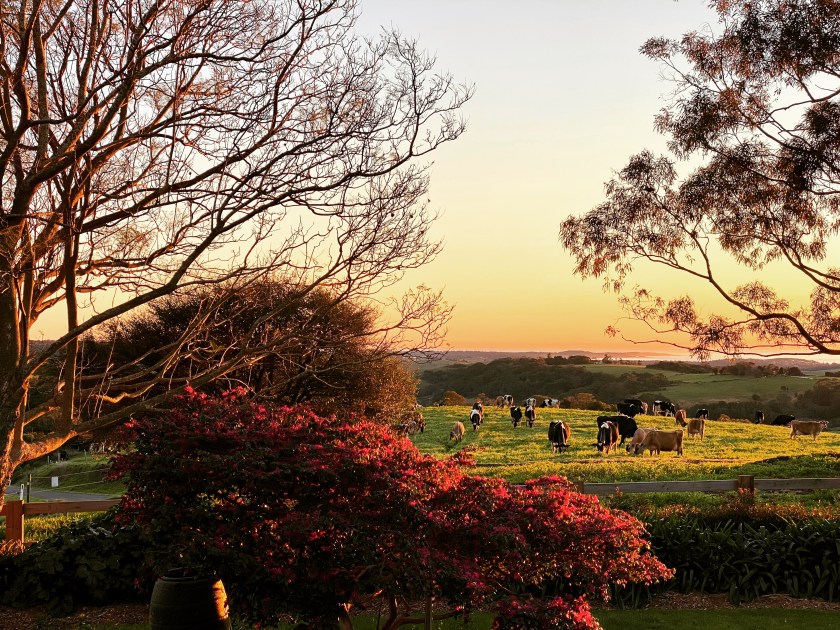
After growing up in Cowra and moving back to the South Coast I know Cowra has its charms but I am confident the Chittick family are going to miss this view

Photo by Ken Duncan of Chittick family Alne Bank farm at Gerringong in 2005

The source of my blogs is  “The Chittick Family History”, as chronicled by Mr. J.H. (Jack)  Chittick and Ms. Betty Chittick. It can be found in the National Library of Australia, and it is an enduring testament to a family’s journey through hardship to prosperity. I have done my best to blog it in a similar language to how it was documented in this book.

#ChittickFamilyLegacy #CourageousJourney #IrishHeritage #AustralianSettlers #HistoricVoyage #FamilyResilience #AncestralPride #FaithAndPerseverance #PioneerSpirit #CommunityBuilders #HeritageAndLegacy #GenerationsStrong

Vale Colin Thompson – an Australian Dairy Industry Legend

The founder of Silvermere Holsteins, Colin Thompson passed away at the age of 63 on June 21st 2024. Read about this dairy industry trailblazer here and here

The Big Question – what does meaningful change look like

Over the years I have worked with some extra-ordinary people. One of those is Changeologist Les Robinson
My big question “what does it take to drive meaningful change” starts with a lot of reflection on what meaningful change looks like for you and the people/organisations you are working with and successfully defining the joint vision.
At Action4Agriculture we are disciples of Les’ work in this space. Les is a big believer in keeping it simple.
Another brains trust we love working with at Action4Agriculture is Professor Felicity Blackstock who is a learning and development guru.
Felicity and I were recently discussing the evaluation of our Action4Youth Workforce Roadmap Model project and Felicity asked me the BIG Question – what does meaningful change look like?
 When you are trying to drive change you have to be able to clearly identify the problem. The research is in – Secondary School students need universal access to high quality work based learning and industry has been identified as part of the problem
So what would meaningful impact look like for me
  1. agricultural employers can clearly articulate the ROI for providing work-based learning for school students
  2. agricultural employers are confident they have the skills and knowledge and mentoring capacity to ensure students can use their work based learning time effectively
  3. agricultural employers commit the time and energy into learning how to engage with workplace learning providers and young people

The piĂšce de rĂ©sistance for me is having a cohort of facilitators who have the capacity to deliver  workshops for all 12 career management competencies for the Australian Blueprint  for students – how rewarding is that

Superstars like Josh Farr

Agricultural Shows – a lesson in high level community organisation and volunteer succession planning

Employers are:

82% more likely to choose a candidate with volunteering experience and

85% more likely to overlook resume flaws when volunteer work is present. 

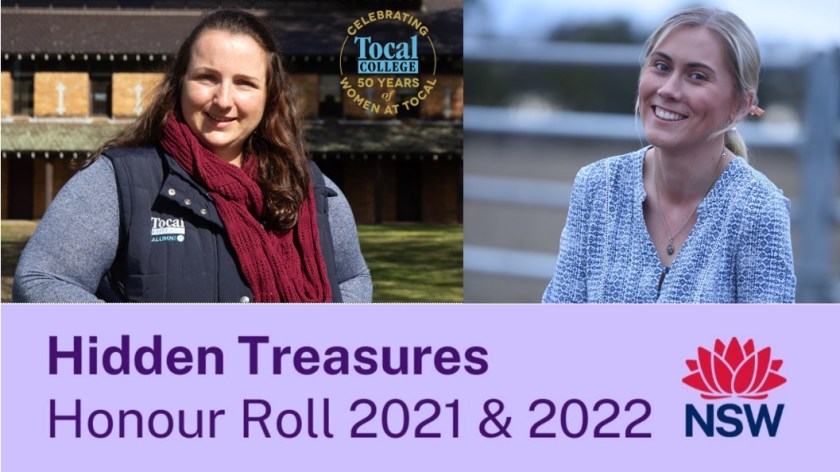
As the Action4Agriculture team recognise two of our own volunteers ( Emily May and Danielle Fordham) by nominating them for the NSW Government Hidden Treasures Honor Role I am finding myself admiring some other organisations manned by volunteers that I have been working with
This post is a celebration of the work of Ryan McParland who comes from a long line of family volunteers with a shared passion for local agricultural shows.

Ryan played a founding role in his local show society’s ‘youth in ag’ group and is working to replicate and scale the Rural Ambassador model for the South Coast and Tablelands, all while working as a mechanical engineer at BlueScope Steel where he is a highly valued member of the team as this quote from his manager reinforces

Ryan is a gifted engineer who continually seeks improvement, not only in himself but in the people and the systems around him. As a genuine leader, he engenders a spirit of cooperation and engages those he works with, seldom taking the credit that is his due.

Ryan is well known to be a youth leader outside of our company, regularly involving us with him in charitable fund raising, promoting the shows and team building activities that lean heavily on his agricultural life experiences.

Ryan is a role model, who is genuine and is an asset to anyone fortunate to work with him.

Harry Murphy  Manager  Energy Services Asset Development, Digital, Services and Manufacturing Excellence

Ryan  was a 2021  RAS of NSW Rural Achiever and his experience inspired him to kickstart a similar initiative at local shows in his region. Ryan recently invited me to judge the Albion Park Rural Ambassador program that he has been instrumental in founding, with the long term view of seeing it replicated at all NSW shows. These young people come from all walks of life, with a dedication to give back to the communities they are proud of.

I first met the Rural Ambassador finalists, Maddi Calloway, Shaylene Mawbey, Jayda Tisma and Ethan Forsyth a week before the show for their interviews. I  was gob smacked. All came well prepared and answered the questions from their hearts with a raw authenticity we don’t see enough of in the 21st century.

Ryan then managed to entice WINNews ( and me to support them) to showcase the ambassadors

Then I got to spend a whole day at the show watching them and their extraordinary volunteer work ethic in action.

I certainly discovered just important volunteers are. Wow so much happens in 12 hours at an agricultural show.

These wonderful pictures from the Wollongong Camera Club share some of the joy and excitement

Its a a family affair with Ryan’s brother Glenn coordinates the animal nursey – bring his farmyard to the show

There are opportunities to milk a cow, real ones and faux ones

There are competitions

This slideshow requires JavaScript.

There is sideshow alley and face painting

and show food – chip on a stick. With potatoes in short supply I wasn’t overly surprised to see these sell for $10 each

and those stunt people that thrill the crowds and seem to have no fear. Did I hear correctly this truck cost $400K?

and it all seems to run like clockwork.

There are some important research facts around the value of volunteering for young people.

They bring fresh ideas,  they adjust easily, they are naturally inquisitive, and are more likely to discover creative solutions.

Volunteering can have a positive impact on volunteers as well as the people and organisations they help.

  • From building skills like collaboration and problem solving
  • they get invaluable life experiences.

Volunteers must put their own needs aside to address the needs of others.

Exposure to meaningful volunteer opportunities as children and young people helps foster lasting empathy and a sense of belonging, qualities necessary in cultivating safe, unified communities.

After shadowing the Albion Park Show rural ambassadors for a week I am in awe of what it takes to draw a record crowd to an event and keep them entertained from 8am until 10pm. A reminder of how important it is that young people like Ethan Forsyth, Madi Calloway, Shay Mawbey and Jayda Tisma put their hands up to carry on the proud tradition of community volunteering that it takes to make it all happen

Congratulations to Madi Calloway who is the 2023 Albion Park Show Rural Ambassador – a truly tough decision. Mega shoutout to Ryan McParland doing an extraordinary job of bringing local youth together. 🙏 BlueScope and #WINTV for investing in NextGen #countryshows #community #youthinag #volunteering #action4agriculture


See the wonderful photos from the Wollongong Camera Club here 


#makingadifference #creatingabetterworldtogether


Agriculture and the “Leaders are Born Mindset” – why has it become part of our identity?

Its been a week of getting my confidence back by stepping up and saying yes to podcasts and interviews

Tonight I get to share my thoughts on leadership

Here is my leadership thought dump of other people’s ideas that resonate with me

Leadership is a process of influence to drive change

We can’t do it alone and we can do it in silos

We must join forces, share resources, skills, knowledge and experiences. Source Julie McAlpin RDA Sydney

I workshopped below with a number of bright minds who came to agriculture from the world beyond and put their toes in the water and went wow the disruptors are very brave people

Agriculture tends to have a “Leaders are Born Mindset”

This has been driven by agriculture’s traditional patriarchal culture where the first born son inherits the farm. This concept has been perpetuated for centuries.

It is a very deep-seated generational identity culture.

In this country women were not allowed to call themselves farmers in the census until 1994

In a sector where you are rewarded for learning to fit in and NOT challenge the status quo we are asking people to re-identify who we are as an industry and as people

Asking people to embrace the concept of “Leaders are Made” will be frightening for a lot of people

This has led to our traditional leadership programs being one off events with no clear pathway of what could be next

These programs are seen as “vehicles” to expose the “born leaders” and position them to fulfil their birth destiny.

and now to the work of the team from The Practice of Adaptive Leadership – Harvard Kennedy School 

How glorious is this concept

Leadership is an experimental art. We are all at the frontier.

Think of your life as a leadership laboratory. In that laboratory, you are continuously facing opportunities for learning how to be more effective in living a meaningful existence, and for making more progress on life’s deepest purposes and leading meaningful change.

Seeing life as a leadership lab enables you to try things out, make mistakes, strengthen your skills, and take pleasure in the journey as well as the fruits of your labour.

This from conversations with our wonderful Young Farming Champions

There is no one size fits all

Young people are doing it differently, the business model has changed

We don’t want to be part of “Old codgers organisations”

We want to ensure young people have a seat at the table

We want to ensure their voices are heard and valued

We can be shapers of “what might we be together”

Back to the brains trust that is the Adaptive Leadership team

The tools and tactics for leading adaptive change should be treated, we believe, in the same spirit as open source technology, made broadly available, so that people who lead adaptive change can learn from each other and improve their skills, and all of us improve our insights into practice.

Leadership for change demands inspiration and perspiration.

We present tools and tactics to lead and stay alive, to build up a sweat by inspiring others, to mobilize people to tackle tough problems while reaching high.

Our work begins with the assumption that there is no reason to exercise leadership, to have a courageous conversation with a boss or a spouse, for example, or to take a risk on a new idea, unless you care about something deeply. What outcome would make the effort and the risk worthwhile?

Trying to create something better from the current reality.

Growing tomorrow’s leaders today moving from reactive to future focused leadership

The practice of leadership, like the practice of medicine, involves two core processes:

  • diagnosis first and then
  • action.

 And those two processes unfold in two dimensions: toward the organizational or social system you are operating in and toward yourself. That is, you diagnose what is happening in your organization or community and take action to address the problems you have identified.

But to lead effectively, you also have to examine and take action toward yourself in the context of the challenge. In the midst of action, you have to be able to reflect on your own attitudes and behaviour to better calibrate your interventions into the complex dynamics of organizations and communities.

You need perspective on yourself as well as on the systemic context in which you operate. The process of diagnosis and action begins with data collection and problem identification (the what), moves through an interpretive stage (the why) and on to potential approaches to action as a series of interventions into the organization, community, or society (the what next).

Typically, the problem-solving process is iterative, moving back and forth among data collection, interpretation, and action.

Adaptive challenges can only be addressed through changes in people’s priorities, beliefs, habits, and loyalties.

Making progress requires going beyond any authoritative expertise to mobilize discovery, shedding entrenched ways, learning from mistakes, and generating the new capacity to thrive anew.

Just love people who wake up everyday to help us create a better world 


Would you agree that the human need to be heard and valued trumps almost everything else?

When my dose of Red Tractor Designs arrived in my inbox this morning  the picture reminded me of a great little book I read recently called Life and Death Listening by Dan Oblinger 

Dan invites us all to become better listeners by building more  CAMPFIRES

Sometimes we need an anchoring image in our mind to focus our intention. The best image for the sort of listening that I’m talking about is that of a roaring campfire.

Inside the circle of the light, it’s safe to tell your story for all to hear.

Almost any topic can be discussed in this atmosphere of friendship and trust.

Outside the circle, there is darkness, fear, and confusion. Leaders and lovers should put considerable time and energy into creating a campfire atmosphere at work or in the home!

Stoke the coals, throw on a new log, and invite the story-telling to commence.

What should motivate all of us to become the best listener we can is this truth.

We should listen to people because of what they are, not who they are.

We listen to people because as a human being they possess a dignity that is invaluable.

They are one of us!

Every human being wants to be understood and loved.

Everyone has a story to tell and desires for an audience, even an audience of one.

The human need to be heard and valued trumps most everything else.

Dan is right. Listening is the most important communication skill.

We hesitate to share our fears, dreams, and aspirations with each other.

When we do, it is often raw, unfiltered, and incomplete.

In the modern hustle of business and life in general, our society lowers the bar for listening.

Our shared human desire for connection is what makes the fine art of “listening well” so compelling. It is the secret to unlocking the universe of people. It is foundational for both leadership and friendship. Source Life and Death Listening by Dan Oblinger 

In 2021 I am looking forward to mastering my listening skills and giving the emerging leaders I work with access to experts from all over the world like Charlie Arnot, Roxi Beck, Kwame Christian and maybe even Dan  to help them “unlock the universe of people” and get the best outcomes for farmers, consumers and the planet

Speaking of great listeners how awesome is the work of Oscar Trimboli who recently shared this on LinkedIn

I am curious – if honesty is the most valued leadership trait why did 75 million Americans vote for Trump?

It seemed easy to just brush past accountability in a world where, according to the ongoing tally by the Washington Post, Trump made more than 30,000 misleading claims in four years. Source 

Why would you want to follow someone if you suspected that they were lying or trying to trick you?

According to the Leadership Challenge Gurus if you want to: 

  1. Become the kind of leader people want to follow.
  2. Get other people, by free will and free choice, to move forward together in pursuit of a common vision.
  3. Mobilize others to want to struggle for shared aspirations. 

Then the majority of people want a leader who they believe is:

  •  Honest  
  • Competent  
  • Inspiring  
  • Forward-looking

Then I am very curious as to why we keep enabling our politicians to lie to us. 

If you google trump lies  the list is frightening

The truth hurts, but lies kill. The past 12 months have demonstrated that with a terrifying clarity. Lies about Covid, insisting that it was a hoax cooked up by the deep state, led millions of people to drop their guard and get infected. And one big lie about the US election – claiming that Donald Trump had won, when he’d lost – led to the storming of the US Capitol and an eruption of violence that left five dead. Source

and its not just American politicians 

Source

Thirty five years of research by the leadership gurus have shown them, of all the qualities that people look for and admire in a leader, honesty is by far the most personal. People want their leaders to be honest because a leader’s honesty is also a reflection upon their own honesty.

They make this very poignant statement 

It’s the quality that can most enhance or most damage personal reputations. If you follow someone who is universally viewed as having impeccable character and strong integrity, then you’re likely to be viewed the same. If you willingly follow someone who is considered dishonest and unethical, your own image is tarnished. In addition, there is perhaps another, subtler, reason why honesty is at the top. When people follow someone, they believe to be dishonest, they come to realize that they have compromised their own integrity. Over time, they not only lose respect for the leader, they lose respect for themselves.

Honesty is strongly tied to values and ethics. Once upon a time people appreciated leaders who took a stand on important principles. They resolutely refused to follow those who lack confidence in their own beliefs. 

In reality you really are only as good as your word in the eyes of those you aspire to lead.

Why would you want to follow someone if you suspected that they were lying or trying to trick you?

Not knowing our leaders beliefs is contributing to conflict, indecision, and political rivalry.

People simply don’t trust leaders who can’t or won’t disclose or live by a clear set of values, ethics, and standards.

Honesty is the basis of trust and you have to believe that what the leader speaks or knows is true.

I am constantly seeking out role models who walk the talk. 

People who turn  

  •  values into actions,
  • visions into realities,
  • obstacles into innovations,
  • separateness into solidarity

People who make a positive difference and create a climate in which people turn challenging opportunities into remarkable successes.

A leading example in this country in Cathy McGowan and she share her inspiring story with our leadership team this week

I am excited 


Reframing the “woe is us” messaging in agriculture

Todays big question

What do you think it would take for agriculture to reframe its messaging from

“woe is us”

to

“If you aren’t part of the solution you are part of the problem”?

I am a sixth generation dairy farmer who was told growing up by my father “never learn to milk a cow”  It was a message that resonated and I listened  and obeyed and chose a career pathway that the world told me would always provide a reliable income for my family and provide opportunities that my siblings and I didn’t have growing up on the farm.

You can imagine the shock/horror feeling I had when six months into my marriage my partner got an offer to go back to his dairy farming roots.

It was a very difficult conversation to have. He was so passionate about the opportunity but the messages I had received as a child rang very loud alarms bells. Those messages meant that despite wanting to support his dream I did everything I could to convince him neither of us should be milking cows for a career.

My pleadings were to no avail, He began his new career as a share farmer on a local dairy farm and the messaging I had received as a child told me I would be required to work very long hours in my off farm career to ensure the bills were paid on time

Twenty five years later I bought my career skills and knowledge of financial literacy, consumer insights and marketing back to the farm so we could grow the business to allow our son to join the dairy business.

What I discovered was a whole new exciting world that for some reason the dairy industry and agriculture wasn’t sharing beyond the farm gate

A world where science, research and technology was available at a level that the medical world I came from couldn’t even dream of. The level of knowledge of ruminant nutrition and capacity to collect data was phenomenal. If only they did this amount of research on human nutrition or doctors got the holistic training vets and agronomists received.

In the following twenty years working in the agriculture advocacy space I have asked myself over and over again . Why are we keeping all this science, research and technology a secret.

Why do we prefer the “woe is us” messaging

Why do we prefer to tell the world things like the average age of farmers in this country in 58 when we know those ABS figures don’t tell the real story.

Why is agriculture so focused on sharing negative messaging . Last week I was part of a workshop where the participants were asked to list all the reasons why young people don’t choose careers in agriculture. I was shocked, surely I must have heard wrong. Surely the industry is across the knowledge from the world of social science that tells us the dangers of reinforcing the negative.

Why do we engage experts to tell us how we can make the most of the opportunities in the world of agriculture and then ignore their advice?

What do you think?

Is it time to reframe our messaging?

What would that look like?

For years I have been been looking for courageous industry leaders who do that.

Meet the forward thinking David Carter CEO of Austral Fisheries. This is the first of a series of Leadership is Language interviews Dione Howard deputy chair of the Youth Voices Leadership Team is doing with David.

What do you think it would take for agriculture to reframe its messaging from “woe is us” to “If you aren’t part of the solution you are part of the problem”?

By the way – those opportunities for a rewarding career in agriculture abound. My advice is only choose to farm if you have strong financial literacy capability ( or some-one on your team who does) and be committed to life-long learning and growing

As an aside I got up early this morning and walked around the garden I started creating 40 years ago around the house on the farm that I lobbied hard not to live in and I experienced great joy. We are a product of our life experiences and I have found you often learn most from your greatest mistakes.

  1. Neil Barr 2014 Where are the young farmers  
  2. Bad impressions and bad stereotypes are quicker to form and more resistant to disconfirmation than good ones Source
  3. Bray and Cay 2018. Room To Grow 

Peer Mentoring – what do I bring to the table?

Peer Assisted Teaching and Learning

As mentioned in previous posts  I am currently part of a Global Leaders program and I am also very grateful to have a circle of people in Australia who mentor and coach me.

Whenever I have been in Leadership programs the part I struggle with the most is the Peer to Peer mentoring. ( (See footnote) What do I offer my peer?

Whilst I personally avoid one on one peer mentoring situations I love listening to other people do it and just live for the wisdom of the crowd moments.

How do you find Peer to Peer Mentoring opportunitues?

Footnote

Here is a suggested agenda for Peer Mentoring

Start
Where are you in the world?
What’s a thumbnail sketch of your role/organization?
What’s one superpower you have?
Discovery
I enjoy teaching other people how to

Other people say I’m good at

One thing I want to gain more perspective on right now is

Perspective
You say: A recent example of a situation where more
perspective may help.
Your partner says: Here’s an experience I can share

Swap roles

Stuff it – I am NOT curling up in bed with chocolate

I must admit I was having a pretty frustrating week. So what do you when you decide its all too frustrating and you want to throw your hands up in the air and say stuff it I am just going to curl up in bed and eat chocolate

What I do is I send messages to all the people in my circle who get stuff done and who I  know will brighten my day in someway.

Thank you Kris and Roger and WSU for reminding me why its all worthwile and an ht to Nicole and the YVLT . 

WSU Agri Industry

though the chocolate is very tempting and isnt it great to know there is an Archie for every occasion

Chocolate


White Fragility: Thank you for helping me understand

In early 2020 I joined a Global Leadership Academy.  There are five people from around the world and the coach in my core group. Our group are also able to participate in a diverse offering of sessions with the wider academy

Yesterday I got up at 5am for Office Hours (see footnote) with Dave Stachowiak from Coaching for Leaders. I was keen to get the wisdom of the crowd to help leverage an opportunity for Picture You in Agriculture. How grateful was I to get my opportunity workshopped by people of the calibre of Emily Leathers . You can listen to Dave interview Emily here 

I am also part of a Coaching for Leaders Academy book club whose focus is having conversations about race and justcie. See my previous blog here

As Dave reminds us

Words and intentions are a first step — movement through action is also important.

We are starting by tapping into the wisdom of Stephen Covey and first seeking to understand beginning with reading White Fragility: Why It’s So Hard for White People to Talk About Racism* by Robin DiAngelo. 

The book is blunt

White people in North America live in a society that is deeply separate and unequal by race, and white people are the beneficiaries of that separation and inequality. As a result, we are insulated from racial stress, at the same time that we come to feel entitled to and deserving of our advantage. Given how seldom we experience racial discomfort in a society we dominate, we haven’t had to build our racial stamina. Socialized into a deeply internalized sense of superiority that we either are unaware of or can never admit to ourselves, we become highly fragile in conversations about race. We consider a challenge to our racial worldviews as a challenge to our very identities as good, moral people. Thus, we perceive any attempt to connect us to the system of racism as an unsettling and unfair moral offense. The smallest amount of racial stress is intolerable—the mere suggestion that being white has meaning often triggers a range of defensive responses. These include emotions such as anger, fear, and guilt and behaviors such as argumentation, silence, and withdrawal from the stress-inducing situation. Source White Fragility:

I am a white person. I see the world through my lived experiences. I am also a woman who grew up on a family farm. I was told by my parents from an early age that men have privileges women don’t and that I should make the most of the intellect I was given because my brother would be inheriting the farm. That’s a very different lived experience to African Americans or Aboriginal and Torres Strait Islander people.

Regardless of our protestations that social groups don’t matter and that we see everyone as equal, we know that to be a man as defined by the dominant culture is a different experience from being a woman. We know that to be viewed as old is different from being viewed as young, rich is different from poor, able-bodied different from having a disability, gay different from heterosexual, and so on. These groups matter, but they don’t matter naturally, as we are often taught to believe. Rather, we are taught that they matter, and the social meaning ascribed to these groups creates a difference in lived experience. Source White Fragility:

Whilst our lived experiences may be very different they can help us understand and they can motivate us to drive change

When a racial group’s collective prejudice is backed by the power of legal authority and institutional control, it is transformed into racism, a far-reaching system that functions independently from the intentions or self-images of individual actors.

J. Kēhaulani Kauanui, professor of American studies and anthropology at Wesleyan University, explains, “Racism is a structure, not an event.” American women’s struggle for suffrage illustrates how institutional power transforms prejudice and discrimination into structures of oppression. Everyone has prejudice and discriminates, but structures of oppression go well beyond individuals.

While women could be prejudiced and discriminate against men in individual interactions, women as a group could not deny men their civil rights. But men as a group could and did deny women their civil rights. Men could do so because they controlled all the institutions.

Therefore, the only way women could gain suffrage was for men to grant it to them; women could not grant suffrage to themselves.

 Similarly, racism—like sexism and other forms of oppression—occurs when a racial group’s prejudice is backed by legal authority and institutional control. This authority and control transform individual prejudices into a far-reaching system that no longer depends on the good intentions of individual actors; it becomes the default of the society and is reproduced automatically.

Racism is a system.

And I would be remiss if I did not acknowledge the intersection of race and gender in the example of suffrage;

White men granted suffrage to women, but only granted full access to white women. Women of colour were denied full access until the Voting Rights Act of 1964.

The system of racism begins with ideology, which refers to the big ideas that are reinforced throughout society. From birth, we are conditioned into accepting and not questioning these ideas. Ideology is reinforced across society, for example, in schools and textbooks, political speeches, movies, advertising, holiday celebrations, and words and phrases. These ideas are also reinforced through social penalties when someone questions an ideology and through the limited availability of alternative ideas. Source White Fragility

I am currently one third of the way through the book. I am finding it a bit depressing I am looking forward to seeing a way forward

Dave has been helping people understand for a long time and you can listen to his podcast with Willie Jackson  here   Wille is a diversity, equity, and inclusion consultant and facilitator with ReadySet, a boutique consulting firm based in the San Francisco Bay Area. He is a frequent writer and speaker on the topics of workplace equity, global diversity, and inclusive leadership.


Bonus Audio

Update

I have now finished reading the book and its a tough, tough read

I think the Chapter I found toughest to read was Chapter 11 White Women’s Tears. I now understand why Amy Cooper’s response to this event was so wrong on so many levels  and a lot of admiration for Christian Cooper on so many levels

I will do as the author suggests and take the time to process my feelings and reflect on her advice

We can interrupt our white fragility and build our capacity to sustain cross-racial honesty by being willing to tolerate the discomfort associated with an honest appraisal and discussion of our internalized superiority and racial privilege. We can challenge our own racial reality by acknowledging ourselves as racial beings with a particular and limited perspective on race. We can attempt to understand the racial realities of people of colour through authentic interaction rather than through the media or through unequal relationships. We can take action to address our own racism, the racism of other whites, and the racism embedded in our institutions. All these efforts will require that we continually challenge our own socialization and investments in racism and the misinformation we have learned about people of color. We can educate ourselves about the history of race relations in our country. We can follow the leadership on antiracism from people of color and work to build authentic cross-racial relationships. We can get involved in organizations working for racial justice. And most important, we must break the silence about race and racism with other white people. Source White Fragility

Follow up

Loved this review in The Atlantic titled The Dehumanizing Condescension of White Fragility


Footnote 

Dave Stachowiak from Coaching for Leaders hosts an Office Hours session each month so we can connect live as a community and share perspectives to help each other with current situations. Here’s a few reasons why people participate:

  • You’ve got something you’d like immediate feedback on
  • You’re working to become more coach-like and want more practice in asking effective questions of others.
  • You want to get to know other leaders in our broader community.
  • You’d like insight on what other leaders are facing right now, in real-time.