Robots bring the cows home

Everybody who knows me knows that the last thing I ever wanted to do was farm but when the people I love most in the world decided that was what they both wanted to do I wanted to make sure that farming would deliver the best possible life for them. 

Now lets not kid ourselves only the very brave farm in a world where supermarkets control the supply chain and the people who run the supermarkets in the main have absolutely no idea of the challenges and constraints farmers face today to farm in a socially acceptable way in the 21st century.

There is something else about farming that excites me beyond my wildest dreams and that is the innovation and technology and the resilience of Australian farmers and great minds who help them feed and clothe not only in Australian consumers but many other people around the world. So I am so excited to be able to share this story with you.

Now as my regular readers know the Australian dairy industry so frustrates me. Driven by the mindset at Dairy Australia our farmers are forced to live in this cocooned world that means they rarely get to interact with all the other exciting people who not only farm in other industries but also the amazing people who support people in other industries.

One shining light is the Dairy Research Foundation (DRF) team and the Future Dairy Project. These people are amazing beyond belief and I am so honoured to sit on the board of the DRF and have insights into what is happening with the Future Dairy Project            

Let me show you what I mean

With increasing numbers of Australian dairy cows now being milked by robots, researchers are looking at a range of exciting ways to use robots on farm, and one that has already shown promise is the use of robots to herd cattle from the paddock to the dairy.

Delegates at the Dairy Research Foundation’s symposium, to be held at Kiama on 4 & 5th of July will get a sneak peak of Rover, a prototype robot, in action.

Robot

Cows at the University of Sydney’s Corstophine farm were unfazed by the presence of a robot which herded the cows out of the paddock calmly and efficiently

Researchers from the University of Sydney’s Dairy Science Group and the Australian Centre for Field Robotics, have used an unmanned ground vehicle (robot) to herd dairy cows out of the paddock.

Dairy researcher Associate Professor Kendra Kerrisk said the team was amazed at how easily the cows accepted the presence of the robot.

“They weren’t at all fazed by it and the herding process was very calm and effective,” Dr Kerrisk said.

“As well as saving labour, robotic herding would improve animal wellbeing by allowing cows to move to and from the dairy at their own pace.”

The robot was developed by researchers at the University of Sydney’s Australian Centre for Field Robotics for tree and fruit monitoring on tree-crop farms. It was used in the initial trial with very little modification for the dairy paddock.

We are keen to explore further opportunities with the Australian Centre for Field Robotics. They have a range of robotic technologies which could have exciting applications on dairy farms,” Dr Kerrisk said.

“While the robot showed exciting potential for use on a dairy farm, it would need to be adapted to operate autonomously on the terrain of dairy farms and its programing would need be customised for dairy applications.”

In addition to robotic herding, some of the possible applications include collecting pasture and animal data in the paddock; monitoring calving and alerting the manger if attention is needed and identifying and locating individual cows in the paddock.

“The research is in its very early stages but robotic technologies certainly have the potential to transform dairy farming, in terms of reducing repetitive work, increasing the accuracy of data that farmers collect and making data available that we currently can’t capture.

“Robotic technologies will have a role in increasing the productivity, sustainability and competitiveness of Australia’s dairy farms,” Dr Kerrisk said.

Does agriculture get anymore exciting than this and let me assure this is not reducing jobs in the dairy industry it just means we can now attract the best and the brightest minds. 

If you want to come and see Rover in action to register for the Dairy Research Foundation Symposium visit www.drfsymposium.com.au 


.

Kudos where kudos is due Woolworths

This post is a salute to Woolworths. You might just be surprised where they are investing some of their profits.

3 Serves of dairy

And that’s just the cows!

Imagine the amount of land!

The people!

The infrastructure!

Supporting business!

The technology!

It takes to get your dairy products from cow to consumer!

Yes we all have to eat and that alone means that agriculture is not only important but vital.

Yet agriculture faces new challenges every day, including activist groups who see livestock farmers as the right hand of devil.

The key to debunking myth conceptions about modern agricultural  farming practices starts with the education sector. The key to success begins with partnering with the 250,000 teachers teaching the 3.5 million students in the 9,500 Australian schools.

Yogurt grows on trees

Once we have excited some of these 3.5 million students to consider careers in the agrifood sector, it is imperative that we deliver on the promise in order to retain them. Sadly we don’t do this well enough

Like our individual food and fibre industries, we need a better “supply chain” for young people to develop skills that enable them to engage, grow and take charge of their industries.

Currently, we see a number of programs aimed at developing individuals at various stages in life, but many lack the mechanisms to support and mentor and galvanize these people into roles that have meaning within our industries, in the medium to longer term.

There is no point training young people if we then abandon them; believing our job is done after holding workshops and camps for them.

If we don’t continue to develop our young people, we lose a generation of leaders, innovators and workers as they seek opportunities elsewhere.

There will be no-one to take over the farm, or work in our agribusinesses.

Excitingly we don’t have to start at the beginning. There is a great pathway in place. All it needs is more agricultural industries supporting it

clip_image004

This diagram identifies cross industry supported programs whose core business is developing next gen agricultural ambassadors, workforce and leaders  

This post is salute to Woolworths who is heavily investing in this space, albeit I am given to understand not as much as they have in the past.

I have spent a bit of time at Woolworths and yes there people who work there who are only driven by $ in the till and $ in shareholders pockets which ultimately mean $ in their pockets.

There also a lot of people at Woolworths who truly care about farmers. I know because I have met them and they walk the talk.

To help to develop and nurture Next Gen Ag Leaders Woolworths run a yearly program called the Woolworths Agricultural Business Scholarship Program (WABSP) offering 24 young people in agriculture between the ages of 18 and 35 the chance to attend

The course is practical as well as theoretical, and covers topics such as:  

• Business strategy and planning

• Agricultural value chain

• Successful business leadership

• Business finance

• Logistics and supply chain management

• The role of government

• Understanding retail

• Sustainability and environmental issues

• Personal development

You only have to see what the alumni have to say to see the potential outcomes it can deliver

At Art4Agriculture, an important part of our mission is to link our Young Farming Champions alumni with further opportunities within their industry and beyond to continue the journey of growth and leadership.

We actively encourage our Young Farming Champions to apply for the WABSP

2013 Art4Agriculture/Target 100 Beef Young Farming Champion Jasmine Nixon attended in 2012

Jasmine Nixon

Jasmine applied because she wanted to gain an increased understanding of the end consumer through broadening her industry knowledge and the paddock to plate concept.

Working in the quality control and assurance team at Teys Australia’s Wagga abattoir, which supplies meat products to Woolworths and other major supermarket chains Jasmine was looking forward to learning more about the end consumer and what is trending.

The meat industry is facing significant challenges and there is a greater focus on meeting the demands of the customer and gaining a better understanding of them – this is something that Jasmine feels is crucial to her role and the success of the company.

She saw the Woolworths Agricultural Business Scholarship program is about filling the knowledge gap and learning more about the supply chain and the logistical challenge of supplying fresh food to the nation.

Extract from http://www.beefcentral.com/p/news/article/2131

As the Australian farmers face all kinds of unrelenting changes in their environment, there is a need for individuals who are capable of turning strategy into reality.

There is a great “supply chain” for young people to help them develop skills that enable them to engage, grow and take charge of their industries.

Is your industry supporting it?

See Next Gen Ag Leaders Pathway supporting partners here

PIEF

PICSE

Horizon Scholarship Program

Art4Agriculture plus NSW Farmers who have just signed on and you can find our community Partners here

Woolworths Agribusiness Scholarship Program

Climate Champions This page needs updating Dairy Australia has withdrawn and AWI have come on board

ARLP

Nuffield

If you take the time to look you will notice some industries and supply chain partners pop up in every single one or almost.

Sadly the dairy industry is very much missing in action

What about the supermarkets who rely so heavily on our farmers.

Did you see Coles? No I don’t thinks so. But you may have noticed Woolworths directly sponsors 4 of the 7 and has provided support to another two in the past and commits more than $140K per year to its own Woolworths Agribusiness Scholarship Program

Kudos where kudos is due I say

Just before I go Here is another great idea Woolworths from one of our Young Farming Champions Kylie Stretton who has certainly crowd sourced for you here 

This post is another in the series. “Success is the journey not the destination and it’s the people you partner with that determine how fast you get there and how rewarding it will be”

Strategy failing to win the hearts of consumers

Wednesday, 22 May 2013 04:17

Todays guest blogger is Steve Jones (see footnote) 

Reblogged from Dairy News Australia

Strategy failing to win the hearts of consumers

Almost weekly I watch with interest an essential Australian industry losing credibility through its own actions.  These include degrading its power base to being not only ineffective but counterproductive; ongoing non-compliance to consumer/voter expectation that causes massive disruption to their own business and the unintentional attack on the largest and most influential unofficial lobby group buying their products, the city consumer/voter.

This is the wider agriculture sector I observe.  I appreciate dairy is heavily regulated and, by enlarge, complies. Unfortunately however the city consumer/voter lumps all farmers together.

I was raised by a builder in Gippsland and for many years our lives were affected by the fortunes of farmers.  My old man would follow the wool price and if they were high he could count on some new sheds to build and if there was a drought or prices fell, we went from eating roast to mince.  This developed true empathy for the ag sector, reconnected in the last few years with meeting my partner who works across most of the ag sector.

My path was 30 years in the oil and gas sector that culminated in co-founding engineering and design company Plexal Group.  In 10 years we expanded from our head office in Perth to Brisbane, Thailand and Bangladesh, with a workforce nearing 200 and servicing majors such as Chevron and Woodside.  At the beginning of this year a multi-national acquired the company and I no longer work in the industry.  The views I share are mine alone and in no way do I represent Plexal Group.

In those 10 years we had our share of droughts and floods.  The Global Financial Crisis (GFC) wiped out years of earnings; the flood in Queensland saw our office shut for weeks; floods in Bangkok virtually shut down our operation for two months and the Bangkok airport was taken over by protestors, isolating us for several weeks.  We never received an ounce of financial support or direct bail-out. 

Nor was this the case for the 30,000 small, privately owned and often family-run businesses that went under during the GFC.  Reportedly the rate of small business collapses is 12% higher today than during the GFC and rarely talked of in the media.  Their cries for a bail out don’t make the light of day.

During my time in the resource sector I witnessed significant growth and with it their power and influence.  They understand their power base and how to use it effectively.  They have adapted to the expectation demands of consumer voters far quicker than ag in the last 3-4 decades and do consumer compliance exceptionally well.  This has helped grease the wheels for approvals, influenced legislation and enabled them to continue even after a major non-compliance.  

It seems to me that the ag sector has the biggest stick of all in terms of power and influence over government policy – it provides 93% of all our food.  History will tell us repeatedly that anarchy is only an empty belly away.  In no way do I advocate blocking of supply as it is a form of blackmail.  Nonetheless it is a massive stick and one I see thrown away or broken into pieces time and again by the owners of it.

Last week I watched in amazement as the WA Farmers Federation and the WA branch of the Pastoralists and Graziers Association very publicly disagreed with each other over whether the WA wheat growers should get another finance assist package or not.  Divide and conquer is 101 ‘art of war’.  But one you are meant to inflict on your enemy, not yourself.  

Behind closed doors government members must shake their heads in bemusement and largely ignore because they are handed this gift.  Then for a moment put yourself in the shoes of 70% of the nation’s voters, living in our cities.  They see farmer against farmer squabbling over a finance assist package that their tax dollar is paying for…meanwhile their job is under threat if they happen to work for an east coast government or a small business.  It doesn’t feel like winning hearts and minds.

And then this week my lounge is filled with sad and terrible images of mistreatment of Australian cattle in an Egyptian abattoir.  Yet another non-compliance with immediate and crippling affects on the industry.  I admire the swift response by the ag sector with the self-imposed ban however the NGO produced footage it is another step closer to the cliff of total abandonment of this important industry.  

Self-regulation often presents internal conflict with trying to justify the endless compliance cost. It can be hard to swallow the expenditure when more pressing issues of commodity prices, falling equity, exchange rate all threaten viability.  However non-compliance to regulations or, worse still, betraying consumer/voter expectation, inflicts costs that make the alternative pale to insignificance.  Although the live export industry is making significant inroads to detecting and rectifying the non-compliances, it is a process than needs to be better regulated.  It is fantastic to see the industry come so far and improve animal treatment in places outside of Australia.  I just hope they can find the improvements to limit opportunities for NGOs to brand the whole effort as a failure before it is too late.

Unfortunately the city voter is largely disconnected from the real issues and efforts of farming groups.  Compliance is not just about legislated regulations, the ag sector must always strive to hold the high ground in the eyes of voter sentiment.  If the city consumer feels trust has been breached they will happily bite the hand that feeds them.  ‘Consumer Expectation Compliance’ is not optional, get on board or be forced out by new and more onerous legislation.

As a CEO and then chairman I had one not negotiable policy –  never, ever publicly criticise your client.  Of course we had robust negotiations behind the scenes but there is nothing to gain through public spats other than alienation with the client and their customer – the public consumer/voter.  We actually sang the praises of our clients in the press and I wish to point out that for 25 years there was a monopoly in the Australian Liquid Natural Gas sector.

On almost a weekly basis I can find examples of farmers and their lobby groups publicly flogging Coles and Woolies.  For example I watch the milk price fight with Coles in complete bewilderment.  Put yourself in the lounge of a city voter – 70% of our nation – most with a small asset and struggling to meet the mortgage payments, compared to their perception of farmers being wealthy. A ‘hectare’ in the city costs $10,000,000 if you consider an average home of $500,000 on 500m2 block.  In their lounge they see the dairy farmer being interviewed lamenting how hard they are doing with hundreds of hectares of prime land in the background and discard the cry of going broke.  I realise this is not reality but it is all about perception.  

The government health department and health groups advertising campaigns stress you must eat a balanced diet of fresh produce.  So you’ve just bought some nutritious milk for $1/litre over a bottle of coke at $2.25/litre for your kids.  Coles have told you they are have provided that great personal achievement cheaper.  You’re feeling pretty good about yourself.  You don’t care how it has come cheaper, after all we’ve all been conditioned to expect cheaper goods for the last three decades and it has become our right not a gift.

Then they see farmers attacking Coles and that they are sending them broke.  

City employees rarely understand the daily struggle of the very business that pays their mortgage let alone a farm business.  So every time farmers attack Coles, they are attacking the most influential lobby group that all political parties jump to – the city consumer/voter.  This does not feel like a winning strategy.

Even though the resource sector is selling all their product overseas they know they must have the heart and minds of the city voter.  Next time look a little closer at the “We Agree” campaign Chevron is running.  It is all about winning empathy of the Australian voter – to ensure they support their developments rather than calling for them to be stopped or shutdown.  Perhaps the ag sector can learn from the resource sector?

Footnote. Steve Jones will be the keynote speaker at the 2013 Dairy Research Foundation Symposium in Kiama on 3rd July 2013

We have given Steve the brief

RETHINKING THE POWER OF AGRICULTURE: The mining and energy sectors are clashing with NSW agriculture over land use – to an extent where one could be excused for thinking that agriculture has little power or influence when it comes to mounting its case. Steve Jones is an oil and gas industry stalwart and former chairman of oil and gas engineering company Plexal Group. Steve is in a unique position to observe
the missed lobbying opportunities for agriculture and believes ag has a ‘big stick’ – it just doesn’t know how to use it! This is a powerful presentation that will force some out of the square agricultural thinking.

More information of the Symposium can be found here

What sort of dairy industry do we want

This morning I woke up to yet another round of what I see as bizarre cheering from the sidelines. Articles like this NZ drought Aus dairy’s boon and headlines of a revival in the fortunes of Australian dairy farmers because our dairy friends over the Tasman are doing it tough

I just don’t get it. If the only way dairy farmers in this country can survive ( let alone prosper) is reliant on climatic disasters in other countries then I say to everyone out there, there is something seriously wrong with the supply chain model for food in this country. I can assure you the Sophie’s Choice model just isn’t working for me and I am not cheering. Survivor remorse is not an easy burden to carry

Everyday u need a farmer

Farmers so important yet so undervalued by supermarket price wars

We know the model is broken. We know there is far too much power at the top of the supply chain. Hagar Cohen and the team at ABC National Background Briefing opened the lid again on just how evil this is just last week See previous post here

As I mentioned at the bottom of this post I too spoke at length to Hagar. I was initially very wary of being interviewed for the program for a number of reasons which didn’t involve a fear of retribution. However Hagar is an absolute delight and after much consideration agreed.   In the end 99.9% of what I had to say hit the cutting room floor but I did do a day’s prep for the interview and spoke to many experts before I decided what I wanted and didn’t want to say. Today I will share with you what I had to say because the supply model is broken and farmers do need to find a completely new way of doing business with the supermarkets and we cant sit around and hope somebody else will save us.

HC – Hagar Cohen ABC National Background Briefing.

What can you tell me about the state of the dairy industry and the domestic milk market in NSW?

LS – Lynne Strong

It has been estimate farm exits are currently running at about 40 % per year. 85% of milk in NSW is sold as fresh white drinking milk so there is a heavy reliance on supermarket contracts. Approximately 45% of NSW milk is sold through supermarkets as private label or homebrand milk and the supermarkets are the ‘price makers’ in this market.

As the largest players in the market, the supermarkets have used fresh milk discounting to increase sales in other sectors of their supermarkets. And it’s working Coles profits are up 16% (1.356Billion $ pre-tax earnings)

This is about all about the whole supply chain – we are all in this together we need each other. The milk price wars are hurting everybody down the supply chain. It’s not just the farmers who are being squeezed

HC – How have the price wars affected your business (bottom line, and emotional/ psychological impact)

LS- One of the big issues now is the capacity to recover from a disaster. Take the recent floods in the north for example. These dairy farmers are more impacted than they would be normally because of the lower milk prices they are receiving. They don’t have the financial capacity to recover from the continual flooding.  They are now desperately asking the State government to help them finance the recovery. It has now become a cost to the public.

This region has had similar and severe impact from recent very sharp drought through spring and summer where farms and farm business did not have available cash surplus to feed and maintain their cows.

On top of this feed prices are up and like other farmers we had to extend our overdraft and take out loans to buy in extra feed. In our case the recent drought has meant hand feeding over 1000 cows

In fact it cost us 30% more this year to feed our cows through that period in comparison to the same time last year. Wages went up 20% I it took a lot of time to hand feed these cows.

The industry is extremely exposed at the moment. Many farms have had to lay off staff. This is increasing workload on those who stay is increasing physical and emotional stress. Repairs and maintenance are not being done; Environmental stewardship spending is falling by the wayside as farms have moved into survival mode

HC – How has your relationship with the processor changed since the milk price wars began (ability to re-negotiate contracts, quantity of milk produced, farm gate price, being paid retrospectively)

LS – I know there have been some very tense conversations between farmers and their processors. Like most Lion suppliers we have lost over 30% of our contract volume since the milk price wars have started. Our milk price per litre has dropped. There is huge uncertainty around price and what next year is going to be like. It’s hard for my son, my neighbours and others I have spoken to in the industry to plan for even one year down track.

We have had a lot of budget conversations and sleepless nights and we are not alone.  This is very destabilising when you want to invest in on farm improvements for our cows and our landscapes and it’s has been very hard on our staff

HC-  How do you feel about the ACCC inquiry, and how its outcomes may (or may not) change the dairy industry.

LS- The ACCC inquiry terms of reference have not yet defined. From a dairy industry perspective . The dairy industry moved from a regulated market to a deregulated market in 2000. We do not want to go back to a regulated market. However we are now in a deregulated market where all the power is at the top of the value chain.

This is not the how a deregulated market should work and it’s not working. This farmer/ milk processor/ supermarket relationship is a logical one and should not be abused

There is room for symbiosis here that provides for the sustainability of farm businesses, processors and the supermarkets while still providing locally produced, high quality product at affordable prices for the consumer with minimal food miles accrued.

But realistically the ACCC’s customer is the consumer. I am consumer too. It is however imperative that the ACCC considers the long- term implications of its recommendations and rulings on consumers. We know consumers want fresh, healthy cheap Australia produce and we are proud to be supplying 50,000 Australia’s with this affordable nutritious cocktail that is milk

But there is a difference between affordable or cheap milk and sustainable farm gate milk pricing. If the status quo remains I am confident no-one will win.  Realistically after all milk is a staple it’s always been affordable

Increasing urbanisation in Australia has resulted in farmers and consumers been further apart than ever before. Sadly we have lost sight of each other. Its no-one’s fault it’s just the way Australian has evolved.

And it’s not just consumers, retailers and processors too have lost sight of on farm realities. It’s time to reverse this trend

So we need a new supply model where we can all work together and have a mutual understanding of the challenges and constraints.

Dairy Connect is working to do this in NSW for dairy farmers. As part of my Bob Medal Landcare win I am working with NSW Farmers Association to create a model so all Australians farmers can learn to engage with and have an active role in the way the supply chain operates

For the dairy industry we need to look at what sort of dairy industry do we want.

What sort of dairy industry do we need?

My vision for the future is an equitable supply chain for everyone. In an ideal world the outcome of the ACCC finding would be a mandatory code of conduct that protects smaller businesses in the value chain and provides equity for everyone

Bringing Arthur Boyd’s vision to life

I just love working with bright young minds who grab life with both hands and run with it. Rachel Walker is one of those young people

I have reblogged this from Art4AgriculutureChat as I am confident Rachel’s journey will inspire you just as much as it does me

Background

Art4Agriculture’s Young Eco Champions have each identified a farmer they want to work side by side with to get best environmental outcomes for Australia’s natural resources 226A5485.JPG.Still001_HIres

Art4Agriculutre Young Eco Champions (right) with some of our Young Farming Champions and members of the Art4Agriculture network

We were very excited to have the opportunity to pair Rachel Walker with Bundanon Trust.

Rachel’s shares this wonderful opportunity with you today through her guest blog post …

Bringing Arthur Boyd’s vision to life – by Rachel Walker

As a Young person with a love for Australia’s wonderful landscapes and a deep respect of how scarce our natural resources are and the opportunity that young people have to pay an active role in protecting and enhancing them

IMG_0218

Rachel left participating in a Face to Camera to camera workshop at a recent Young Farming Champions/Young Eco Champions workshop 

I also believe that Australia can play an integral role on a global scale by setting good examples in the management of our scarce resources.

I have learnt that the majority of the Australian landscape and its resources, are managed by our farmers, and much of that includes privately owned areas of native bushland. Hence our farmers also have a very important environmental role to play

As a Young Eco Champion, I have been able to spend some time with the Bundanon Trust in the Shoalhaven. The trust has the unique challenge of rehabilitating and maintaining a large area of native bushland as part of Arthur Boyd’s gift to the Australian people.

The 1,100 ha of river front land was generously left to the people of Australia in 1993, by renowned Australian artist, Arthur Boyd, and featured in much of his artwork. Since the gift the properties have been under the care of the Bundanon Trust, which has preserved the natural and cultural heritage, and developed a fantastic artistic educational experience that is adaptable and applicable to all levels of knowledge. It hosts school children year-round, as well as artists in residence

clip_image002

The Riversdale Property regularly hosts workshops for young people

clip_image004

As well as guests from all over the world who see views to die for

riversdaleview1

and enjoy fine Shoalhaven Produce prepared by local chefs

clip_image008

Including local wines

clip_image010

And beef grazed on the property

bundanon beef1

On Friday I was fortunate enough to be taken on a personal tour of the four properties that together form the Bundanon Trust. A stipulation of the bequest was that Bundanon was to always remain a working property in some capacity, and to be accessible to the people of Australia. Today the properties have reduced their beef cattle production in favour of restoring native forest, a tribute to the inspiration in many of Arthur Boyd’s artworks.

96-0163-0001-01_small

Arthur Boyd, Peter’s fish and crucifixion, 1993 Copyright Bundanon Trust Reproduced with permission of Bundanon Trust 1993


During my visit to Bundanon, Riversdale and Eearie Park it became apparent to me what a fantastic job the Bundanon Trust has done in caring for and managing this magnificent resource combining farm, education and culture, and also what an enormous responsibility they have for the environmental management of the properties for the people of Australia. This is particularly so given the length of Shoalhaven riparian zone (boundary between the land and river) that the properties border.

My ever-enthusiastic guide and Bundanon’s education manager, Mary Preece, has been utilising her photographic skills to catalogue the diverse plants species present across the properties, in order to contribute to the understanding of the biodiversity across the 11 vegetation communities in the landscape.

clip_image016

Mary Preece Bundanon’s Education Manager works with local school students at Riversdale

However the management of 1,100 ha of diverse, native landscape has its challenges, and the Bundanon Trust is using theirs as an opportunity to learn and educate others by setting a great example of natural resource management.

clip_image018

Mary Preece is photographing and cataloguing the diverse plant species on Bundanon in order to contribute to the understanding of the biodiversity across the 11 vegetation communities in the landscape.

One of the most apparent ongoing battles that the Bundanon landscape faces is the infestation of Lantana, particularly along the 15km riparian zone.

Haunted-Point-100_4507Pulpit Rock viewed from Bundanon Property

.As luck would have it, Bundanon’s caretaker Gary, who is also the longest serving resident of the properties, was happy to take me up to a place called Haunted Point, where the battle against invasive Lantana has been ongoing for a few years, and threatens the properties’ biodiversity and ecosystem health.

clip_image020

This aggressive weed has been removed from the properties once before, and so there is a strong push to remove it again – this time for good! Landcare Australia, Greening Australia and the Southern Rivers Catchment Management Authority are partnering with the Bundanon Trust to orchestrate the enormous task of removing Lantana from all the properties. Even from my brief tour around Haunted Point, the difference between cleared and uncleared areas was incredible! The cleared areas looked unburdened in contrast to the dense weed that seemed to be choking the understorey of the uncleared zones.

clip_image022

This task is expected to take 3 years and to be completed by 2015. The removal of Lantana however is not a once off job, and will require constant management once the initial removal is complete, to prevent reinvasion. With so many knowledgeable people on hand, and the enthusiasm of the people that I met on my trip to Bundanon, I’m sure it is a labour of love that will lead to the eradication of this weed and the rehabilitation of the region. I am looking forward to seeing the progress as it continues.

clip_image024

As we drove down the rocky road away from Haunted Point, we were able to identify a variety of vegetation that is inherent to the Shoalhaven region – red cedars for which the area was first colonised, figs, gums, banksia’s and bush lemons were all found along the way, not mention some petrified wood from a rock that had recently been split in half by a falling tree!

clip_image027

Another environmental issue that Bundanon faces is the threat of bank erosion, which is unfortunately exacerbated by the removal vegetation (yes, even lantana) from the riparian zone. The property has taken many steps forward in reducing the impact of their practices on the riparian zone, by fencing off livestock and reinforcing vulnerable areas with local rocks to slow erosion rates. The awareness of such issues and the dedication of the Trust towards developing management strategies not only benefits the local region, but by sharing these experiences with visitors and students as part of the educational experience, Bundanon sets a great example of achievable goals, and such knowledge is passed on to the public where is has no boundaries!

clip_image029

Bundanon Homestead

To add a great end to a fantastic day, I was shown around the sandstone homestead of the Boyd family, completed in 1866. Walking through the homestead was quite a personal and unique experience, with no ropes or barricades to keep you from getting a close up look at the displayed art collection, which includes artworks from Arthur’s childhood and throughout his life, and from all members of the family.

studio pick

Arthur Boyd’s studio at Bundanon

My favourite things were that children were allowed to play the family’s grand piano, and that the studio light switches were still covered in paint!

clip_image031

Bundanon Trust is in a unique position where they have the opportunity to involve the public and educate students on the impacts that they are having through their natural resource management choices. It was a great day in the Shoalhaven, and a a great example of how the team are integrating the exploration of the artistic heritage of Arthur Boyd and his family with response to landscape and immersion in the natural environment.

Riversdale BEC1

Riversdale – Spectacular scenery teamed with an award winning building designed by Glenn Murcutt in association with Wendy Lewin and Reg Lark

FOOD – A MIRROR OF LIFE AND LIFESTYLES?

In September last year I had the opportunity to sit on a panel at the Bundanon Siteworks event FUTURE FOOD FEAST A DAY OF TALKING, EATING & DOING. See pervious post here

The Panel

The Panel: LtoR Gretel Killeen, Lynne Strong, Jared Ingersoll, Mike McCallum, Jodie Newcombe, John Crawford and Ingrid Just.

Fellow panellist Michael McAllum believes our current food system is driving a slow form of mass suicide and he kindly consented to share his thoughts on the conversation about Food Futures with you. 

Michael McAllum Siteworks Bundanon

Michael McAllum

One of the best ways to understand another society or culture is through the ways it produces and consumes food. It offers us a first glimpse into ritual, values and custom. In one way it is a mirror of what has been and what might be. This insight or reflection is as true for us as any one else. So when we think about how we produce, sell and consume food; do we like what we see in the mirror?

Shrimp on the barbie or fast food couch potatoes?

For many of us the current images are disturbing. Producers seem to struggle to realise decent returns for their efforts, food processors are giving up on rural Australia and moving off shore, the sales process both internally and internationally is in the control of a powerful few and our consumer waistlines have expanded to unhealthy proportions. All of this has been built on a system that relied on cheap oil (except it isn’t anymore), seemingly endless fresh water (now limited), and fertile soils (predicted to largely disappear globally by 2060!).

If all of this is true, then its time to change and the change must be substantive, especially given the rising demand for food in the next few decades. Simply tinkering at the margins will not be sufficient nor will reliance on ‘business as usual.’ This scale of the change required cannot be determined just by letting the market decide as the oligarchies (rule by the few) that dominate our current system have no intention of acting in any way other than their own self interest. Nor should we expect them to. The failure of the current green paper for a National Food Plan in my view fails to even begin to address the scope of change required.

Leaving that aside, outlined below are five points that might be worthy of debate and conversation around the kitchen table – if such rituals still exist!

1. Its time to move beyond trade liberalisation and the green revolution. It is clear that there are now many aspects of our current system that are near, or at, limits. For instance some suggest that if the world demand for protein continues on its current course, 2/3rds of the worlds grain will be required to feed livestock by 2020. Really!! All of this of course must be understood within the context that global grain storage is at historic lows. As food becomes more expensive most nations will naturally regard food security as a sovereign risk and will act accordingly. Just like the Doha round on free trade, the reality is that the technology based ‘green revolution’ has run out of steam and globally production has largely been static or declining in the last few years.

2. Restorative agriculture – production at no cost to the planet. In this future world, success and long term prosperity will come from systems (restorative agriculture) where production is achieved without heavy reliance on oil based fertilisers, overuse of water systems or continually mining of soils. Many of these systems operate on a resilience approach that requires production diversity rather than an obsession with large scale monoculture. If the humans of 2050 are to have any chance of feeding themselves then no longer can we compromise production systems at their expense. Sadly, except in a few isolated cases, Australia seems to be quite a long way behind in understanding and embracing the body of practice evident elsewhere that proves such systems do work.

3. Eating is an agricultural act – a consumer revolution is required. Our current food system is driving a slow form of mass suicide. Type 2 diabetes and other problems of overweight are both endemic and overwhelming. The only hope is that a new way of thinking, a new philosophy, might emerge to counteract that. This will undoubtedly contain a view that less is more, meat must be only occasional, taste is more important than visual perfection and that an addiction to salt and sugar is something to be cured. As this philosophy takes hold the entire food system that has driven it will need to be reprogrammed. The likelihood that food costs will shift from historically low cost to something approaching 40% of household budgets may well hasten that process.

4. A future that is diverse and distributed not centralised and mechanistic. The structures and systems that were developed in the last 100 years (large mechanistic, centralised entities), were created because the cost of managing and transferring information in any other way was simply too high. Now this is not true. Already we are seeing the emergence of distributed networks that have faster knowledge flows, lower transaction costs and more raid rates of adaptation than conventional entities. These new networks are creating new distribution systems that are not only designed from the customer backwards but they also have the ability to outperform the economies of scale systems designed on a standardised and specialised model. Think how online shopping is hollowing out traditional retailing to get the point. These new ways to market represent a real opportunity for rural communities to rebuild the community fabric that once made them strong.

5. Overthrowing the $1/litre for milk genie. Paradoxically as our society begins to treat food as more that just an economic good for sale and exchange, as farmers realise that there is life beyond the farm gate and that it is their business where what they produce goes, profitability and prosperity will be returned to the system. In our current model the focus on ‘unit’ cost rather than ‘whole system’ cost drives and does not count unnecessary waste and penalises those that can least afford it. It reduces the entire system to some kind of anonymous factory based process devoid of dignity and the passion that is the essence of great food. Connection will be everything and any farmer using simple applications like iherd (iherd.com.au) will if not now, then very soon, be able to track exactly where every piece of their produce ends up anywhere on the globe.

The coming food renaissance.

While the challenges are substantive, all the technologies and proven case studies that show that a better way is possible already exist. What is required is a new will and a philosophy that properly respects the food we create. If we make the right choices and as food futures become central to the agenda of every society then finally agriculture and rural communities will offer young people – and those that are young at heart – an exciting value proposition with which to engage. This is truly a time for a food renaissance. It is not a time to have a crisis of imagination or to retreat to the sidelines in the vain hope that someone else will find the way.

The above notes are based on a conversation about food futures at the 2012 Bundanon Food Festival

Far too many untold stories

As my readers know I am a proud farmer,and that says a lot as the last thing I ever wanted to do was farm. But until I took on the role of sharing my farming story there was so much about farming beyond the dairy industry that I knew so little about. This is one of the reasons I became a Climate Champion which offered me a once in a lifetime opportunity to meet other like minded farmers from other industries and wow what an awakening and life changing experience that has been. It truly saddens me that I am the only dairy farmer that has been funded to have this opportunity

The National Farmers Federation has done a great job of helping me expand my knowledge by creating this great little resource – Farm Facts. Which the very clever Craig Taylor has summarised in what I believe tells the story innovatively, simply and succinctly.of how are farmers are doing a brilliant job of producing more from less (and that’s the key to successful sustainable  farming in this country) 


One of the things that still fascinates me is despite the vastness of our country just how little of it we can grow food on and how precious our natural resources are to sustain our standard of living now and in the future.

Yes we all know Australia is a pretty big place and what most of us don’t realise (including me until recently) is believe it or not over 60% of it is owned, managed and cared for by Australian farmers. To put this into perspective the white bits on the map below are the 40% of Australia that are classified as non agricultural land.Agricultural Land in Australia,

What’s even harder to believe is that only 6% of our agricultural land is suitable for growing food. This means our 134,000 farmers have a huge amount of land between them that doesn’t generate an income   It therefore goes without saying that Australian farmers are at the frontline of delivering environmental outcomes on behalf of the Australian community and they have a very big unpaid gardening/park keeping gig in any man’s language. I was as flabbergasted as most people when I found out these statistics that overall  94% of what farmers own and manage returns them no direct in your pocket benefit. As one of those farmers of which 50% of our farm is pristine rainforest it does however give great satisfaction and warms your heart to see it support diverse native vegetation and wildlife.

Cows on Picasso Laneway Marie Pier  0001

Can you just imagine what its like following the cows home through this – I can tell you its doesn’t get much better

However its very clear as many of our farmers readily admit they don’t have the skillsets nor the time to do all of this gardening alone. Luckily Australia has a whole team of very special professionals called natural resource managers who partner with farmers to help them get the best outcomes for Australia’s scare natural resources.

I wrote parts of this blog post to share this great story about the cotton industry and the exciting young people who eyes are being opened to just what some of our Champion Industries and their great farmers are achieving not just for themselves but for the wider community. You can read it here and be as proud as me   

YFC-02

Some of our great young farmers and natural resource managers who are working together to care for Australia’s scarce natural resources

History is remembered by how the historians write it

Recording family history serves as a bridge connecting past, present, and future generations. It’s not just about cataloguing dates and events; it’s about capturing the essence of what motivates a family through time. These stories, woven from the threads of individual experiences, triumphs, and challenges, help future generations understand their roots. They provide a sense of identity and belonging, offering insights into the values and decisions that have shaped their heritage. This rich tapestry of familial lore becomes a treasured legacy, enlightening and inspiring those who seek to find their place in the story of their lineage.

When I first started writing this blog just over 12 months ago it was (or so I thought) an opportunity to share with the community and provide insights into what happens on our dairy farm and the diverse ways beyond the farm gate I use to share that story and advocate for the people and the places behind the food we eat     .

Now as it turns out my readers are invariably much more interested in my agri-political commentary so these days my posts tend to be more about the challenges of farming and the supply chain that delivers the milk from my farm to your glass. That’s fine that’s what my readers want.

For me it has become a record of my life and the way I think and feel about a number of things. Its also an outlet and a hobby ( of which I have too few). Its cathartic. There are times when the web that strangles agriculture so frustrates me I want to scream so I sit down and I vent through my blog and I feel better and I can get on with life and and have a productive day. I love the feedback. Its like having a huge virtual support network  to get you through the tough times

It has other advantages too.  My father is an avid reader of my blog. As I am dreadful at keeping in touch with family and friends the blog helps make up for this flaw in my personality

John

I have been hassling my father for quite some time to write me some guest blog posts and share with my readers some insights into his life growing up on the dairy farm. Remember this is the man who constantly told me growing up “Lynne never learn to milk a cow” so obviously dairy farming wasn’t his idea of the ideal career pathway. I am not sure if he jinxed me but I did try once to milk cows and it was a disaster and I quickly learnt to stick at what I do best

Whilst I was in WA in November last year I took the opportunity to visit my father’s brother and his wife  – the gorgeous Uncle Dave and Aunty Ros,  In an effort to gain family solidarity in my drive to get my father blogging his family history I told my Aunt and Uncle of my plan and how I thought it would help greatly if we had some photos

I was very excited when Uncle Dave and Aunty Ros said they believe they have some photos going back to when my dad was just a youngster in boxes in their garage (mine are in boxes in my roof – that goodness for the new digital age) and they are unearthing them for me and then we can see if these ‘blasts from the past’  give my father the necessary inspiration

What they have unearthed to date is this

L007

That’s me on the left with Uncle Dave on his wedding day. My cousin and I were flower girls. I was thrilled to see I was even a fashion icon way back then with pink glasses to match the pink flower girl dress.

BTW Dad you are on notice – its time to start tapping on that iPad

Farmer Vicki Jones is living the dream

As promised in an earlier post I am now delighted to share Vicki Jones’ presentation from the Naturally Resourceful Conference in Mitchell this month.

I am confident Vicki’s story will move you just as much as it did me

IMG_7453

Hello my name is Vicki Jones……………………

Yes Jones one of the most common names in the phone book and I am married to a farmer, so I am Mrs Jones the farmer’s wife. I love what I do as a farmer’s wife and am very passionate about the land.

I suppose this came about at a very young age as I grew up on a cattle property on the western downs and even though I initially chose a different path, I have ended up just where I wanted to be. Lucky I guess or you could say well planned.

For the last couple of years as my involvement in the local land care group grew, I found myself volunteering to be the Chair of Mitchell & District Landcare. I did this because I believe in the foundations of land care and not only does it give us access to factors that affect our land scapes and environment it also allows us to be a part of a very important group of people who also have the same goals and love for their land.

For those of us who are fortunate to own a piece of this wonderful country, land care is a major part of our lives. Most of us get out of bed every morning with the intention to care for our land and to make it better for our future generation. We do this because we have too…. we are the ones with the money on the line, we can’t afford to get in wrong, we have to keep searching to make things better. It is easy for others who do not have any money on the line to have an opinion of what we as farmers need to do, or better still what not to do. However it is those of us that are the resourceful ones that are in the pilot seat of our future and chose this life because we can and it’s what we as people of this land do.


I will just give you a brief background. After leaving boarding school many years ago I went on to study dentistry and worked for Queensland Health on and off for 20 years having breaks for children and other pursuits. Dentistry is not all it’s cracked up to be as nobody likes you and it actually has the highest suicide rate of all professionals.

I did have a career, but as a wife and mother I always put my family first. For the first 10 years of our marriage we worked and lived on Bruce’s family dairy farm near Toowoomba and as seeming to be the theme of a couple of the speakers I heard yesterday, this was also not what it was cracked up to be.

Bruce had always wanted to have his own cattle property. It was his lifelong dream and as I had grown up on the land it soon became mine as well. After working on the family dairy farm for 15 years it became apparent that his dream was not going to happen unless he did it himself.

In one of a few heated discussions with Bruce’s parents, about our decision, we decided to walk away and make it on our own. Bruce’s dad told him that if he left the family farm to go west, that he would go broke.

So with these words from the man he admired most still ringing in his ears he packed up his young family and moved west. We bought all that we could afford, a small cattle property south west of Mitchell.

Just to give you an idea of the scale of how small. The surrounding properties and the regional average is about 20 – 60 thousand acres and we had purchased 2500 acres. So we don’t have a very big ship, but what we do have is our own boat and we can paddle it where ever we chose. And we chose to do the best with what we have. We could not buy this place and run it like both our fathers would have, because it was not big enough and it needed to pay for itself. If it was not profitable it just became and expensive place to live.

Oolandilla Park” was the beginning of our dream.  The only thing a bit tricky was that it only ran 80 head of cattle. The house had never been lived in, the fences / yards were all falling down and in terms of type of country, south of Mitchell was not a best street kind of suburb. As we found out from all of the comments from the locals. So we had some work to do. We were wondering what we can do to give us the biggest bang for our buck, as we realized that something had to change or our dream was not going to happen.

Slide1


With the help of MDLA, Queensland Murray Darling Catchment & farmbis my husband and I were fortunate enough to be involved in a pilot study  being participants in RCS’s Grazing For Profit School in early 2007. Sixteen local farming enterprises attended the course and up to 4 enterprises continued on the Graduate Link and Executive Link modules. We were privileged to have Terry McCosker as our facilitator. We took on this information with great enthusiasm and applied the grazing management principles immediately. This has since proven to not only change our business forever, but also our personal lives. It heightened our awareness of our environment and taught us to love our grasses just as much as our cows.

Slide3

When we started to measure our ground cover & grasses in March 2007 we found that we had 23% ground cover and 5% desirable grasses.

Slide4 

We immediately changed our grazing management to include rotational grazing of livestock, fenced off dams and boundary fenced for feral goats and kangaroos. Don’t get me wrong we still have some kangaroo’s, we just now have a sustainable level. Before they were in plague proportions and not very healthy. The rotational grazing has allowed us to rest each paddock for 12 months of the year every year.

Slide5

By changing our grazing management for only 2 years we had been able to increase our desired grasses by 1000% and the litter has improved by 350% giving us an overall ground cover now of 90%. While doing this we were also able to increase our livestock numbers by 325%.

Slide6

 After a while the wattle suckers and a few other species started to come up pretty thick and we became a bit concerned. We had neither the time nor the money to address them.

Slide7

We left them alone and concentrated on what we did want and not want we did not want and that was grass. As we were monitoring our grass we discovered that the suckers were changing. A scale/moth/grub or something was getting into them and they were slowly dying. Where the woody weeds had been the grass was higher and thicker.

We also noticed that due to the higher stock density that the cattle were now changing their diet to include some of the woody weeds. Things were happening that we know not much about, but however were changing for the good.

Slide8

During this time we have also been monitoring our microbial activity and water cycle.  The microbial activity and fungi within our soils are becoming more evident and the water cycle is increasing positively. This has allowed us to have an increase, in usable rainfall. Rather than having water running away, we now have moisture retention with less rainfall.

Slide10

Slide11

We are always on the lookout for worms and what’s happening in the soil and until this year we had not found any live worms, but when we did we celebrated. These things are the life blood to our soils and if we can have an increase in cattle numbers and have worms popping up in the paddock then we must be doing something right.

Map

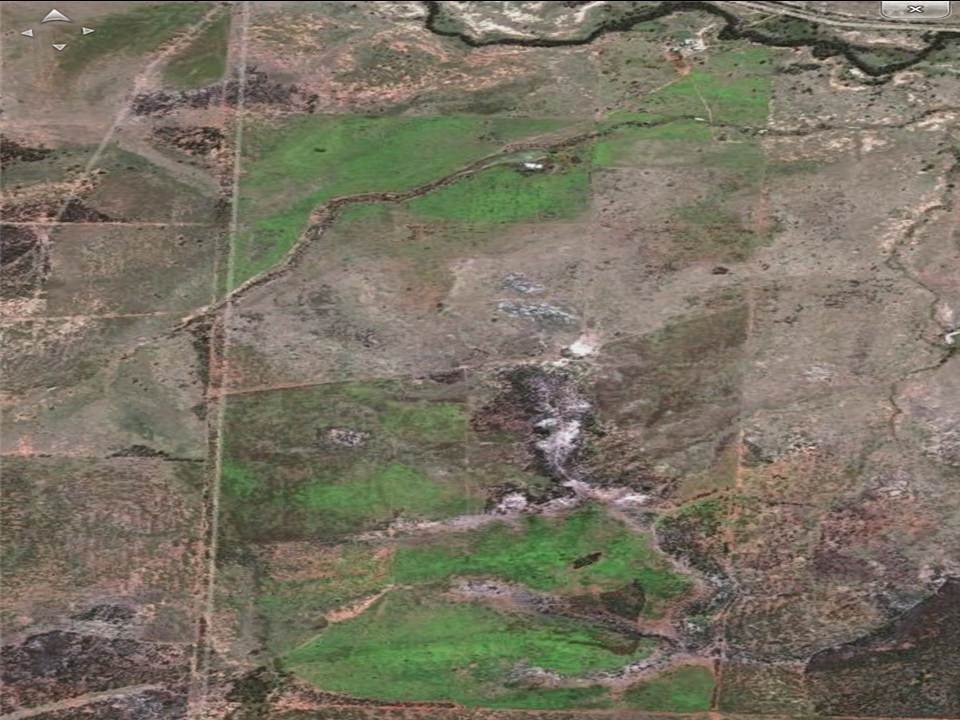
Until a few weeks ago we did not know that this map existed. Our eldest son was doing an assignment at school and he found the map. As you can see it clearly shows what’s happening with the ground cover and the moisture retention.

Other things that we have done to increase our profitability have been courses such as

  • KLR Marketing
  • Low Stress Stock Handling
  • Advanced Stock Movement and Dog School

One of the courses that we have been attending for the past 4 years is the Livestock Movement course which introduces the working dog into the enterprise. We have learnt so much form these courses and implementing the strategies, has made such a difference to our bottom line that we have fallen in love with the working dog an now have our own registered stud “Dunyellan Working dogs” and have been training and breeding kelpies and collies for sale as  a hobby. Like we needed something else to do.

Slide12

So, the big question is, are we there yet, have we achieved our dream? Well not quite, with everything that we have implemented we are not quite viable, but are pretty close. We do realise that we need to have a larger scale, however with what we know now, we definitely know it’s not about how much land you own but what you can do with it.

Slide13

Bruce and I have always built our lives on goals and trying to work out in what direction we need to go next, which is the most beneficial to our lives and our business. We know that it does not matter where you are today in this state of your lives or business because that is only a temporary indicator.

This conference is helping to provide the tools for you to take the clay of your life in your hands and mould it to your dreams. Just like moulding real clay, it’s not about the results but the process of the moulding that counts. Look and speak in the direction that you want to be and never look back.


Without these opportunities and courses we would not be where we are today. So, thank-you to MDLA and QMDC for allowing us to move our business forward.


Next Gen Eco Champions fostering life long partnerships with farmers

I have the pleasure of working with Art4Agriculture to help train a team of 5 young natural resource management professionals from Southern Rivers region of NSW. They will be trained alongside the Young Farming Champions to develop leadership and communication skills and become local faces of sustainable primary production and natural resource management.

They will also work with Young Farmer Champions to present Archibull Prize activities in 15 schools throughout the region and work with the students to explore the economic, environmental and social challenges of sustainable agriculture and biodiversity conservation activities through the ‘Archibull Prize‘ competition.

As part of the project the 5 Young Eco Champions are also paired with 5 farmers to plan and help undertake natural resource management activities on the farmers’ properties. The aim of this component of the project is to help them better understand the diversity of land managers and their priorities and to work side by side with land managers to deliver healthy ecosystem outcomes

Young Eco Champion Renae Riviere recently visited the property of the landholder she is working with.  Renae will be sharing her journey with the readers of my blog. I am confident you will enjoy seeing her progress and outcomes just as much as me  …

IMG_7614

Renae checking out some of the revegation work the farmer has undertaken along the river bank

Today I visited the property I will be working on as part of the Young Eco Champions program. The property is about 36ha and it situated in prime dairy country in Jamberoo, NSW. The property is owned by an absentee landholder who lived on the farm for some years, but for various reasons has since moved closer to her workplace.

However she is highly aware of the need for and value of having productive agricultural land in the region conjunction with having a sustainable natural ecosystem.

IMG_7640

The property has great views and backs on to a number of dairy farms in the region

The property has remnants of Dry Rainforest flanking the driveway up to the house, but the understorey is dominated by lantana and wild tobacco, which will need to be systematically removed and replaced with local native rainforest species.

IMG_7627

Lantana and Tobacco Bush hold up large areas of the hillside and careful planning will need to be undertaken to ensure their removal does not encourage erosion in major rainfall events

IMG_7631

The next door neighbour, another lifestyle farmers ( fenced area to the right) also has significant weeds of national significance along the boundary fence

The landholder is balancing the two by leasing the land to a neighbouring dairy farmer who uses it to graze their young stock  as well as undertaking a bush regeneration projects in the rainforest with the help of funding from Southern Rivers CMA and support from Landcare Illawarra.

P1020382

Dairy heifers enjoy the lush pasture growing on the property 

P1020383

The farmer has already fenced of the waterways and put in a series of water troughs

The project I am working on will be carried out by an experienced bush regenerator and teams of volunteers from Conservation Volunteers Australia who will assist at major planting events.

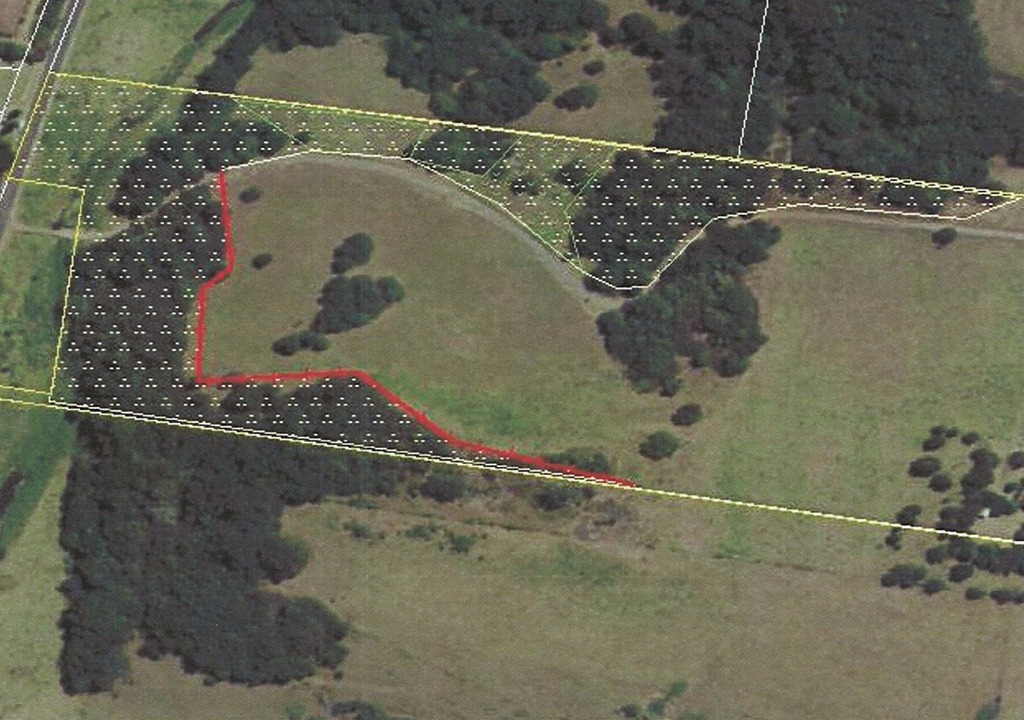
Map

We have taken on a big pretty task as you can see from the map with the project area marked in yellow and the area we will be fencing in red

The project area fronts the road, so will be a great example to other landholders in the area of how an environmental rehabilitation project and a working dairy farm can exist side by side. As an added bonus every time the landholder drives up her driveway, she’ll be reminded of what a positive and lasting impact she has had on the biodiversity of her local environment.

This is a very exciting project and I can’t wait to sink my teeth into it! As well as coordinating the teams of volunteers, I will be writing pre and post project case studies, I’ll be making a video; interviewing the bush regenerator, the farmer who leases the property as well as the property owner. I’ll also be taking lots of photos along the way so that you can all see what great progress we make!