Russian latte–opening the farmgate has many advantages

We have been opening our farm gate to international delegations for over ten years.

There is no denying hosting visitors to your farm is a lot of work. It can also be very rewarding and enlightening

I grew up a country town in NSW. I met the first person who couldn’t speak English when I was ten. I was fascinated by the new girl at our school who was Italian and didn’t speak one word of English. How brave was she. We didn’t mean to but I am pretty sure we all made her feel like an alien.

I learnt French at school so was very comfortable travelling to France when I went overseas but I must admit sadly I have favoured visits to overseas countries where the majority of people speak English.

So hosting delegations of farmers who speak no English is quite an eye opening learning experience. Whilst they always come with a translator invariably the translator knows little about farming.

IMG_6585

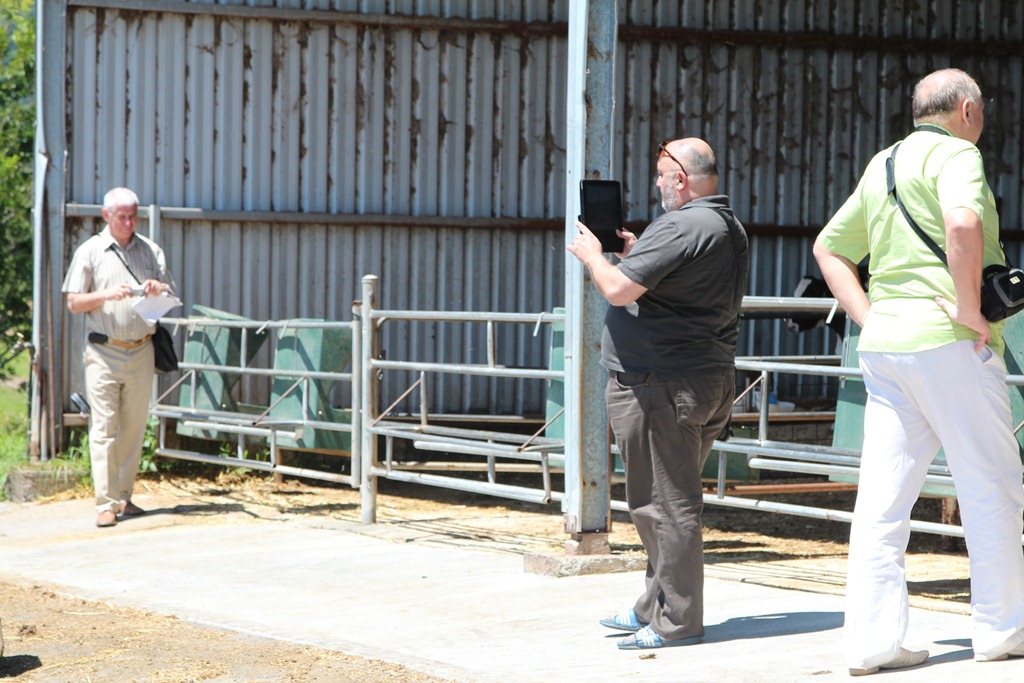
Dimitry the translator knew little about farming but he made up for that with lots of personality and good humour

The farmers always take loIMG_6702ts of notes

f

take hundred of pictures

IMG_6718

not only video cameras but and Ipads as well

Ipad

and ask a lot of questions

IMG_6637

and like all farmers love big pieces of machinery

IMG_6727

and love to share their farming stories and this weeks visitors from Russia were no different.

IMG_6784

Our consultant Dr Neil Moss was on hand to explain the technical details

Come to think of it I don’t think I have meet a Russian before and these farmers where so Russian. Why was I so flabbergasted when the bottles of vodka were bought out for morning team

Russian Latte 2

There was vodka for the Russian Lattes

IMG_6749

Straight vodka and vodka on the rocks

Russian Birthday Boy

Russian and Aussie icons go down well together

This Russian delegation was from the Volgograd (formerly Stalingrad) region and they were very proud of their heritage presenting me with a replica of the famous Motherland Calls statue.

IMG_7018

The history of this statue is fascinating. Briefly in 1967, the Soviet Union dedicated a towering monument to one of its great World War II triumphs. The Motherland Calls stands 170 ft., hoisting a sword to the sky that measures another 108 ft. 200 steps lead to the base of the statue to commemorate the 200 day battle of Stalingrad where the Red Army broke a German siege, only to surround and defeat the invading army. Motherland is not fixed to her base, though, and seeping groundwater has caused the plinth to lean nearly eight inches.

IMG_6860

I also received a bottle of Russia’s finest and I have since had a few Cosmopolitans to remind me of our new Russian friends

images

салют

Two way conversations are the key

As anyone who knows me will tell you I have very strong opinions about the way forward for sustainable agriculture.

Today my post reflects on the importance of both talking and listening.

Sadly Australia is complacent about the challenges to food security.  There is a lack of appreciation by society in general of the interdependence of environment, agriculture, food and health.

However if we are to progress and fuel the mushrooming food needs of the cities while meeting the community’s expectations for environmental sustainability and animal well being, then both rural and urban communities must have greater mutual empathy and respect.

This I believe is the real challenge facing farmers in the immediate future – how do we fix it?

As I see it we can do one of two things

We (farmers) can sit back and lament that we are victims or we can actively acknowledge that farmers are business people selling a product and successful businesses recognise marketing is the strategic part of doing business.

Marketing doesn’t mean every farmer needs to write a blog, join Twitter or Facebook it simply means being customer focused. This means you have to understand your customer and their values and your business has to BE the image you want your customer to see.

Every sector of the food system whether that be farmers, manufactures, branded food companies, supermarkets or restaurants is under ever increasing pressure to demonstrate they are operating in a way that is consistent with stakeholder values and expectations. Farmers cannot expect to be exempted from this scrutiny just because we grow the food.

Businesses are built on relationships. This means we (farmers) have to get out there in our communities and start having two way conversations with our customers

Excitingly I know that once farmers embrace the concept they will discover like me that it can be very rewarding talking to your customers. They are interested and they do care.

There are so many ways farmers can share their stories. This one is very quirky and I just love it. Check it out you will too

Cobargo Dairy Farmer Stephanie Tarlinton shares her story via YouTube

Fascinating facts about cows

Now here is a quirky fact you may not know


Dairy cows ( Bos Taurus ) only sweat through their noses. 

As dairy cows perspire at only 10 per cent of the human rate we have to help them maintain a comfortable body temperature in the hotter summer months.

tonguing

Cattle dissipate heat primarily through breathing. That is why during the summer months cows’ tongues may be hanging out of their mouths. This is an attempt to increase the volume of air that passes through the airways, maximizing the exchange of heat with the environment.

IMG_5171

And they have this very quirky way of wiping the sweat off their noses

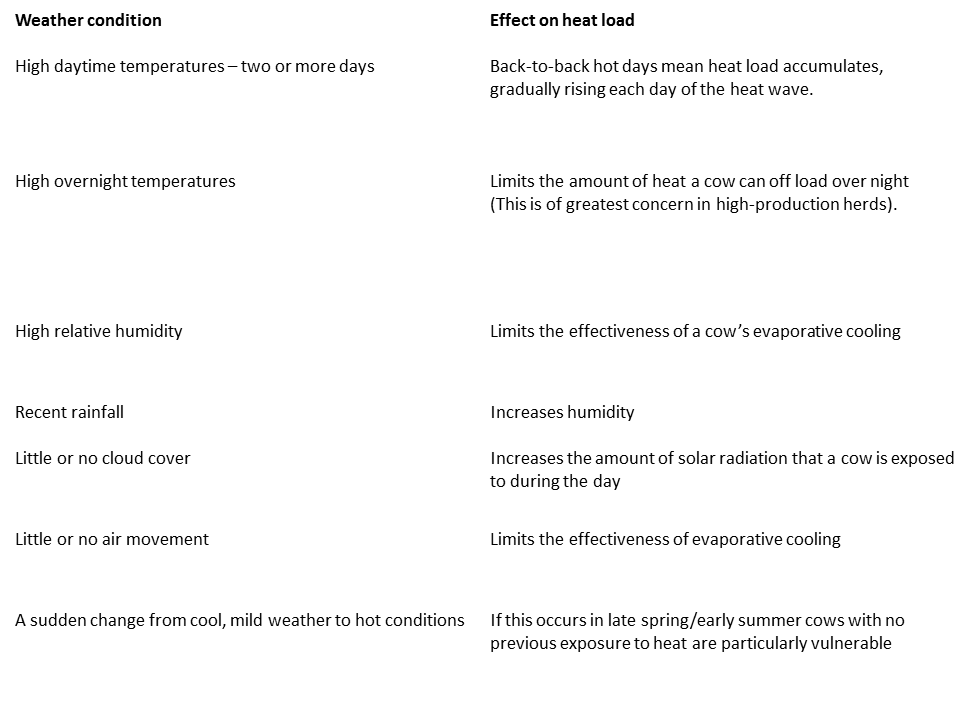
To reduce the levels of cow heat stress the trick is to be constantly aware of the  weather and what is likely to be coming.

For example a combination of the following can act as a warning

Slide1

http://www.coolcows.com.au/

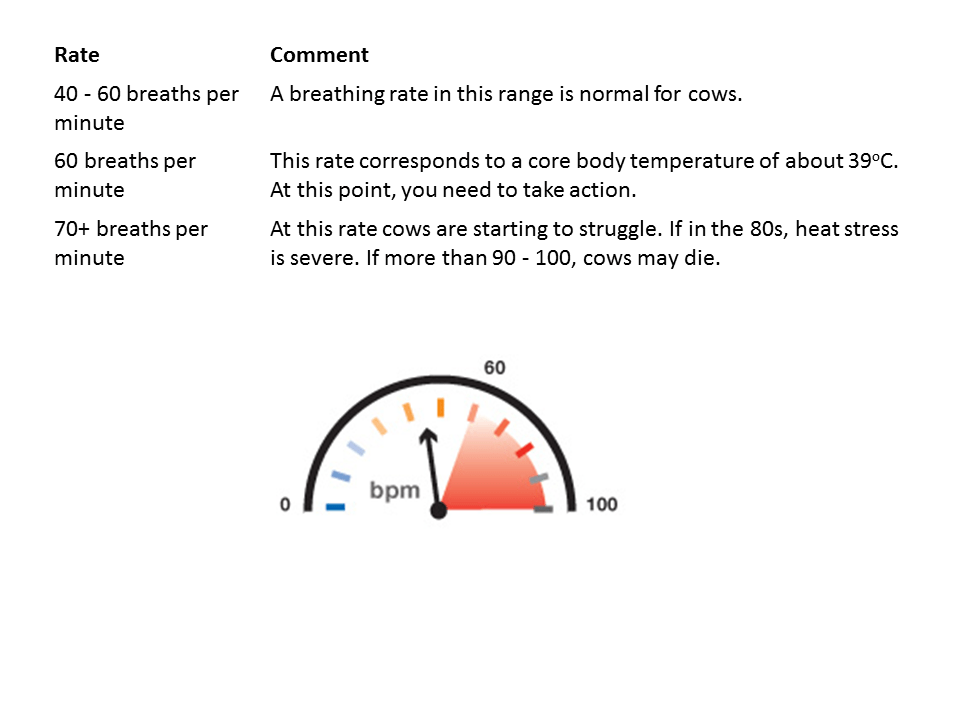
The most useful and practical way to determine how your cows are actually coping with the prevailing conditions and managing their heat load is to check their breathing rate.

Slide2

http://www.coolcows.com.au/

Holsteins being black and white have the added burden that black cows feel the heat more and seem to attract more flies that whiter cows. Whereas white cows will suffer sunburn.

IMG_4855

Flies seem to more prevalent on black cows

IMG_4779

Whilst this much whiter cow sitting next to her didn’t seem to be at all troubled by flies

We have the added complication of the home farm being very steep which means the   the cows require extra energy provided via a higher feed intake to walk up and down the hills. Metabolising this extra feed generates more heat aggravating any extra heat stress being incurred from the weather.

IMG_4524

The cows are in paddock 3 this week between the morning and the noon milking.

IMG_3119

Like this paddock it has a 5 to 6 gradient. That’s almost mountain goat terrain

IMG_4588

And they traverse the hills like mountain goats on the walk home 

IMG_4599

Udders full of milk prior to midday milking

On top of this our cows already have high feed intake because they produce a lot of milk so it goes with out saying higher milk production cows will begin experiencing heat stress before lower producing or dry cows (cows not lactating)

Okay so what do you do?

With wise advice from our nutritionist Dr Neil Moss we adjust the feed by packing the nutrients into smaller volumes of feed that we feed in the dairy.

IMG_4185

Our cows get fed a mixture of grains and vitamins and mineral supplements three times daily in the dairy. 

On hot days, we put the cows in paddocks where they have access to adequate amounts of shade.

IMG_4633

And you need to keep your eyes wide open for the ones in the bushes

High producing cows will often drink 50 per cent more water on a hot day so again it goes without saying they must have access to good quality, cool drinking water

IMG_4298

Big troughs and lots of them.

IMG_4341

Allowing the cows to take their time their time walking backwards and forwards from the dairy is always a high priority

IMG_4714

Cows don’t seem to like hot concrete and will avoid it if the can

Milking three times daily makes it tricky too and our cows are walking backwards and forwards to the dairy during the hottest part of the day. Whilst its hard to modify the times of milking we normally start early ( 4am) so that milking is completed early in the morning before it gets too hot. IMG_5334

Early starts mean the cows get to the paddock before it gets too hot

We keep the cows close to the dairy for the midday milking and the night time milking (8am) is in the cooler part of the evening. Research says during hot weather,cows prefer to eat at night so we pick the paddock with the highest quality feed for the night feed.

Then we get to the fun part. We have sprinklers set up in the milking yard to cool the cows while they wait to be milked and large fans in the milking shed which helps keep both the people and cows a lot cooler

IMG_3730

Cows love to stand under the sprinklers whilst they wait to get milked

IMG_5763

The dairy is also protected from the hot sun by two huge Morton Bay figs

Its a challenge but we get better at it every year

For those who like the science – courtesy of Dr Moss

PHYSIOLOGICAL RESPONSES TO HEAT STRESS
Heat stress induces a number of physiological responses by the cow in an attempt to keep body temperatures within normal limits. The following are some of the physiological changes occurring in the cow as heat stress conditions are incurred:

  1. Respiration rates increase and may reach the stage of panting. In this attempt to increase evaporative cooling, increased amounts of CO2 are exhaled resulting an a decrease in H2CO3 and an increase in blood pH. In response to the decrease in blood pH, the kidney increases resorption of H+ and more HCO3– and cations, primarily sodium, are excreted in the urine.
  2. Heat stressed cows lose two thirds of their evaporative water loss by sweating and one third by panting. The maximum sweat loss at 95° F is estimated to be 150g/m2 of body surface per hour. Cows lose potassium rather than sodium through sweating.
  3. Reticulo-rumen motility and overall rate of digesta passage is decreased during heat stress. There also is a change in rumen fermentation with less total volatile fatty acids produced and an increase in the molar percent of acetate.
  4. Blood flow to the digestive tract and other internal tissues is decreased and flow to the skin surface is increased
  5. Urine volume generally increases

WINNING DAIRY ENTRIES ANNOUNCED


Recognising all food fibre industries share common ground we have designed the  Archibull Prize as a cross industry partnership.

This year we showcased grains, beef, sheep, wool, dairy and the egg industry.

There are some superb dairy entries with Model Farms High School coming second overall.

This post is a tribute to all the schools who studied the dairy industry and showcases the winning dairy entries.

A special thank you to our Young Dairy Farming Champions Emma Visser, Erin Lake Stephanie Tarlinton, and Naomi Marks. You are all absolute stars

By the way just to reinforce that this month alone Emma has won her section of the Heywire competition and Naomi has been named Ms Dorrigo Showgirl !!!!!!!


THE ARCHIBULL PRIZE 2011 HONOUR ROLL

Archibull Prize  2011

Runner Up

Model Farms High School

Model Farms


Secondary School Winner

Best Blog

Model Farms High School
(Dairy Industry)


Secondary School Winner

Best PowerPoint
Model Farms High School
(Dairy Industry)


Primary School Winner

Best Video

Schofield Primary School
(Dairy Industry)


Technology Award of Excellence

Windsor Public School


The Archibull Prize was developed with the support of the Department of Agriculture Fisheries and Forestry, Woolworths Ltd, Rural Industries Research and Development Corporation, NSW Department of Primary Industries, LandLearn NSW and Hawkesbury Harvest.


Want to join the Archibull Prize Team in 2012?

Opportunities are available for other organisations who share the same passion and vision as we do to be part of the Archibull Prize 2012

For more information please contact
National Program Director
Lynne Strong
105 Clover Hill Rd
Jamberoo NSW 2533
Phone 02 42 360 309
Mobile 0412 428 334
Email: lynnestrong@art4agriculture.com.au
Web: www.art4agriculture.com.au

Join the growing list of supporting partners for 2012

AND THE WINNER IS

My family has been farming for 180 years. 180 of great farming stories waiting to be told. But how, but where and to whom. My family aren’t alone farmers across Australia have great stories to tell.  So I decided to fill this gap and what better audience than our future, our school students, the next generation of consumers, decision makers and our workforce.

So Art4Agriculture was born. Our signature program is the Archibull Prize and now we have paired the Archibull Prize with the Young Farming Champions program which I hope will be my ongoing legacy.

IMG_2871

The Archibull Prize Awards and Exhibition Day is the highlight of the Art4Agriculture year 

It was yesterday and it was huge. Woolworths rolled out the red carpet and hosted the event. The Hon Katrina Hodgkinson not only presented the winners she spent considerable time viewing the artworks and talking to the students  

IMG_2470    

I love the Archibull Prize. Every entry gives me one of those ‘feel good’ moments.

It reminds me that young Australians are interested and positive about the future and they are filled with hope.

Don’t believe what you read in the papers – our school students are engaged, they are talented and they are truly inspiring!

And this competition proves it!

This year was second time we have rolled out the program in Western Sydney with 5 primary schools and 15 secondary schools participating.

20 bulls have made their way to the judging ring and today we found out which schools have triumphed in each of the categories and who is the Grand Champion Bull

IMG_2743

Once again it has been an outstanding success

I thought the entries last year were impressive – but the schools who participated this year have taken things to a whole new level.

  • We have some amazing examples of fine art
  • We have discovered digital technology we didn’t no existed
  • We have entries that have astounded the heads of the food and fibre industries our schools have showcased

World class is the only way to describe the efforts of the teachers and the student participants in the 2011 Archibull Prize

and the winners are ?

Announced by the Hon Katrina Hodgkinson Minister for Primary Industries and Small  Business

IMG_2681IMG_2684

Primary Winner

Secondary Winner

Artwork

Macarthur Anglican School

($250.00)

Caroline Chisholm College

($250.00)

Blog

Macarthur Anglican School

($250.00)

Model Farms High School

($250.00)

PowerPoint

St Michaels Catholic Primary School

($250.00)

Colo High School ($250.00)

Model Farms High School ($250.00)

Video

Schofield Primary School

($250.00)

Caroline Chisholm College

($250.00)

Overall 2012 Archibull Prize Winner

Caroline Chisholm College ($1,000.00)

“Moobiks Cube”

Artwork Award of Excellence

Hurlstone Agricultural High School

Quakers Hill High School

Richmond High School

Innovation in Technology Award of Excellence

Windsor Public School


See all the picture from the Awards and Exhibition Day on Flickr http://www.flickr.com/photos/art4agriculture/

There are so many ways to meet a farmer – Part 1

This week has been huge I have been everywhere but on farm ( hugs and kisses to the people who milk the cows. Thank god they don’t need to rely on me to wear that hat).

Yesterday was one of those blissful days where you come home elated (albeit very sunburnt. Note to self. Buy sunscreen for handbag)

What bought on this feeling of euphoria you ask? Well the answer to that is easy my sister Kerrie and I joined Jacqueline Weiley of Foodscape Tours on their South Coast Indulgence tour to Berry & Beyond.

Jacqueline Weiley is one of those wonderful people who not only wakes up everyday and says “I thank a farmer today” she spends her spare time spruiking regional farmers and produce far and wide in every way imaginable.

IMG_1733

Love your work Jac

Here is a little background from the Foodscape Tours website

With a shared passion for food and a friendship spanning over 17 years, Jacqueline and business partner Karen  launched Foodscape Tours in 2009 to acknowledge and celebrate regional food. Karen and her husband moved to Byron Bay in 2003 for a change of lifestyle. Karen saw an opportunity to leave a corporate marketing and communications career behind and follow one of her passions – food. She began working with a local food manufacturing company and soon became part of the growing Northern Rivers food industry.

Jacqueline began her marketing career working for a small consultancy offering marketing, public relations and distribution advice to gourmet food producers from Tasmania, igniting a life-long passion for food and quality produce. In 2009 she moved to the NSW South Coast to be closer to her family where she got to know the local producers. She soon discovered they were hungry to get involved with Foodscape Tours on the South Coast.

Since Jacqueline moved back to South Coast ( she still has the job that pays the bills in Sydney) I have had the absolute delight of working with her as part of  the South Coast Harvest Experience and 100 Mile Challengeteams

Kerrie and I were met in Gerringong at 8.30 am by Jac and her gorgeous dad Gordon who drives the bus

Our first port of call was to be the Berry Tea Shop where we sampled artisan teas in one of Berry’s most beautiful specialty retail stores

Owners Paulina and Cliff Collier say “Tea brings people together and has a beautiful sense of warmth and hospitality. It is something you can sit down with and enjoy with friends. There is also an important ritual around it – you are boiling the kettle, putting the leaves in the pot and letting it steep and, in our busy lives, it is something that brings you back to the present, even if just for 10 minutes of your day. And it’s great for your health – we should all drink to that!”

IMG_1671

Kerrie says I will drink to that

IMG_1678

Not only tea but every kind of tea pot and tea cup you could ever imagine

IMG_1677

Christmas pudding tea cosies to boot

IMG_1695

MMMMh interesting imagery on this tea pot

IMG_1693

and Cliff produced scones to die for

IMG_1685

Just ask Kerrie ( and I had two)

IMG_1701

Are you really buying all those things Kerrie?

IMG_1702

“Yes she is” says Paulina

IMG_1703

“Its Christmas and my friends and family deserve the best of the best” says Kerrie

Joining us on our Foodscape Tour was Penny Baker the new editor of South Coast Style Magazineand photographer Philip Atkinson.

How excited was I to be out and about with my new Canon camera and 70-300mm zoom lens ( about which I know nothing about both) and get to watch an expert photographer in action

IMG_1806

Kerrie and Jac with Penny and Philip from South Coast Style Magazine share tales of the Shoalhaven River with Neil from Riverside Strawberries 

Next stop was South Coast Providores. It was great to catch up with the dynamic duo that is Carole Rutta and Ian Grey of South Coast Providores. Ian and Carole have a “local” philosophy on food and source over 85% of their ingredients from local farmers and growers. They also sell local produce every Friday at their “Locavore Friday” market.

Carole also played a key role in the bringing the South Coast Harvest Experience to our region and she and Ian are another great example of the exciting sea changers who are moving to our region and using their considerable talents to promote local food and the people who grow it

View albumView albumView albumView albumView album

Kerrie’s friends are going to shout with glee when they see the South Coast Providores delicacies she bought for them and mine are going to tuck into roasted beetroot and red wine relish when they drop by for Christmas cheer and cheese

We then jumped back on the bus and took the road to Terrara where we would meet the first of the local producers Jo and Neil from Riverside Strawberries and Citrus.

But this story will have to wait until next time. First rule of blogging “keep your posts short and sweet” and you must admit this post had lots of sweets on offer

For information on Foodscape Tours contact. (I feel some gift vouchers coming on)

Jacqueline Weiley
Foodscape Tours

1300 502 100  |  0409 123 553  |  www.foodscapetours.com.au  |  www.facebook.com/foodscapetours
Members of The Hawkesbury Harvest – South Coast Harvest Experience & Northern Rivers Food

Hello World, Welcome to my world

My name is Lynne Strong and I am a woman with many, many hats. Some I wear better than others I readily admit.

The one I wear most proudly though is my farmer hat. I will be the first to admit it isn’t a hat that I saw myself wearing as a little girl.

NickLynneMichaelStrong3

I grew up on a farm and even though I enjoyed being hands on in the day to day running of the farm and the lifestyle that comes with it the idea of being a farmer was most definitely not on my list of top 10 professions.

I farm today because the people I most care about in the world farm and they are in it for the long haul.

MichaelNickStrong1

Farming today is no walk in the park. Feeding, clothing and housing the world now and in the next 50 years is going to require an extraordinary effort. This means we need extraordinary people to take up the challenge.  My husband Michael, my son Nick and our farm team (and our cows) have put their hands up to take on the challenge and I want to work side by side with these extraordinary people.

So why write a blog. Well my family have been farming in the Jamberoo Valley on the South Coast of New South Wales since 1831 (and in Ireland and Scotland probably for centuries before that).  That is 7 generations of farming families and 180 years of blood sweat, tears, passion and commitment that have gone into what is now producing milk for 50,000 Australians everyday

That’s 180 years of great stories waiting to be told. And I knew from my interactions with our friends and neighbours that the community wanted to hear those stories.

They just needed the right vehicle. So Art4Agriculture was conceived and Art4Agriculuture has its own entire wardrobe of hats.

But people keep telling me there was still a gap missing, we need more farmers to share their stories to help provide the community with real farmers they can relate to.

Writing a blog is indeed a great way to open the door to our farms, share our ups and downs, the frustrations and challenges, the passion and commitment but most of all show the community that the faith they have in Australian farm produce is warranted.

I am writing this blog to join other inspiring farmers who are opening thier farmgates and help inspire other farming men and women to share their stories. To help show them the community does love farmers, that they do want to hear our stories but they maybe a bit concerned about modern farming practices and whether the way we farm today fits into their rural idyll.

Lets not forget farmers are people and not all people are perfect but there is a whole nation of Australian farmers who get up everyday and say “today I want to move one step closer to being being a perfect farmer”.

What is the definition of perfect farming? That’s the challenge – that’s the two way conversation I would like to have with my readers.

I will put this one out there as a definition this morning “We believe that responsible farming is not only about ‘doing the right thing’ but makes sense – for our animals, our landscape, our people and our communities”.

So lets start the conversation I invite my readers to write me a mission statement for their “perfect” farm