Agriculture spawns its own fringe group

BTxD3ByCUAE9EaF

Sadly agriculture now has its own twitter fringe group, a very negative group that attacks anyone in agriculture who isn’t totally obsessed with Animals Australia and their demise.

Some of them have even gone to the trouble of setting up anonymous twitter accounts to become faceless trolls stalking those in the middle who have no interest in joining them in their vendetta.

The best way to handle these people is to do what agriculture should be doing with Animals Australia is not give them oxygen, don’t engage, let them wallow in their own self-absorbed world, let them play the victim and DON’T let them drain your energy. BLOCK THEM.

Like Animals Australia we won’t change these people, they are so self-absorbed they can’t see the damage they are doing to the agriculture brand, so don’t bother to try.

Instead we need to visibly support each other and show our urban consumer base the real agriculture. I salute all the people who, aren’t game to put their hands up for fear of being the butt of troll rage,yet take the time to DM support to the people who are. But it is imperative we are all visible and show these people that we, the current silent majority, want to be the change agriculture must have.

I also salute passionate people like Bess Gairns who writes from the heart  Advocating for AGvocaters

pizap.com13743392729321

Love this pix thanks for this one Krysteen  @bkmcelroy22

I would like to share some thoughts on leadership which I have adapted from this great post Leading a culture shift that I think are relevant to agriculture

Leadership

We see the evidence of leadership everywhere we go.

So what makes the difference?

People.

The way people see and engage with others. The way these leaders embrace and value people. For some leaders, people are an afterthought. For others, people are everything.

So How Do We Lead This Way?

Instead of telling people how to behave, they equip them how to think. It’s less about behaviour modification (which you can do for a pet), and more about “perspective transformation.” Team members gain a new perspective and can respond and act.

If we’re going to transform our teams, we must change the way we equip them. We must build a new DNA, a new culture on the team. This requires organic, not merely programmatic, changes.

Let me offer suggestions on some shifts leaders must make:

1. Teach team members how to think and perceive the world.

This sounds huge, but it can start small. Just begin to talk about how to look at people and goals. Talk about perspective. Illustrate how to think, not just what to think. If you can change the way people think, you can change the way they act.

2. Model the way and embody the values.

Organizational culture changes happen when leaders set examples for what they want from their teams and attach actions to their core values.

3. Surround yourself with other people that “get it.”

Seek out and find others that already embrace the kind of culture you wish to see in agriculture.

4. Cultivate small communities to tell stories.

Interaction and storytelling are contagious.

5. Align your values and objectives to reflect the new reality.

Celebrate these people. What gets rewarded gets repeated. Be sure that your core values and your objectives all reflect this new culture you’re putting in place. Alignment brings energy to people.

Finally in the words of Tom Peters

“Leaders don’t create followers, they create more leaders.”

BTW Great article from Colin Bettles here

and this wise advice from The Conversation – Personality differences: trolls and cyberstalkers aren’t the same

Farming is tough My thoughts on how to avoid the Valium

I have had a bit of Annus horribilis in 2013 and looking forward to my Annus mirabilis (Year of Wonder) in 2014.

Do You every feel like Bessie

Do you ever feel like Bessie ( thanks Brian)

I have survived my personal issues by throwing my energy into my professional life and in particular soaking up the bright minds I encounter beyond the farmgate in all of the diverse activities I now engage in. In particular I find the Young Farming Champions particularly invigorating

At home I find writing blogs posts very cathartic and it’s been a very tough week so you might have noticed a plethora of musings from my desk.

When suddenly I found I had no landline and no internet I thought I was going to have a serious meltdown. Mobile service is not great at times in paradise (fix my black spot Tony) and operating off my hotspot is always fraught with frustration

Instead of reaching for the Valium (just jesting) I have made a list of all of the things that are within my power to change that will help my wellbeing and begun ticking them off.

pizap.com13743392729321.jpg

This week I went to my doctor and started that list of tests I should have had 6 months ago (not smart when you have no phone and you are sweating on the results)

Whilst I was there I showed her my health and wellness bucket list and she is helping me work my way through it

Yesterday it was off to the dietician (they call themselves ‘Wellness Specialists” now)

So look out world it is the fit and ideal weight Lynne the world will be seeing sooner rather than later.

So what does that look like to me and this is all about me. I want to be proud of me; other people are irrelevant in this quest

Until I started winning a few awards I was always behind the camera so had to do a lot of searching for pix of me at my ideal weight and fitness. They were indeed hard to find and then I came across this one. clip_image002

OMG not only did I fit into size 11 jeans 10 years ago I had red hair. Yes to the size 11 jeans think I will leave the red hair off the list

I particularly like this photo because I have my arm around one of the most special people in my life Dr Neil Moss our farm consultant. Neil who has not only held our hand through the bleak years in the dairy industry, he supports all his clients at an unparalleled level through their darkest mental and physical challenges.

Read this great story on how Neil helped local dairy farmer Con Watts survive the devastation of the tier 2 milk pricing narrow minded strategy from Lion to combat the Down Down Down campaign by Coles here

My new ideal weight and health guru is Rebecca and of course she is tiny and super fit and wow is she interesting. I have a medical background which includes a fair amount of what I thought was good nutrition insights but I was quite amazed at the mindset change in this area since I left pharmacy

It’s all about portion size, high protein, low carbs and good fats. No counting every calories just healthy eating and quality not quantity exercise.

This means set the treadmill to incline and do the hard yards for half an hour rather than walking on the flat for an hour. So I can see why I looked like that ten years ago (before I broke my pelvis from a fall from the quad bike) and walked the hills of paradise.

What I find very interesting was the discussion we had on protein and how impressive eggs are.

clip_image004

My breakfast this morning.

Now thanks to Jamie Oliver – Woolworths have taken a very strong stance on caged eggs.

As farmer who has chooks as pets I know how hard it is to let them roam free range and not be wiped out by predators and I am very concerned about the viability of the egg industry and the affordability of this very important protein for Australians going forward.

So tomorrow I am go to share my thoughts ( internet allowing) on why I think this stance by Woolworths may be very naive

And of course milk was at the top of the list as the perfect healthy protein so tomorrow I will be whizzing up a breakfast smoothie

For lunch its the divine Dairy Farmers Thick and Creamy Yoghurt ( all good fat) and peaches,

Dairy Farmers Thick and Creamy

Which reminds me sadly no more Tamar Valley

God made a farmer and on the 8th day he said I help those who help themselves

In my post yesterday cheekily titled Shame on you Woolworths set to sell sex toys in the milk isle I talked about my dream for a new look agriculture that saw farmers level the supply chain playing field, working side by side with supply chain partners who showed each other equal respect and our farmers gaining the knowledge and skills sets to allow them to extract real value from supply chain. 

I don’t know how many farmers feel like me and I hope the fact that when I write a post that has a dig at Coles is 15 times more popular with my readers than a post that actually talks about working on real solutions to get farmers out of this nightmare paradigm where all the power lies at the top of the supply chain is not indicative of the lack of interest in my sector in driving real change

Whilst I might get disillusioned from time to time by lack of positive feedback, it wont stop me spending the rest of my days in paradise working towards my goal of supply chain equality driven by the farmers themselves not this energy wasting dream of white knights with silver bullets  

Farmers can laugh at themselves and we have all heard this joke

There was a man whose farm was located on the banks of a flood-swollen river.  As the water rose, a neighbour drove up in a Jeep, urging him to leave before the farm was flooded.

“Oh, no,” said the man confidently, “God will save me.”

The water rose higher, and the man was forced to move into the second story of the farmhouse.  A police boat soon came, and the officers called for the man to hurry and get into their boat.

“Oh, no, that won’t be necessary,” the man insisted.  “God will save me.”

Finally the house was completely engulfed in water, and a Coast Guard helicopter swooped in to rescue the man, now perched on the roof.  Again he refused.  Just then, a huge wave of water swept over the house, and the man drowned.

When he got to heaven, he stormed at the Lord, asking WHY God had let him die when his faith had been so strong.

“What do you mean?” asked the heavenly Father.  “I sent a Jeep, a boat, and a helicopter … and you wouldn’t budge!”

and we have all heard the phrase

“god helps those who help themselves”

Whether farmers like it or not its time we got with the program

This morning I am going to give farmers the best advice that I have ever been given

In the words of Steve Jobs

‘Don’t be trapped by dogma – that is, living with the results of other people’s thinking’,”

  • Shed the whingers. 
  • Shed the below the line thinkers.
  • Shed the people who only want to Coles and Woolworths bash.
  • Shed the people who cant talk about anything but fringe groups
  • Shed the people who think the world revolves around them and their problems
  • Most of all walk away from the victim triangle and shed the people who think you are their white knight

Instead

  • Surround yourself with people you can learn from.
  • People who give you energy.
  • People who genuinely want to drive change and are prepared to gain the skills sets and knowledge to make it happen 
  • People who genuinely support your vision and
  • Most importantly don’t be like me and wait 50 years to do it.

I know it can work and I know we have lots of farmers who think this way. We certainly have lots of highly visible young people who think this way. One great example I have the pleasure of working with is just an example of many. Celebrate them.

“For the creativity of individual creators to be celebrated, and to make a difference in the world, it has to be enthusiastically embraced by others,”

In this great article Professor Haslam (see below) poses the question of whether, if Mozart were alive today, he would be writing symphonies.

“It’s unlikely, and without a well-funded and publicly valorised group of classical musicians to nurture and encourage him, it’s probably more likely that he’d be writing jingles for laundry detergent,” he said.

An important finding from Professor Haslam’s research was that in order to get the best out of creative individuals, society needed to invest in the groups that made certain forms of creativity possible.

“Even Steve Jobs needed a group to treat his ideas seriously and to cultivate them,” Professor Haslam said.

“Indeed, it was precisely because people refused to be ‘trapped by the dogma of another person’s thinking’, that Jobs’ idea of the personal computer wasn’t dismissed as lunacy.”

My call to action.

Agriculture identify your young talent, engage them, nurture them and most importantly invest in them 


BTW –  Some food for thought for Australian dairy farmers in this opinion piece from TWT  Dairy industry needs to act now


Professor Haslam collaborated on the paper – The Collective Origins of Valued Originality: A Social Identity Approach to Creativity – with Dr Inma Adarves-Yorno from the University of Exeter as well as Professor Tom Postmes and Dr Lise Jans from the University of Groningen in the Netherlands.

Shame on you Woolworths set to sell sex toys in the milk isle

Newspapers pay people whose sole job is to come up with headings for news articles that will motivate people to buy newspapers. Woolworths latest foray into innovative fast moving consumer goods must be a dream come true for them. Despite the temptation to use the tongue in cheek clever line from Brian Dodd @bushboywhotweet that Woolworths maybe ‘artificially screwing dairy’ I wont go there in the name of good taste.

What I would like to do this morning is reflect on this article in The Conversation Worried about Coles and Woolworths – then look in the mirror  and in particular these comments from the author

The greatest public concern has been the treatment of Australian farmers, particularly since the introduction of ‘one dollar per litre’ milk. So we should not be surprised that the major supermarkets have moved to stock more local produce and to set up supply arrangements that clearly benefit local farmers.

When customers complain, even retail gorilla’s listen!

Coles and Woolworths behaviour, however, highlights the underlying source of their marketing and their market power. The customers.

The two supermarket giants reached their current positions because people choose to shop at them rather than the competitors. We may rail against the closure of a small retailer when Coles or Woolworths opens up nearby, but the real cause of the closure is, well, us! As consumers, we choose to buy from Coles and Woolworths rather than the retail alternatives. We may complain but the low prices, the product selection, the convenience or whatever else, draws us in to buy at the major supermarkets and, in so doing, we slowly but surely push the retail competitors out of the market.

This is not anti-competitive; it is the very nature of competition. Businesses who best serve customers win. But when we complain, we should look in the mirror. Because it is our choices as consumers that decide who wins and who loses in the retail wars.

Put simply, Coles and Woolworths have succeeded because they are so damn good at giving us what we want!

…………. The major supermarkets are no angels. But they do respond to customers’ demands. So if you want more small grocers, you have the answer. Shop at them. But do not call on the politicians to make that decision for you.

On my previous post Coles Show Some Respect the very wise Greg Mills commented

What I found interesting about the Coles presentations was the issues management cycle slide. Coles had a ‘process’ and they stuck to it. Farmer objections where just an ‘event’ in the cycle to be dealt with. Which makes me think about what is the farmer ‘process’ to deal with these and other consumer issues. I suspect that there may not be a ‘process’ to deal with these issues by farmers and the food system, but rather the response is simply a number of events..

While I may not agree with Cole’s tactics I have learnt from this presentation and their FOCUS – Follow One Course Until Successful. I thinks it a good thing that this presentations is out there and being talked about. I hope that it gets some discussion going about how to deal with issues in the longer term.

Greg is right and I will be blunt it is not just consumers who have to take responsibility for their actions and stop expecting the government to be their white knight. Its time for farmers and Australian agriculture to convert supply chains into value chains.

Its tough out there dealing with the big 2. Is there a better current example than the latest very sad case of How private labels helped bring down Tasmania’s Tamar Valley Dairy

This company make yogurt to die for. I love it. It is divine and it appears working with Coles may have been their downfall

As Associate Professor of Marketing at Melbourne Business School Mark Ritson says in his article on Tamar Valley Dairy in BRW .

…. while around 25 per cent of all grocery sales in this country are now accounted for by private labels, in dairy categories that figure is closer to 50 per cent.

Given this proportion, it would be almost impossible for a dairy producer like Tamar Valley to grow revenues without manufacturing private labels and they aren’t alone. Almost every major branded manufacturer in Australia now makes some private label products for retailers or is trying to get a contract to start. In the case of Tamar Valley the company had clearly become extraordinarily dependent on this kind of trade supplying Coles, Woolworths and Aldi with private label yoghurts. The scale of its dependence was revealed last year when Tamar Valley’s founder and managing director, Archie Matteo, acknowledged that around 40 per cent of the dairy’s planned growth was built on a single, newly signed contract to supply Coles with private label yoghurt.

Unfortunately, manufacturing private labels is a very tricky strategic business.Private labels depend on a winning combination of prices that are 25 per cent to 30 per cent less than their branded competition but which usually return at least the same profit per unit sold to the retailer. That means that although the volumes involved in a private label supplier contract are gigantic the margins on such products are extremely tight. The nature of supermarket negotiation also means that no matter what the initial agreed supply price, there will always be future discussions on reducing it further ….

The margin pressure on private labels also means that retailers are constantly on the lookout for alternative suppliers who can offer the same quality commodity product at a lower supply price. And as private label penetration grows, more and more companies are offering their excess capacity for exactly that purpose.

The other big problem with supplying private label is the strategic schizophrenia it creates at the heart of a branded manufacturer. Tamar Valley Diary, like any other branded producer, should have had several clear strategic priorities that drove their business. They should have been focused on understanding and responding to the tastes of Australian consumers. They should have been working on product innovations to propel their Tamar Valley brand past its rivals on the shelf. And, most important, it should have been investing in and building the Tamar Valley brand to build brand equity, create differentiation and protect its market share.

The problem with private label supply is that it runs counter to all these principles. Producing private labels means manufacturing large amounts of commodity product, at the lowest possible price, without any innovation or branding considerations It also means focusing on one or two giant customers (the supermarkets) rather than the ultimate consumer for the product (you and I). As private label supply becomes an increasingly important source of revenues for a company its switches focus from branded innovation to commodity production. Its brands consequently begin to wither and fail making the company more and more dependent on private label supply to stay afloat. But, as Tamar Valley Dairy learnt this week, that’s a very fickle business to depend upon.

It would be naive to suggest that any supplier should avoid any and all private label supply. But it would be equally naive to become as dependent as Tamar Valley Dairy to sustain your business. Any company that builds their business on significant proportions of private label supply is making an enormous gamble in my opinion.

Very smart man Mart Ritson. I  would love to sit around the table with him and a group of like minded farmers

In reality just how do we deliver the change that agriculture must have? For farmers this will mean working beyond traditional boundaries and challenging the conventional thinking of primary industries and individuals. It will require a paradigm shift in thinking and a collaborative re-allocation of resources and responsibilities amongst all stakeholders in the value chain.

It will require deploying agriculture’s young people into schools to build relationships with the next generation of consumers. It will need innovative and fun ways of engaging the next generation of consumers in considering the issues affecting sustainable food and fibre production.

I have set up Farming Ahead of the Curve to do just that with a a suite of programs, training and networking opportunities that will change the way farmers and consumers interact, increasing value across all sectors.

These programs will provide a supportive environment, professional development, access to inspiring leadership, first class mentoring and training.

The legacy of these programs will allow farmers of all ages to participate in, and extract greater value from the fibre to fabric and paddock to plate supply chain.

I don’t know about you but I have had enough of others defining my future for me. I say its time to take control and get my dignity back  and farm ahead of the curve

FAHOC_Logo_Hori_RGB_WEB

How can we meet community expectations if we don’t know what they are

Following up on my post The real story about Animal Abuse I am in this space at the moment because I am on two industry peak body committees whose role is to set policy to help achieve the best outcomes for farm animal well-being in this country.   

Yogurt is made from happy heathly cows

The federal government Department of Agriculture Fisheries and Forestry (DAFF) is currently in the process of working with stakeholders to develop Australian Standards and Guidelines for Welfare of Livestock

In this case the stakeholders are

  • government and non-government organisations
  • veterinary and community groups
  • animal industries
  • animal welfare groups, and
  • farmers and stock handlers

The development process has recently undergone an independent review by Price Waterhouse Cooper (PwC) and they have released their findings which can be found here

The Business Plan for the development of Australian Standards and Guidelines for
Welfare of Livestock states the following as the objective of the Standards and Guidelines:

… the national livestock welfare standards, with complementary
guidelines, provide welfare outcomes that meet community and
international expectations and reflect Australia’s position as a leader in
modern, sustainable and scientifically-based welfare practice
.

This objective includes a requirement for the Standards and Guidelines to meet
community expectations and what the review has found is there is currently a relatively low understanding, or agreement, on what these expectations are.

This gap according to PwC is apparently contributing greatly to the problems of conflicts within the process. Without a strong statement of objective, each party involved in the process has their own benchmark of what the Standards should be seeking to achieve – a common complaint from Animal Welfare organisations is that the Standards are not sufficiently ambitious and do not ‘raise the bar’. Conversely, industry supports the establishment of processes which reflect practicalities of agricultural business.

According to PwC and I couldn’t agree more that what is needed is greater articulation and consideration of the broader community expectations in this area, which are likely to be something of a balance between these two polarised viewpoints.

PwC go on to say this identified gap in understanding of community expectations should be addressed through focused social science research. Outcomes from this research can then be balanced with industry input and scientific knowledge on animal welfare matters.

Hooray to that I say.  For too long government and the food supply chain, that is farmers right through to retailers have been second guessing consumer images and perceptions of modern farming practices and getting bogged down by lunatic fringe highly vocal agenda driven campaigns

I am pleased to report Dr Heather Bray see previous post and the team at Adelaide University had received funding through the Australian Research Council to do this absolutely pivotal social research.

This ARC Linkage project LP 130100419 aims to

Porject Aims

and has the following specific objectives   

Objectives

with the following outcomes

Research from Translation

Some of the previous ARC Discovery Projects have used focus groups to explore consumer understandings of ‘food ethics’ and they found for example that categories (such as organic) are defined in various ways, if values are taken as key drivers of purchasing patterns.

So although ‘organic’ for example has a scientific definition, some consumers associate it primarily with nutrition, some with purity/natural products, some with sustainability, and some with elitism.

Hence as the research teams have found it is critical not just to ask what they think, but why they think that (associated values)

At an industry level I would also like to applaud the Sheep Meat Council and Meat and Livestock Australia for developing A producer’s guide to sheep husbandry practices which provides information from a range of research and on-farm experience that will enhance animal welfare and potentially improve production outcomes.

As NSW RSPCA Chief Inspector David O’Shannessy recently shared 99% of animal welfare issues are caused by ignorance not malice and the key to change is to raise awareness of, and commit to best practice education. Just like the community (over 60% of animal welfare complaints relate to companion dogs and horses) farmers often have wide ranging views on what is acceptable best practice

The Sheep Meat Council and MLA are setting the perfect example for industry by leading the way through education. Its is my understanding that the dairy industry in Western Australia is also heading down a similar path and I am very keen to hear from other livestock industries who are also moving in this direction.

It is pivotal that farmers have these resources available for their use and adaptation, and utilize numbers from credible sources in order to show consumers and animal welfare groups the true side of farming today.

It is also imperative that we communicate our commitment to do it better and better and encourage our farmers to reach out to their networks in local communities – business associates, neighbours, and friends to share our knowledge and set the record straight about our industry, our work, our goals and commitments, our challenges and our successes.

Doesn’t this gorgeous picture of sheep being moved to ‘higher ground” during the NSW flood sum it all up. Farmers do love and care for their animals  

890356-nsw-flooding

Great follow up blog by Milk Maid Marian One Woman’s Kindness is Another’s Cruelty

How the cows bring life to the landscape

I call my little piece of the world paradise and for good reason. If gives me great pleasure to wake up very early every morning and breathe it all in.

These days the wonder of it all starts to bring joy to my heart around 5.30am and I spend many mornings on my front verandah just trying to capture the sheer beauty of it all with my camera

This week I was reminded just how much the cows add a whole new dimension to the word ‘landscape’ 

Clover Hill Jamberoo IMG_6043

Whatever my legacy it will always give me great pride to have spent the last 35 years of my life enhancing and sustaining this very special part of the world.

And just to reinforce my point this incredible photo was taken (not by me) just ten minutes from the farm 

BUiXdc-CYAAvwyM

The Milky Way above the coast of Kiama

Water water everywhere. Just who are we kidding

This year we have been able to send Young Eco Champions as well as Young Farming Champions into schools as part of a Department of Agriculture Fisheries and Forestry supported Archibull Prize

This has been particularly rewarding for me as I know just how much our farm has benefited from working with natural resource management professionals and it has given me great joy to be able to partner our Young Farming Champions and the next generation of consumers and decision and policy makers (school students) with these bright young minds.

This slideshow requires JavaScript.

Clover Hill paired with Next Gen to look after the farm’s scarce natural resources

Whereas our Young Farming Champions have their individual food and fibre industries behind them our Young Eco Champions don’t have an umbrella organisation that supports them financially and/or provides them with the type of personal and professional development Art4Agriculture offers and it’s been mind-blowing for me to see how they have flourished under the Young Eco Champions program.

Going into schools the Young Eco Champions have discovered that the knowledge base of students about natural resource management varies widely from school to school from almost nothing to exceptional and seems dependent on the culture within the school with some primary schools in the Archibull Prize 2013 leading the way.

They have found in the main that urban schools have their heads around sustainability in the context of reducing personal carbon footprint through recycling, reduced waste etc. because that’s what is driven through a lot of local council initiatives and some of the students with a rural background understood weed management issues and why it is important to manage weeds however knowledge of what it takes to farm sustainably and wider catchment management issues where almost non-existent.

Last week I joined Young Eco Champion Megan Rowlatt who returned to one of her schools to conduct a bush regeneration workshop with the students.

This slideshow requires JavaScript.

Young Eco Champion Megan Rowlatt and students attacking the evil asparagus fern 

I was recently reminded just how important it is for us all to have a wider knowledge of what is happening to our scarce natural resources beyond our front fences when I came across this article Where the world’s running out of water, in one map by Brad Plumer in the Washington Post

Brad asks the question

And with the global population soaring past 7 billion, this is one of the biggest questions the world is now facing. Can better conservation practices and new technology enable farmers to keep feeding the planet without depleting its most important water resources?

Its pretty scary to know that approximately 1.7 billion people rely on aquifers that are rapidly being depleted and would take thousands of years to refill, according to the study in the journal Nature.

The report, “Water balance of global aquifers revealed by groundwater footprint,” identifies aquifers in the U.S., Mexico, Eastern Europe, the Middle East, India and China as crisis zones where groundwater resources and/or groundwater-dependent ecosystems are under threat because the use of water vastly exceeds the rate at which aquifers are being refilled by rain.

The underground reservoir in north-western India, for instance, would need 54 times more rainfall to replenish the water that’s currently being used by farmers and the local population.

In the map below, the blue areas mark where rain can replenish the amount of water being used by humans. Orange or red areas indicate places where people draw out more for irrigation and drinking water than rain can refill.

The grey areas show the extent of the “groundwater footprint” by representing how much water people are drawing from the aquifers compared with how much water each holds.

Water map

When we know Australia

  • is the driest inhabited continent on earth, with the least amount of water in rivers, the lowest run-off and the smallest area of permanent wetlands of all the continents.
  • and one third of the continent produces almost no run-off at all and Australia’s rainfall and stream-flow are the most variable in the world.

And then you see the big picture problem the world is facing due to an ever increasing scarcity of our precious natural resources its very rewarding to be able to work with and share our Young Farming Champions and our Young Eco Champions and their knowledge diversity and expertise with our school students

Its also very rewarding to be able to provide the schools they visit with the amazing resources our food and  fibre industries are creating to show how farmers are doing their bit and striving to do it better and inspiring the next generation to look beyond their front door and get actively involved as well

Examples of some great industry resources can be found on our web page here

In particular

Target 100 http://www.target100.com.au/Tips-resources

Cotton Australia Education Kit http://cottonaustralia.com.au/uploads/resources/Cotton_Australia_Education_Kit_-_Secondary.pdf

A Wool Growers Guide to Managing Streams and Creeks

http://www.wool.com/Content/en-GB/lww_Rivers_Managing-rivers-creeks-streams.pdf

Dont tell me the sky is the limit when there are footprints on the moon

Fear is at the root of so many barriers that women face. Fear of not being liked. Fear of making the wrong choice. Fear of drawing negative attention.  Fear of overreaching. Fear of being judged. Fear of failure. And the holy trinity of fear: the fear of being a bad mother/wife/daughter

Without fear, women can pursue professional success and personal fulfillment- and freely chose one, or other or both

What would you do if you weren’t afraid  – Sheryl Sandberg CFO Facebook

I am what is known as a big ideas person and sometimes I have a “big idea’ once a week and that’s a bit scary. Even I question my focus on a regular basis. Now it’s one thing to have a big idea it’s another thing entirely to bring it to fruition.

don't_tell_me_the-53100

Every now and then I have a big idea that my gut tells me is winner and some very smart people tells me it’s a winner – yet I continually question and get very frustrated by lack of belief in myself to take it beyond the big idea.

As it turns out it appears I stand beside far too many women who are doing the same

My good friend and mentor Victoria Taylor is currently reading Sheryl Sanberg’s book Lean In

Little bit of background See here

Thirty years after women became 50 percent of the college graduates in the United States, men still hold the vast majority of leadership positions in government and industry. This means that women’s voices are still not heard equally in the decisions that most affect our lives. In Lean In, Sheryl Sandberg examines why women’s progress in achieving leadership roles has stalled, explains the root causes, and offers compelling, common-sense solutions that can empower women to achieve their full potential.
Sandberg is the chief operating officer of Facebook and is ranked on Fortune’s list of the 50 Most Powerful Women in Business and as one of Time’s 100 Most Influential People in the World. In 2010, she gave an electrifying TEDTalk in which she described how women unintentionally hold themselves back in their careers. Her talk, which became a phenomenon and has been viewed more than two million times, encouraged women to “sit at the table,” seek challenges, take risks, and pursue their goals with gusto.
In Lean In, Sandberg digs deeper into these issues, combining personal anecdotes, hard data, and compelling research to cut through the layers of ambiguity and bias surrounding the lives and choices of working women. She recounts her own decisions, mistakes, and daily struggles to make the right choices for herself, her career, and her family. She provides practical advice on negotiation techniques, mentorship, and building a satisfying career, urging women to set boundaries and to abandon the myth of “having it all.”  She describes specific steps women can take to combine professional achievement with personal fulfilment and demonstrates how men can benefit by supporting women in the workplace and at home.
Written with both humour and wisdom, Sandberg’s book is an inspiring call to action and a blueprint for individual growth. Lean In is destined to change the conversation from what women can’t do to what they can.

That TedTalk

I just wonder how many women like me are afraid of success and just what will it take  to give us the courage to take that leap of faith and believe in ourselves.

Sheryl says it starts with 3 basic rules

  1. always take a seat at the table – no-one gets where they want to be by sitting on the sidelines
  2. Make your partner your partner – successful people have partners who share their vision or are divorced
  3. Don’t leave before you leave –  keep your foot on the gas pedal

So in my drive to achieve professional success and personal fulfilment I have made a start and downloaded Lean In on my iPad . Looking forward to Sheryl inspiring me to keep my foot on the gas pedal.

Don’t tell me the sky is the limit when there are footprints on the moon’  Paul Brandt

This one is for you John

I would like to dedicate this post to my father.

Who has two little girls he was always very proud ofKerrie and Lynne

Over the years those little girls have grown up and been flower girls

Lynne Strong Flowergirlls

and bridesmaids

Lynne John & Kerrie

and brides

Lynne & John

and had children of their own who were clones of their father

Nick and Mike Gran's 86

and grew up to make you even prouder

Nick and Michael Strong

Here’s to you John

Cotton opens the champagne bottle

oysterschampdaysm

There is no denying that farming is tough and getting tougher and plenty of people in agriculture have sad authentic experiences and stories to tell that remind us of this.

The problem is too often they are the only stories we’ve been telling for decades. Nobody wants to discount those stories, but it is imperative we put some balance in the equation by sharing the good news too.

So when I got a call from a newspaper yesterday wanting comment on what agriculture would like the next government to deliver I asked them to ring back as I wanted to give my answer a lot of thought and I am still thinking – more about that later.

One thing that worries me greatly that definitely needs fixing is, I believe agriculture in the main has forgotten how to celebrate success and we now have a culture where we have  thousands of silent farmers, too frightened to put their heads above the trenches.

There is one industry I have been interacting with over the last three years who have certainly bucked the trend and wow do they know how to celebrate their industry and the people in it and that is the Australian Cotton Industry

I recently had the opportunity to present Art4Agriculture to Australia’s cotton farmers at the Cotton Collective event in Narrabri

For those of you who like me (until recently) know very little about the cotton industry in Australia, cotton is grown mostly in Queensland and NSW

Cotton Production in Australia

Whilst Cotton has had a bit of a bad rap over the years I have discovered a number of things that have certainly opened my eyes

Cotton farmers see Cotton as an opportunity crop. By that I mean they grow it when there is plenty of water and cotton prices are good. When the moons don’t align they grow something else. In reality Cotton uses about the same amount of water as other summer crops and on top of this it is pretty drought and heat tolerant.

Almost all the cotton grown in Australia is genetically modified. Biotechnology has allowed the cotton plant to turn on its natural insecticide which has meant the industry has been able to reduce its chemical usage by around 90%. Some cotton farmers also use this awesome thing called integrated pest management where beneficial insects fend off the insect pests and they don’t need to spray their crops for bugs at all.

The Cotton Collective was an opportunity for Australian cotton farmers to catch up with the latest advances in the world of biotechnology and I must admit I was blown away by their knowledge

Now I did a science degree and whilst I admit I was fascinated to learn how and why medicines work when I see the squiggly diagrams/graphs et al that show the minute details my eyes just glaze over and that was okay for me because my role was to explain the science in a way that the non-scientific world could understand.

Cotton farmers on the other hand live and breathe this stuff and the questions they asked the scientists clearly showed there was extreme rigor in the system at farmer level

The Cotton Collective was also the place to celebrate the industry’s best and brightest and their rising best and brightest

I would love to share these exciting stories with you so you can celebrate them too

Lets starts with their young people

Meet Sophie Gulliver. Wow does this girl know how to frock up for a big occasion. Divine dress and even more impressive wow can she deliver a speech. This is a young girl going places fast  

Sophie Gulliver accepting her award

Here is just some of Sophie’s story.

After graduating from a Bachelor of Science in Agriculture degree at Sydney University in 2009 with First Class Honours and the University Medal, Sophie headed to the Darling Downs in Queensland where she started her cotton and agricultural career.
Sophie joined AgBiTech in 2011 as its Technical Specialist. Her role involves providing technical, extension and sales support for the company’s product range, management of the research and development program for new and existing products and quality control oversight at AgBiTech’s production facilities.

Sophie Gulliver in laboratory

Sophie’s main area of interest is the biology, ecology and management of the Heliothis caterpillar, the cotton industry’s number one insect pest. Sophie is involved in projects investigating new ways to control Heliothis and other devastating caterpillar pests, to meet a growing community and global desire for fewer pesticides.

“Australia leads the way in sustainable agriculture and I want to to ensure that our cotton growers have access to an
increasing range of tools that allow them to continue to grow profitable cotton crops for as long as possible,” Sophie said.

Like her friend Young Farming Champion Liz Lobsey, Sophie is also working with kids in schools

As part of the Gateway Schools to Agribusiness program, Sophie has developed the “Caterpillar Classroom” initiative, which distributes Heliothis rearing kits and provides online technical support and a discussion forum for participating teachers and students. The kits will be used in primary and secondary schools as a practical way to understand and enjoy science. She is also working on a website project called “Primary Roots” to encourage young people from both rural and urban backgrounds to consider careers in agriculture. The website provides an audio-visual snapshot of the diversity of
careers available within agriculture and demonstrates what current agricultural employees do on a day to day basis in a range of workplace settings (e.g. the field, laboratory or office).

sophie-gulliver

Please take the time and read more of Sophie’s story here

But it doesn’t stop there when you meet Glenn Rogan you can see why the average age of cotton farmers is 39. This is one exciting industry.

Glenn Rogan with cotton bales  

Glenn and Julianne Rogan and family won the 2013 Cotton Industry Awards for Innovative Grower of the Year! .

driglow-add

The Rogan family farms 2,760 hectares at “Benelong” St George, including 900 ha of irrigated cotton, gritting corn, sunflowers, wheat and mungbeans. The Rogans are great industry collaborators and innovators, growing long staple cottons for niche sustainability
markets.

Glenn is a visionary who saw an opportunity in linking his family’s story with the products that consumers purchase at retail
via “ingredient marketing”. Coupled with a point of difference, in growing a variety different to most growers, Glenn
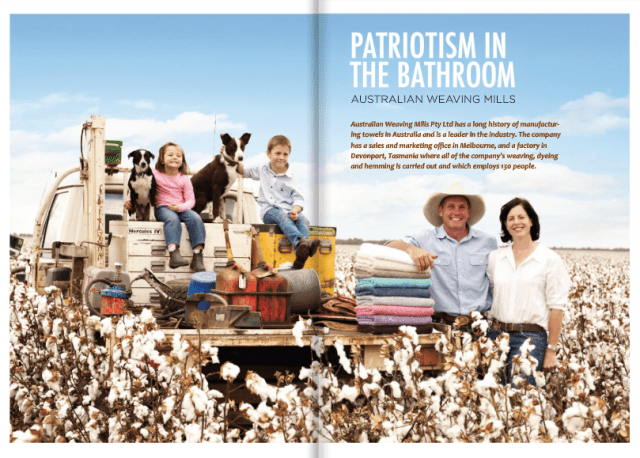
partnered with Australian Weaving Mills (AWM) who produce a line of towels using 100% Glenn’s Australian Super Cotton.
AWM has attached Glenn’s story to its DriGlo towel range, with swing tags, magazine articles, a website and in-store
appearances all helping to build brand awareness.

. You can read all about Glenn and his family  here

Then there is the character that is John (Cowboy) Cameron of “Kintyre” Bongeen, QLD

John Cameron accepting his award 01

John and Ros Cameron won the Cotton Grower of the Year award. They are dryland cotton farmers and this means all their cotton is rain-fed.

They have a big focus on looking after their soils

“Our soils are the most important asset in our dryland system. We’ve got one metre below the soil to work with and we
need to know exactly what’s going on at any point in time. Everything above the soil goes out the gate,” John said.

John had what he calls a light bulb moment in the early 90s when he was running out of
cash after a few lean years. He decided to spend $150 on a soil test rather than $30,000 on fertilisers that he wasn’t sure the soils needed. What followed was five years of no fertiliser costs and a practice that has held, and been improved upon to this day. Soil tests are conducted at regular intervals across the farm, and nutrients added only when and if
they’re needed.

You can read John and Ros’ awards case study here 

These are all great stories worth telling and certainly worth celebrating and you can read all about the stars these people just pipped at the post here

Agriculture does have great stories to tell. What can the next government do to ensure they become the norm – its time for this little black duck to give this some more serious thought