#Strongwomen. "I write about the power of trying, because I want to be okay with failing. I write about generosity because I battle selfishness. I write about joy because I know sorrow. I write about faith because I almost lost mine, and I know what it is to be broken and in need of redemption. I write about gratitude because I am thankful – for all of it." Kristin Armstrong
Lately, I’ve found myself on a learning journey. Watching what’s happening in the world, and even in my own backyard, I keep coming back to the same question: How do our governments keep getting us into these messes? Conflicts that last for decades, policies that make enemies out of neighbours, and a constant sense that ordinary people are dragged into fights they didn’t start and don’t want.
So I started digging, and here’s what I’ve found. While everyday people often find ways to move on and connect, their governments often don’t. And that disconnect is costing us all.
The broader community don’t hold onto old grudges. They care about safety, family, work and being able to live in peace. They’re not the ones calling for wars or enforcing sanctions. In fact, across the globe, people are reaching across national and ideological lines to find common ground.
A young Iranian might admire Israeli medical tech. A Cuban musician collaborates with an American on YouTube. Indians and Pakistanis laugh together on social media. North and South Koreans cry when they’re briefly allowed to see long-lost relatives. These aren’t enemies. They’re people who recognise shared humanity.
Governments operate differently. Conflict can serve political goals. It creates a clear enemy. It unites people through fear. And it often justifies repression, spending or staying in power.
Sometimes it’s about ideology. For example, Iran’s government positions itself as morally opposed to Israel. China defines itself partly through its claim over Taiwan. And even in democracies, strong anti-enemy rhetoric can win votes.
Letting go of an old rivalry means rethinking identity, power and control. That’s not something governments do easily.
While politicians trade threats and play long games, it’s everyday people who suffer.
Civilians are the ones displaced, bombed, or cut off by sanctions. Families are split by borders. Passports become tools of isolation. Trade stops. Opportunities dry up. The people who want peace often have the least power to make it happen.
Despite all this, i think change is possible. In many cases, people-to-people diplomacy and cultural connection can begin to soften political hard lines. Civil society organisations, global communities, and public sentiment can create pressure for peace.
It may be slow, but history shows that citizen voices can grow too loud for governments to ignore.
“Governments start conflicts in suits and end them in silence. But it’s everyday people who pay the cost — and often hold the key to peace.”
In our community, conversations about the weather are more than just small talk. They reflect a lived experience deeply rooted in a landscape known for its lush greenery and, notably, its abundant rainfall which provides our dairy industry with rainfed pastures that have the capacity to run 6 cows to the hectare compared to NSW average stocking rate of 1.5 cows/hectare ( see footnote)
For years, we’ve shared stories about the skies above our village, often remarking on the persistent rain that seems to set our area apart. But how much of this is perception, and how much is based on actual data?
Recently, I had the opportunity to explore this question through an analysis of local rainfall data spanning several decades, from 1977 to the present. This data, covering areas like Clover Hill, 47 Nuninuna, 288 Nuninuna, East Saddleback, and 89 Fountaindale Rd, has provided a fascinating glimpse into the climatic heartbeat of our region.
What the Data Tells Us
The analysis reveals a complex portrait of our local climate, confirming some long-held beliefs while challenging others. Yes, our area does receive a significant amount of rainfall compared to surrounding regions—a fact now supported by data rather than just anecdote. But the story doesn’t end there. The data also shows variability in rainfall patterns across different locations, highlighting the microclimates within our larger ecosystem.
Our recent deep dive into the data added another layer of insight, particularly concerning the frequency of extreme rainfall years. By analysing the mean yearly rainfall across all locations, we were able to identify trends and variances that speak to the heart of our community’s experiences with weather. Our findings suggest that while there are indeed years of significantly high rainfall, the frequency of these extreme events has not shown a clear increasing trend over the period covered by our data. Please note anecdotally it would appear there is an increase in daily extreme weather events
Implications for Our Community
The importance of understanding these rainfall patterns extends far beyond mere curiosity. Agriculture, water management, flood planning, and biodiversity conservation are all deeply impacted by the nuances of our weather. By quantifying the ebb and flow of our rainfall, we can make more informed decisions that affect everything from crop planting schedules to infrastructure development.
Looking Ahead
As we face the challenges and opportunities presented by climate change, the need for ongoing monitoring and analysis becomes increasingly clear. The data we have today lays a foundation for future research, enabling us to track trends, anticipate changes, and adapt our practices accordingly.
The Power of Collaboration
This journey into our local climate data underscores the value of collaborative effort. By bringing together community members, policymakers, environmental researchers, and local media, we can harness the power of this information to foster sustainability and resilience in the face of a changing climate.
A Call to Action
I invite you to join in this conversation. Whether you’re a farmer, a policy maker, an environmental enthusiast, or simply a resident who loves this region, your perspective is valuable. Together, we can turn data into action, ensuring that our community remains a vibrant, thriving place for generations to come.
This exploration of local rainfall data is more than just an academic exercise; it’s a reflection of our commitment to understanding and preserving the unique environmental character of our home. As we continue to gather and analyse data, we also weave a richer narrative of our community—a narrative grounded in science, yet alive with the stories of those who call this place home.
Footnote. Average stocking rate in NSW of dairy cattle has increased since 2000. Over the period 2001 to 2004-05 the average NSW dairy farm carried 1.24 cattle per hectare compared to 1.54 cattle per hectare averaged for 2013-14 to 2017-18. Source
Alignment of analysis of local rainfall data with the UN Sustainable Development Goals (SDGs):
SDG 13: Climate Action: The research contributes to understanding local climate patterns, which is essential for climate resilience and adaptation. By analysing rainfall data, the findings are indirectly addressing SDG 13 by promoting climate awareness and informed decision-making.
SDG 15: Life on Land: The variability in rainfall patterns and microclimates observed directly relates to land ecosystems. Understanding these variations can help manage natural resources sustainably, supporting SDG 15’s goal of protecting terrestrial ecosystems.
SDG 6: Clean Water and Sanitation: Rainfall patterns impact water availability. By studying local rainfall, the analysis is indirectly contributing to SDG 6 by enhancing our understanding of water resources and their distribution.
SDG 2: Zero Hunger: Rainfed pastures and their capacity for dairy farming highlights the importance of sustainable agriculture. Ensuring reliable water sources through rainfall patterns is crucial for food security (SDG 2).
SDG 11: Sustainable Cities and Communities: Understanding local climate helps communities plan for extreme weather events, infrastructure resilience, and disaster preparedness—key aspects of SDG 11.
In summary, the research aligns with several SDGs, emphasizing the interconnectedness of climate, land, water, and community well-being. 🌧️🌍🌱
Here is a great article by Steve Spencer from Fresh Agenda that I am unashamedly reblogging
Getting the pitch right
Sustainability is a hard to sell – in spite of being important to consumers.
Socially and environmentally conscious attitudes are gaining ground – thanks to media campaigns for years around environmental sustainability. But corresponding purchases and behaviours are stagnating or even heading south.
The National Geographic’s Greendex 2014 survey on Consumer Choice and the Environment across 18 countries found that though the number of global consumers who say they are very concerned about the environment (61%) has increased since 2012, sustainable purchasing behaviour has actually decreased in key markets such as US, Germany, Japan, Canada, and China.
But why aren’t consumers putting their money where their sustainable aspirations are?
The answer lies somewhere in the gap between what consumers say they want and what they actually buy.
The Sustainable Lifestyles Frontier Group – established to confront this “value-action” gap – says the problem isn’t with consumer values but with the value offered by brands. Over the years, consumers have been cajoled, coerced, and guilt-tripped by marketers into doing the “right” thing for the higher purpose of sustainability, for planetary or collective benefits.
However for most sustainable products and behaviours, the hard question of “what’s in it for me?” is still largely unanswered – with the most important personal value proposition still missing. On a day to day basis, purchasing decisions are centred on an individual’s own priorities and the immediate needs of their family.
While values, ethics and beliefs are hugely important when making major life decisions but how decisive a role do they play when choosing shampoo.
Shoppers are most likely to be motivated to buy a sustainable product if they also see a personal benefit.
That benefit could be functional with the promise of value for money, performance, quality, and safety; demonstrating emotional, such as delivering an intangible hit of emotion; or social which helps make a statement about the shopper to the world.
Even tiny direct benefits could close the gap and lead to behaviour change – such as sustainable eating (with less pesticides or unhealthy food additives) can lead to weight loss, or natural body care products will smell nicer and are gentle for sensitive skin.
It may seem at odds with the sustainability mantra – surely doing the right thing by the planet and future generations should be enough to persuade people to change their purchases and other behaviours. However, the more pragmatic approach is to recognise that sustainable brands also need to deliver personal and immediate benefits – even if they’re small – to cut through.
Every parent sweats the nine months their child is in the womb waiting for the moment the child is born and doctor says “we’ve got five fingers and five toes”
When that doesn’t happen parents tend to go into overdrive and investigate every piece of science and technology to provide the best possible life for their child. Sometimes their love takes them into the unproven science behind cure-alls.
When I was born I had five fingers and toes but about 6 months down the track it became clear that for me everything wasn’t clear, in fact my world was very blurry. On top of this there seemed to be some serious problems with my legs.
So my parents moved heaven and earth to get the best possible science and technology to fix their little girl and they (and me) in the main where rewarded for their efforts
But despite many, many operations, visits to doctors/specialists, eye patches etc. etc. their little girl would always wear glasses and that made them sad.
I think I was about 3 when this photo was taken. Pink dress, pink glasses, pink everything. No doubt about it if I had to wear glasses my mother always made sure I did it with style. Can you believe 50 years later those cats eye glasses are back in fashion.
Wearing glasses in those days wasn’t trendy and every new (proven) thing that came along they made sure I was first in line to take every advantage. On hard contact lenses, soft contact lenses, throw away contact lenses a small fortune was spent but it wasn’t to be glasses became a fixture of my life for 5 plus decades.
But this has all changed. For the past 12 months my eyesight had been rapidly deteriorating, my eyes where really sore and I had permanent headaches. After spending 5 plus decades knowing what is was like to be blind by just taking my glasses off I was starting to get pretty frightened. Having spent my childhood in more hospitals that most people have been in their lifetime I tend to avoid hospitals and doctors like the plague. So I kept putting of the investigative procedures that would get to the bottom of my diminishing eyesight.
But sometimes when you bite the bullet it can lead to good news. I wasn’t going blind I had cataracts (though of course cataract can lead to blindness) Today modern technology means that people with cataracts can often get 20:20 vision. Though I am still finding it hard to believe my cataract operation has given me 20:20 vision in one eye and John and Robyn’s little girl doesn’t have to wear glasses anymore (beyond the “chemist glasses” – and yes I bought the cats eye frames – for reading)
Now when the specialist told me the result I cried with happiness and sadness. Sadness because Robyn died four years ago and she would never know. My mother and I never really got on but she would have been the first person I rang to tell this news because above all I knew she loved me very much and it would have made her the happiest person on the planet.
Now what does all this have to do with the snake oil phenomenon. Well my parents took the high road and followed science and science delivered for them.
This doesn’t always happen and in these cases parents often turn to the unproven and I for one am not going to judge them for that. Everybody who has had a child knows they become your life’s work.
But when I see websites like this The Food Intolerance Network that make claims that A2 milk is a cure-all for almost every evil under the sun, including apparently autism it makes me really cranky.
Now A2 milk is definitely trendy and sales are on the rise and if you happen to have cows with A2 DNA they definitely sell at a premium I can vouch for that.
But the evidence is all anecdotal yet this website quotes this study
There is a medical report of allergies managed by camel milk, which also contains a2 beta casein protein. In this study, eight children with severe food (mainly milk) allergies recovered fully from their allergies by drinking camel milk.
Mmh Camel milk, eight study participants I rest my case
I don’t have a problem with A2 milk per se. If I need to buy milk and A2 just happens to have the longest dating and I need milk with long dating I will buy it but that is the only reason.
Milk is good for you. There is no scientific evidence to say A2 is better than any other milk and its certainly no worse than other milks and I have no problem with it having a place in the supermarket fridge. But as a cure-all it is in the quackery aisle.
It’s time for the quacks and snake oil merchants to leave the room and lets all hope it doesn’t take 5 plus decades to find a genuine scientific positive outcome for autism because I have seen the pain first hand and it is just morally wrong to give people false hope
I am a big fan of Meat and Livestock Australia’s Target 100 program concept.
Target 100 initiative demonstrates the long term commitment of Australia’s cattle and sheep farmers to advance sustainable practices – from an environmental, animal welfare, social and economic perspective – and ensure a sustainable food supply for generations to come. Target 100 outlines 100 research, development and extension activities covering soil, water, energy, pests and weeds, biodiversity, emissions and animal welfare.
In fact I am a big fan of any industry initiative that allows farmers to play an active role, communicate with each other, share stories, collaborate and feel proud of themselves, their fellow farmers and their industry.
This particular project looks at the role of technology in improving animal welfare and in this case the opportunity to make pharmaceutical and drug delivery systems, including needle-less injectors a more feasible proposition for farmers
You can imagine my excitement when I discovered that Young Farming Champion Jo Newton actually knew one of the researchers involved in this project
Meet Danila Marini
Originally I’m a city kid; I hadn’t gone near anything remotely like a farm until I was 9 when my Dad bought a small property and started a little hobby farm. I had always loved animals but being on this little farm increased my love for livestock animals and sparked my interest in agriculture.
Me getting my sheep ready for measurements for the first experiment of my PhD
I decided working in agriculture was my calling, so I applied for Urrbrae Agricultural High school, even if it meant travelling 2 + hours a day just to study. I made use of the school’s farm and applied to study in as many agricultural subjects as I could and as a result I received the Urrbrae Agricultural high school “Majorie Bowes Prize”, which is awarded to the highest achieving female in agriculture, as well receiving the Animal Science certificate for participating in animal related subjects. Throughout the years I had a million ideas of what I could be when I finished high school, a livestock veterinarian, a jillaroo, a stud breeder, a farmer, the list was endless, everything sounded exciting.
My year 12 Ag class that attended the South East Tour, where we learnt about different agricultural practices in the South East of South Australia
In year ten I went on an excursion to Adelaide University’s Agricultural campus, Roseworthy and to CSIROs Waite campus. I saw some amazing projects on animal nutrition, animal/plant production and animal/plant health. I was completely fascinated and from that point I decided I could do some interesting work in the agricultural field if I became a scientist. It was a hard choice between animal and agricultural science but in the end animals won and I went on to do a Bachelor of Animal Science at Adelaide University.
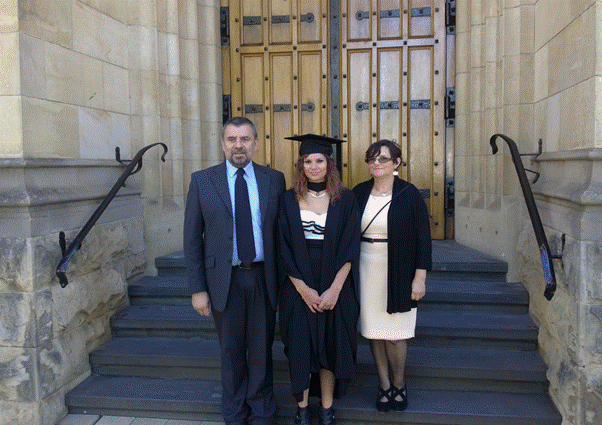
My Dad, my Mum and me at my graduation day in 2012 for my first degree a Bachelor of Science (Animal Science)
Like most undergrads I still had no definite idea what I wanted to do when I finished my degree. When it was time to graduate, I thought “why not give research a go?” I mean research was one of the main reasons I decided to go to uni. So with that I went and did honours, for which I was awarded first class. During my honours year I learnt a lot about research, I had a lot of fun and I grew to love sheep.
How can you not love those faces!
As the year began to wrap up I knew I wanted to work in animal welfare and if it involved sheep even better! I thought that one of the best ways I could help improve animal welfare was through research so I went looking for PhD projects that had an animal welfare focus. Luckily enough I found a project with CSIRO and the University of New England on self-medication in sheep, which was a double whammy for me! There was a catch though, I had to move from little ol’ Adelaide to an even littler Armidale.
Research sometimes means early starts, late finishes and very long days but I’m not complaining!
The aim of my PhD project is to incorporate pain relief in food, so that sheep and cattle that undergo painful husbandry procedures, such as castration and tail-docking, can eat this food and be relieved of pain. I will also try to train sheep to self-administer the drugs (non-addictive of course) in order to provide pain-relief, this will give us some interesting insight into pain states in animals. I think it will be the most interesting part of my research! In my first year I identified a non-steroidal anti-inflammatory drug (this is what our panadol is) that works at relieving pain in sheep.
My sheepie minions! Together we shall take over the world with great animal welfare practices!
I have just started my second year and I am really enjoying my work, I currently have some interesting experiments planned for this year. They include adding the drugs to food and seeing if it helps to relieve pain in lambs that have been castrated and tail-docked and training sheep to self-medicate.
As you can imagine I’m getting pretty excited about my work. Many think I’m mad having gone on to do a PhD, some days I think I am too but thanks to the support from family, friends and my supervisors at CSIRO and UNE, I am so glad I have started this journey. So here’s to a future of research, helping the agricultural sector and helping animals!
On farm field days are a great way for farmers to learn from other farmers. The successes and the stuff ups that farmers share are equally insightful.
Overview of research and down to the paddock to see it in action
At the Lemon Grove Research Farm field day we hosted in July as part of the 2013 Dairy Research Foundation Symposium I bit the bullet and shared the “Wish we had the knowledge, skill sets, attention to systems detail and time to do x,y & z better – Clover Hill Dairies story”
What I particularly liked was that I also got the opportunity to identify farmers in our region who were systems focused and balancing all four to get great outcomes for their cows, their farms and their staff whilst keeping the bank manager happy.
One of the keys to profitability in the dairy industry is having milk in the vat in the quantity and quality you and your milk processor want it to be all year round.
Milk yield of a dairy cow depends on four main factors: (a) genetic ability; (b) feeding program; (c) herd management; and (d) health. A good dairy feeding program must consider the quantity fed, the suitability of the feed and how and when the feeds are offered.
Paying attention to herd nutrition in the 90 days prior to calving through lead feeding (aka transition feeding) can mean an extra $200 in milk production per cow. But it’s not just about the dollars – an effective transition program also makes life less stressful for dairy farmers as well as making their cows’ lives safer and easier.
For smart farmers good herd management also means having your herd as “fresh” as possible. Now that doesn’t mean feeding your cows oysters, it means ensuring you have as many cows as possible in the herd at peak milk production. This means managing herd fertility well is paramount.
The top farmers in our region work with the team from Sydney University Livestock Veterinary Teaching and Research Unit.
The Livestock Veterinary Service operates commercial on farm personal herd health and treatment and consultancy services. Activities range from routine procedures such as pregnancy testing through to more complex project planning, clinical trials and disease investigation. A philosophy of the Livestock Veterinary Teaching and Research Unit is to promote application of science and technology to problem solving on the farm.
The Livestock Veterinary Service also provides veterinary students with an opportunity to get hands on experience working with livestock and post graduate veterinarians with an interest in livestock an opportunity to pursue specialty training.
Dr Luke Ingenhoff from the Livestock Veterinary Teaching and Research Unit preg testing cows at Clover Hill Dairies
I identified Phil and Craig Tate from Albion Park as the farmers I believed would share their story with the field day participants in an honest and open way that would resonate with other farmers like us who wished we were just a little better at it.
Craig and Philip Tate with Assoc Professor John House tell their story at Lemon Grove Research Farm field day
Philip and Craig outlined their reproductive system to delegates describing the ‘systematic routine’ that they believe is the secret to their success.
When it comes to being successful in business, one must create systems. Systems provide a framework for your team to use. In order to create high-levels of efficiency you will need to constantly update your systems and be on the lookout for ways to improve your business’s way of operating. Creating systems will take time, but it will more than save you the time on the back-end.
‘‘The system is the solution.’’ — AT&T motto
BTW I had Craig and Phil’s presentation with Assoc Professor John House videoed so you can watch it too. See link below
So impressive was Phil and Craig’s presentation that Holstein Australia commissioned Lee-Ann Monks to write a story for their journal readers and guess who was invited to take the pictures. Well after all who else would do for nix (when oh when am I going to value my time?)
So off I went with my trusty Canon to Macquarie Holsteins, home of the Tate Family dairy and now the workplace for two of our former employees.
What a delight are Craig and Phil, such great farmers yet so humble and so proud of their cows
Craig and Phil making use of Smart Phone technology to keep good records
Good records in the dairy ensure everyone is in the loop. Knowledge is power
Communication is the true lifeblood of a successful organization – a high flow of information so everyone and everything is connected. Easy to say, hard to do.
The herd favourite 1258
Please note Craig took his helmet of for this stationery pix – trust me he does wear it when the bike is moving
Mutual respect between farmer and cow is very evident at the Tate Farm
Louise Macmaster – Phil and Craig’s calf rearer extraordinaire
and of course looking after the next generation requires team members who treat the calves under their care with as much love and attention as their children
and what of former Clover Hill team members John and Tim pictured below at our field day?
Tim (left) is now managing the farm across the hill and John is working at the Tate’s along with Louise.
See and hear Craig and Phil Tate share their successful herd fertility management strategies with the farmers, students and researchers at the 2013 Dairy Research Foundation Field Day at Lemon Grove Research Farm here
‘‘You must analyze your business as it is today, decide what it must be like when you’ve finally got it just like you want it, and then determine the gap between where you are and where you need to be in order to make your dream a reality. That gap will tell you exactly what needs to be done to create the business of your dreams. And what you’ll discover when you look at your business through your E-Myth eyes is that the gap is always created by the absence of systems, the absence of a proprietary way of doing business that successfully differentiates your business from everyone else’s.’’ — Michael Gerber
Following up on my post The real story about Animal Abuse I am in this space at the moment because I am on two industry peak body committees whose role is to set policy to help achieve the best outcomes for farm animal well-being in this country.
The development process has recently undergone an independent review by Price Waterhouse Cooper (PwC) and they have released their findings which can be found here
The Business Plan for the development of Australian Standards and Guidelines for Welfare of Livestock states the following as the objective of the Standards and Guidelines:
… the national livestock welfare standards, with complementary guidelines, provide welfare outcomes that meet community and international expectations and reflect Australia’s position as a leader in modern, sustainable and scientifically-based welfare practice.
This objective includes a requirement for the Standards and Guidelines to meet community expectations and what the review has found is there is currently a relatively low understanding, or agreement, on what these expectations are.
This gap according to PwC is apparently contributing greatly to the problems of conflicts within the process. Without a strong statement of objective, each party involved in the process has their own benchmark of what the Standards should be seeking to achieve – a common complaint from Animal Welfare organisations is that the Standards are not sufficiently ambitious and do not ‘raise the bar’. Conversely, industry supports the establishment of processes which reflect practicalities of agricultural business.
According to PwC and I couldn’t agree more that what is needed is greater articulation and consideration of the broader community expectations in this area, which are likely to be something of a balance between these two polarised viewpoints.
PwC go on to say this identified gap in understanding of community expectations should be addressed through focused social science research. Outcomes from this research can then be balanced with industry input and scientific knowledge on animal welfare matters.
Hooray to that I say. For too long government and the food supply chain, that is farmers right through to retailers have been second guessing consumer images and perceptions of modern farming practices and getting bogged down by lunatic fringe highly vocal agenda driven campaigns
I am pleased to report Dr Heather Bray see previous postand the team at Adelaide University had received funding through the Australian Research Council to do this absolutely pivotal social research.
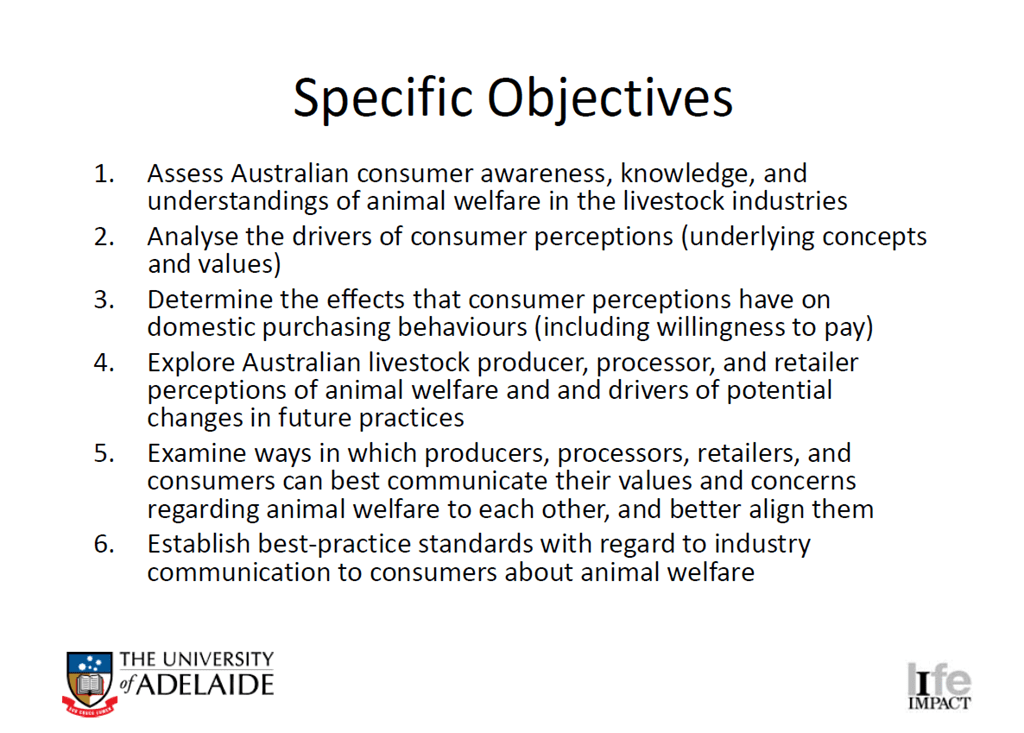
This ARC Linkage project LP 130100419 aims to
and has the following specific objectives
with the following outcomes
Some of the previous ARC Discovery Projects have used focus groups to explore consumer understandings of ‘food ethics’ and they found for example that categories (such as organic) are defined in various ways, if values are taken as key drivers of purchasing patterns.
So although ‘organic’ for example has a scientific definition, some consumers associate it primarily with nutrition, some with purity/natural products, some with sustainability, and some with elitism.
Hence as the research teams have found it is critical not just to ask what they think, but why they think that (associated values)
At an industry level I would also like to applaud the Sheep Meat Council and Meat and Livestock Australia for developing A producer’s guide to sheep husbandry practices which provides information from a range of research and on-farm experience that will enhance animal welfare and potentially improve production outcomes.
As NSW RSPCA Chief Inspector David O’Shannessy recently shared 99% of animal welfare issues are caused by ignorance not malice and the key to change is to raise awareness of, and commit to best practice education. Just like the community (over 60% of animal welfare complaints relate to companion dogs and horses) farmers often have wide ranging views on what is acceptable best practice
The Sheep Meat Council and MLA are setting the perfect example for industry by leading the way through education. Its is my understanding that the dairy industry in Western Australia is also heading down a similar path and I am very keen to hear from other livestock industries who are also moving in this direction.
It is pivotal that farmers have these resources available for their use and adaptation, and utilize numbers from credible sources in order to show consumers and animal welfare groups the true side of farming today.
It is also imperative that we communicate our commitment to do it better and better and encourage our farmers to reach out to their networks in local communities – business associates, neighbours, and friends to share our knowledge and set the record straight about our industry, our work, our goals and commitments, our challenges and our successes.
Doesn’t this gorgeous picture of sheep being moved to ‘higher ground” during the NSW flood sum it all up. Farmers do love and care for their animals
Insecticide resistance is the quieter, lesser-known relative of antibiotic resistance. Anyone who has been to a hospital recently knows about antibiotic resistant bacteria. But how many people think about insecticide resistance when they spray their home garden with insecticides?
A research group has published the first directed-discovery research program for a new, environmentally-friendly insecticide from the venom of a native Australian tarantula.
Check out this scary video on milking Tarantula venom
Trudy also undertakes research at the centre with her focus being identifying and management of Bt Cotton boll worm resistance
Use of the Sterile Insect Technique (SIT) together with transgenic cotton expressing the Bt transgene suppresses the growth of the pink bollworm population and facilitates management of resistance to Bt toxin.
Pink bollworm feeds only on cotton bolls and does not damage other tissues.
(a) Sustainable use of Bt cotton to control pink bollworm populations is threatened by the emergence of resistance.
(b) Although costly, repeated release of sterile pink bollworm moths (red) in vast excess to the number of wild moths (brown) can suppress the growth of pink bollworm populations.
(c) Combined use of Bt cotton and SIT ensures that the release of fewer sterile moths can suppress the growth of pink bollworm populations while preventing the emergence of resistance to Bt toxin.
The development of insecticide resistance is a major limitation to successful
pest control in crop production in Australia. Resistance at the field level
results in reduced efficacy of insecticide applications, leading to increased spraying
and reduced chemical options. Insecticide resistance represents a significant economic
cost to growers particularly when more expensive chemistries and mixtures
become necessary for control. Increased spraying also represents an environmental
threat, and has social implications, particularly in areas close to towns.
The Australian cotton industry has been supporting insecticide resistance monitoring
and associated research for over 25 years in an effort to manage insecticide
use and maintain the efficacy of all available chemistries. Helicoverpa (boll worm) is also a major pest of grain and pulse crops
This slideshow requires JavaScript.
Testing for Helicoverpa insecticide resistance at the ACRI, Narrabri.
The Young Farming Champions had fun testing their skills sexing boll worms. I was hopeless at it but Richie had obviously done this before and had picked the boys from the girls in no time
This slideshow requires JavaScript.
Field collections of Helicoverpa eggs are reared in the laboratory and larvae are
tested with doses of insecticide that are known to kill susceptible insects. Survivors
are considered to be resistant. Eggs are collected from all available hosts including
sorghum, maize, chickpeas and other pulses, sunflowers and cotton. This data
is used to determine regional resistance frequencies to identify any changes in resistance.
This slideshow requires JavaScript.
There are many methods used to control insects to ensure high yields and good quality cotton is produced. Using a combination of these methods is known as Integrated Pest Management (IPM), a widely recognised best practice in agricultural insect control.
Some of the methods used to control insect pests include:
Encouraging beneficial insects into the crop, such as ladybirds, spiders, wasps and ants, to eat the pests
Regular monitoring of insect populations and crop damage
Use of transgenic cotton such as Bt cotton (Bollgard II) that is resistant to heliothis
Alternating pesticides to reduce the chance of pesticide resistance
Crop rotation to kill the Heliothis pupae living in the soil
Ploughing the field after harvesting to destroy the Heliothis pupae (pupae
busting)
Biological sprays containing viruses or the naturally occurring soil bacterium Bacillus thuringiensis (Bt) that produces proteins toxic to heliothis
Management of crops to promote early maturity.
Keeping non-crop areas free from weeds, volunteer cotton and other crops
As an example this is the treatment of cotton stubble
Cotton Stubble
After picking the cotton is slashed to break up the quite woody plant. Because it is machine picked, there is some left over cotton on the ground. It looks a lot more than it is and it is not economic to pick up the last bits Once the cotton is slashed it is then mulched into the soil. This is done for 2 reasons.
Firstly to break the resistance cycle of insects. If an insect is resistant to the GM technology it will survive and climb down to the ground to pupate over the winter. In the summer it will fly out as a moth and then breed more resistant larvae. The soil is worked to incorporate the cotton trash and the breaking the cycle and any remote possibility that the insects may be resistant to the GM (or other) technologies.
The second reason the cotton stubble is mulched back into the soil is to increase the organic matter.
A combination of all of these things has seen a reduction in insecticide use of 87% since 2003, with some cotton crops not sprayed at all these days.
Pest control is a major focus of the cotton industry’s environmental program called myBMP, which sets out the latest research and best practice guidelines for controlling insects.
The cotton industry very innovative as you can see and I learnt a lot and it. Thanks Trudy for showing us around
For those of you interested in the lasted R&D&E happenings on NSW dairy farms I am highly confident you will enjoy this article
This video shares Dr Neil Moss’ full presentation on our pasture trials at the recent Sydney University Dairy Research Symposium. See full report (pages 21 to 39) here
Why we did the research at Lemon Grove
Surveys tell us 9 out of 10 farmers learn from other farmers and they want to see research that is relevant to them and their business i.e. they want to see the research working in their own backyard. They want to see research that we deliver a good return on investment in the shortest turnaround time
Lemon Grove Research Farm
Aim
To explore pastures that could potentially reduce Carbon footprint whilst improving productivity, profitability, and management (resilience)
Objective
To grow productive (quantity) and nutritious (quality) pasture that will be
Resilient through extremes of climate (floods and droughts)
Water and fertiliser efficient
Able to fill the feed gaps
Tolerant to captured dairy effluent irrigation
What we did
The trial was conducted at Lemon Grove Research Farm, located on the Minnamurra River floodplain just to the east of Jamberoo, NSW. Control and treatment paddocks were identified in December 2010 and soil tests were taken. One paddock was to be identified as the “trial/treatment” paddock and was to be prepared for the new pasture; the other “control” paddock was to be farmed as per the rest of the property, retaining its kikuyu base and being sown down to oats and Italian ryegrass in early autumn.
The trial paddock was sprayed with 6L/ha of Roundup Powermax (540 g/L glyphosate (present as the potassium salt))on 17.2.2011. Pasture trash was mown and removed and the trial paddock sown down to 110kg/ha of Cooba oats on the 19.2.2011. A small area was topped up in early April following flooding in March. Grazing of the oats commenced shortly after and continued until the 5th of August when the paddock was sprayed again with 6L/ha of Roundup Powermax on 5.8.2011. The paddock was then direct drilled with a disc seed with the trial seed mix of:
8.5kg/ha Stamina GT6 Lucerne
4kg/ha Bulldog red clover
1.5kg/ha Kopu II white clover
1.5kg/ha Will ladino white clover
2kg/ha Tonic Plantain
2.5kg/ha Puna Chicory
The trial paddock was treated with 150ml/ha of Verdict (520g/L haloxyfop present as the haloxyfop-r-methyl ester) selective grass herbicide on the 20.2.2012 to control grass weeds. It was not over sown in the autumn of 2012.
Cows grazing the treatment paddock
The “control” paddock was sprayed with 200mls/ha of Roundup Power Max on the 1/3/2011 to suppress kikuyu growth and facilitate early planting of a mix of 35kg/ha of Feast II ryegrass and 60kg/ha of Cooba Oats. Grazing commenced 16th April 2011. It was resprayed with 225mls/ha of Roundup Powermax on the 16/42012 to suppress kikuyu prior to autumn planting with a similar mix
Researcher Dr Neil Moss SBScibus in the control paddock of Ryegrass and Oats
Fertiliser was applied to both control and trial paddocks as deemed necessary by the farmer. This include urea, some mixed blended fertilisers and an application of liquid dairy effluent. Pastures were grazed only by the dairy herd and no fodder was conserved during the trial on the two plots. Pasture dry matter was estimated pre and post grazing using a C-Dax towable pasture metre and pasture yields determined. Yield data was validated using pasture cuts and estimation of dry matter during the trial. The nutritive value of the trial and control pastures were tested by NIR at Westons Laboratories, NSW.
Where we did it
Results
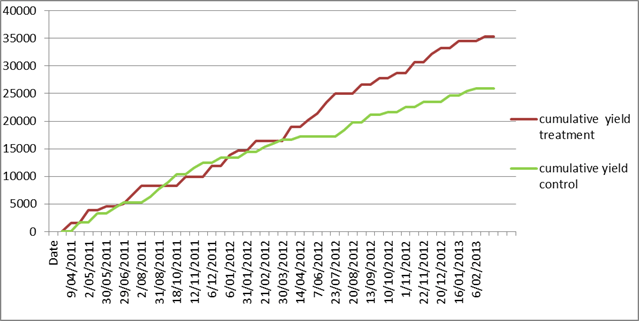
Total yield for the first 12 months of trial, including oats, and control pasture was 16413 and 15310 kgs of DM/ha respectively. Total yields in the six months following removal of the oats were 8134 and 6407 kgs DM/ha respectively. Total 2 year yields from trial and control paddocks was 35365 and 25989 kgs of DM/ha respectively. Cumulative yield data is presented in Graph 1.
Graph 1: Two year cumulative yield data: herbs and legumes (Treatment) v’s kikuyu and ryegrass (control)
The results blew us away
Two-year nitrogen application rates were 289kgs of N for the trial paddock in total and 85kgs of N after the oats and 726kg of N in total and 476kg of N per hectare after the oats in the trail paddock were removed. In the second year of the study, only 30kg per hectare of N was applied to the herb and legume paddock compared to 188kg of N per hectare in the control.
Feed quality data from two samplings in November and February are presented in Table 1
Table 1 Comparative feed quality of herb and legume pasture (treatment) vs. spring ryegrass (control test 1) and kikuyu (control test 2)
Components:
Treatment Test 1:
Control Test 1:
Treatment Test 2:
Control Test 2:
% NDF
30.7
46.3
30.4
51.4
% Crude Protein
32
24.1
33.1
27.5
% Ash
13.33
11.34
11.35
10.41
Lignin % NDF
12.4
3.9
16.8
5.6
% Calcium
1.23
0.58
1.37
0.53
% Phosphorus
0.45
0.42
0.45
0.43
% Magnesium
0.36
0.3
0.36
0.26
% Potassium
3.28
3.13
3.18
3.16
% ADF
23.6
26.3
23.1
26.7
% Lignin
3.8
1.8
5.1
2.9
% NFC
25.2
18.6
27.6
14.4
Relative Feed Value
214
138
217
123
ME (MJ/kg)
11.63
10.8
11.76
10.97
ME CPM (MJ/kg DM)
10.16
8.58
Fertiliser Efficiency Outcomes where excellent
Pasture trial proves to be good news for people,cows and the planet
Challenges
Adverse climatic conditions with four major flood events and one very pronounced dry period during the trial certainly made for an interesting times and showed the trial pasture mix’s resilience to vagaries of the Australian climate
Flood water pooled at the top end of the trial paddock however where the water was able to get away fairly quickly the pasture was very resilient to these extreme weather events
Accessing personnel in the region to do soil testing proved very difficult and we have been unable to have the final soil test undertaken at this point in time
Discussion
This farm based trial has provided useful evidence of the potential for alternative pasture systems based on legumes and herbs on coastal dairies in NSW. The trial pastures have provided at least as much dry matter in the first year as the conventional system with the yield data in year 2 being substantially higher in the trial paddock. The trial pasture appears to have performed very well in the autumn of its 2nd year and did not suffer a planting lag as per the conventional system. It also appeared to continue growing very well off a one off significant rain event in October 2012 during what was a very dry spring and summer in the region.
Nitrogen inputs were significantly reduced in the trial compared to the conventional plots with potential here to reduce fertiliser costs as well as nitrous oxide emissions and exposure to volatile nitrogen pricing. Full soil test data is not available at the time of writing.
Feed quality at all times on the trial was excellent with the farmers reporting anecdotal improvements in milk production when grazing trial pastures, particularly between November and March.
Weeds have been troublesome including both broadleaf and summer grass weed invasion in summer of 2012-2013.
These pastures have significant potential for NSW grazing based dairy systems. There has been considerable success with similar systems on the mid north coast and inland areas, however, problems with both stem root nematode and water-logging have been encountered on some properties. Soil characteristics, particularly, potential for poor drainage, underlying weed burdens and regional pasture pathogens need to carefully considered, when selecting alternative pasture systems as part of a pasture “portfolio”. However, there is considerable flexibility within both pasture species and cultivars in the group of pasture species under investigation to further explore these systems on a region by region basis. Farmers and scientific organisations can successfully partner to produce useful field based research.
What we learnt
The power of the two way conversations – farmers and natural resource management personnel working side by side to understand each other’s challenges and constraints
The value of cross community partnerships to improve NRM and sustainable farming outcomes and improve skills, knowledge, attitudes, and innovations,
That investment in people and on the ground activities that bring them together is critical for long term sustainability, fostering continuous improvement and creating opportunities to learn and grow together.
That communication is more than just sending information. It is a two-way process which creates demand for information delivery, is responsive to audience needs, and provides content in a way which is timely, relevant and understandable to target audiences.
Where to from here
Adoption of research, innovation and practices are critical to attaining long term goals
9 out of 10 farmers learn directly from other farmers or through appropriate delivery of extension based on in field experience of other farmers in familiar and recognisable farming situations.
Farmers want to be able to ask questions in an non threating environment but need highly skilled facilitators who understand both the technical aspects of what they are presenting as well as the people they are working with
This project has produced extremely valuable and measurable results that have important and deliverable environmental and economic benefits for farmers. There is a need funding for extension projects that capture this research and other alternate forage system research. This could be delivered through regional farm discussion groups looking at .
ii) Alternate strategies to annual and perennial pastures – showcasing the work at Lemon Grove Research Farm and farms in other regions doing similar trials.
iii) Developing fodder production portfolios to manage risk and season
With prime agricultural land getting gobbled up by houses and mining the challenge for Oz farmers is to produce more food using fewer resources to generate less waste and reusing/recycling that waste whenever we can
For dairy farmers that requires us to grow more grass per hectare (ha) so we can graze more cows per ha to produce more milk per ha which also means we are reducing CO2 emitted per ha. Here is a very novel way of increasing stocking rate. Love it
Thanks @peterholding for sharing
By the way other ways Oz Farmers are looking after our scare natural resources and getting more food and fibre from less
soil testing and nutrient mapping to allow them to use less fertiliser per ha.
getting more crop per drop
Placing nitrogen fertiliser at depth in cooler times in wet soils to maximise nitrogen efficiency (and thus minimise losses to the atmosphere)
Planting water use and fertiliser efficient, drought tolerant perennial pastures
Assessing and optimising nitrogen fertiliser use and use of alternative sources such as legume rotations.
Using lower emissions machinery and assessing and improving existing machinery and irrigation pumping performance and investigating alternative fuel sources.
Improvements in soil management through stubble retention, reduced tillage and reduction in spraying operations
Measures of success
Farmers are able to increase their productivity:
• per hectare of land
• per unit of nitrogen fertiliser
• per ML water
• per unit of CO2 equivalent emitted