A Very Wicked Problem

I am reblogging this from Art4AgricultureChat because I am very interested in what my Clover Diaries Diary readers have to say about this  

Today’s guest blog 1 is by Gerry Andersen who is the Chief Executive Officer of Foodbank NSW.
image

Gerry has also been involved with the RAS of NSW for the past 25 years and is currently a RAS Councillor and Chair of the Sydney Royal Dairy Produce Committee. I had the pleasure of working with Gerry and the superb team from the Sydney Royal Dairy Produce Show in February this year when I had the honour of stewarding in the ice cream judging section. See the post I wrote about my day here

Gerry’s work with Foodbank has perfect synergies with the ethos of the Archibull Prize where we ask participating students to reflect on sustainable food production and also their role in sustainable food consumption. I am confident like me you will be astounded by the amount of food that is wasted in this country and as a farmer producing some of this food that ends up in landfill it breaks my heart. It will also break your heart to read about the other end of the spectrum that Gerry shares with us in this post. It just beggars belief that this can happen.

Each year two million Australians will rely on food relief and around half of them will be children who often go to school without breakfast or to bed without dinner.

Are the lucky ones so self absorbed and we live in our own little worlds and forget what really matters?. I just don’t know. What do you think?

I do know that as a farmer I am very proud of my fellow farmers participating in the Waste Not Want Not program.

This is what Gerry has to say………………..

Waste not; want not

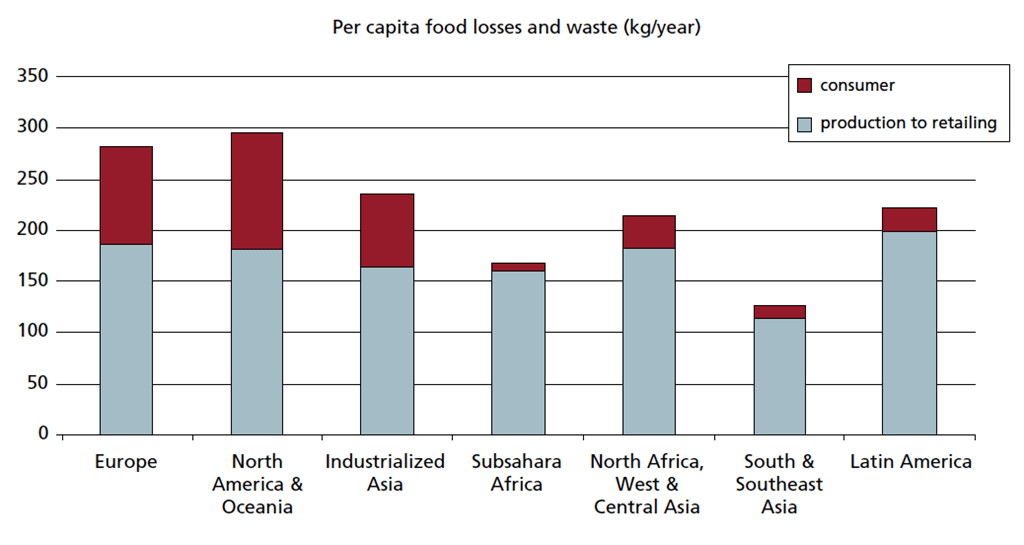
Food waste is a complex social, economic and environmental problem that is having an increasingly negative impact on our world.
wastegraph

There’s no doubt that when it comes to food production, Australia truly is the lucky country. We live in a plentiful country, with some of the world’s most abundant fresh produce and skilful, efficient farmers. Each year, Australia produces enough fresh food to feed 60 million people – that’s nearly enough to feed the nation 3 times over.1
However, recent figures suggest that 4 million tonnes of food is wasted every year in Australia.

food_waste

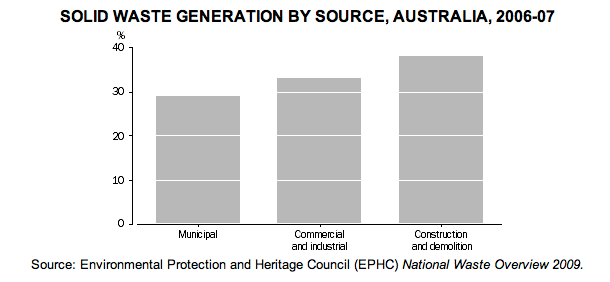
Of this, 1.38 million tonnes is business food waste and 2.6 million tonnes is household food waste. 2
waste

This surplus food could feed millions of Australians every day. Food gets wasted because we buy more than we need; we cook more than we need; and due to demanding quality standards a lot of produce is discarded because of appearance, despite the nutritional quality still being very good. These food waste facts are startling alone, but when coupled with the fact that 1.2 million Australians do not have access to a safe and nutritious food supply, the situation is staggering.

Many of us eat well and enjoy a varied diet, so it seems strange to be discussing food shortages for Australians; however, for many, access to food is a critical problem. Each year two million Australians will rely on food relief and around half of them will be children who often go to school without breakfast or to bed without dinner. This is where Foodbank, the largest hunger relief organisation in Australia, comes into the equation. Foodbank is a not-for-profit, nondenominational organisation that seeks and distributes food and grocery industry donations to welfare agencies to feed the hungry around the country. The food goes to hostels, shelters, drop-in centres, school breakfast programs, home hampers and emergency relief packages for people in need. Last year alone it redistributed enough food for 28 million meals.

I became involved with Foodbank in 2009 taking up the role of CEO, following retirement from the food manufacturing industry three years earlier. I enjoyed entering the workforce again, and in particular working in the charity sector. Foodbank was initially formed to redistribute wasted food products from Australian food manufacturing and retailing sectors. However, recently the focus has moved to the farming industry.

Foodbank’s Waste Not Want Not program is a unique project that delivers otherwise wasted produce from the Riverina farming community to the tables of hungry families throughout NSW and the ACT. Since the program began in 2011, over 400 tonnes of produce from the Riverina district has been donated. There are plans to roll out the program in many more areas in NSW by 2013. Farmers, including small producers, can donate their fresh fruit and vegetables products that are in excess to demand or not quite up to quality standards, as they are still nutritious and very desirable to feed needy people. Our most common donations from farmers include oranges, pumpkins, onions, potatoes and grain.

There is still a long way to go to achieve an Australia without hunger, but we, as an agricultural community, can play a part to reduce the waste and hunger that exists.

food-waste-hierarchyHeria

Waste Food Hierarchy

This is a very wicked problem that each and everyone of us has an opportunity to make a difference  

For more information on Foodbank and how you can become involved Visit www.foodbank.com.au

1 This article first appeared in RAS Times July 2012.

2 Australia and Food Security in a Changing World. Report of the Prime
Minister’s Science, Engineering and Innovation Council (PMSEIC)
Expert Working Group, 2010.

Farmers Angels – The Alison Fairleigh story

During the last ten years I have met some very special people who I refer to as #angels.

They are knowledgeable, stimulating and inspiring people who have influenced me in a positive way. They have taught me that true leaders encourage and shape future leaders, not followers. They have helped foster the way I am in the present and what I will be in the future. They are people I can look to for advice in the ‘sticky’ times and the good times. They give me words of wisdom, a shoulder to cry on and a swift kick if I need it!

I have also had the pleasure of working with amazing,inspiring and selfless people who don’t farm and chose to spend their non working hours lobbying and supporting  and AGvocating on behalf of all Australian farmers.

I will be inviting a selection of these people who have crossed my path to write guest blogs to share their stories over the next 12 months.

Sadly I have found some farmers (too many) see themselves as victims and fail to acknowledge the wonderful networks of people who support them, appreciate them and fight for them every day.  

I am starting with the angel of all angels Alison Fairleigh  

Alison is founder of the “Farming is the New Black”  Facebook site

Some examples of Alison’s campaigns AGvocating for farmers  

The Great Cafe Challenge

More Questions than Answers

and one from the heart

What ANZAC day means to me

The Alison Fairleigh story………..

13 Feb 2012

I was born and bred on a farm in SE Queensland and into an entire extended family of farmers – from beef cattle production to dairying, poultry and cropping – but I wasn’t your typical farm girl. I did not relish growing up on a farm … in fact, I couldn’t wait to leave, which I did as soon as I was old enough: heading to uni and then, as a teacher, to discover the world.

Like the majority of Australians, I became very complacent about farming and agriculture as a whole, and my attitude didn’t begin to shift until a few years ago when I took up a position with the Australian Agricultural College and moved to north Queensland. While working for AACC I saw, learned and experienced things about our farming sector that caused me to become extremely concerned about Australia’s future food security. Things that the average Australian is completely oblivious too:

  • Once thriving agricultural colleges closing down due to lack of enrolments, lack of support from industry and government policy that just “doesn’t get it”.
  • Farmers encouraging their children to do anything BUT farming because they don’t see any future for them in the industry.
  • Male farmers and male farm workers having one of the highest rates of suicide in Australia.
  • Agricultural workers being drawn away from farming to the high wages available in the mining and construction sectors.
  • Urban-based young people who are eager to work in agriculture but who cannot find support from industry.
  • Governments, both state and federal, de-investing in agricultural research and selling off valuable research facilities and land.

What is the future of food production in Australia if we do not have family farmers growing it?

Do we want multi-national corporations and foreign governments to own and operate our agricultural lands and be responsible for our food production? Some see no problem in that. I on the other hand do. I want to see sustainable agriculture and I don’t trust multi-national corporations to do anything sustainably other than whatever it takes to make mega profits. At the end of the day, farming is a business but at least the majority of family owned farms throughout Australia operate ethically. I want to be able to buy food that I know is produced with the highest degree of environmental stewardship and animal welfare standards.

One of the things that frustrates me so much about campaigns against Australian farmers by certain animal welfare groups is that we can encourage and legislate for the ethical treatment of animals in Australia. If our farmers are forced to leave the industry and we do become a net importer of food, we have no control over how animals are treated in other countries. People are not going to stop eating meat or seafood. If they see it in the supermarket, whether it is Australian or otherwise, they will buy it. While restrictions have been placed on the live export of Australian animals to Indonesia, this does not improve the treatment of animals in Indonesia – in fact, as Indonesia seeks to go it alone, conditions may get far, far worse: Indonesia tests “breedlots” as self-sufficiency solution. That is not a win for animals.

I guess what I’m trying to say is that people who have little understanding of agriculture and farming systems, should be very careful about the long-term consequences of what they campaign for. If we don’t have farmers, we don’t have food; and unless people have had their heads in the sand the past year or so, Australian farmers are being expected to feed a large proportion of the world. What happens to farmers in Australia has global consequences. We need to take care of them and listen to them.

I would never have thought to become an ‘AGvocate’ except for social media. I have used it to speak about the things that concern me and to raise awareness for rural mental health. To my utter surprise, people have listened. If you were to meet me in person, you’d find a woman that country people call a ‘city-chick’ and a woman that city people call ‘country’. I have the best of both worlds and I feel comfortable in either setting which has given me the opportunity to be a ‘bridge’ between the two. It’s been frustrating at times because farmers are not the easiest people to advocate for: they are stubborn and self-sufficient, which is why they are so good at what they do. But I have a vision of an Australia that sees, loves and supports its rural communities as a valuable part of a whole. It’s not easy, but it’s absolutely, 100%, definitely worth it!

(Alison now works for the Mental Illness Fellowship of NQ as a Rural Development Officer. You can learn more about her advocacy by visiting her blog: ( www.talkingfairleigh.blogspot.com.au )

Alison tweets at @AlisonFairleigh