Agriculture in self reflection. What does self awareness look like? What is the image we want the world to see.

One of the golden rules in the Young Farming Champions program is to avoid re-enforcing the negative and using deficit language ( which agriculture by the way has turned into an artform)

But if we are going to address the pain points in the Action4Agriculture Action4YouthExplore, Connect and Support young people to thrive in careers in agriculture Attract-Train-Retain Workforce Strategy and Roadmap we must be prepared to put our dirty linen out for washing

This slideshow requires JavaScript.

And like all forward thinking sectors there are times when self-awareness and self-reflection are key to being the change required to be the image you want the world to see.

The graphics below are from the  YouthInsight Study done in WA in2017

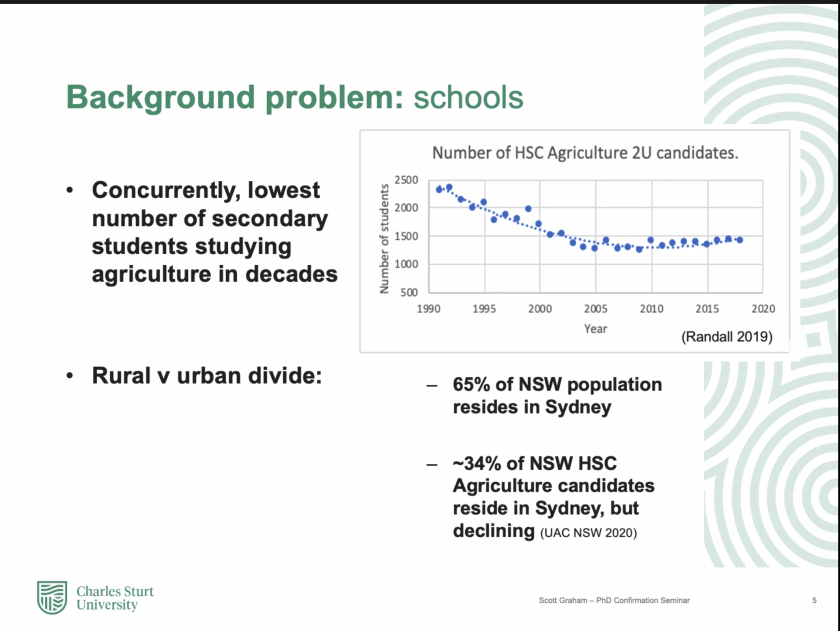
Scott Graham from Barker College has identified others


Action4Agriculture’s work in schools has shown it IS possible to change of teachers and students images and perceptions

This slideshow requires JavaScript.

Its possible to raise awareness of the diversity of careers

But we cant do it alone and Scott Graham and Barker College cant do it alone.

Creating resources and putting them on a website and hoping teachers see them is an equally ad hoc transaction that it not a best return on investment of expectations for anyone.

None of us can do it alone and we cant do it in silos.

How do we build a culture of co-operation in the agriculture sector  because we are not alone in needing to attract the best and brightest

Job vacancies rose 18.5 per cent to hit a record of 396,100 in the three months to November 30 as employers embarked on a hiring spree at the end of the delta lockdowns in NSW, Victoria and the ACT, the Australian Bureau of Statistics reported

Of all the sectors looking for workers agriculture is the only one that gets its own subject in the school curriculum. How cool is that. 

Job vacancies rose 18.5 per cent to hit a record of 396,100 in the three months to November 30 as employers embarked on a hiring spree at the end of the delta lockdowns in NSW, Victoria and the ACT, the Australian Bureau of Statistics reported.

How is agriculture ensuring we are front of mind when young people make career choices?

How are we helping young people explore and connect with our sector.?

How are we supporting them to thrive when they get there?

At Action4Agriculture we have created an Action4Youth Workforce Strategy and Roadmap. It looks like this.

This slideshow requires JavaScript.

Forever grateful to Professor Felicity Blackstock for helping us create our Action4Youth model

We have also identified there are numerous pain points on the journey that need addressing by the agriculture sector and the education system

There are a number of exciting people and organisations working in this space

One of those is  Scott Graham the current winner of the Prime Minister’s Prize for Secondary School Science Teachers

Scott is head of agriculture at Barker College. He is undertaking a PhD under the supervision of Emeritus Professor Jim Pratley et al

Last Monday I was one of 21 people who had the opportunity to listen to Scott’s HDR endorsement

This was a new opportunity for me and what I learnt gave me a lot to ruminate on

It reminded me to celebrate the advantages we have in the world of agriculture

There is a huge labour shortage out there “Employers wanted 400,000 workers before omicron hit”

And of all the sectors looking for workers agriculture is the only one that gets its own subject in the school curriculum. How cool is that. 

What Scott’s PhD is looking at is how do to we encourage more urban students to select agriculture as a subject with the ultimate aim they choose agricultural career pathways. Scott is ideally placed to research and report on this as he and Barker College have done a phenomenal job of the former and are keeping a close eye on the later

Barker College appears to be well and truly bucking the trend

Scott has identified the issues. Here is a few of them

At Action4Agriculture  we are complementing the work Scott is doing by tailoring our school programs to teachers and students NOT teaching/studying agriculture.  We are using similar principles to Scott and Barker College

Our programs are student-centred, individualised, contextual and culturally sensitive.

They involve key influencers, are accessible to all, can be targeted at specific groups when required and all evaluated for their effectiveness.

Students are mentored by our Young Farming Champions young people working in agriculture who are debunking stereotypes

  • Agriculture is not all Akubra’s and moleskins or mud and flies
  • 80% of jobs are off farm, 40% are in cities

Our Young Farming Champions represent the diversity of people in the agriculture sector. Students can see they are young people like them – they can be confident that they will fit in- that agriculture is a place where you feel identity safe.

What a great time to be on this journey with Scott with his research complementing our two year project with UNSW uni students working with BCG 

#action4youth #AGSTEMcareers

Career decisions – How did you make them ?

I am currently on a journey with UNSW students who are part of a Global Consulting Group initiative to support agriculture to attract the best and the brightest

I am curious what drove your career decision pathways?

I remember in Year 11 at my rural high school  I had early entry into a Arts Law degree at ANU – not a profession I had a genuine interest in but it was a signal of what was possible

Far too many young Australians from Rural and Regional and Remote OZ don’t get these signals.

Its time for us all to step up and say ensuring “equity and excellence” is our joint responsibility


How does agriculture as a career choice reach the hearts and minds of young people (and their parents)

In an ideal world agriculture as a career pathway would have equal opportunity as any other sector to reach the hearts and minds of young people (and their parents – particularly important for 1st generation Australians)

School-to-work pathways have changed dramatically and traditional routes to work have been described as irrelevant (FYA, 2018)

The journey of young people through education into the world of work and the influences on their planning and decision making, including aspirations, sources of information and formal, school-based career education is a complex web to encounter.

Just getting in the school door can be very challenging for all sectors not just agriculture

Agriculture does have some very successful initiatives including the Action4Agriculture suite of programs Kreative Koalas and The Archibull Prize

Our secret herb and spice is our Young Farming Champions ( they know how to change hearts and minds)

Others that come to mind are Cows Create Careers run by Jaydee Events and Australian Wool Innovation’s suite of programs that introduce young people to the world of working with wool

As this graphic highlights agriculture needs to attract a very diverse workforce in the next ten years. I am excited to be working with a team of bright young minds at University of NSW through a partnership with the Global Consulting Group to come up with innovative ways we can attract the best and brightest into careers in Research, Development, Innovation and IT

This slideshow requires JavaScript.

I met the team last week and we started our relationship by getting to know each other and our motivations. All of the team are either engineering students or science/commerce students and none have an agricultural background.

The students are supported by an expert from Accenture

I think I am going to learn a great deal and we can get a win:win for everyone

The Global Consulting Group (GCG) is a charity which provides pro-bono consulting services to other charities and not-for-profits.

We do this by connecting university students with experienced professionals who then work together to solve business problems for other  charities, combining the energy and passion of today’s youth with the experience and wisdom of our industry leaders.

The organisation currently has more than 150 volunteers across several locations in Australia and has completed over 150 projects for clients such  as the United Nations, Tedx, Our Big Kitchen and Shelterbox. GCG is sponsored by Bain and Monitor Deloitte, and has informal partnerships with  a range of reputed consulting firms.


Quiet achievers who inspire – thank you Sara Leonardi-McGrath

Woman who inspire – Sara Leonardi-McGrath with YFC Richie Quigley  

I am looking forward to watching Australian Story this week

Sara Leonardi McGrath reached out to me in 2012 wanting to learn more about what our organisation did and what we were hoping to achieve

I remember meeting her in a café in Paddington and listening to her story and getting insights into what drove her

  1. No 1 was her new family
  2. No 2 was young people  everywhere having agency and voice 

I am totally in awe of women like Sara who have the capacity to fulfil the dream of those who came before them and put one foot in front of the other to bring their vision for a better world to fruition

The ten years following our partnership with Sara has taught me a lot. The most important thing I have learnt is we cant do it alone and we can do it in silos. We must join forces, share resources, skills and knowledge

How can we all work better together to ensure young people’s voices are heard ?

Are the entitled having the important conversations – What is enough ??????

When some-one challenges life as you know it, it gives you an opportunity to reflect on whether you want to support the status quo or step up and say its time to embrace a future focused model.

When we have the capacity to ask ourselves “what is enough” only then can we support and enable next gen Australians to envision a future we all want to be part of.

I invite all of my readers to read this report from Learning Creates Australia and ask ourselves are we setting next gen up for success and if not who is going to put their hand up and lobby for change


Agriculture and the “Leaders are Born Mindset” – why has it become part of our identity?

Its been a week of getting my confidence back by stepping up and saying yes to podcasts and interviews

Tonight I get to share my thoughts on leadership

Here is my leadership thought dump of other people’s ideas that resonate with me

Leadership is a process of influence to drive change

We can’t do it alone and we can do it in silos

We must join forces, share resources, skills, knowledge and experiences. Source Julie McAlpin RDA Sydney

I workshopped below with a number of bright minds who came to agriculture from the world beyond and put their toes in the water and went wow the disruptors are very brave people

Agriculture tends to have a “Leaders are Born Mindset”

This has been driven by agriculture’s traditional patriarchal culture where the first born son inherits the farm. This concept has been perpetuated for centuries.

It is a very deep-seated generational identity culture.

In this country women were not allowed to call themselves farmers in the census until 1994

In a sector where you are rewarded for learning to fit in and NOT challenge the status quo we are asking people to re-identify who we are as an industry and as people

Asking people to embrace the concept of “Leaders are Made” will be frightening for a lot of people

This has led to our traditional leadership programs being one off events with no clear pathway of what could be next

These programs are seen as “vehicles” to expose the “born leaders” and position them to fulfil their birth destiny.

and now to the work of the team from The Practice of Adaptive Leadership – Harvard Kennedy School 

How glorious is this concept

Leadership is an experimental art. We are all at the frontier.

Think of your life as a leadership laboratory. In that laboratory, you are continuously facing opportunities for learning how to be more effective in living a meaningful existence, and for making more progress on life’s deepest purposes and leading meaningful change.

Seeing life as a leadership lab enables you to try things out, make mistakes, strengthen your skills, and take pleasure in the journey as well as the fruits of your labour.

This from conversations with our wonderful Young Farming Champions

There is no one size fits all

Young people are doing it differently, the business model has changed

We don’t want to be part of “Old codgers organisations”

We want to ensure young people have a seat at the table

We want to ensure their voices are heard and valued

We can be shapers of “what might we be together”

Back to the brains trust that is the Adaptive Leadership team

The tools and tactics for leading adaptive change should be treated, we believe, in the same spirit as open source technology, made broadly available, so that people who lead adaptive change can learn from each other and improve their skills, and all of us improve our insights into practice.

Leadership for change demands inspiration and perspiration.

We present tools and tactics to lead and stay alive, to build up a sweat by inspiring others, to mobilize people to tackle tough problems while reaching high.

Our work begins with the assumption that there is no reason to exercise leadership, to have a courageous conversation with a boss or a spouse, for example, or to take a risk on a new idea, unless you care about something deeply. What outcome would make the effort and the risk worthwhile?

Trying to create something better from the current reality.

Growing tomorrow’s leaders today moving from reactive to future focused leadership

The practice of leadership, like the practice of medicine, involves two core processes:

  • diagnosis first and then
  • action.

 And those two processes unfold in two dimensions: toward the organizational or social system you are operating in and toward yourself. That is, you diagnose what is happening in your organization or community and take action to address the problems you have identified.

But to lead effectively, you also have to examine and take action toward yourself in the context of the challenge. In the midst of action, you have to be able to reflect on your own attitudes and behaviour to better calibrate your interventions into the complex dynamics of organizations and communities.

You need perspective on yourself as well as on the systemic context in which you operate. The process of diagnosis and action begins with data collection and problem identification (the what), moves through an interpretive stage (the why) and on to potential approaches to action as a series of interventions into the organization, community, or society (the what next).

Typically, the problem-solving process is iterative, moving back and forth among data collection, interpretation, and action.

Adaptive challenges can only be addressed through changes in people’s priorities, beliefs, habits, and loyalties.

Making progress requires going beyond any authoritative expertise to mobilize discovery, shedding entrenched ways, learning from mistakes, and generating the new capacity to thrive anew.

Just love people who wake up everyday to help us create a better world 


Advocacy at its worst – when agriculture chooses the divide and conquer route to market

When I got my latest email from the Australian Farm Institute this week  advertising their upcoming conference I couldn’t take it anymore and hit the unsubscribe  button

Our agri-politicans are a great example of how broken our political system is. Like our federal politicians they tend to follow the Allan Jones model and appeal to the prejudices of the masses

“The argumentum ad populum used in democratic political rhetoric can make political argumentation appear to be reason-based when it is not and subvert and undermine reason-based deliberation in democratic political argumentation.”(Douglas Walton, “Criteria of Rationality for Evaluating Democratic Public Rhetoric,” Talking Democracy, ed. by B. Fontana et al. Penn State, 2004)

Its the “them and us” model where farmers are pitched as victims,  and our state farming organisations are our white knights.

As an example when Agforce deleted their data  and lost their credibility in government they decided a roadshow with Peter Ridd was their advocacy model

Its too easy and so lazy to choose to pander to audiences by telling them what you think they want to hear.

This is not advocacy, this divide and conquer and it makes me cringe. Its time to rethink what advocacy looks like because Australian agriculture has some very serious human rights issues we should have addressed a long time ago.

We do have a choice

We can all work together and build a better world or we can focus on bettering our world

Who would you put on the podium if you wanted to hear from people who do advocacy well?

Beside the three very courageous women in the video above some names that come to mind for me

Far too many young Australians have no idea what “normal” looks like

I grew up in a family where domestic violence  was an everyday occurrence

Both my mother and my father shared joint responsibility for the nightmare they invited their children into

My father left us without telling a responsible adult when I think I was 8 years old

I was the eldest. My mother had a chronic depressive disorder and on both sides of the family  everyone just did what they always did – pretend everything is normal

This means that 8 year old’s have to make big decisions when their mothers don’t wake up and daddy decides his family isn’t his responsibility any more.

Its time we all  stood up

Cows Milk without cows. The birthplace of the Australian dairy industry is stepping up to answer the big questions.

The birthplace of the Australian dairy industry is stepping up to answer the big questions.

What will our rolling green hills look like in 50 years time if cellular agriculture means we can have all the nutrition cows’ milk provides without the cows ?


What will the view from my front verandah look like without the cows?

As a sixth generation dairy farmer this concept seems so far fetched but then so did the smart phone twenty years ago

We have a new council. They plan to make protection of rural lands a pillar. But what are we protecting the land from?

Is the science going to decide for us or are the property developers with deep pockets?

Where does the native flora and fauna fit into all of this?

We have an amazing opportunity to have our voices heard as part of the community consultation process for the new Local Environmental Plan.

I look forward to hearing the community’s hopes and dreams for the future

And what of our dairy farmers and the cows. What does Just Transition look like?

Me – I feel so passionately about Sam Archer’s vision I nominated hm for the 2014 Bob Hawke Landcare Award. Sam was runner up and like me retired from farming. Does that allow us to have the best of both worlds – inside and outside perspectives?