Its never too late to find out why you were born

Let me introduce you Changemaker Naomi Edwards who I met earlier this year

Naomi is described perfectley below by fellow #legend Megan Rowlatt

Now this girl is a legend. Naomi is a leader, an innovator and social entrepreneur who is so passionate about conservation and the environment, and a real change agent on a national scale.

I have never met anyone with such infectious energy, zero ego, and an unrelenting love of the coast and dunes. Naomi is a breath of fresh air and an absolute star. 

Naomi also blogs and this post reblogged below in particular resonated with me. Its taken me a very long time to find out why I was born but I am so glad I finally got there

Falling in love – with my life

11218619_10153033912479005_1461492551610300543_n

If you know me, know of me, or have some idea about who I am I want you to park all your judgements aside and read on with no expectations and assumptions. Because that is how I used to live my life, then I got caught up with expectations and assumptions, only to realise the impact this was having on my life. It’s like I have found my 10xmore excitement for life, and it’s genuine.

I was talking with a friend tonight about life and where I am at in life. I have this feeling I can’t explain other than falling in love, with my life. It’s bubbling. It’s exciting. I’ve been trying to figure out where this feeling has come from, is it for someone, something or some reason. But my friend said it perfectly tonight, your being true to yourself and your life. Yeah our mojo’s go and down and go the long way round sometimes. But right now, I feel raw, real and genuinely present to who I am and for the world.

Someone who is genuinely 10xmore excited and it’s real. I am not putting on a happy face, my face is happy. I am genuinely present, patient and listening from the silences I hadn’t listened from before. I am learning, a lot, and seeing myself differently and accepting that I haven’t got it all, got it all together, or got it right or get it right.

My access to this state of being has been being truthful, true to myself.

Truth gives power and I have discovered it, as Michel Foucault, a french philosopher, work unveils.

“Truth is an event which takes place in history. It is something that ‘happens’, and is produced by various techniques (the ‘technology’ of truth) rather than something that already exists and is simply waiting to be discovered”  – Michel Foucault.

I have invited myself to discover my truth and what I see is love for my life and every part of it.

I invite you to discover your truth.

the-day-you-find-out-why


Finding your WHY is vital

Changemakers fascinate me. People who wake up everyday and want to change the world or at the very least their part of the world.

the-day-you-find-out-why

I am particularly fascinated by young changemakers or as they call themselves ‘disruptors’. Young people who are being a revolutionary – spotting something that needs to change and not being afraid to turn things upside down in order to achieve it.

Yesterday I got an opportunity to sit in on a roundtable in Canberra consisting of some of Australia’s most engaged young changemakers in the sustainability space.

The exercise that they did  that blew my mind involved mapping their personal and professional development journey.

Identifying the moments in time.

The:

  • inspiration points
  • pivot points

Identifying the key people on the the journey.

The:

  • champions
  • mentors
  • critics/naysayers
  • connectors

These young people were all under 35. They all had a strong community spirit and involvement in community from a very young age. Many identified being inspired by a guest speaker at their school. They all viewed life as an opportunity to grab with both hands.   And they had all changed the world. The world was a better place because they were in it

One thing that resonated with me was the impact of the political landscape on many of these young people. Young changemakers choosing career pathways based on who was leading our country at the time. Too often it was lack of inspiration from the top of the political tree being the pivot point in their journey.

Yesterday was definitely one of the highlights of my life – thank you  #YoungAustralians committed to a #brighterfuture

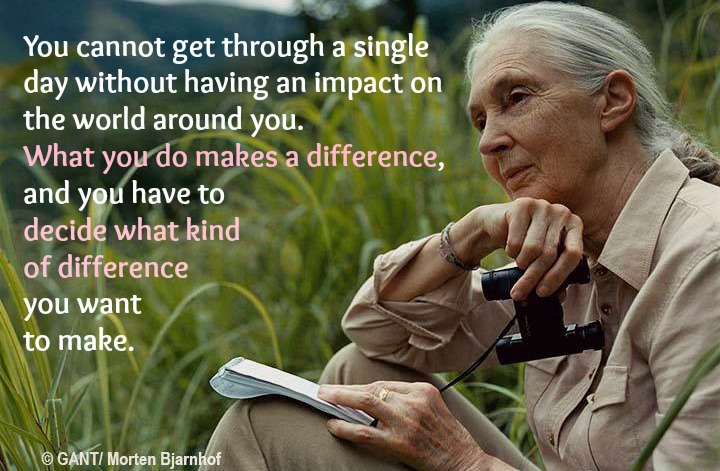
jane-goodall-quote


Farmers – celebrating the skills diversity women bring to the farmgate

I am reblogging this awesome post by Grain Farmer Julia Hausler found here on LinkedIn

Its brilliantly written and her words speak for themselves #gogirlfriend #skillsmatter #strongwomen #grainslove

julia-hausler

What is your image of a grain farmer?

I am a grain farmer. Sometimes I receive funny looks when I say this and am subsequently asked – “So do you drive the tractor, header or truck?” Of which I drive none but is this really the perception to make me a grain farmer?
My husband Tim, is very good at “in-field” operations and more importantly, he enjoys it. Along with our working man Matt, I have great confidence that my “in-field” contribution as a chauffeur and occasional stock shifter are more than adequate. So how do I consider myself a grain farmer if I’m not that active in the paddock?

Here is a list of my contribution and you can decide for yourself.
1. Staff, payroll and safety inductions
2. Grain sales program
3. Harvest logistics
4. Record keeping
5. ATO compliance
6. Mother, cook, gopher, lawn mower, mediator, nurse, school project consultant etc.

With a background in grain accumulation for large companies such as Cargill and GrainCorp I bring certain contract knowledge and market insight skills. My husband and I decided a long time ago (possibly after I mis-raked some hay) that we should work to our strengths in our farm business. So with assistance from our brokers at Rural Directions I usually start our sales program well before harvest, look for cash opportunities during harvest and then finish with post-harvest direct delivery sales with crop we decide to store onfarm.

To give this some perspective, I’ll share last year’s harvest sales program and subsequent logistics. Forward multi-grade sales were made for wheat and barley. This differed from previous years which would usually also include canola. However, with a dry cropping start, low rainfall through winter and no rainfall for spring, the canola crop struggled all year. So I sold a small proportion of canola for cash at harvest and stored the rest onfarm. Lentils were 100% sold at harvest. Some further cash sales of wheat and barley were made and the remainder used to fill onfarm storage. We grow vetch for hay and 100% of this was cut, baled and also stored on farm, mostly under cover.

There is money in the margins, so I require the right quality matches the right contract spreads at the right delivery location. So this might sound easy enough but let me go through our local delivery options. Firstly, we have GrainCorp and a private store (Wilken Storages) near town, 2 GrainFlow sites (one North, one South) each about 60km away and at least 6 packer/processor pulse buyers within 100km radius. We also use our own on farm storage. So I required ASW wheat at GrainCorp and any other grades at Wilken Storages. I required specific volumes of lentils to go to PeaCo Donald and Wimpak Minyip respectively. I required a set volume of feed 1 barley only at GrainCorp to fill contract commitments and any excess or other grades to Wilken Storages. Our exfarm sales have been delivered to Central Districts, Western Districts, Melbourne and Geelong regions of Victoria.

In the meantime, I run excel spreadsheets documenting every paddock by commodity and then variety. Once harvest starts each load delivered is entered, paddock yields calculated, loads are then allocated to contracts and the contract transfers are executed by my broker. This system gives me confidence that contracts are delivered in full on time with the right quality (or DIFOTQ for those in grain trading!) When we receive our remittance advice for the sales these are cross-referenced on the excel spreadsheet to ensure accurate and timely payments have been received and levies have been deducted. Due to the mixed nature of my sales program payments vary from 5 days for pre harvest contracted grain through to 30days for exfarm sales directly to end-user customers.

Hopefully from this small snapshot of my contribution to our grain growing business, you might start to rethink the definition of a grain grower. At the very least hopefully I have convinced your perception of a grain grower to be more than just a paddock role.

Julia Hausler

Supermarket milk wars: a lot of pain for no gain


Aussie Farmers

Image Source

I am reblogging another another wonderful insight from the milk pit (coal face) of the Australian  dairy industry from Milk Maid Marian (see here )

Its this comment that particularly resonates with me

“Taking the emotional side of the issue into account first, there is no doubt that the discounting of fresh white milk has devalued the perception of product value in the eyes of farmers. To see milk selling for less than the price of something like bottled water has an impact on farmer sentiment that the economic data doesn’t capture. It suggests to farmers that all the hard work, capital investment, and management skill that goes into producing the product is not properly valued, by those selling it, or the wider community buying it.”

A further cynical insight from me

Sell your soul to the devil

I just nod my head with disbelief at this notion by milk processors that sell their souls to Coles and Woolworths  that the duopoly will do the right thing by them and farmers

“Dairy Australia also understands that there may be an advantage for processors in attaining additional supermarket shelf space for their company branded products in both milk and other dairy categories by supplying private label milk (i.e. a non-financial return).

The upcoming ACCC dairy market study is likely to bring some of this information to light.. ”.

I look forward to what ACCC unearth. From what I have seen processors who find themselves locked in these no win contacts are treated like fools

Just take my region. Parmalat package and sell their NSW dairy farmer suppliers milk to Woolworths which they sell as Woolworths Select. Parmalat’s brand is Pauls. Try going into a Woolworths in my region and buying Pauls milk. If its there then is invariably almost out of date.

and the big question are people buying more milk because its cheaper than water. ???

“What Dairy Australia can demonstrate though is that per capita consumption of fresh white milk has not increased as a result of the $1 litre pricing policy introduced in 2011.”

After five years of crippling farmer pain due to $1 milk the statistics show consumers arent even buying more white milk

Gary Helou

and yes the only person left smiling  in this photo is the man on the right (John Durkin) and yes he works for Coles. The other two Garry and Tony havent faired so well.


#DairyCrisis – the elephant in the room

Elephant in the Room

In my opinion the #DairyCrisis is a direct result of the industry not investing in the capacity of its farmers to navigate and lead the industry through the minefield that is doing business in the 21st century

I have been watching the peer appointed dairy industry leaders David Basham and Adam Jenkins with great admiration over the past months.

I am very exctied to say that I believe it is clear there is a new culture at the top of the national body  Australian Dairy Farmers and United Dairy Farmers of Victoria

‘Doom and gloom’ speak ( farmers need sympathy) has gone out the the door replaced by ‘We are all in this together. We can beat this. We have a vision for a bright future for Australian dairy farmers and we are going to work with government and the supply chain to make that happen’.

I just love how they are communicating with their farmers and keeping them in the loop. David with his weekly newsletter and Adam with his very quirky video Weekly Wrap.

I have watched with interest a new culture of women in dairy putting their hands up to invest in personal and professional development to ensure they have the skills and knowledge to lead the industry forward.

Kudos to those I know of personally including Lauren Peterson, Di Bowles , Cath Jenkins and Erika Chesworth ( new chair of NSW Farmers dairy committee). I have heard on the grapevine that many dairy women are doing the same.

Its time for industry to follow their lead. I have seen what other industries do. Cotton is highly committed to investing in its leadership development programs. Australian Wool Innovation has a very strong focus on investing in its young people.

These industries are leading the pack, its time dairy went into overdrive to catch up.  I have sat on far too many dairy committees where I knew I didn’t have the higher level skill sets necessary for me to take the lead. I would look around the table and go oh no oh dear all the farmers around me are in the same boat

So what sort of mid career programs do farmers need to move with confidence into leadership roles?

Comprehensive-leadership-1

We need programs that focus on the fundamentals of team engagement and handling difficult conversations from conflicting perspectives.

We need cross sectorial programs that would see dairy farmers network with other industries’ farmers and see what those industries are doing well and bring it back.

We need programs that support our dairy farmers to get a world view and see how other businesses beyond the agriculture sector thrive in a minefield

We need programs that help farmers understand complex leadership challenges and corporate governance responsibilities. On corporate governance kudos to The Cattle Council this year for providing the opportunity for a number of its young farmers to undertake the Australian Institute of Company Directors Course.

We do have a problem at federal government level with the Minister for Agriculture also ignoring the elephant in the room.  Whist he has put $900K on the table to help dairy farmers achieve rudimentary financial literacy skills he appears blind to the fact that investment in research, development and technology alone is NOT the panacea for a vibrant and resilient agriculture sector .

Farmers do have the power to guide Dairy Australia in the right direction. If our dairy farmers want a bright future for their industry its time to use that power.


Dairy – a whole lot of love

As the #DairyCrisis heads into a round-table between industry stakeholders and the Deputy PM  I am reflecting on the last 8 months journey for dairy farmers

Excitingly out of the negatives  can come so many positives especially if people analyse all the issues and directly address them with the aim of ‘putting the fight back in the dog’

And what a great segue that is to highlighting this wonderful initiative   

Black Dog Ride for Charity

Just yesterday this wonderful Facebook campaign started by a school in Vincentia on the NSW south coast who are selling bumper sticker they have designed to raise money for farmers appeared in my new feed. Check out Fight the $1 White here 

Fight the $1 white

The outpouring of #dairylove from the community has just been phenomenal

The grass roots driven initiative that just keeps on giving that has overwhelmed with its success is the Show some #dairylove Facebook page started by some very switched on and caring female dairy farmers from Victoria with the face of the page being Di Bowles.

Di Bowles

In fact, it has been a life saver for some farmers

This site has helped turn my life back around. I’m very much a loner ………. My biggest social outlet is Facebook.

And eye opener for some follower members of the wider community who have not traditionally been supporters of our industry.

What I have seen (on this Facebook site) does reassure me that on the whole,
most dairy farmers are decent, caring and genuine people

I have so many favourite postings on the site and I would like to invite Show some #dairylove Facebook followers to identify theirs for me to showcase here


Here are some I have recently shared on my Facebook page

#dairylove2

katherine botterill

#dairylove4


#dairylove3

#dairylove1

#dairylove

This one from Clancy Burn found here 

I look forward to filling this page with highlights

You can email me on  lynnestrong@art4agriculture or message me on Facebook here


FYI If you would like to follow this page you can make a request to Dianne here https://www.facebook.com/groups/1591950161115622/


Celebrating the long list of “doers” in agriculture

Dreamers-and-Doers-e1428383638886

This week has made me smile. Two seemingly unrelated things happened at once.

I got an email from a lovely lady in cotton who questioned the accuracy of a statistic I had just released and at the same time I had a request to answer this question

Who are your role models both professionally in the ag sector and then in the general public arena, and why you look up to these people?

I have been asked a similar question a number of times over the last 10 years and I was amused how quickly I replied this time compared the two weeks of in-depth reflection that went into this answer   

I was able to reel off a list of people I see as role models and the characteristics that I value and why I value them and why those people are important for me personally

I admire 

  •  Brave and independent thinkers
  • Doers and people who connect doers.
  • People who selflessly share their knowledge and experience for the good of the whole
  • People who understand that the whole can’t thrive unless all the individual components of the whole thrive
  • People you know have got your back.  

I look up to these people because they have all these qualities and they also recognise my fragility and they keep me grounded and feeling safe

It was an interesting exercise. I divided my list into gender and people over 40 and under 40 and I look forward to reviewing that list and the ratios in another 10 years time.

Doers 1

Now how does this relate to my statistical error problem?  Well up until the Australian Year of the Farmer (AYOF) in 2012 nobody in Australia had ever told the story of Australian agriculture in an eye catching way.

Thanks to the AYOF team we are now telling Australian Agriculture’s story in a way that appeals to the diverse audiences our sector wants to reach.  Because the necessary statistics were not easily accessible at that point in time, the  AYOF team relied on American statistics to determine how many people Australian farmers feed

This is AYOF video


This is the real story after AYOF provided the little kick up the derriere needed

Now as you can see there is a big difference between US Farmers with respect to this statistic

AYOF 2012

and Australian farmers

Art4Ag 2012

As it turns out the Australian Farm Institute’s Mick Keogh reviewed those figures last year and announced 1 Australian farmer now feeds 700 people.

Through The Archibull Prize our Young Farming Champions are able to test various scenarios and find out what information and graphics and styles of presenting resonate with young people thinking about careers in our sector

This year the Young Farming Champions have found this exercise of students identifying all the careers in the production chain for their allocated industry of study has really turned the lights on about the diversity of careers in agriculture

IMG_6858

So back to my statistical stuff up, recognising the AYOF video had been viewed many many many many more times than the follow up. I went into overdrive in my efforts to recall my mistake and get the correct statistic out there in its place.

We are all busy people and when you want the right answer you go straight to the source . What a frustrating time that was – it reminded me just how much time some people choose to spend telling you how busy they are, in preference to looking up something they have at their fingertips.

It also reminded me what an awesome resource the Australian Farm Institute is. Kudos to the team of doers and bright minds this organisation always attracts.

Now that I am confident in my stats and very grateful to my never toooooooooooooo busy graphic artist I can spend my weekend recalling the previous competition flyer and getting the right one out there.


13599_Picture You in Agriculture Flyer _Page_1      13599_Picture You in Agriculture Flyer _Page_2

And I look forward to finding the time to raising a toast to all the doers in my life. I was thrilled to have the opportunity to identify them all this week  and see just how long that list was

Please note readers.

I dont always get it right.  Please dont hesitate to contact me if you spot something you think i should revisit

The real story on native vegetation clearing and why it is MIA

Below is a reprint of this article from the Australian Farm Institute today. What I find worrying is if the AFI is right why agriculture wasn’t on the front foot shouting all this great news from the roof tops

Knowing the AFI,  I am very confident the analysis is correct – I think the question agriculture should be asking is why we keep making the same mistakes and letting the rest of the world tell our story for us?.

View from Saddleback

   No shortage of native vegetation regeneration at Clover Hill 

BEWARE THE STATISTICS IN MEDIA REPORTS ON LAND CLEARING 

Debates in Australia about land clearing are seemingly unending, in part due to the failure of many involved to recognise some basic truths, and in part due to the very significant divide between media reports about the issue, and what the available statistics actually say about land clearing rates.

Starting with the statistics that are published about land clearing, and the divide between that and what the media actually reports, the latest official report released by the NSW Government on land clearing rates in the state are a classic example.

According to a report by Peter Hannam in the Sydney Morning Herald, the latest available NSW Report on Native Vegetation reveals that, ‘23,000 hectares had been cleared of woody vegetation (for crops and pastures) in the three years to June 2013.’ Note the use of the sum of three years of data, rather than a single year of figures, to make the number sound bigger.

The article continues, ‘unexplained clearing amounted to 13,579 hectares, or 59 per cent’ – again, a reference to three years rather than a single year. The article then reported a quote from the Chief Executive of the Nature Conservation Council of NSW stating, ‘This report shows that the Baird Government is soft on illegal land clearing.’

Starting with the very basic facts, Geoscience Australia reports that the mainland area of the State of NSW is 80,062,800 hectares. This means that the amount of native vegetation reportedly cleared by farmers over the three years amounted to 0.029% of the total land area of the state.

Reading the NSW Government report a little more closely, however, some other important additional information emerges. First, the figures included in the report as areas cleared are areas that were previously areas of native vegetation (presumably on 1 January 1990) which have since had trees removed. However, (as the NSW Government report states), ‘the report does not identify gains in woody vegetation due to planting or natural regrowth’, meaning that reporting the aforementioned figures in isolation (as Peter Hannam has done) is the equivalent of reporting a football game but only providing one side’s score.

Interestingly, another section of the NSW Government report does provide information that is of use in gaining some understanding of the ‘plus’ side of the native vegetation scorecard, but curiously, this seems to have been overlooked in the Sydney Morning Herald article.

The same NSW Government report identifies that some 71,360 hectares of new native vegetation conservation areas were created in the three years referred to above, and that on average over the past nine years 144,030 hectares of new conservation areas have been created annually.

The same report also identified that 711,850 hectares of land was converted into new or revegetated areas of native vegetation over the past three years, and 2,475,120 hectares of land was included in native vegetation management agreements designed to improve biodiversity through weed control and grazing management.

So, in summary, the NSW Native Vegetation report for 2013–14 identified that 23,000 hectares of land had been cleared by farmers over the last three years, and 3,258,330 hectares of land had been converted into native vegetation conservation areas or placed under management agreements to improve native vegetation, with much of this being land owned by farmers.

This means that the area of land on which native vegetation was removed was just 0.07% of the new areas of land on which native vegetation was either permanently conserved or placed under protective management, yet the author of the Sydney Morning Herald article chose to report the 0.07%, and completely ignore what is a very good news story for those interested in native vegetation and biodiversity conservation in NSW.

Strangely, the article quoted a series of spokespersons all expressing grave concern about the implications of the reported clearing rates. For example Kate Smolski, chief executive of the Nature Conservation Council, said:

We in NSW are in the middle of an extinction crisis – we cannot afford to keep losing wildlife habitat at this rate or we will lose species like the koala forever.

Either the people quoted in the article did not read the report and were contacted by the reporter in the knowledge that they would provide supportive quotes, or the responses confirm that even with the addition of 3.24 million hectares of new areas of native vegetation conservation, environmental campaigners will never be satisfied.

#DairyCrisis Finding a career in agriculture – bright minds apply here

I gave it a lot of thought but in the end I decided not to watch the 4 Corners Milked Dry program this week on the #DairyCrisis. I can feel all these people’s pain and I just didn’t want to see it.

Farming a stress free profession LOL

Thanks Gill and Paul this one put a smile on my face 

One thing the #DairyCrisis has highlighted to me is the pressing need to attract the best and the brightest to the Australian Agriculture sector – bright minds who can work with farmers to help our farmers get a fairer deal.

So instead of watching 4 Corners with the support of the Art4Agriculture team I put the finishing touches on our new competition for The Archibull Prize that aims to attract all those exciting people to our sector.

Despite farming being a verrrrrrry risky profession, it has plenty of highlights and in reality we don’t really need any more farmers we just need to look after the ones we have. Today less than 1% of the Australian population are farmers. Agriculture supports 1.6 million jobs and more than 80% of these jobs in the agriculture sector are off farm.

So this week we are celebrating the positives and inviting all the exciting,visionary and creative young people out there to identify your cutting edge career in the agriculture sector and join us in getting a fair deal for farmers and securing a bright future for everyone in this country.

13599_Picture You in Agriculture Flyer _Page_1

PICTURE YOU IN AGRICULTURE Competition Flyer_Page_2

Special shout out to Samuel at Glasshouse Christian College who provided some of the inspiration behind the design of this competition with his recent infographic

Samuel

Agriculture and social licence are we setting ourselves up to fail?

This week AgChatOz will invite participants to reflect on and share their insights and opinions on social licence

AgchatozVery topical with the NSW Government recently taking out this one page infographic the Telegraph. My previous blog on this issue can be found here 

Greyhound Industry

Having identified a huge gap in agriculture consumer engagement programs eight years ago Art4Agriculture made maintaining agriculture’s social licence our core business and created The Archibull Prize and the Young Farming Champions programs.

This week I showcased what we do at the Future Cotton Leaders dinner and the IGen session at the 2016 Cotton Conference. After the IGen session the Young Farming Champions in the audience told me the most common comment they heard around the room was “I hadn’t thought of it like that”

We talk about social licence a lot in agriculture. Its like the words ‘climate change’, lots of people have heard of it, too few understand it and acknowledge its not a right its a privilege and know what it takes to maintain that privilege.

This recent talk by Kim Williams AM titled: The unwavering march of general ignorance  at the Alumni Speaker Series on 21 July 2016 has some very wise words for agriculture.

‘We have witnessed the largest power transfer in human history. I refer to the unprecedented transfer of power from producers and authorities to consumers, or as I prefer, citizens. The significance of this shift is difficult to exaggerate. Impossible to stop.

Those who ignore the essential elements of change, where citizens are now increasingly in charge, are destined to fail. Those who enter this new environment openly, with a determination to adjust and adapt, have the best opportunity to prosper. ‘

Some many of our industries have so much to be proud of, but with respect to social licence maintenance too many are relying on the underlying belief that everyone who wears the title ‘Farmer’ will do the right thing. Farmers are people, in the main when we stuff up its because of ignorance – been there done that myself.

It’s time all farmers stood up and said “We all want industry defined standards and guidelines and auditable industry driven QA systems because its important to us and our business and our industry and Brand Australia that we can show our customers we are committed to doing the right thing”

People often say the world is changing. This misses the point. The world is not changing – it has changed. Forever. …..Kim Williams AM July 2016 

I found this documentary from Canada which poses the question “Will farmers stand up and share their story or will they stay silent and lose their licence to farm” well worth the watch