Tree Huggers Unite

Our guest blogger today is the gorgeous Megan Rowlatt who is a finalist in the National Young Landcare Leader Award and a Young Eco Champion and part of the Clover Hill Dairies eco team .  

Hi my name is Megan Rowlatt, and I hug trees

Profile Pic eroo

Jamberoo Tree Hug


No really. I do. All the time. See…

RNP tree hug

Royal National Park Tree Hug

Positano italy tree hug

  Positano Italy Tree Hug

Grand Canyon tree hug

Grand Canyon USA Tree Hug

Growing up in the NSW coastal town of Corrimal with my mum, dad and younger brother, I had a wholesome childhood. Playing with other kids in our street until the street lights came on, climbing trees, playing in the bush along the foothills of the Illawarra escarpment after school, visiting local swimming holes in the national park, and with regular camping trips and family holidays to a range of destinations, this set the foundations for a keen sense of adventure, a desire to travel the world, and a love of our natural environment.

.Nan and pop from my dad’s side resided in a beautiful little country town called Crabbes Creek on the north coast of NSW. I spent many of my first years in the crystal clear creeks with my dad and our family dog and over the years developed an emotional connection to the landscape, particularly rainforests and fresh water bodies. I’m a sucker for a rope swing and a swimming hole.

Megan and Dad

1 year old me and my dad in Crabbes Creek, NSW.

Growing up I was a keen bushwalker and still am. I love climbing things, especially mountains (even though I am secretly a little bit scared of heights. But don’t tell anyone. I like to look tough).

Path of the Gods, Amalfi Coast – Italy Austrian Alps Royal National Park


Kosciusko National Park NSW (me and my bro), Whistler Mountain Canada, Füssen – Germany

I’ve travelled the world (but not nearly enough of it) and love learning about other cultures, exploring new environments and letting my mind flow over the possibilities of where life will take me next. I love laughing, and I mean laughing hard, and I always surround myself with people who make me smile. But I always come home. There really is no place like home and travelling abroad and living away for a period of time helped to develop a deep appreciation of just how amazing our country is. Sometimes I am so awe-struck by the beauty of our landscape it gives me goose bumps. And when you love something so much and want to make sure it’s there for future generations to enjoy, you get involved.

My home…

My favourite swimming hole, Royal National Park

Megan (4)Megan (6)


Megan (1)

Exploring the creek line, Royal National Park

My home (7)Lagoon


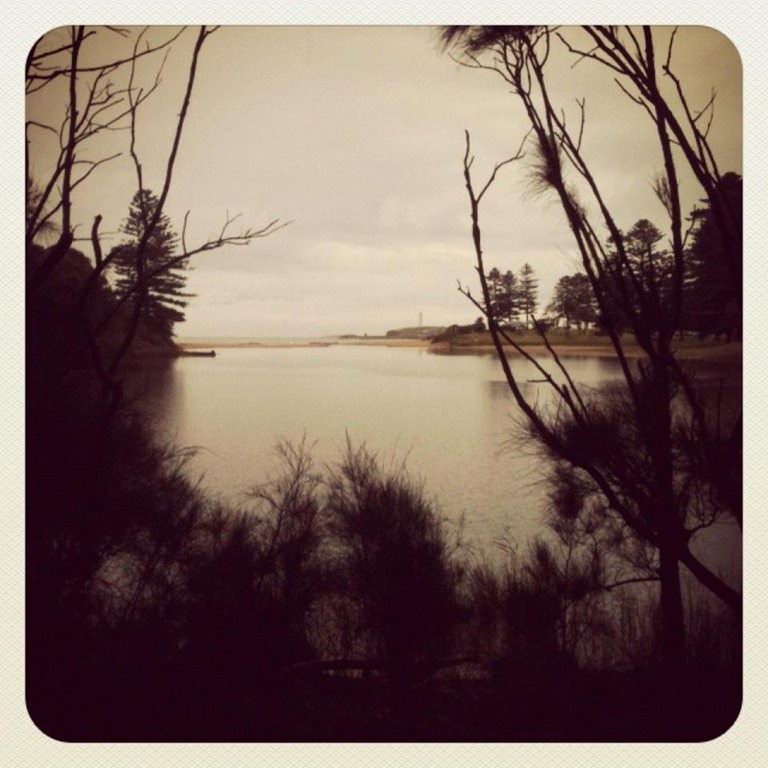
My local beach at sunset, and local lagoon North Wollongong, NSW


My home (4)

My bike 


My home (8)

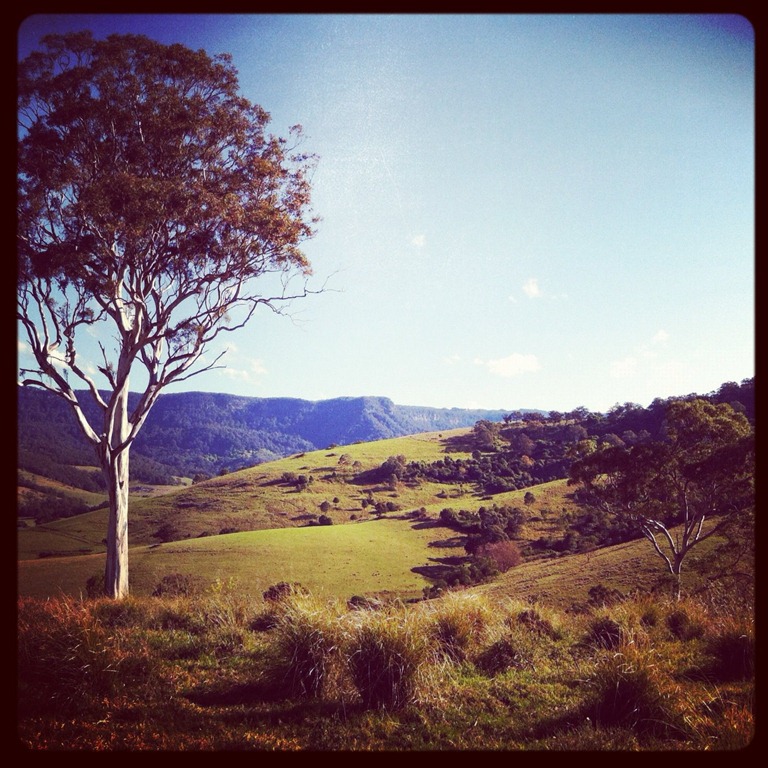
…And this is the view I am greeted with every time I come home from traveling.

After finishing high school I decided that I wanted to complete a degree in primary teaching figuring the lengthy school holidays would satisfy my desire to travel and allow more flexibility in the amount of time I could take off, but soon after commencing a Bachelor of Education degree I developed a love affair with my science electives. Through my first year of study I was so torn, I was spending more time with my two environmental science electives than my education subjects and things were getting out of control. After breaking down in tears to my dad one night crying “I don’t want to be a primary teacher anymore I want to be an environmental scientist (insert sooky stressed face)” he looked at me and plainly said “why are you crying you weirdo? If that’s what will make you happy, do it” and so I did, and immediately made the leap into Bachelor of Environmental Science degree’s arms at the University of Wollongong. (See ya education, you just weren’t the right one for me).

Having spent all of my life growing up in the Illawarra I began to get itchy feet and was craving a change of scenery so I moved to the Gold Coast in 2003 and transferred to a Bachelor of Science in Ecotourism. Working with people has always been in my nature, I spent many years working in bars and hospitality. Interacting and meeting new people was the biggest attraction for me in this industry so it was only natural that I would enjoy studying a degree which offered opportunities for me to explore the tourism industry as well as develop skills and knowledge in environmental science.

After spending four years away from home and taking advantage of the beautiful warm weather QLD has to offer, I began to miss our coast line (seriously, we really do have the best coastline in the world).

My home (3)

See. It’s pretty amazing. (Me and my best friend)

I returned to Wollongong and was immediately employed as a casual Visitor Services Officer with NPWS working at Royal National Park. Being casual, I had some spare time and I wanted to continue to develop my knowledge around natural resource management (NRM), so I began to volunteer with Conservation Volunteers Australia (CVA) where I started to really become aware of regional environmental issues. A position as Landcare Community Support Officer came up during my time as a volunteer with CVA. Looking at the selection criteria I didn’t think I had a chance but I applied anyway. The next day I had an interview and the day after that I was employed! Almost five years on, I am still loving the role.

Funded by Southern Rivers Catchment Management Authority and hosted by Conservation Volunteers Australia, as the Landcare Community Support Officer for the Illawarra region, my role is to assist Landcare volunteers, private landholders and farmers, as well as the wider community to develop skills and knowledge around natural resource management. This includes delivering training to build capacity of volunteers and individuals working in natural areas to carry out quality on-ground activities, engaging new volunteers into Landcare, managing and distributing online resources through newsletters, social media and a range of websites, and applying for a variety of grants to carry out environmental projects in the Illawarra region.

This job couldn’t be more perfect for me. I get to travel around the region and meet and work with loads of wonderful people. I love my volunteers and the groups I get to work with, they are just beautiful. I also am fortunate enough to be able to travel around the state for meetings and forums where I have an opportunity to share my experiences and be inspired by other NRM professionals and volunteers. I find managing online resources and developing resources such as newsletters satisfying as I am able to apply my own creative flair to these products.

Some of the places I get to see for work…

Bermagui River

Bermagui River at sunset NSW

Little Blowhole

Little Blowhole, Kiama NSW

Dapto

Albion Park NSW

But after attending my very first state Landcare forum in Queanbeyan I was surprised to learn that there was a real lack of young people in the Landcare movement. Many existing groups were of retirement age and no significant new recruitment was occurring. So I started to question why this was the case and why I had been attracted to volunteering and what was lacking that was deterring younger people from joining.


In 2009 I set up Illawarra Youth Landcare and run the group in my own time. Illawarra Youth Landcare is a Landcare group exclusive for young people aged between late teens to early thirties. We travel around once a month and visit an existing Landcare or Bushcare group in the Illawarra and assist them with their on-ground work. This gives the host group an opportunity to share their knowledge and skills with a younger generation and volunteers are able to explore the region and develop awareness about the environmental management issues we are facing. In addition to local projects I also organise overnight expeditions to other parts of the state. We partner up with other organisations and look at what other environmental issues persist beyond the Illawarra. These trips allow for volunteers to bond and develop friendships while giving something back to the environment.

To date we have a membership of over 70 people and over 120 followers on Facebook. Volunteers come from all sorts of backgrounds and are motivated for all different reasons to volunteer with the group. The key is flexibility, variety and opportunity for a fun social experience. It’s all about having a good time because at the end of the day, if it’s not enjoyable people are not going to become involved. I wouldn’t. Landcare is just as much about the people as it is the environment, and gen Y are generally time-poor and prioritise study, career and social commitments. So it’s difficult to gain any long term commitment from volunteers of this demographic. So I simply try to cater to this.

Over the last few years we’ve been involved in some amazing projects, a highlight for me was the Hawkesbury Source to Sea paddle we did with Willow Warriors in 2010. On this extremely hot (43 degrees in fact) weekend, we paddled along the Colo River working with a range of different Landcare and Bushcare groups. The weekend was jam packed full of swimming, kayaking, more swimming, rope swings, BBQs and a few beers (which I also love), fishing and oh yeah, some bush regeneration and a whole lot of laughing!

Here’s a short video of our adventures so far…


In 2011 I was awarded the Be Natural Young Landcare Leader award for NSW and am now a finalist in the National Landcare Awards as the NSW representative under this category. This is a huge achievement and being nominated means a lot. But living in a country as beautiful and diverse as ours, I could never stand back and not be involved in making it a better place for future generations to enjoy the way I did.

You can check out more about Illawarra Youth Landcare at www.illawarrayouthlandcare.com.au

Following in their footsteps

Excitingly the recent State of the Environment report has show  Australian farmers have made some major inroads in their farm environmental stewardship outcomes through a strong commitment to Landcare principals   

Most of Australia’s land environment is managed by one of three groups: state and territory agencies responsible for public land of various tenures, family and corporate agricultural and pastoral businesses, and Indigenous Australians.

The effectiveness of management has improved for most land uses, particularly those that are most intensive. While land–management practices have improved during the past few decades, in agricultural systems the loss of soil carbon, and soil acidification and erosion, are problematic and may have major impacts on production.

However, there is a serious gap in both the professional and the technical capacity necessary for effective land management. This gap will increase and its consequences become more acute as we face the challenges that climate change will bring to land environmental values and production systems.

Obviously if our farmers are going to achieve the best environmental outcomes they must have access to the best advice and have the opportunity to work side by side with natural resource management professionals  With this in my mind Art4Agriculture have accessed Caring for our Country funding to role out the Young Eco Champion program for 2012/13 This program will train a team of 5 young natural resource management professionals from Southern Rivers region of NSW. They will be trained to develop leadership and communication skills and become local faces of sustainable primary production and natural resource management. See Erin Lake our 2011 Young Eco Champion in action here

Eco Champions will work with Young Farmer Champions to present Archibull Prize activities in 15 schools throughout the region using a range of authentic and contemporary learning tools that allow young people to explore the economic, environmental and social challenges of sustainable agriculture and biodiversity conservation activities through the ‘Archibull Prize‘ competition.

Today our guest blogger is Heather Gow-Carey one of our exciting Young Eco Champions


Here is Heather’s story ………………….

My name is Heather Gow-Carey. I am 22 years old and am currently undertaking honours in my fourth and final year of an International Bachelor of Science (Geoscience) at the University of Wollongong.

Photo 1

Me

I grew up in the rural community at Dignams Creek on the Far South Coast of NSW. Environmental and natural resource management has always played a huge part of my life. The influence of my parents’ professions in the direction of my educational career has subconsciously shaped my decisions and their support has been unwavering at every stage of my development.

Photo 2

Helping out tree planting on the Hawkesbury River when I was just learning to walk.

I was born in Western Sydney but moved to the South Coast with my parents when I was two years old. They were looking to get away from the city and pursue their goals in setting up South Coast Flora, a native bushfood nursery. It is this specialised plant propagation that first introduced me to the theories behind environmental management. As long as I can remember I have been helping out in the nursery, going to markets and assisting mum out in her botanical pursuits collecting seeds and cuttings to be used in the nursery.

Photo 3

 Out collecting seeds with Mum.

My father was involved in the National Parks and Wildlife Service for a number of years and now works as the Landcare Community Support Officer throughout the Eurobodalla Shire. Hence my weekends as a youngster were filled with farm visits, tree plantings, weed control and numerous conferences and meetings. Luckily I had my younger brother to have tree planting competitions and someone to hang out with when dad had to attend to business matters. From both of my parents I have developed a love and a respect for the environment that I value immensely. It has shaped my love for the outdoors and even though I have had to move away to attend uni, I love going back home whenever I can.

Photo 4

 Playing in Dignams Creek when I was little.

About 15 minutes away is the closest town, Cobargo. It is a small town that has earnt the name of the ‘working village’. There are around 500 residents if you include the many farms around the area and there is a very strong sense of community, with all of the locals willing to pitch in to help each other out. I was part of the swimming club, soccer club, rugby club and scout group, as well as always exhibited and volunteered for the annual Cobargo Show. The show was and still is, one of the highlights of the Cobargo calendar. Even though it is such a small town, the show always draws large crowds in competitors, exhibitors and visitors and is well known as a quality agricultural show. There were several years where I made it my goal to enter every youth section in the pavilion, and even many of the open sections. When I was about 12, a prize was introduced for the junior exhibitor with the highest overall point-score, so I busied myself making arts, crafts, jams, baking, growing fruit and veggies, even entered some prime compost to take out the top prize!

Photo 5

The Cobargo main street.

One of my other interests is art. When I was little I wanted to grow up to be an artist, but soon learnt that most artists don’t get rich and famous until they are dead! So I had to rethink my career ideas. I was lucky enough to be involved in the Jindabyne Sculpture by the Lake exhibition – a competition for local artists held each Easter Long Weekend and with  from my art teacher I first entered at the age of 14.

I had always felt very strongly about using water responsibly and hence, I made a giant plug that floated out in the middle of the lake to inform people of my water-saving message. This was a great opportunity to raise awareness about the scarcity of water and the fact that we all rely on it so much, and yet we have so little that is actually able to be consumed.

My community involvement continued throughout high school, being involved in several sporting groups, community groups, the Rural Volunteer Bushfire Service and more Landcare activities. There was hardly a weekend or week night spare in my schedule! I was recognised for my efforts on Australia Day 2009, being awarded the Narooma Young Citizen of the Year.

Photo 6

After being awarded Young Citizen of the Year.

My HSC helped to shape what I chose to study and the last three and a half years of university really have taught me so much about the different areas of physical geography, human geography and the ways in which people interact with their environments. I have all of the theory behind me; I just need to put my ideas into practice.

Even though I am not from a farm in the traditional sense, I feel as though my upbringing really has shaped the person that I am, and what I would like to achieve out of life. Through this program I hope that I can encourage and support young Australians, and especially those in rural areas, to become involved in natural resource management and sustainable agriculture.

Wow we looking forward to working with young lady as you can imagine

The Young Farming Champions program is funded through the Australian Government’s Caring for our Country program. Art4agriculture thanks you for believing in us  

c4oc-pos

A Very Wicked Problem

I am reblogging this from Art4AgricultureChat because I am very interested in what my Clover Diaries Diary readers have to say about this  

Today’s guest blog 1 is by Gerry Andersen who is the Chief Executive Officer of Foodbank NSW.

image

Gerry has also been involved with the RAS of NSW for the past 25 years and is currently a RAS Councillor and Chair of the Sydney Royal Dairy Produce Committee. I had the pleasure of working with Gerry and the superb team from the Sydney Royal Dairy Produce Show in February this year when I had the honour of stewarding in the ice cream judging section. See the post I wrote about my day here

Gerry’s work with Foodbank has perfect synergies with the ethos of the Archibull Prize where we ask participating students to reflect on sustainable food production and also their role in sustainable food consumption. I am confident like me you will be astounded by the amount of food that is wasted in this country and as a farmer producing some of this food that ends up in landfill it breaks my heart. It will also break your heart to read about the other end of the spectrum that Gerry shares with us in this post. It just beggars belief that this can happen.

Each year two million Australians will rely on food relief and around half of them will be children who often go to school without breakfast or to bed without dinner.

Are the lucky ones so self absorbed and we live in our own little worlds and forget what really matters?. I just don’t know. What do you think?

I do know that as a farmer I am very proud of my fellow farmers participating in the Waste Not Want Not program.

This is what Gerry has to say………………..

Waste not; want not

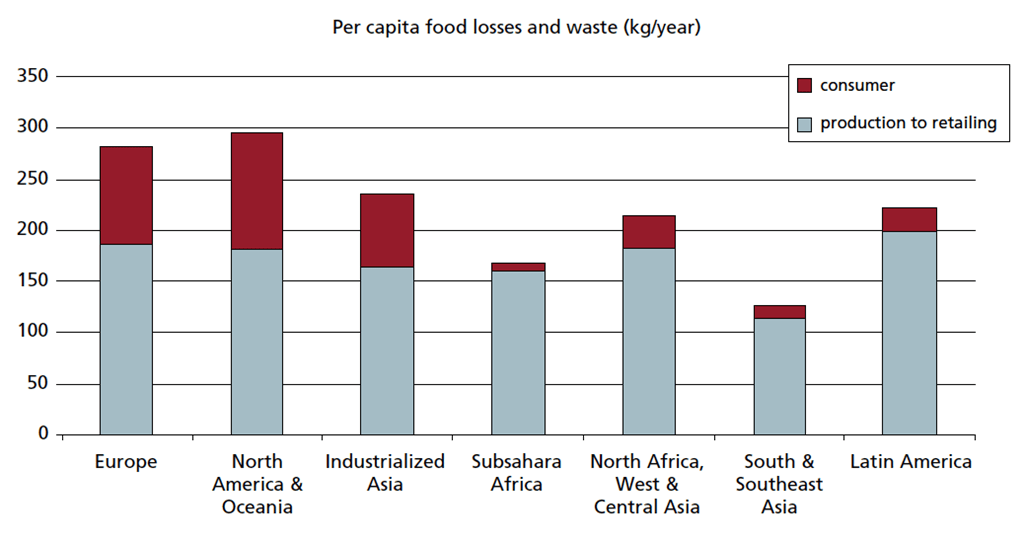
Food waste is a complex social, economic and environmental problem that is having an increasingly negative impact on our world.

wastegraph

There’s no doubt that when it comes to food production, Australia truly is the lucky country. We live in a plentiful country, with some of the world’s most abundant fresh produce and skilful, efficient farmers. Each year, Australia produces enough fresh food to feed 60 million people – that’s nearly enough to feed the nation 3 times over.1
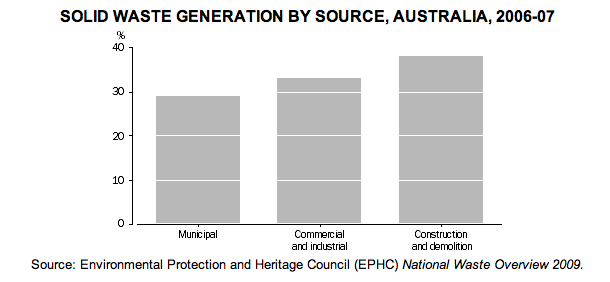
However, recent figures suggest that 4 million tonnes of food is wasted every year in Australia.

food_waste

Of this, 1.38 million tonnes is business food waste and 2.6 million tonnes is household food waste. 2

waste

This surplus food could feed millions of Australians every day. Food gets wasted because we buy more than we need; we cook more than we need; and due to demanding quality standards a lot of produce is discarded because of appearance, despite the nutritional quality still being very good. These food waste facts are startling alone, but when coupled with the fact that 1.2 million Australians do not have access to a safe and nutritious food supply, the situation is staggering.

Many of us eat well and enjoy a varied diet, so it seems strange to be discussing food shortages for Australians; however, for many, access to food is a critical problem. Each year two million Australians will rely on food relief and around half of them will be children who often go to school without breakfast or to bed without dinner. This is where Foodbank, the largest hunger relief organisation in Australia, comes into the equation. Foodbank is a not-for-profit, nondenominational organisation that seeks and distributes food and grocery industry donations to welfare agencies to feed the hungry around the country. The food goes to hostels, shelters, drop-in centres, school breakfast programs, home hampers and emergency relief packages for people in need. Last year alone it redistributed enough food for 28 million meals.

I became involved with Foodbank in 2009 taking up the role of CEO, following retirement from the food manufacturing industry three years earlier. I enjoyed entering the workforce again, and in particular working in the charity sector. Foodbank was initially formed to redistribute wasted food products from Australian food manufacturing and retailing sectors. However, recently the focus has moved to the farming industry.

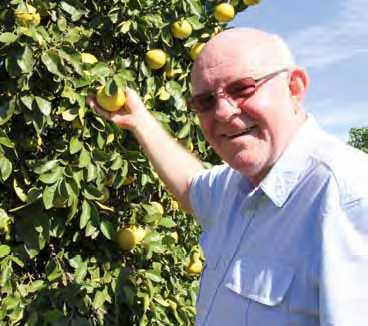
Foodbank’s Waste Not Want Not program is a unique project that delivers otherwise wasted produce from the Riverina farming community to the tables of hungry families throughout NSW and the ACT. Since the program began in 2011, over 400 tonnes of produce from the Riverina district has been donated. There are plans to roll out the program in many more areas in NSW by 2013. Farmers, including small producers, can donate their fresh fruit and vegetables products that are in excess to demand or not quite up to quality standards, as they are still nutritious and very desirable to feed needy people. Our most common donations from farmers include oranges, pumpkins, onions, potatoes and grain.

There is still a long way to go to achieve an Australia without hunger, but we, as an agricultural community, can play a part to reduce the waste and hunger that exists.

food-waste-hierarchyHeria

Waste Food Hierarchy

This is a very wicked problem that each and everyone of us has an opportunity to make a difference  

For more information on Foodbank and how you can become involved Visit www.foodbank.com.au

1 This article first appeared in RAS Times July 2012.

2 Australia and Food Security in a Changing World. Report of the Prime
Minister’s Science, Engineering and Innovation Council (PMSEIC)
Expert Working Group, 2010.

My light bulb moment

I have just come back from 2 pretty frustrating days of meetings in Canberra. The good news is two great positives have come from those two days of frustration

Firstly I had an epiphany. I know why farmers farm. Despite everything they go through to produce food and fibre for too often, too little return there IS a huge reward. That reward is satisfaction of knowing that you get up every day and have the ability to achieve something very important and most of the time you do it. My last two days in Canberra have shown me that there are a lot of people who don’t get that opportunity and certainly not people who spend most of their lives going to meetings

At Clover Hill Dairies that reward is the satisfaction of supplying 50,000 Australians with nature’s perfect nutrient dense cocktail “milk”.  Three times daily we have the satisfaction/reward of seeing the cows coming into the dairy, the cups going on, the milk traveling from the cow’s udder at 37 degrees through a series of stainless steel pipes to the first plate cooler which drops the milk to 17degrees C then to the second plate cooler which drops it to a further 8 degrees and then into the vat. The vat’s role is to drop the milk to the required just less than 4 degrees C and maintain that temperature until the milk tanker (or the money truck as Nick calls it) arrives.  All this in the blink of an eye lid. Not quite that fast but you get the picture. All this exciting stuff is happening right in front of you. So rewarding. So satisfying.

The second realisation I had is that it is no different at the top of the ladder as it is as the bottom. Too many  “leaders/spokespeople” do not come to decision making table prepared to bring the solutions and/or be part of the solution. When this doesn’t happens its the same old same old and it doesn’t matter how good the facilitation process is, everybody walks out the door shaking their heads, too often blaming the facilitator and the facilitation process at the two meetings I attended was just fine no complaints from me there.

Its horrifying really. People at all levels just don’t have the skills sets to participate effectively in meetings. BTW There were no farmers in the room at either of these meetings. On Monday the people in the room were high end service providers and the like to the agrifood sector

So the second positive is going forward the Young Farming Champions program will now incorporate a session/s on how to turn up at the decision making table with the solutions and effectively participate in meetings.

I for one will be attending those sessions with my eyes and ears wide open. Ready, willing and able to learn because for me there would be nothing more less satisfying than waking up everyday and finding yourself part of the problem.

Slide18

Post Script

A reader of my post today has drawn my attention to the work and writings of Margaret Wheatley who hails from US?. Yes Julie you were spot on. I am indeed very impressed

I have cut and pasted one of her articles found at this link  so you can see if what she has to say resonates  with you http://www.margaretwheatley.com/articles/Leadership-in-Age-of-Complexity.pdf. Have you taken on the hero role at some stage in your life? Then like me this quote will particularly resonate with you.

“This hero’s path has only one guaranteed destination—we end up feeling lonely, exhausted and unappreciated”.


Leadership in the Age of Complexity: From Hero to Host

Margaret Wheatley with Debbie Frieze ©2010 published in Resurgence Magazine, Winter 2011

For too long, too many of us have been entranced by heroes. Perhaps it’s our desire to
be saved, to not have to do the hard work, to rely on someone else to figure things out.
Constantly we are barraged by politicians presenting themselves as heroes, the ones
who will fix everything and make our problems go away. It’s a seductive image, an
enticing promise. And we keep believing it. Somewhere there’s someone who will make
it all better. Somewhere, there’s someone who’s visionary, inspiring, brilliant,
trustworthy, and we’ll all happily follow him or her. Somewhere…

Well, it is time for all the heroes to go home, as the poet William Stafford wrote. It is
time for us to give up these hopes and expectations that only breed dependency and
passivity, and that do not give us solutions to the challenges we face. It is time to stop
waiting for someone to save us. It is time to face the truth of our situation—that we’re
all in this together, that we all have a voice—and figure out how to mobilize the hearts
and minds of everyone in our workplaces and communities.

Why do we continue to hope for heroes? It seems we assume certain things:
• Leaders have the answers. They know what to do.
• People do what they’re told. They just have to be given good plans and
instructions.
• High risk requires high control. As situations grow more complex and
challenging, power needs to shift to the top (with the leaders who know
what to do.)

These beliefs give rise to the models of command and control revered in organizations
and governments world‐wide. Those at the bottom of the hierarchy submit to the
greater vision and expertise of those above. Leaders promise to get us out of this mess;
we willingly surrender individual autonomy in exchange for security.
The only predictable consequence of leaders attempts to wrest control of a complex,
even chaotic situation, is that they create more chaos. They go into isolation with just a
few key advisors, and attempt to find a simple solution (quickly) to a complex problem.
And people pressure them to do just that. Everyone wants the problem to disappear;
cries of “fix it!” arise from the public. Leaders scramble to look like they’ve taken charge
and have everything in hand.
But the causes of today’s problems are complex and interconnected. There are no
simple answers, and no one individual can possibly know what to do. We seem unable
to acknowledge these complex realities. Instead, when the leader fails to resolve the
crisis, we fire him or her, and immediately begin searching for the next (more perfect)
one. We don’t question our expectations of leaders, we don’t question our
desire for heroes.

The Illusion of Control
Heroic leadership rests on the illusion that someone can be in control. Yet we live in a
world of complex systems whose very existence means they are inherently
uncontrollable. No one is in charge of our food systems. No one is in charge of our
schools. No one is in charge of the environment. No one is in charge of national
security. No one is in charge! These systems are emergent phenomena—the result of
thousands of small, local actions that converged to create powerful systems with
properties that may bear little or no resemblance to the smaller actions that gave rise to
them. These are the systems that now dominate our lives; they cannot be changed by
working backwards, focusing on only a few simple causes. And certainly they cannot be
changed by the boldest visions of our most heroic leaders.
If we want to be able to get these complex systems to work better, we need to abandon
our reliance on the leader‐as‐hero and invite in the leader‐as‐host. We need to support
those leaders who know that problems are complex, who know that in order to
understand the full complexity of any issue, all parts of the system need to be invited in
to participate and contribute. We, as followers, need to give our leaders time, patience,
forgiveness; and we need to be willing to step up and contribute.
These leaders‐as‐hosts are candid enough to admit that they don’t know what to do;
they realize that it’s sheer foolishness to rely only on them for answers. But they also
know they can trust in other people’s creativity and commitment to get the work done.
They know that other people, no matter where they are in the organizational hierarchy,
can be as motivated, diligent and creative as the leader, given the right invitation.

The Journey from Hero to Host

Leaders who journey from hero to host have seen past the negative dynamics of politics
and opposition that hierarchy breeds, they’ve ignored the organizational charts and role
descriptions that confine people’s potential. Instead, they’ve become curious. Who’s in
this organization or community? What skills and capacities might they offer if they were
invited into the work as full contributors? What do they know, what insights do they
have that might lead to a solution to this problem?

Leaders‐as‐hosts know that people willingly support those things they’ve played a part
in creating—that you can’t expect people to ‘buy‐in’ to plans and projects developed
elsewhere. Leaders‐as‐hosts invest in meaningful conversations among people from
many parts of the system as the most productive way to engender new insights and
possibilities for action. They trust that people are willing to contribute, and that most
people yearn to find meaning and possibility in their lives and work. And these leaders
know that hosting others is the only way to get complex, intractable problems solved.
Leaders‐as‐hosts don’t just benevolently let go and trust that people will do good work
on their own Leaders have a great many things to attend to, but these are quite
different than the work of heroes.

Hosting leaders must:
• provide conditions and good group processes for people to work together.
• provide resources of time, the scarcest commodity of all.
• insist that people and the system learn from experience, frequently.
• offer unequivocal support—people know the leader is there for them.
• keep the bureaucracy at bay, creating oases (or bunkers) where people are less
encumbered by senseless demands for reports and administrivia.
• play defense with other leaders who want to take back control, who are critical
that people have been given too much freedom.
• reflect back to people on a regular basis how they’re doing, what they’re
accomplishing, how far they’ve journeyed.
• work with people to develop relevant measures of progress to make their
achievements visible.
• value conviviality and esprit de corps—not false rah‐rah activities, but the spirit
that arises in any group that accomplishes difficult work together.

Challenges from Superiors
It’s important to note how leaders journeying from hero to host use their positional
power. They have to work all levels of the hierarchy; most often, it’s easier to gain
support and respect from the people they lead than it is to gain it from their superiors.
Most senior leaders of large hierarchies believe in their inherent superiority, as proven
by the position they’ve attained. They don’t believe that everyday people are as
creative or self‐motivated as are they. When participation is suggested as the means to
gather insights and ideas from staff on a complex problem, senior leaders often will
block such activities. They justify their opposition by stating that people would use this
opportunity to take advantage of the organization; or that they would suggest ideas that
have no bearing to the organization’s mission; or that people would feel overly
confident and overstep their roles. In truth, many senior leaders view engaging the
whole system as a threat to their own power and control. They consistently choose for
control, and the resultant chaos, rather than invite people in to solve difficult and
complex problems.
Leaders who do know the value of full engagement, who do trust those they lead, have
to constantly defend their staff from senior leaders who insist on more controls and
more bureaucracy to curtail their activities, even when those very activities are
producing excellent results. Strange to say, but too many senior leaders choose control
over effectiveness; they’re willing to risk creating more chaos by continuing their take-charge, command and control leadership.

Re‐engaging People
Those who’ve been held back in confining roles, who’ve been buried in the hierarchy,
will eventually blossom and develop in the company of a hosting leader. Yet, it takes
time for employees to believe that this boss is different, that this leader actually wants
them to contribute. It can take 12 to 18 months in systems where people have been
silenced into submission by autocratic leadership. These days, most people take a wait and see attitude, no longer interested in participating because past invitations weren’t
sincere, or didn’t engage them in meaningful work. The leader needs to prove him or
herself by continually insisting that work cannot be accomplished, nor problems solved
without the participation of everyone. If the message is sincere and consistent, people
gradually return to life; even people who have died on the job, who’re just waiting until
retirement, can come alive in the presence of a leader who encourages them and
creates opportunities for them to contribute.
Leaders ashosts need to be skilled conveners. They realize that their organization or
community is rich in resources, and that the easiest way to discover these is to bring
diverse people together in conversations that matter. People who didn’t like each other,
people who discounted and ignored each other, people who felt invisible, neglected, left
out—these are the people who can emerge from their boxes and labels to become
interesting, engaged colleagues and citizens.
Hosting meaningful conversations isn’t about getting people to like each other or feel
good. It’s about creating the means for problems to get solved, for teams to function
well, for people to become energetic activists. Hosting Leaders create substantive
change by relying on everyone’s creativity, commitment and generosity. They learn
from firsthand experience that these qualities are present in just about everyone and in
every organization. They extend sincere invitations, ask good questions, and have the
courage to support risk‐taking and experimentation.

Are You a Hero?
Many of us can get caught up acting like heroes, not from power drives, but from our
good intentions and desires to help. Are you acting as a hero? Here’s how to know.
You’re acting as a hero when you believe that if you just work harder, you’ll fix things;
that if you just get smarter or learn a new technique, you’ll be able to solve problems
for others. You’re acting as a hero if you take on more and more projects and causes
and have less time for relationships. You’re playing the hero if you believe that you can
save the situation, the person, the world.
Our heroic impulses most often are born from the best of intentions. We want to help,
we want to solve, we want to fix. Yet this is the illusion of specialness, that we’re the
only ones who can offer help, service, skills. If we don’t do it, nobody will. This hero’s
path has only one guaranteed destination—we end up feeling lonely, exhausted and
unappreciated.
It is time for all us heroes to go home because, if we do, we’ll notice that we’re not
alone. We’re surrounded by people just like us. They too want to contribute, they too
have ideas, they want to be useful to others and solve their own problems. Truth be told, they never wanted heroes to rescue them anyway.

Parts of this article are excerpts from Walk Out Walk On: A Learning Journey Into
Communities Daring to Live the Future Now. Margaret Wheatley & Deborah Frieze.
Berrett‐Koehler Publishers.

Milk comes from Cats or does it

I thought it was time for a bit of light hearted relief from all the things that have made me angry in the last few weeks.

This week I was asked to define success over a range of initiatives I am involved in and this is what I wrote for

AGvocacy

Success beyond the farm gate is acknowledgement by the community that Australian farmers are

  • Professional and caring and committed to working towards sustainable farming production systems.
  • Underpinning Australia’s quality of life through ongoing innovation, efficiency gains and intensification to deliver affordable, nutritious and ethically produced food for Australian consumers and many other people around the world. 

Young Farming Champions program

Success for the Young Farming Champions program is Australia-wide network of trained, articulate and passionate young farmers talking directly with the communities they supply!

When I saw this picture I thought the Young Farming Champions will know they have been successful when supermarkets think their customers are knowledgeable enough about food and fibre production that this type of signage is no longer necessary

How funny is this?

Cat milk

There is a Sting in the Nettle

Last weekend it was a pleasure to host Angela Bradburn who is a senior policy officer with Cotton Australia her husband Scott and father in law Grahame. Angela has a background in Natural Resource Management and Scott is keen cyclist always looking for a new mountain to climb and we certainly have one of those living on the side of Saddle Back Mountain

As it turned out Grahame who is a school teacher by profession has keen interest in Native Orchids and was very keen to see our rainforest

IMG_3595

Team Bradburn at Clover Hill

IMG_3604

Scott and his dad enjoyed the visit to Fountaindale Dam wall 

Fountaindale Dam

The spectacular Fountaindale Dam See video here

Now I have a serious aversion to the Giant Stinging Nettle tree which thrives in our rainforest IMG_3720

Lots of  Giant Stinging Trees are regenerating in our rainforest

IMG_3730

The reason for my aversion to the Giant Stinging Tree is I once once mistook a little one (see picture immediately above) for a small Tobacco Bush and grabbed with both hands to pull it out. Ouch does it have a sting to remember

IMG_3738

Baby Tobacco Bush

Giant Stinging Tree

Giant Stinging Tree (Dendrocnide exelsa) They get very big don’t they?

I now have a new respect for the Stinging Tree as Graham tells me they host Native Orchids and I just adore Native Orchids

Pink rock orchid

Another beautiful bush on our farm is the endangered Illawarra Zieria

Ziera Like this one

Zieria Habitat at Clover Hill

Confidence to Grow Photos for Facebook   (9)

and Zieria Granulata in flower

The native Stinging Nettle also flourish at the farm.

stinging-nettle

An interesting combination of the beautiful and the beware don’t touch species

How do farmers move beyond the Ultimate Betrayal

“Et Tu Brute” This well-known Latin phrase historically believed to be the last words of Julius Caesar to his friend Marcus Brutus at time of his assassination is widely used in Western culture to signify the ultimate betrayal.

Recently some-one I have known and admired for a couple of years said to me “Lynne I am proud of you, you are in indomitable”. Now “invincible, tough, unconquerable” I am confident are not words people who have stood side by side with me for the long haul would use to describe me. I would think “fragile” would be more the word that comes firstly to mind.

Some-one I also know and admire greatly has said to me “There are times when I hate agriculture. I have worked in so many fields including politics and I have never seen so much backstabbing and nastiness as I have seen in agriculture”

I haven’t worked in politics and despite considerable pressure being put on me currently to stand for local government it is not something I am considering entering but I have recently witnessed something in agri-politics that has rocked to the core. People say farmers are their own worst enemy and in the past many farmers would have agreed with them. Well sadly fellow farmers some of the organisations funded by large chunks of taxpayer money to ensure agriculture has bright future I believe are setting you a very poor example and do not have your best interests at heart

Let’s bring it all together “ultimate betrayal” and “fragile”

Firstly fellow farmers you are I believe being betrayed by people/organisations who should know and do better and secondly I am not the one who can go into battle on this on your behalf. This is something we can only surmount and win if we all do it together. This will require a cohort of resilient bright minds with a cohesive, collaborative and whole of industry and Australia wide vision

Let me explain

My vision is for a dynamic, innovative, exciting and profitable agrifood sector that the next generation of food and fibre producers see as a career of first choice. I know this is achievable but from what I have seen over the last ten years we have a highly fragmented agrifood sector seemingly hell-bent on a path of self destruction.

I have chosen to achieve my vision in in two ways.

Firstly I am committed to finding every ideal opportunity and vehicle I can to show our farmers why we should be proud and loud that we feed and clothe 60 million people with a strong commitment to do this with the best interests of people, animals and the planet at the forefront of our minds.

Secondly I believe creating a community which is engaged & informed with agriculture is our ‘MOST IMPORTANT JOB’ and is the key to the sustainability of, not just agriculture – but to the entire fabric of our modern advanced society. To do this I work with a wonderful and growing network of young people who deliver the Art4agriculutureprograms into schools currently in NSW and Queensland and hopefully (fingers crossed) right across Australia in 2013-2014

So when in good faith the National Farmers Federation brought together a range of people from across the education, skills and training spectrum in March this year to discuss labour, education and skills in the agrifood sector I got very excited and jumped in my truck and headed to Canberra determined to play an active role. The aim of the forum was to identify the critical issues facing the sector and to move to address these issues through collective effort.  NFF then facilitated a subsequent working group of the forum to further these actions and I am a proud member of this working group.

When NFF CEO Matt Linnegar facilitated this working group he made it clear from the start that one of the key priorities in the first instance was to identify the lead body for this working group. Prior to this everybody invited was asked to “bring a friend” By this I mean each body was given a list of the organisations invited to the table and asked to identify any others they felt should be in the room. Every hour on the hour Matt gave everybody in the room the opportunity to put their hand up to be the lead body and every time everyone in the room identified NFF as the appropriate body. Everybody then agreed to work together, identified where they believed they could play the most effective role and how we could get the ball rolling and off we went to take it to the next stage and I drove home all warm and fuzzy. After 50 years of navel gazing ( the words of the statesmen around the table) this time the agrifood sector was going to address image, labour and skills shortages and community education and awareness of agriculture through collaboration and innovation to achieve great things

So  naïve, so altruistic was I and couldn’t believe my ears when the phone calls starting coming in. ‘Lynne have you heard about the “Canberra Roundtable – Rebuilding the Agricultural Workforce” to be held on 19thJune 2012’.

No I hadn’t and everyone I spoke to agreed it was essentially an attempt to duplicate the NFF process with some but not all of those represented by the working group and as such would only serve to fragment the sector at a time where we most need to work cooperatively.

Now I am highly confident that 99% of farmers would never have heard of the “Group of 4” that convened and supported the ethos of the Canberra Roundtable – “Rebuilding the Agricultural Workforce”

I felt farmers had been betrayed because with only limited money available in this space more silo building at this time is the last thing that industry requires to enhance industry image and reverse the skills shortage. Equally the last thing we need are groups without direct farmer membership seeking to direct the shape of our industry.

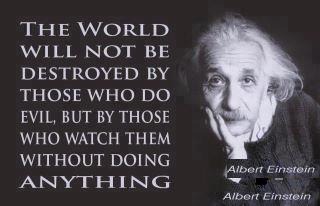
Albert Einstein

I personally felt betrayed because one of the ‘”Group of 4” I promoted at every opportunity as they do wonderful things to encourage high schools students to take up science careers in the R&D field. Why on earth they believe however that their tiny little organisation should take a lead role in defining the future for Labour, Skills and Education for agriculture in Australia is too bizarre to even think about.

One of the other organisations I was an ambassador for and I had never heard of the other two. I have since resigned from my ambassador role for this organisation because as a farmer first and foremost my allegiance is with NFF who represent my fellow farmers. I know the current leadership of NFF is committed to a whole of industry coordinated approach to tackle labour, education and skills in our sector and with vocal support from farmers and genuine collaboration from the agrifood sector as a whole I am very confident they can deliver.

Traditionally Agriculture has been fragmented with each industry thinking they have unique problems and issues. We have got to move beyond this paradigm. We all have common macro problems and issues and it’s only when we work together to address these can we solve the micro issues that affect individual industries

A recent study* showed Australians are most concerned about food and health. Ensuring our farmers can continue to grow affordable, nutritious, ethically produced food is the key to health, wealth and happiness of every person in this great country. It’s time for farmers to take back control of their own destinies and work together.

So if farmers don’t want groups without direct farmer membership seeking to direct the shape of our industry what do we want?

Call to action –

Farmers in the main just want to get on with the job of farming. Between email, snail mail and Twitter and Facebook I get invited to at least one event everyday so it’s important for productivity and clarity, that farmers have strong representation that allows them to get on with the job of farming.

Then it’s as plain as the nose on your face the way forward out of this quagmire is for farmers to join their state farming organisations and direct the change you want to see through that process

If you are not happy with your state farming organisations or grower groups et al identify, support, encourage and vote in farmers and leaders who can make the wisest decisions and most importantly work together for the greater good. Only in this way can they deliver on your behalf

We have got to do more than buy the tee shirt

Its time do more than just buy the T Shirt 

FARMERS WE CAN DO THIS AND WE MUST DO THIS

PS Twitter has been very busy discussing this post but few have put pen to paper and commented.  Remember the third biggest regret people who are dying have is I wish I’d had the courage to express my feelings. Many people suppressed their feelings in order to keep peace with others. As a result, they settled for a mediocre existence and never became who they were truly capable of becoming. Many developed illnesses relating to the bitterness and resentment they carried as a result”.

* What Matters to Australians:Our Social, Political and Economic Values A Report from the Anatomy of Civil Societies Research Project March 2012

The Power of Language

Today’s post has been written by Angus Whyte profiled beautifully here by Fleur McDonald in January.

The power of Language

A Robert Brinkerhoff Illustration

The post has been prompted by two posts I wrote recently. Firstly on Art4agriculuture Chat about Young Farming Champion Stephanie Tarlinton’s recent speech at the Dairy Research Foundation Symposium which saw her voted the favourite speaker of the day. Scroll half way down the page past my background info to read Stephanie’s very powerful speech she titled the “Conversations of Change”. The other post referred to a presentation at the same event given by Dr Jude Capper that prompted this post on Clover Hill Dairies Diary “Little Golden Book Farming” 

This is what Gus has to say ……..   

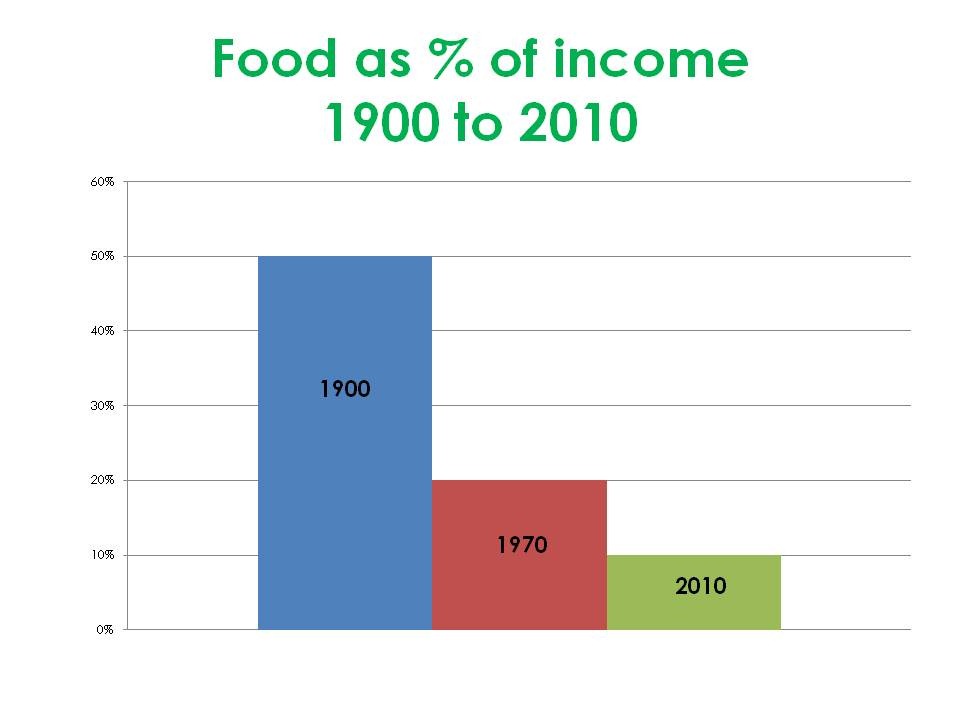
Interesting that language can mean different things to different people; it can bring people together or divide them. When farmers talk about new technology they are talking about GPS technology that allows them to plant, fertilize or spray exactly where required, or telemetry systems that allow them to remotely control waters, maybe even individual animal ID systems that feed the animal its exact requirements. All technologies that have helped reduced food spend as percentage of income in Australia from 50% to 10% in the last 100 years

Applications of Computers in Sustainable Agriculture

When consumers hear new technology in agriculture they hear “triffid like” GM plants or the latest spray that will kill everything, even hormone growth promotants that will turn stock into the incredible hulk, well green anyway.

Horrors of GM

The question might be; “how can the language show the reality?” The reality is that farmers and consumers both want the same thing – healthy, nutritious, ethically produced food and fibre that was grown with the best interests of the planet in mind” 

agriculture 0012

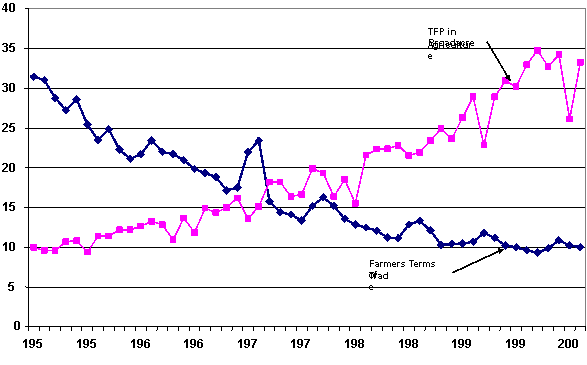
Lets have a look further at how we may be using the same language; when consumers want food produced “like the way it has always been produced, the old fashioned way”, and the farmers want to be able to produce a good product “without working 8 days a week 30 hours a day, the old fashioned way”. When farmers talk about “efficiency gains” they are talking about being able to produce the same product with less of a carbon footprint and still make a margin aware that the “terms of trade” are constantly reducing.  Remembering whilst the cost of food had gone up 40% in the last ten years (CPI has gone up about 50%), the farmer’s share has gone from 20 cents in the dollar to 17.

Total Productivity

Total factor productivity (TFP) in Australian broadacre agriculture and farmers’ terms of trade: 1953–2004.Source ABARES


When consumers hear “efficiency gains” they seem to hear “factory farms” or that farmers have found a better way to make even more money than they already do. These thoughts conjure up images of cruelty and money hungry, both traits that are disliked (and rightly so) in our community.

P1020049

To bring the language together if consumers think that farmers must invest in the environment regardless of the cost then consumers must show the environment the same respect and seek produce that is raised consistent to their values, then buy it, regardless of the cost. I put it to you that if farming was so easy and you can make so much money then why are less than 1% of our community involved and that is decreasing every year?

I must admit I know that we can produce food and fibre in a way that means consumers and farmers needs are met, even exceeded. You will notice that I will not mention money when I’m talking about needs. Consumers have no more right whatsoever to expect food at a reasonable price if they don’t believe farmers have no right to get paid a reasonable price for their produce. Everyone involved in the production of food through to eating it, should be aware of the social and ethical values of living in a community. The “carbon tax” is an attempt to place an economic value on something that we as a society should value, which is the living within our means and not having negative external impacts on the environment.

When we purchase an item we should ask ourselves: Has this been produced with respect to my personal values of welfare, health etc.? Has the item been produced without external impacts on environment, community etc.? These values can’t have an economic value placed on them and yet all talk about the long term health of the planet and the community.

When we buy food you can look to “make an investment in your health and future” or you can see it as “a cost that needs to be reduced as much as possible.” I believe that we as a society are so used to eating poor quality food that is “cheap”, if we based our decisions on food quality we would need much less and actually save money.

Count Nutrients not calores

Just so that we are all taking the same language we as consumers need to build closer relationships with our producers so we understand how our wonderful food is produced, then we can make “value based” decisions when we purchase. As you are all aware large supermarkets are service based industries that don’t produce anything and they make it very difficult to build a relationship with your farmers. So you should find vendors that can tell you who, how and where the food is grown, tell you its story, then you can make a judgment on the values of that product before purchase. This way you can ensure that you aren’t just making a good investment in your own health, also that of the broader community and the planet.

Food_System_Diagram

Remember the statement “no man is an island”, our dollars dictate our values so if we truly want to see change then we need to understand that our choices impact on others, we are all part of the same community on planet Earth.


The Author: Angus Whyte lives with wife Kelly and 8 year old son Mitchell at “Wyndham”, a 12,500ha pastoral property on the Anabranch River 85km north of Wentworth NSW.  “We consider ourselves “graziers”, in that we turn plants into money through livestock and we don’t mind what sort of livestock we run. Our attitude to farming is simply to work with nature rather than against, so we no longer have weeds, we have “plants with stories” that we can learn from and our aim is to make our business simple and our ecosystem extremely complex, the more complex the better.”

If you would like to join in the conversation on Twitter Gus tweets as @GusWhyte and farmers and their extensive and diverse networks discuss all things food and fibre under #agchatoz

Recently farmers have been concerned about how we are being stereotyped see I am not Happy Woolies and we are adding #proag to our tweets ( when there is room- I mean 140 characters is pretty tight at the best of times) to discuss this.

FYI #proag is short for professional and caring farmers 

Have you heard about the Great Cafe Challenge?

Our favourite angel Alison Fairleigh and team have launched with the support of The Land newspaper this challenge

“We challenge every café owner across Australia to carry at least one weekly rural newspaper in their shop”.

Cafe challenge 2

That’s it. So simple. It won’t cost much; it won’t take much time; but the benefits to rural Australians of having more urban people with a greater understanding of where their food and fibre comes from, of the people and communities who produce it, and the conditions under which they produce it, could be extraordinary!

More than likely most people won’t pick up the rural newspaper as their first choice; but when all the other papers are gone, they may just flip through the pages and begin to see a world they know very little about.

Will you accept the challenge? Will you help spread the word?

The Great Cafe Challenge

Alana and Chris at the Chippendale Roastery Cafe have!

Go into your local café today and ask: “Do you carry a rural newspaper?” If not, let’s change that!

(Follow the Great Café Challenge on Twitter & Facebook) and read the background on Alison’s blog here

Little Golden Book Farming

I recently heard Dr Jude Capper speak at the Dairy Research Foundation Symposium in Camden. She had a lot of thought provoking insights about consumer images and perceptions

“We have cars and airplanes. We have treatments for cancer and heart disease. Why is it that in every other business sector we celebrate increased efficiency and productivity thanks to new technology while when it comes to food more and more people want it done the old-fashioned way?” Dr Jude Capper

Lets have a think about this Little Golden Book notion of farming and this fascinating (not sure that is the right word ) push by consumers for farmers in 1st world countries to “slow down” and go back to the 1950’s way of farming

In 2000 our farm was a one man operation milking 80 cows producing 800,000 litres of milk. Today we milk 500 cows and supply 50,000 Australians with milk every day. We employ 10 people and we have reduced our environmental footprint by over 35 per cent per litre of milk produced. That’s cause for celebration wouldn’t you think?.

Lets take a look at the average Australian farmer. In 1950 he/she fed 20 people, in 1970 he/she fed 200 people. In 2012 he/she feeds 600 people.I would think that’s one hell of a lot to be proud of.

Lets take a look at the cost of food compared to income.

Slide8

Wow what else can you think of that has gone down in price in real terms? But is anybody celebrating our farmers because of this?. I don’t think so

It you are still not convinced lets really put it into perspective. Let me assure you not  everyone has this luxury. This is what Pakistanis spend on food

Slide1

Yes you read correctly 42% of their income. Note the number of people employed in agriculture at nearly half the country. In Australia less than 1%.of people are farmers. The hunger index is “alarming” Their food consumption in calories is 1/5 of ours and 25% of people are undernourished.  Don’t know about you but that’s pretty sobering for me.

Now lets have a look at few things Dr Capper had to say at the Dairy Research Foundation Symposium. Dr Capper by the way comes from the US where they spend 6% of their income on food

She put up this slide to highlight that our footprint is related to our productivity whether we are human or livestock or cars for that matter

Environmental Impact per unit of Production Slide 1

Yes at first glance vehicle 2 has the lowest footprint but as you can see in the next slide footprint its a function of how many people the vehicle carries.In other words how productive the vehicle is

Environmental Impact per unit of Production

Take home message from that one. You cant judge the system without all the facts

Bus vs Car

Back to the 50’s rural idyll.  Where has agriculture gone wrong I ask? We are seeing consumer alienation from agriculture and the food system expressed through concerns about

  • nutrition,
  • food safety,
  • affordability, Yes affordability – haven’t they seen that graph.
  • environmental sustainability and animal welfare

The armchair experts are telling consumers the answer is apparently to buy organic or grow your own. Dr Capper told the audience based on the current productivity of the world’s organic dairy industry we would need 25% more cows and 30% more land to produce the same amount of milk if all dairy farmers went organic. In the US alone that means they would need a further 3.5 million dairy cows.!!! Heaven forbid.

Where has agriculture in 1st world countries gone wrong.? Its obvious isn’t it! Agriculture has done a bloody awful job of telling it’s story. Instead of proud and loud messages we have let others tell our story and sadly I didn’t get the impression the dairy farmers in the auditorium by their questions to Dr Capper were going to rush out and share their wonderful news stories with the rest of the industrialised world.

Another story for another day. The Holstein vs the Jersey cow and how the dairy farmers in the room in my mind got the wrong take home message from Dr Capper’s talk that day