The Fine Line Between Giving and Over-Giving: Striking the Right Balance for Success 🌟

In the words of Zig Ziglar, “You can have everything in life you want if you will just help enough other people get what they want.”

This profound statement underpins the ethos of successful giving – a vital trait in both personal and professional realms. Yet, there exists a thin line between being a giver and inadvertently becoming a doormat. It’s a delicate balance, one that requires introspection and strategic thinking.

The Power of Giving 🤲

Giving, in its essence, is a powerful tool for success. It fosters a culture of mutual support and collaboration. By helping others, we often pave the way for our own success, creating networks of reciprocity and trust. This principle is especially resonant in leadership, where the ability to give – be it time, resources, or support – can significantly elevate a team or an organisation’s performance.

The Pitfalls of Over-Giving 😓

However, there’s a caveat. Givers can find themselves at the bottom of the success ladder if they fail to set boundaries. Without these limits, one risks burnout, being taken advantage of, or losing sight of their own goals and needs. Adam Grant, in his exploration of giver and taker dynamics, emphasises the necessity for givers to establish boundaries. This prevents them from depleting their resources – emotional, physical, and otherwise.

Drawing the Line 🚧

So, how does one draw the line? It starts with self-awareness and understanding one’s limits. It’s about recognising the difference between being helpful and overextending oneself. A crucial aspect is learning to say ‘no’ when necessary. It’s not about being less generous but about being smart with your generosity.

The Balanced Giver 🧘‍♂️

The ideal giver is one who knows how to give effectively. This means prioritising, choosing where and how to give in a way that adds value without draining personal resources. It’s about being strategic – helping others in a way that also aligns with one’s own goals and values.

Embrace Giving, Respect Limits 🔚

Giving is undoubtedly a pathway to success, but it must be practised with mindfulness and boundaries. As we navigate our roles as givers, let’s strive to maintain that delicate balance, ensuring that our generosity uplifts others as well as ourselves.

Have you ever felt like a doormat?
How do you set boundaries?

#StrategicGiving #MindfulLeadership #SuccessThroughSupport #BoundarySetting #EmpoweredGivers 🌍💼🛡️🤗📈

Harmony in Unity. Embracing ‘Better Together’ for a Resilient and Sustainable World

In our closely connected world, the idea of “better together” encourages us to break down barriers and focus on the well-being of everyone instead of just ourselves.

When we work together, combining our different skills and ideas, we can tackle big problems in a complete way, encouraging new ideas and making us stronger.

Choosing a shared vision over just thinking about what we want individually lets us join forces, making a bigger impact on global challenges like climate change.

Teamwork doesn’t just make each person’s efforts stronger; it also builds a feeling of togetherness, trust, and respect.

When people with diverse perspectives collaborate, it sparks creativity and helps us adapt for a future that’s both resilient and sustainable. Remember, the idea of being “better together” is a powerful reminder that when we work as a team, we can navigate the complexities of our modern world more effectively. 🌍💙

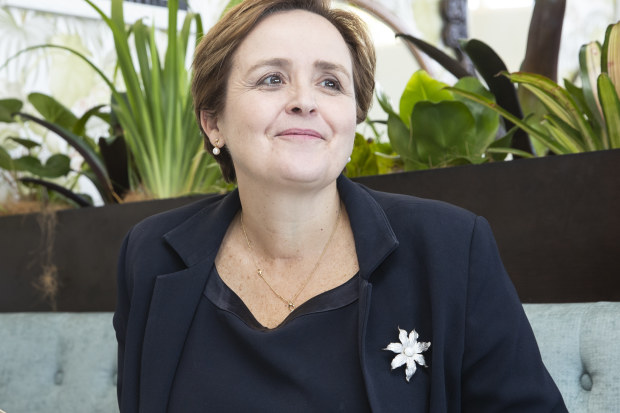
If anyone can bring us all together – its Cate McQuillan

This is Cate McQuillen’s call to action at last nights AAEE Awards

I first met Cate at Belltrees Public School Regen Ag Workshop last weekend and reconnected last night

If anyone can breakdown silo thinking and convince us to move beyond self interest and we are #bettertogether its Cate

Footnote: Cate is Mememe productions cofounder. They won an International Emmy Award in Cannes for their Dirtgirlworld animation. Check out their website here https://www.mememe.com.au/

#CreatingaBetterWorldTogether #BetterTogether #CollaborationMatters #CollectiveAction #GlobalUnity #SiloBreaking #InnovationHub #ResilientFuture #ClimateCollaboration #UnityInDiversity #SharedVision #GlobalImpact #CommunityFirst #CollectiveWellBeing #Adaptability #SustainableSolutions #HarmonyInAction

Continuing the Stories of My Family Treasures by Remembering those who came before us – Part Two

Continuing the stories of my family treasures.

This particular item is a real treasure, both of monetary and sentimental value. It is stored in a safety deposit box, to be passed on to the next generation who will appreciate its significance.

As mentioned in “Remembering Those Who Came Before Us – Part One”  Eric Lindsay and his brothers were impressive footballers and tennis players.

In the early 20th century, winning a premiership came with “real” gold medals. Charlie Lindsay played 1st Grade football for Port Kembla, and they must have won the competition in 1922. Eric Lindsay and Charlie Lindsay also played 1st Grade football for Dapto, winning the premiership in 1919.

In 1906, Eric Lindsay won the Junior Tennis Championship, and his victory was celebrated with “real” gold, all accompanied by this beautiful “real” gold fob chain.

To continue the family tradition, I had my son’s national ski championship awards replicated in gold and added to the family history fob chain. I am confident the next generation will value them as much as I do.

While it is sad that these treasures are kept locked away, I would be devastated if I wore the fob chain and lost them. Just having the capacity to share their story gives me great joy

#FamilyHistory #Heirlooms #LindsayFamily #FamilyTreasures #SportsAchievements #FootballHistory #TennisHistory #GoldMedals #FobChain #GenerationalLegacy

Table – John Lindsay and Mary Dunster and children
Name Born Died Status
John Lindsay 1857 1930 Married: Mary Dunster
Muriel 1887 1961 Unmarried
Charles 1888 1964 Married: Eileen McPhee
Joseph Roy 1890 1929 Unmarried
Walter Dunster 1893 1967 Married: Ethel Carr
Eric Stratford 1894 1970 Unmarried
Estelle 1897 1962 Unmarried
Harold Thornbury 1895 1959 Unmarried
Hilda 1900 1963 Unmarried
Doris 1899 1980 Unmarried
Hilton 1902 1964 Married: Edith Martin


Apathy has led to a broken food system – information and education are the missing links

In this passionate TEDx talk Dr Anika Molesworth implores us to rethink the food system

Farmers for Climate Action are showing us how with their recently released Farming Forever Report. Their research shows ensuring our farmers have the education and information they need is pivotal for them to sustainably provide us with a reliable supply of nutritious food for our families

Some background for us to think about

Farming in Australia is risky business. Farming has 3 x the risk profile of the food sector it services in Australia and our agriculture output is the most volatile of any major exporting nation  

Source 

Not surprising when we live and farm on the hottest, driest continent inhabited continent 

In their report Farmers for Climate Action:

  • has called for more on-ground staff and programs delivering farmers education on climate and carbon.
  • puts forward a plan for a national climate and agriculture policy, based on a major survey of more than 600 farmers and round table discussions with leading farm stakeholders.
  • surveys found the vast majority of farmers want to reduce emissions and many want to sell carbon credits, but don’t know how to do so.

More interesting facts and stats from the report:

  • Carbon farming can produce huge benefits but just 10% of farmers are participating and 70% say they don’t understand it
  • 93% of farmers willing to shift to low emissions production but just 30% have been in a relevant practical demonstration or “extension” program with other farmers
  • 38% of farmers said they do not sell carbon because they do not know how
  • Landcare and Natural Resource Management (NRM )bodies are the sources farmers trust the most
  • Farmers want access to trusted experts via NRM Regions or Landcare
  • Farmers understand the need to be sustainable to maintain access to vital overseas markets

To me it would seem from the stats below about the access to the  Future Drought Fund that the government needs to be constantly reminded 9 out of 10 farmers learn from other farmers

Want to see how innovative our young farmers are? Read this story about Tegan Nock, who co-founded farming start-up Loam Bio in 2019,  developing a microbial fungus that when applied to soil might not only improve its health but greatly enhance its ability to store carbon

People have very long memories

My experience with Dairy Australia happened a long time ago. 

Why am I talking about it now.

Its because I am not a one off. I am one of a possible class action  of many, many undervalued people who have passed through their doors.

This was hammered home to me recently. I was part of a team who put together a successful National Careers Institute Grant Round 3.

A model that had the potential to turn agriculture on it head and genuinely empower the sector to drive real profitability for its farmers.

When we launched the campaign to sign up the changemakers, I found roadblocks within my circle of dairy influencers

“You are kidding me Lynne – there is no way in the world I am going to promote something that will make Dairy Australia look good when they have nothing to do with its success”

It was then I knew we needed a serious culture change. The culture at Dairy Australia isn’t a one off.    Not enough of  our research and development corporations are not fit for purpose

How do fix this?


How do you fix a problem not enough people seem to realise we have?

My post yesterday came from a place of deep hurt. In fact my entire world is driven by my emotions.

When I came back to agriculture 20 years ago I knew there was a very good reason why I left in the first place. I didn’t want to milk cows but I did want to use my talents ( whatever they were ) to get the best outcomes for the industry my family loved so much.

It turned out I did have a talent I didn’t know I had and that was designing and delivering action learning programs for young people 

To hone my talent I sought our John Hutchison and Deanne Kennedy at JayDee events who have been delivering Cows Create Careers for the dairy industry.

John and Deanne are magnificent humans and together with Cathy Phelps ( who at the time headed up the Natural Resources Management department at Dairy Australia) we created a farmer focused first iteration of Picasso Cows where young people in primary schools explored healthy landscapes, clean waterways and energy efficient dairies. I got it funded and piloted it for two years and then Dairy Australia wanted it.

The first Picasso Cows were traffic stoppers

I was aware the budget would be in Marketing and Communications (M&C) . The people who run schools’ engagement at Dairy Australia are nutritional experts. The Dairy Australia version of Picasso Cows would not be farmer focused and instead have a health and nutrition focus

All well and good, that is their area of expertise,  but not my passion so I walked away. Handed over all the IP everything for no remuneration and knew that it was in good hands been looked after by John and Deanne.

Is Picasso Cows still being looked after by John and Deanne? No it isn’t. When will people in Marketing and Communications realise grass roots programs are successful because they are grass roots programs and the best people to deliver them are the grass roots ?

A couple of years ago Dairy Australia made the decision to no longer fund Cows Create Careers . It was so rewarding to see the farmers go into battle to have Dairy Australia reverse their decision. As I said John and Deanne are magnificent humans, they have a rapport with the demographic of farmers I don’t- the over 45’s

I also created a highly successful series called “Jhet and Emma – A Day in the Life of Two Young Girls working on a Dairy Farm ” series for the NSW DPI LandLearn program. The DPI insisted it be housed on their website. When they shut down LandLearn did they let me know the Jhet and Emma series would disappear into the ether? No they did not. Hours and hours and hours of pro bono time and a highly successful education series gone forever .

And this was just the beginning of the extractive world of agriculture I found myself in. After 20 years I feel like an abused housewife who knows deep down no matter how much people say they are going to change, the problem is too endemic, yet she keeps going back for more.

So I ask myself, why is the culture in agriculture like this and there is a good reason

Everyday WE ( Australians) wake up expecting food at rock bottom prices to be a birth rite. We are asking farmers to do what they do and we aren’t prepared to value it. The system proliferates this mindset. The supermarkets wake up everyday on a race to the bottom competing on price alone.

Food is 10% of income in this country. 70 years ago it was 50%. Our farmers getting up everyday to produce food at rock bottom prices gives us a disposable income to spend on other things.

Our farmers feel undervalued. The sector feels undervalued. Undervalued people tend to focus on problems and don’t have the energy to seek out solutions. They tend not to value people who do.

Change starts with us

How do we start the regenerative process?


Best practice workforce development – what does success look like?

I am very excited that the charity I founded has received National Careers Institute funding to prototype and pilot a model for best practice workforce development.

I am putting a lot of pressure on me and the people I am surrounding myself with to ensure we deliver a successful model that is replicable and scalable by any industry.

Working in agriculture for the last 20 years I have seen so much money wasted.

I have also seen people and organisations delivering pockets of brilliance . How impressive is this People in Agriculture  which is a partnership between a number of agricultural sectors leveraging the brilliance of the people at Dairy Australia who created People in Dairy

In the first instance – surely we could all work miracles if we bought the pockets of brilliance together so we could learn from each other because this is what people committed to best outcomes for the people they serve do.

Whilst I have seen some brilliance at Dairy Australia  I have seen a lot of things that don’t make any sense to me at all. My area of expertise is designing and delivering programs that empower young people to take action on issues that matter to them.

I created Picasso Cows for Dairy Australia. That  meant I have worked with their Marketing and Communications teams because that’s were the budget for school engagement sits.

Can agriculture fix its images and perceptions issues through marketing and communication?

I am 100% confident that it cant.

The only way we ( farmers and the businesses that support us) can attract and keep employees is by being the places that people are proud to work for.

This requires the capacity and capability to self reflect on our businesses. Simple things like how does my business present to the public. One example rubbish and piles of old machinery lying around are not a good look.

I spent 25 years working in the world of retail. We got taught this stuff. Who is helping people in agriculture self reflect.

When we get ourselves right THEN and only then can we let the people in marketing and communications do their thing  with confidence

Organisations like Dairy Australia can lead by example and show us how its done.

Lets start by taking the pressure off the Marketing and Communications team – they cant fix things that are out of their control

Who do you channel when you need to flex your courage muscle?

Everyday I get to work with extraordinary young people doing extraordinary things

The person who gives me the courage to keep turning up everyday is an octogenarian

His name is E. Professor David Lindsay AO FTSE and my claim to fame is I am his niece and the flower girl at his wedding. Yes that’s me on the left.

He has more courage than any scientist I have ever met in the world of agriculture. He challenges the research and development corporation that will potentially fund his team’s science at the highest level.

If only other industries had scientists with this courage, just imagine how exciting the agriculture space could be

In 2022 will we have the courage to hold up a mirror to ourselves and ask the big question ?

Our Young Farming Champions are participating in a series of workshops with Cynthia Mahoney doing a deep dive into Alexandra Carter’s groundbreaking book “Ask for More” 

I am enjoying the sessions and this resonated with me

Many people believe that it takes two to make a conflict, but you only need one car to have an accident! When you examine what brought you to this place, you’ll have better information to help you move through it. If you’re internally stuck, you can still go through both sides of the situation and look at the conflicting feelings, patterns, and facts that are leading to the stagnation you feel.

Today I sent our Impact Report to our funding partners. I shared my personal joy at getting the best return on investment for the organisations we work with who have all recognised investing in young people (K-12, higher education, early career) is where Australia is going to have the most impact.   Young people may only be 20% of the population but they are 100% of the future and very importantly young people are aware and they are active and they have the capacity to take others on the journey .   

I shared that 2022 has been a rewarding year for me.

      • The highlight has been getting $ from the National Careers Institute to protype a workforce strategy that any sector can replicate and scale.
      • Receiving state Government and Vincent Fairfax Family Foundation funding for the Young Environmental Champions program
      • Our YFC being invited to speak at conferences across the world

I also shared my frustrations and hopes and dreams

Whilst I enjoy supporting young people (K-12, higher education and early career) to take action on issues that matter to them, the agriculture sector remains a sector I don’t understand and continues to frustrate me.

Notably:

    • The agriculture invests in programs that aim to lift young people up whilst the wider culture in the sector rewards them for learning to fit in, for staying small, for not self-promoting.  Cynthia Mahoney touched on it in a recent YFC workshop  
    • The agriculture sector is desperately short of labour but has no workforce strategy
    • The agriculture sector has very black mark for modern slavery – yet appears to makes no real effort to address it

In 2022 will we have the courage to hold up a mirror to ourselves and ask the big question ?


Culture change can start with acknowledging the pain and respecting the expertise

This post is a reprint of a recent article in AFR.  For me the article’s ethos highlights an opportunity for us all to change our thinking from believing we are all experts on everything to acknowledging and valuing many, many people have dedicated their lives to obtaining expertise is specialist fields. I have been working with teachers for 15 years
“Schools are complex ecosystems, interconnected and intertwined communities that require qualified practitioners to navigate and to educate so that we can give our next generation all the skills they need to make informed choices in their lives.”
I have been working with farmers all my life and listening and hearing their ask to be seen, heard, understood and valued.
I watch from the side lines the pain Indigenous Australians continue to feel.
Surely creating a culture we all want to be part of is a shared responsibility that starts by acknowledging the pain and the respecting the expertise

Fed-up school principal says critics ‘have no idea’

Julie Hare Education editor

The head of an elite private school has railed against baseless attacks and misinformed opinions about teachers by politicians “who actually have no idea what they are talking about” while calling out their remedies for complex issues, such as falling educational standards, as simplistic.

Briony Scott, the principal of Wenona School in North Sydney, said teachers were trivialised, their profession bastardised and their contribution overlooked by a generation of political decision makers who see the world in black and white and have no comprehension as to the complexity of the school “ecosystem”.

Outsiders and politicians like to tell Briony Scott how to do her job and she’s had enough. Louie Douvis

In an impassioned speech at a conference about female educational leaders, Dr Scott said everyone, having attended a school at some stage, considered themselves an expert with their opinions often misinformed and too-rarely imbued with facts or evidence.

“Every couple of years an education minister or prime minister will say something along the lines of ‘we should focus on the basics of how to read and write’. And I’m like, oh, I hadn’t thought of that one,” Dr Scott said.

“They say schools must focus on character and values and in my head I’m thinking ‘have you heard of Aristotle? What do you think we have been doing for the last 2000 years’?

“And then I think, they have no training, but they [think they] know more about my profession, what I do with my three degrees and where I have worked on the ground for decades. Tell me again, how to do my job.”

Dr Scott elaborated on the complexity of the teaching profession by detailing what is not, in theory, part of her job, but is nevertheless intrinsic to it.

“I’m not a family counsellor, but I have sat with children and held their wrists as they were bleeding, patched countless self-harm injuries, told a child that their mother has died and they just found her body,” Dr Scott said.

“I’ve ridden in far too many ambulances to count, counselled warring parents, dealt on the front line with medical issues, accidents, alcoholism, mental health, breakdowns, suicide, domestic violence, murder, bankruptcy, unemployment, homelessness, and couch-surfing primary school students. Tell me again, how to do my job.”

She went on. “I’m not a medical doctor. But I have students who are walking around with defibrillators in case their heart stops, epi pens in case their body stops, nebulisers in case their lungs stop. And yes, I confess to the crime of talking about sexuality. I have talked to my students about sex and consent, long before it became a political football or an openly discussed subject,” she said.

“I’m not a police officer, but I give students advice about where to go when they’ve been assaulted or raped. What to do if someone stalks them online or at the bus stop. I explained over and over that child pornography laws apply to them if they send a naked photo of themselves online, even if their boyfriends ask them to, or how to get out of a car when the person who wants to drive has drunk too much. Tell me again how to do my job.”

Dr Scott said she is not an extrovert, but has dressed in too many ridiculous costumes to count to raise money and awareness for various issues. Neither is she an expert in cybersecurity but has found herself helping a 14-year-old take down a porn site she created so people would like her more.

She is not a lawyer, but has spent days in courtrooms as an expert witness, prepared subpoenas, “interpreted and misinterpreted court orders, parent restraining orders, and been threatened with legal action too many times to list”.

She said she had been imperiled, trolled and “silenced by those who think I should know better”.

“Education is my profession. And despite popular but lazy stereotypes, I don’t expel students for vaping or for being obnoxious or for having dodgy parents. I don’t turn my back on the quirky, the illiterate and the children who aren’t gifted.”

“The whole purpose of education is that it is given to every child so that they have the opportunities to make informed choices about who they want to be, what they want to do and where they want to go. I appreciate that it doesn’t always work this way and that we have huge inequalities that need addressing.”

Dr Scott said politicians had in recent months accused teachers of being extremists, of indoctrinating students on gender fluidity and climate change “because of this belief that we can’t be trusted”.

She said teachers were judged by school performance in various tests, such as NAPLAN, PISA, higher school certificate and ATAR – “all interesting measures but frankly, the equivalent of a butter knife in an operating theatre”.

‘Dud teachers’

In March, Stuart Robert, then acting federal education minister, blamed “dud teachers” for the decline in the academic results of Australian school students.

He told an independent schools conference that the “bottom 10 per cent of teachers” who “can’t read and write” were a key reason for Australia’s plummeting performance in the international education benchmark tests.

“Our society has the right to determine and influence what happens in schools. I have no problem with that. But schools are not political playing fields nor are we chess pieces to be moved at the whim of others,” Dr Scott said.

“Schools are complex ecosystems, interconnected and intertwined communities that require qualified practitioners to navigate and to educate so that we can give our next generation all the skills they need to make informed choices in their lives.”

Dr Scott said it was time teachers stood up and defended their profession because without doing so, they were “handing it to people who have no idea how to do this job”.

Julie Hare is the Education editor. She has more than 20 years’ experience as a writer, journalist and editor. Connect with Julie on Twitter. Email Julie at julie.hare@afr.com
  •  #CreatingaBetterWorldTogether