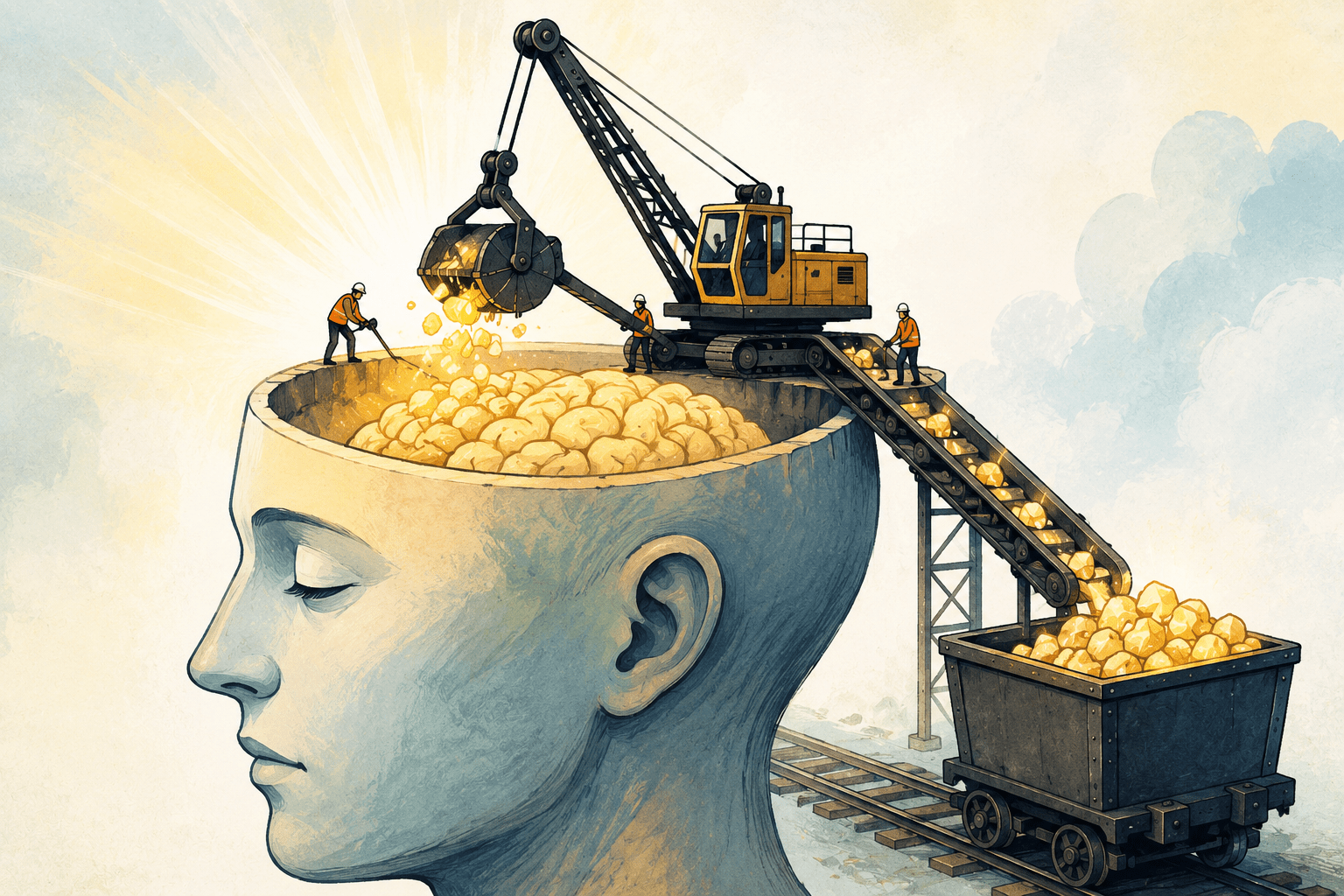
Don and Ben – the hero, the villain and the rest of us.


Today’s thoughts on the latest mess the bullies have delivered ……

Initial media coverage followed a trope as old as time.

Iran cast as the villain.
The United States and Israel riding in as the heroes.
The rest of us cast as the people who need saving.

Every culture tells this story.

The villain threatens the village.
The villagers wait to be rescued.
The hero arrives on the white horse.

War reporting regularly slips into this pattern. The roles feel familiar. We all recognise them.

Every story like this skips the same question.

What outcome is the operation meant to deliver?

The SMH’s Peter Hartcher has already warned where this road can lead, an early military success drifting into what he called a “politico-military muddle”.

Military strategist Mick Ryan points to Iraq and Afghanistan. The bombing opens the story. The political outcome writes the ending.

Remove a leader and the next questions arrive immediately.

Who governs Iran?
What stabilises the region?
What outcome marks success?

Each time Donald Trump speaks about the objective the explanation shifts. Prevention. Regime change. Deterrence.

Strategy begins with a destination.

Without one, events take control.

History contains plenty of examples.

Most end exactly where Peter Hartcher suggested. A politico-military muddle.

Will Australia show courage or sleepwalk past it

Courage isn’t surviving a paper straw. Courage is leadership that refuses another war.
Canada has stepped up and said what we are all thinking.
There comes a point where caution stops being wisdom and starts looking like fear.
Canada has shown some courage.
Australia now has the same opportunity.
The question is whether our leaders recognise the moment
or sleepwalk past it.
Read this excellent article in The Conversation here

Australian values belong to the people who live them not to politicians who weaponise them


Source https://tinyurl.com/ycxnp6rk

When Pauline Hanson claims “Australian values”, I cringe.

When Angus Taylor mirrors it, I cringe again.

These are leaders who trade in suspicion. Who elevate culture as a test. Who talk about countries that supposedly fail us. Who tighten the definition of belonging and call it strength.

Then they reach for “Australian values”.

The Australia I know runs on a fair go. Equal treatment under the law. Decent schools. Decent healthcare. Work hard and get ahead. Once you are here, you stand in the same queue.

Researchers writing in The Conversation asked Australians what a fair go means. Strong support for equal opportunity. Strong support for access to education and healthcare. More than half gave the highest possible agreement to recent migrants having the same opportunity as everyone else to get ahead.

That feels familiar.

When I shared the article, my Facebook tribe responded in minutes. Fairness. Decency. Treat people properly. Play by the rules. Give newcomers a chance. It read like the country I recognise.

So when “Australian values” is used to narrow the circle, I recoil. The phrase belongs to all of us. It does not belong to the loudest voice in the room.

Read the article in The Conversation here 

Thank you one of my Facebook tribe for this wonderful sentiment image

Ht to Bill Piggott who shared this with me on Facebook

“Australian values are visible when kindness, care, collaboration, compassion and reciprocity are recognised, encouraged, embraced and rewarded.”

Kiama and the art of the almost plan

Kiama’s principal public car park has been sold and the gates are now closed. The alternatives referenced in council papers are long-standing proposals, discussed and deferred over many years. Identification has never been the problem. Implementation has been.

If that feels familiar, it’s because it is.

Kiama hesitated over a town water supply in the 1890s, and the hesitation was framed as prudence. Debate ran not only through the township but across the municipality, particularly in Jamberoo and Gerringong Wards, where ratepayers questioned why they should fund projects centred on Terralong Street ( Kiama’s main street) from which they would see little direct benefit. Debt was feared. Overreach was feared. Spending on prevention felt optional.

Sanitary reports described open drains and contaminated tanks, and typhoid brought urgency to the discussion, though years still passed before execution followed debate. Pipes were laid along Terralong Street, but they were not connected to a dam, a reservoir or a pumping system. They were infrastructure in appearance only, awaiting a network that did not yet exist.

Then the fires came.

In October 1899 a blaze that began in Wood Brothers’ premises tore through the commercial heart of town, taking the Royal Hotel and a string of businesses as high winds carried flames from roof to roof. In December, before recovery was complete, another fire destroyed six more shops. Across the two events, twenty-two businesses were lost and families were displaced in a matter of hours.

The pipes were still not connected.

The cost of hesitation was ash, unemployment and reconstruction. A fire brigade without an adequate water supply can only do so much, and buckets have limits. Kiama did eventually build its water scheme, and in 1900 Fountaindale Dam was constructed as a declaration that the town had absorbed the lesson of fire. Fifty years later Jerrara Dam was added, another declaration of security and permanence.

Today, Kiama buys its water from elsewhere while both dams remain on the books, requiring maintenance even though they no longer perform the function for which they were built. There is something instructive about that, somewhere between heritage and hydraulics.

Before the dams there was the tramway, constructed at public expense on a gauge that prevented integration with the coming railway. Jamberoo and Gerringong Wards helped finance it, even though its benefit sat squarely in Kiama township. The locomotive could not properly negotiate the line, and within two years it was sold. The rails were lifted soon after. It was ambitious, and it was brief.

None of these decisions were taken lightly. They were made in good faith and under pressure, often in the belief that acting boldly demonstrated leadership.

We build for permanence, and we fund the consequences when permanence proves temporary.

Perhaps we are not poor at building. Perhaps we are optimistic about timing.

When you look at the decision before us now, what pattern do you see? Are we sequencing properly before we divest what currently works? Are we modelling the full life cycle of what we build and what we sell? Or are we confident that the future will accommodate the present?

History rarely repeats itself in identical form. It does, however, submit variations on a theme.

Source of Historical Information Kiama Library – Kiama Independent (1890 to 1909)

If this is renewal, Angus Taylor needs a new speechwriter

Every new leader gets a first moment.

When Angus Taylor stepped up to lead the Liberal Party of Australia, this was the pivotal moment. Fresh page. Fresh language. A chance to widen the tent.

He could have said this:

Australia is strong.
We are entering a decade defined by productivity, housing supply, energy transition and technological change.
Our task is to grow the economy, lift wages through innovation and manage migration with discipline so infrastructure keeps pace.
We are the party of aspiration. We back small business, we back home ownership, we back families who work hard and want opportunity for their children.
We will listen, we will modernise, and we will build a serious alternative government.

That would have framed the future.

Instead, here is what he said.

“I’m particularly conscious that we got some big calls wrong – especially on personal income tax. And it won’t happen again.”

“If an election was held today, our party may not exist by the end of it.”

“We’re in this position because we didn’t stay true to our core values – because we stopped listening to Australians, because we were attracted to the politics of convenience rather than focusing on the politics of conviction.”

And in a time that calls for social cohesion, here is the immigration frame he chose.

“In this country, our borders have been open to people who hate our way of life, people who don’t want to embrace Australia, and who want Australia to change for them.”

He could have said this

Control of our borders is a fundamental responsibility of government.
Migration must serve Australia’s national interest, support economic growth and maintain social cohesion.
We will ensure that every intake strengthens the country and reflects the standards Australians expect.

One version expands the horizon.
One version narrows it.

One version invites aspiration.
One version centres anxiety.

Politics is not only about policy. It is about tone and imagination. A first speech as leader is about defining tomorrow.

Australia is confident. Voters respond to leaders who sound that way.

The difference between these two speeches is altitude.

And altitude is everything.

If there were a masterclass in how to shrink a moment, yesterday’s speech from Angus Taylor would be the case study.

The cloud leaves tracks on the ground.

This playful AI avatar trend feels light, instant, almost weightless. A few seconds in the cloud and out pops something clever and personal.

Behind it sita data centres that drink electricity and water at scale. Physical infrastructure, physical limits, physical footprints.

Worth holding both ideas at once. Delight in the tool. Curiosity about the cost.

The cloud leaves tracks on the ground. Read my post on Substack here and do read  The Conversation article that inspired it. Wow the graphics alone are worth the visit

When corporate failure scrambles trust in science

I am confused.

A commenter on my Facebook post about vaccines is someone I respect. They are a committed climate action advocate. They run an effective sustainability initiative. They speak clearly about evidence, consensus, and corporate responsibility. Then they recommend a book arguing vaccines are unnecessary or harmful.

Those positions collide.

Climate science and vaccine science rest on the same foundations. Large bodies of evidence. Decades of data. Overwhelming expert agreement. Around 97 percent of climate scientists accept climate change as real and human driven. Around 97 to 99 percent of doctors and medical scientists support vaccination.

So what changes in people’s thinking?

Corporate behaviour sits front and centre.

Fossil fuel companies funded doubt and delayed action. Pharmaceutical companies overcharge, lobby aggressively, minimise tax, and protect shareholders. People see this pattern and draw a straight line. If corporations distort truth in one arena, they must be doing it everywhere.

That reaction sends attention in the wrong direction.

Vaccines sit across countries, health systems, and decades. Their impact shows up in fewer outbreaks, fewer children living with preventable disability, hospitals that cope during crises. Those outcomes appear regardless of which company supplied the product.

Here’s the problem.

When regulation weakens and transparency thins, trust drains away. Science takes the hit. Evidence gets treated as suspect. Risk shifts onto children and vulnerable people who never agreed to carry it.

What does being concrete about what to do next look like.

Regulate pharmaceutical power as seriously as carbon emissions.
Demand transparency in trials, reporting, and regulation.
Reject the idea that corporate misconduct cancels public health evidence.
Call out misinformation dressed up as justice.
Distrust unchecked power and protect evidence-based public health at the same time.

If you care about climate action, apply the same discipline here. Follow the evidence. Target the power structures causing harm. Protect the people who carry the consequences when trust collapses.

This is the choice in front of us.

This is about asbestos. It is also about memory, power, and who gets protected.

Toxic City: Asbestos, Amnesia, and the Collapse of Care lays out a story many in Shoalhaven already recognise. Swift action when risk sits inside council walls. Silence when that same risk sits in a small village, under roads, near creeks, beside homes.

This is collaborative community advocacy at its best, from Spark Shoalhaven in Politics. It opens with a preface by Cat Holloway and centres the long, sustained work of Peter Allison. His work is seminal. It shows what happens when ordinary people keep records, keep asking questions, and keep going long after institutions move on.

This is about asbestos. It is also about memory, power, and who gets protected.

How many versions of this reckoning do we need before we all stand up, in some way, no matter how small.

First they came for a small place.
Then they came for people without power.
Then they came for something they should never have ignored.

If you live in Shoalhaven, read it.
If you care about how councils work, read it.
If you wonder how systems drift away from accountability, read it.

And if you are part of a group somewhere else, watching something similar unfold, this is an invitation. We are learning that shared stories, shared evidence, and shared pressure travel further together.

Are you feeling swamped by the world’s biggest problems?

Source Facebook

Do you feel overwhelmed by the biggest issues shaping everyday life climate disruption, housing pressure, food prices, insurance, government spending? I did too.

For a long time my response lived in my head. Reading more. Arguing better. Feeling frustrated that public debate kept sliding into blame. None of that helped. What shifted things was doing something much simpler. I joined groups. I went to workshops. I put myself in rooms with people who were already translating big problems into practical action.

I have written before about the victim triangle and how easy it is to slip into it when the world feels out of control. What I learned through participation is how people climb out of it. Not by pretending the problems are smaller, and not by blaming others, but by reconnecting with responsibility and control.

One of the clearest examples for me has been Farmers for Climate Action. What works in spaces like this is not ideology. It is community. You learn alongside others. You share uncertainty. You are shown where effort counts. No one is cast as a villain or a victim. People are treated as capable decision makers.

That pattern repeats across other community based organisations like Landcare. Workshops, peer networks, and practical forums all do the same capacity and capability building work. They replace overwhelm with participation. They turn big abstract issues into things you can act on with others.

This is the shift I wish we talked about more. When people feel powerless, blame becomes a coping mechanism. When people feel supported and capable, responsibility returns.

If public debate feels stuck, it may be because we keep asking people to care without showing them how to act. The way forward is not louder arguments. It is clearer pathways and communities that make engagement feel possible.

That was the circuit breaker for me.

HT to Maryvonne Norman whose excellent Fb post prompted this article

If parliament was held to workplace standards

Seen through a corporate leadership lens, the recent analysis by Amplify reads like a board paper titled Why nothing got done.

In a six month period, almost half of parliamentary sitting time was absorbed by point scoring, disruption and theatre, with policy work compressed into what remained. The finding gained public attention through an ABC News report, where the framing was very clear.

“Parliament is wasting our time.”
Georgina Harrison, Amplify CEO, ABC News interview

A board sees executive time diverted from delivery to performance. Behaviour consumes oxygen. Risk and reputation join the discussion. This is the moment directors shift from observation to intervention.

The accountability picture sharpens further when the numbers are spelled out in operational terms.

“In the last six months of parliament, 28 business days were wasted on political point scoring.”
Georgina Harrison, Amplify CEO, ABC News interview

In big business, accountability concentrates at the top. The CEO, the chair and the senior leadership team carry responsibility for how time is used and how people behave in decision making forums. Read through a board lens, this section feels like a leadership issue parked under general business, then left there.

Time spent this way erodes value. Twenty eight business days in six months shows productivity leaking, opportunities missed and direction slipping. In board shorthand, this reads as a performance issue deferred again, while investors circle and analysts mark execution risk.

Governance systems succeed or fail on consequences. Standing rules provide structure, yet boards judge systems by impact. The ABC report captured the long running nature of the issue clearly.

“Decades of criticism about behaviour and limited policy debate have failed to shift the dynamic.”
ABC News, interview summary

A governance committee hears this and recognises a familiar problem. The rules exist. The outcomes drift. That is the trigger for change. Meeting formats reset. Speaking rules sharpen. Incentives move. Performance consequences apply.

Culture sits alongside leadership throughout this analysis. Culture shows how power behaves in daily practice. Persistent dysfunction points to weak authority, incentives pulling sideways and consequence gaps left unattended. On a board paper, this section reads like culture written in the margins of the minutes.

The conclusion arrives without flourish. A corporate organisation facing these signals moves quickly into review mode. Senior leaders face scrutiny. Behaviour links directly to performance. Governance structures undergo redesign with urgency. In business shorthand, this looks like intervention approved, timetable attached.

Politics operates under a different shield. Parliamentary leadership sits apart from the accountability standards applied across big business every day.

To a board audience, the final line reads as risk identified, owner missing.