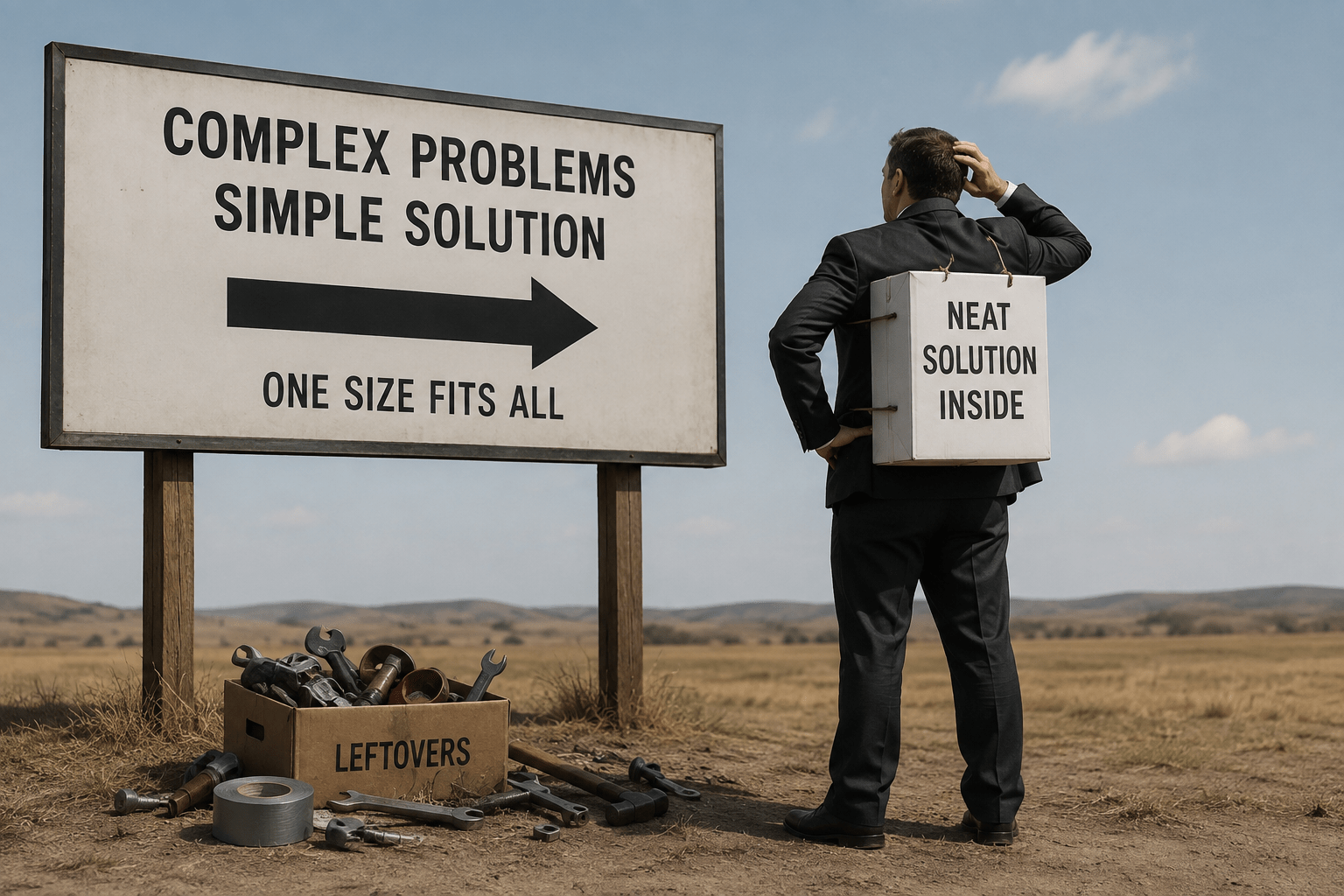
How often do your forget to ask the right question?

All my communications training says the same thing. Have three key points. Include a call to action. Reinforce the points. Then reinforce them again.

For the last twelve months I have been presenting to local service groups and doing my very best to stick to the rules. And I have learned something important. No matter how impressive the talk is, nobody takes up the call to action. My presentation is usually followed by lunch and I invite people to come and talk to me about it over lunch. What I get instead is “wow, your presentation was great.”

After each talk I kept asking myself the same question. What is wrong with me? Why is nobody sitting down to talk about the call to action?

Then I finally woke up. It’s the audience, Lynne. They want to be entertained.

How old do I have to be before I start asking the right question first? Who is my audience? What do they want from this presentation? The reason I keep getting invited to present is that people talk about how entertaining the talks are. Facepalm.

It took me a while longer to see what the answer meant, and it started with admitting what I am actually there for.

I am not in that hall to win commissions. I talk about life story writing because I want people to create living memories, the kind that last well beyond the last person who remembers them. The lunch invitation was never the real call to action.

The real call to action happens later, at somebody’s kitchen table, without me. An entertained audience goes home and tells someone about the talk. And somewhere in that retelling, a son or a daughter decides to capture a parent’s story before it is too late.

If that happens at one kitchen table, the talk has done its job. Nobody needs to ring me. The memory does not need me to survive. It needs a family who decides it is worth keeping.

So the training was half right. Three points, yes. Reinforce them, yes. But the call to action belongs to the audience, and this audience’s job is to enjoy the hour and carry the idea home. If I do my job well, they do theirs, and I will never see it happen.

The number one question for anybody doing anything is this. Who is the audience, and what do they want from me? Not what do I want to tell them. What do they want from me. I have spent a working life in communications and I still needed twelve months of puzzled lunches to learn it.

This is the point where I would normally give you a call to action. I know better now.

One Saturday, two events, and the story of three orphans who built this district

Every object on this table holds a story. Yours do too, and most of those stories are one generation from being lost. Saturday 18 July, Kiama Library, the Royal Australian Historical Society is teaching us how to capture them before they go.

Three orphan girls built lives we still drive past every day

I write stories so the people we love are remembered. Memory has a shelf life of about two generations. Your grandchildren will know your name. Their children probably won’t, unless someone writes it down. Every family has people worth remembering, and most families never get around to it.

So when I heard what the Kiama Historical Society has organised for Saturday 18 July, I paid attention.

In 1821 three young sisters, Cecelia, Caroline and Catherine Rutter, were sent to the Female Orphan School at Parramatta. The Orphan School was where the colony put children it had no other place for. It was not a beginning anyone would choose.

Fifty years on, their names were attached to some of the finest homes in this district. Cecelia married Michael Hindmarsh of Alnebank at Gerringong. Caroline married Thomas Surfleet Kendall of Barroul House. Catherine’s second marriage, to Thomas Chapman, made her home at Hartwell House.

For me, one of those names is personal. In 1880 my grandfather’s family, the Chitticks, arrived in Sydney aboard the Samuel Plimsoll, a wool clipper 74 days out of Plymouth. The shipping list records six brothers, aged 15 to 27, every one of them an agricultural labourer, with their mother and sisters listed as domestics. In time the Chitticks bought half of the Alnebank farm. The orphan girl’s ground became my family’s ground. My grandmother’s people had already been in this district since 1831, and my father’s side arrived in 1841. These stories don’t just overlap with ours. They share fences.

I know all of that because somebody kept the records, and somebody else taught me how to read them. A shipping list, a family tree in a booklet, dates and ages in a column. That’s how a name becomes a person whose story you can share.

Carol Liston, president of the Royal Australian Historical Society, tells the Rutter sisters’ story at Kiama Library Auditorium on Saturday 18 July at 1.45 pm. It costs $3 for Historical Society members, $5 for guests, afternoon tea included, and you can just turn up.

The morning session is the one I’d urge you to book

Before the talk, Carol and the Society’s senior vice president Christine Yeats are running a research workshop, 10 am to 1 pm at the same venue. This is a rare thing. The two most senior figures of the Royal Australian Historical Society, in Kiama, teaching the practical craft: how to search Trove so it gives you answers instead of noise, how to use the Historical Land Records Viewer to trace a property and the people who held it, how to read colonial records for the personal detail that turns a name into a person.

Almost every family around here has the shoebox. The photographs with no names on the back. The family tree that stops dead somewhere in the 1880s. The house with a name nobody can explain. This workshop is for that shoebox. BOOK YOUR SPACE HERE 

It’s $25 for historical society members, $30 for everyone else, and that includes morning tea, cakes and lunch. Bookings are essential, so don’t leave it until the week of.

I’ll be there with my own list of dead ends. Whether Trove can crack them is another question. That’s rather the point of going.

We elected them to watch the road. Turning the bus around means taking back the wheel.

Turning the bus around means changing who the system is wired to listen to, not just swapping the person at the wheel.

We elect politicians to watch the road ahead, see the trouble coming, and steer us around it, or fix it if we hit it anyway.

Here is what happened instead, in five charts.

Pay did rise since 2021. Prices rose faster, every single year, so the average wage now buys about 5 per cent less than it did. And this measure leaves the mortgage out, so anyone paying one off has gone backwards further than the gap here shows.

Same house, same loan, nothing changed but the interest rate. The repayment on the average new loan has gone from about $2,950 a month to about $4,500. That is an extra $18,000 a year out of a household that did nothing differently.

Renters copped it a different way. The typical New South Wales rent has climbed from about $450 a week a decade ago to about $670 now, roughly $11,000 more a year for the same roof over your head.

This is who the system looks after. Australia is one of the biggest gas exporters on earth, yet the tax the gas companies pay on it comes in below what we raise from beer. And over the past four years, $149 billion worth of gas left the country without a dollar of royalty.

Put all of it together and this is what it does to the country. Since 2015 the inner cities have edged ahead while the outer suburbs and the regions have gone backwards. The same nation, pulling apart into three.

Yes the people we trusted to watch the road let this happen, in full view.

The system they operate in answers to someone else. The big end of town, the lobbyists and donors and the organised money, gets the meetings and sets the terms. We have watched it: gambling reform stalled for years, gas shipped overseas for next to nothing while our bills climbed, a housing fix that took three years to arrive and still will not start until 2027. Every time, the obvious popular thing lost to the organised well-funded thing.

We handed trust over on the understanding they would act for us. People do not need telling how that turned out. They live it.

So how do we turn the bus around?  What is wrong with a system that lets the big end of town decide what gets done? Until that changes, with the donations, the lobbying, the comfortable jobs waiting on the other side, the next government will feel the same pull and mostly make the same choices, whatever colour rosette it wears.

Turning the bus around means changing who the system is wired to listen to, not just swapping the person at the wheel.

In practice that means tighter rules on lobbying and donations, daylight on who gets the meetings, and a press that asks the dull questions about who pays and who benefits. None of it is glamorous, and all of it is resisted, which tells you it would work.

We trusted them to see this coming. The least we can do now is refuse to look away from why they did not.

References

Prices vs pay

  • Australian Bureau of Statistics, Consumer Price Index, Australia (latest release, April 2026)
  • Australian Bureau of Statistics, Wage Price Index, Australia (March quarter 2026)
  • Reserve Bank of Australia, on the roughly 5 per cent fall in real wages since 2021

The mortgage

  • Australian Bureau of Statistics, Lending Indicators, for the average new owner-occupier loan size (around $736,000)
  • Reserve Bank of Australia and APRA, for the move in mortgage interest rates from mid-2021
  • Canstar and CoreLogic, for the current average monthly repayment

The rent

  • CoreLogic, for the rise in median advertised rents over the decade to March 2025 and the current New South Wales median

Gas vs beer

  • Australian Treasury and Senate Estimates figures for Petroleum Resource Rent Tax and beer excise revenue, 2024-25, as compiled by the Australia Institute
  • The Australia Institute, on the value of LNG exported royalty-free

Three Australias

  • RedBridge analysis of Australian Bureau of Statistics Household Income and Wealth, the ANU Regional Living Cost Index, and the Productivity Commission (2024)

With thanks to Vivien Twyford, whose “how do we turn the bus around” question inspired this piece, and to David Cornish, who pointed me to the Three Australias graphic.

Further reading: Political Trust in the “Places That Don’t Matter”


The science of how the watch dog ends up working for the dog.

Here is the trick nobody runs an ad campaign about. The watchdog ends up working for the dog. And once you see how, you cannot unsee it.

Are you as baffled as I am? One Nation has almost no policies to speak of. It lurches from one embarrassing headline to the next, a fresh gaffe from a candidate every other week, and then, like clockwork, climbs again in the polls. In a couple of the big national surveys it now sits ahead of Labor. None of the usual rules seem to apply, and for the life of me I could not work out why.

This is the point where, as my best work usually does, it turned into me getting cranky. I do not think a third of the country has fallen for Pauline Hanson. I think it is anger, the kind that builds when people feel nobody in charge is listening. So instead of yelling at the television like a sensible person, I went looking to see whether anyone had studied why people end up feeling that way. A great many clever people have, for the best part of sixty years, and they have given it a pile of important-sounding names. I have left most of the jargon at the door.

I am sharing it because I have been trying to make sense of this country, and I figured somebody must have worked it out already. They had. And it is not really a story about One Nation at all. It is a story about who gets listened to, and who does not. Here is what I found.

It comes down to one rule. A small group that cares enormously about one thing will almost always beat a big group that cares only a little about a lot of things. Once you see it you cannot unsee it.

Getting organised is hard work and it costs money. A handful of gambling companies, each with millions riding on the outcome, will happily pay for lobbyists, lawyers and ad campaigns, because the payoff to each of them is huge. The rest of us each lose a little, spread thin across the whole country, so not one of us has much reason to down tools and fight. The organised few beat the unorganised many, even though the many are far bigger. An economist named Mancur Olson set this out in 1965, and nobody has knocked it over since.

The red flag to watch for is a policy that hands a big win to a small group and spreads the cost thinly across everyone else. The small group fights like mad, because the stakes for each of them are enormous. Gambling advertising is the perfect example. The broadcasters and betting firms make a fortune, and the cost is paid in small, scattered harms across thousands of kitchen tables.

Noticing is not the same as power. The gap between what we can see and what we can change is where the anger lives.

The textbooks say we do not notice costs spread that thin. They are wrong. We notice. We notice the betting ad in every break of the footy. We notice when a friend cannot stop, when the pay disappears before the bills are paid, when a marriage falls apart over hidden debt, when someone we know loses the house or worse. Noticing is exactly why people are angry. The trouble is that noticing is not the same thing as power. Anger spread across millions who each lose a little is no match for a handful of companies with millions each on the line and the minister’s mobile number. We can see it perfectly well. We just do not have the machine to do anything about it.

None of this is because people are switched off. We notice. The harder question is why noticing so rarely turns into the organised pushback that actually shifts a policy. Fighting a lobby head on is a second job. It means turning up to every review, reading every draft, funding someone to sit in the room year after year. Your one vote, or your one furious afternoon, is almost never the thing that tips it. So the organised, funded few turn up to every fight, and the angry, busy many cannot. The lobby lives in that gap.

Once a group is that organised, something predictable happens to whoever is meant to keep it honest. Slowly the watchdog starts working for the dog. It is rarely brown envelopes. The minister spends all day talking to the industry, leans on it for the facts, and starts to see the whole question through its eyes. The posh name is regulatory capture, and a Nobel went to the man who described it.

What keeps it oiled is the revolving door. People move from government into industry and back, until both sides are the same faces. Nobody has to be corrupt for this to bend things. The simple prospect of a comfortable job later makes people friendlier now. You have seen it with resources ministers who end up at the gas companies they used to oversee.

A lobby does not need to kill a reform outright. That looks bad and invites a fight. Delay is not a failure for them, it is the weapon. Slow the thing down, send it off for another review, shave bits off until almost nothing is left. You do not lose the argument. You run out the clock.

That is the gambling ad ban exactly. A parliamentary inquiry handed the government a clear plan years ago. It sat in a drawer, came back a watered-down half version the government’s own experts say will not work, and it does not even start until 2027. We know the big television and betting companies kept getting their meetings in Canberra the whole time, because freedom of information requests dragged the records into the open. None of that is a feeling. It is on paper.

The cleverest power of all is quieter still. It is not winning the fight out in the open, it is making sure the fight never reaches the table. The decisions that shape a country most are often the ones that quietly never happen.

A royal commission watered down afterwards is one version. A royal commission never called, because someone powerful does not want the lights switched on, is the better trick, because there is nothing to point at. The banking royal commission is the watered-down kind. After a year of damning evidence, key recommendations were quietly trimmed or reversed once the industry went to work, which the commissioner said he expected. The clearest tell of all: bank share prices went up the day the report came out. The market decided the banks had got off lightly.

Any group that is well organised, well funded and focused on one issue gets the same advantage, and that includes foreign policy. Australia has a well-resourced pro-Israel lobby, including groups such as the Australia, Israel and Jewish Affairs Council and the Zionist Federation of Australia, that presses government hard in exactly the way the gambling industry presses on its own. How a government responds to that pressure is a fair thing to examine.

It is an organised, well-funded operation, not a stand-in for a whole community. Jewish Australians do not all think the same way, and plenty are among the toughest critics of the Israeli government. What I am looking at is organised advocacy and how power responds to it.

If that sounds like a theory, two American researchers put numbers on it. They checked nearly two thousand policy questions against what ordinary people wanted, and against what the wealthy and organised interest groups wanted. What the organised and the wealthy wanted predicted what became law. What the average person wanted made almost no difference on its own. American data, so treat it as American data, but it is the cold-numbers version of everything above.

There is a cheerful counter-theory. It says that with so many groups pushing against each other, no single one ever dominates, and it balances out. The catch is that the groups are not evenly matched. The organised and well-funded turn up to every fight, and the rest of us are the busy, distracted, powerless majority. Whether you think the contest is fair or rigged is the real argument, and you can make up your own mind.

And here is the bitter twist.

The party so many angry, powerless people are turning to, the one that says it stands for the forgotten, is bankrolled by Gina Rinehart, one of the richest and most powerful people in the country. One Nation is not the outsiders’ revolt it sells itself as. It is the best-funded lobby in the land wearing a battler’s hat. The unorganised many, looking for someone to fight the organised few, have been handed a megaphone owned by the organised few.

So where does this leave One Nation? Right back where this piece started. A party can have almost no policies and a fresh embarrassment every week and still keep climbing, because it is not selling policies. It is selling the feeling of being on the side of people who have worked out, correctly, that the system is not built to listen to them. You do not take the wind out of that by being louder, or by borrowing its worst lines. You take it out by changing who gets listened to, by fixing the obvious thing for once, so an ordinary person can point at it and say, look, they heard us.

I have stopped taking the excuses at face value. When something obvious does not get fixed, the easy explanation is that politicians are useless. Sometimes they are. But there is a better question.

Who is making money out of this not being fixed, and who in office is helping them?

Ask it out loud, and ask it often, and by name, and you drag the whole game into the light. One voice is easy to ignore. A few million asking the same question, by name, is the one thing money cannot buy its way past.

Sources

  • Mancur Olson, The Logic of Collective Action (1965), on why small groups organise and large ones do not
  • James Q. Wilson, on concentrated benefits and diffuse costs, sometimes called client politics
  • Anthony Downs, on rational ignorance, why it is sensible for voters not to study everything
  • George Stigler, The Theory of Economic Regulation (1971), on regulatory capture
  • E. Schattschneider, The Semisovereign People (1960), and Bachrach and Baratz, on the power to keep issues off the agenda
  • Martin Gilens and Benjamin Page (2014), Testing Theories of American Politics, the United States study on whose preferences become law
  • Robert Dahl, on pluralism, the more hopeful counter-view
  • The Conversation, on the banking royal commission and the industry lobbying to water down its recommendations
  • Michael West Media and Crikey, on the delayed gambling advertising ban and the freedom of information records of industry meetings

About this post

These notes are put together by Betty in Blacktown, mostly so she and her brother Kevin in Kiama always have something that keeps them thinking it through long after phone call has ended. If it helps you stay in the loop too, even better.


The Paddock That Grew Nothing

On why “save our farmland” is the wrong fight for the right reason.

Wollongong Railway Station, 1900. 

Take a good look at that old photo of the railway station. Timber and tin, a scatter of weatherboard cottages, and open paddock rolling away in every direction. Now go and stand where the photographer stood. There isn’t a vacant block for miles. Every one of those paddocks filled in, one approval at a time, and nobody felt the loss on the day it happened. That’s how it always goes. The green doesn’t vanish in a single bad decision. It goes in slices, each one too small to argue about, until one day you look up and the hills have a rash.

The same station, 1920. Twenty years on

And it didn’t stop in 1920. Local residents Lesley East and Annette Young and their now husbands still remember driving into Wollongong in the early 1960s to see Psycho at the Regent Theatre on Keira Street, then a grand Art Deco picture palace only a few years old. They parked in a paddock right near the cinema. A paddock, in the middle of town. Today Wollongong is a city of more than 200,000 people, the Regent has been a church since 2005, Crown Street is a pedestrian mall, and the idea of an open field to leave your car in near the main street sounds like a tall tale. But that’s the whole point. Every one of those paddocks was “just one block” once.

Nobody stood in it the day it was lost.

So I have a lot of sympathy for the worry behind Graham Pike’s comment on one of my Catch-Up posts. He was referring to a development application on Minnamurra Lane, Jamberoo, a house and a farm shed on a vacant block, the one Cr Lawton sensibly sent off for a second look and independent legal advice at the May Council meeting. Here’s part of what he said:

“We might not be using the vacant lands or the land in question for food production right now. but most of these lands have been used for farming within the past century or less and, most importantly, we’ll need them for food production again as the human population, even in our area, increases uncontrollably and unsustainably and the resulting suburbanisation sprawls across and fragments this same agricultural/food producing land. The zoning of the land as RU1 or RU2 is a human construct and immaterial. It is still land that we have used and will in future need to use, if any is left uncovered by concrete and asphalt, for food production.” Graham Pike, Jamberoo

I’ve turned that over for days, because there’s a lot in it I agree with. The slow creep of houses and sheds across those hills is real. I’ve watched it happen. And his bigger worry, that we keep paving over the very ground we’ll need to feed ourselves one day, is a serious one.

In a later note, Graham went further and put his finger on what he sees as the root of it all: too many people. Human overpopulation, driving an economy that chews through the natural world. It’s a heartfelt view and plenty of thoughtful people share it.

That’s too big for me to sort out. What I’d say is simpler: whatever any of us thinks about how many people there ought to be, they’re already here. They were born, they need a roof, and saying “there are too many of them” doesn’t put one over a single head. So my mind goes to the thing we can actually do something about, which isn’t the number of people, but where they’re going to live.

The thing is, all that green didn’t go in one big decision anyone could point to. It went in slices, a block here, a shed there, each one too small to worry over on the day. Nobody ever stood up and voted to lose it. It just happened while we weren’t looking.

So maybe the better thing isn’t to fight every single house, but to decide on purpose where the houses should go, instead of letting them turn up one at a time until the hills are full again and we’re left wondering how.

And there’s a part of these “save our farmland” conversations that almost never gets said out loud. Farming is a business. For most farmers, the land isn’t only where they work. It’s the biggest thing they own, the nest egg meant to see them through old age after a lifetime of hard years and thin margins.

So when we say a paddock must stay green forever, I think we should stop and hear what we’re really asking. We’re asking that farmer, and only that farmer, to lock away the worth of their own land so the rest of us can enjoy the view on the drive past. A person in town can sell their house for whatever it’ll fetch. The farmer gets told their paddock is a community treasure and they ought to keep it green for a fraction of what it’s worth. I’m not sure that’s protecting farming. It feels more like asking one family to foot the bill for everyone else’s nice outlook.

I’ve stood on that side of the fence. I dairy farmed for decades, and I know what it is to look at a paddock and see both a lifetime’s work and the only retirement you’ve got. So I find myself asking the question that doesn’t get asked much: is that fair?

And it’s a slippery word, fair. Everyone in this thinks they’re on its side. The people in town feel it’s only fair the hills stay green, they get the view and lose nothing. The farmer feels it’s only fair they get to realise the worth of the land they’ve worked their whole life, the same as anyone else can with what they own. Both are sincere. Both are “fair.” They just can’t both have their way.

And it tends to be the farmer’s fairness that gets left out, because the farmer’s usually not in the room when the rest of us decide their paddock is too precious to touch.

So where does that leave me? Not where you might think. I’m not saying build everywhere. And I’m not saying the green hills don’t count, they’re a good part of why people love this place, and why the visitors come. The slow spread of sheds and houses across those ridgelines is real, and worth watching very closely.

But if we want our farmers to keep the hills green for the rest of us, the least we can do is be honest that we’re asking them to give something up, and decent enough to talk about who carries that cost rather than pretending it’s free.

Lock the gate on a farmer’s land and we haven’t saved farming. We’ve decided their retirement is a fair price for our view.

Good on Cr Lawton for asking for a proper look before anyone signs anything. That’s the kind of careful, eyes-open thinking this deserves, on this block and the next one. The conversation I’d like us to have isn’t “green or houses.” It’s “if we want the green, who pays for it, and is that fair on them?”

I don’t have a tidy answer. I’m not sure there is one. But I think we owe the farmers at least the courtesy of asking.

A note on the photos: I came across these two images on Facebook, where they were dated 1900 and 1920 and identified as Wollongong Railway Station. I haven’t been able to independently verify the dates or the photographer, so if anyone can confirm the details or knows the original source, I’d love to hear from you, please get in touch.

The Building Is the Thing

Sixteen years, one very narrow road, and several quietly skeptical dinner parties later: Michael aboard Archimedes.

There’s a question that creeps up on people somewhere in their sixties and seventies. It arrives quietly and starts sitting in the room. What do you want this stretch of life to be for? Some people decide the answer is rest. Some chase the places they never got to. Some pour themselves into grandchildren, or a garden, or finally restoring the car that’s been under a tarp for twenty years. And a stubborn, wonderful few decide that what they want is to build something enormous and improbable with their own two hands, just to prove it can be done.

Michael is one of those few.

On the side of Saddleback Mountain, at Jamberoo, he set out to build an ocean-going catamaran. A self-designed, eighteen-and-a-half-metre boat, built in his own backyard. He’d talk about it with this great, infectious enthusiasm: the big idea, the plan, the vision of it finished and on the water. And beside him, as she always is, his gorgeous wife Susie would sit and smile. What a woman she is.

He’d bring it up at dinner parties, the way other people mention a renovation or a recent trip, and around the table you’d see the same look settle on every face. We were all thinking something. We were each, I suspect, thinking something completely different. Somewhere in that circle was jealousy, and amazement, and flat incredulity, quietly calculating the boat’s chances against a road that accommodates cows and precisely one car at a time. We’d nod warmly and pass the wine. Then we’d go home to our perfectly normal backyards, containing no catamaran whatsoever.

How on earth are you ever going to get it out of here?

When he started, I doubt Michael imagined it would take sixteen years. The big idea rarely comes with the small print attached. Somewhere along the way there was even talk that the ABC might make a documentary of it, that the grand finale would see the boat lifted out by helicopter, surely the only sensible way to get a thing that size off a mountain. Anyone who knew the narrow road he lived on was asking the same question we all were: how on earth are you ever going to get it out of here?

Photo credit 

The helicopter stayed on the ground and the documentary went unmade. What happened instead was better: the boat was cut into pieces and crawled down a narrow road, metre by metre, over the better part of a week. The polished launch footage you can find online skips all of that and shows the dream going into the water, clean and triumphant, with the difficult and stubborn and real parts left on the cutting-room floor. Watching it, knowing what it actually took, I find myself quietly amused. That’s a long way from how it looked coming down the hill.

The building is the thing. Some people garden. Some people restore cars. Michael and Susie built an ocean-going boat by hand, for sixteen years.

Where they take it, and whether they take it anywhere at all, almost feels secondary to having proved it could be done.

Michael built something else, long before the boat, and I have carried it for twenty years.

When I started out in agricultural advocacy, I was wrestling with the question the whole industry wrestles with. How do you get people to value farmers when most of them will never set foot on a farm? The standard answer then, and the standard answer now, is to teach people how food is produced, on the theory that understanding leads to appreciation.

Michael, over the side fence, put it differently. You don’t need to know how it works to appreciate it. He pointed at the mobile phone. Almost nobody can explain what happens inside one, and almost nobody would give theirs up. Appreciation grows from knowing the people, admiring what they made, and feeling some tie to the place it came from. The mechanism barely comes into it.

You don’t need to know how it works to appreciate it.

That sentence changed how I built every project after it. I stopped explaining the supply chain and started introducing people to the makers. A child who meets the man who turned a tiny valley factory into a national champion, or spends a day on a farm with a young dairy farmer who loves the life, comes away admiring them. The admiration is the appreciation. How the milk gets processed can come later, or never, and it holds either way.

It is the same thing I felt watching Archimedes come down the mountain. I could not tell you how Michael engineered an eighteen-and-a-half-metre catamaran in a backyard, and I do not need to. I appreciate the sixteen years and the four hands. The building is the thing, and the builder is who you come to admire.

That is what I want for farmers: a nation that admires the people who feed it. Whether they can explain how it is done matters far less. Michael handed me the key to that twenty years ago, over the fence, and then he spent sixteen years on the side of a mountain proving it.

The launch video carries a line as its title: to strive, to seek, to find, and not to yield. It’s the closing line of Tennyson’s Ulysses, a poem about old age and the refusal to stop. Whoever chose it understood exactly what this was: a way of answering that quiet question that arrives in your sixties and never quite leaves.

What do you want to do with the years you’ve got left?

Michael and Susie answered it on the side of a mountain, one piece of fibreglass at a time. And the boat is finally on the water.

Want to hear more from Michael and learn what does it take to pull off an incredible Project like ” Archimedes” ?


A Little Shout-Out to Kiama Library

Something caught my eye on Facebook the other day and it put a smile on my dial.

Whoever runs the socials at our local Kiama Library is very clever, and they deserve a shout-out.

The first one was a brilliant bit of bookface, the art of holding a book cover up so it lines up with a real person behind it, and the cover seems to finish the picture. It turns out this has a name and a bit of history. It grew out of an older idea called “sleeveface” from 2007, where people posed with vinyl record covers. The book version really took off when the New York Public Library started sharing theirs in 2015, and France’s famous Librairie Mollat bookshop turned it into a global craze a couple of years later. These days libraries everywhere join in, usually tagged #BookFaceFriday.

But Kiama hasn’t just copied the trend. They’ve put their own cheeky stamp on it. Here are a few that made me grin:

They’ve also got a running gag about AI coming for library jobs, which had me laughing too

What I love is that it’s not just clever photography. It’s a warm, funny way to show off the books on their shelves and remind us what a gem we have on our doorstep. So this is just a small thank you to the team at Kiama Library. You’ve brightened up my feed and reminded me to pop in and borrow something. How clever are they?

Why GDP Gets So Much Attention


Same money, two doors. Most of it went to the houses.

Last time we cracked open GDP and found the weird bit: your house can double in value without the country making one extra thing. We worked out why. You buy a house that’s already there, you’re richer, but nothing new got built. That’s just savings in a nicer jacket. Money goes into a business instead and it buys gear, takes people on, makes stuff. That’s productivity, and that’s the thing that lifts everyone, not just the bloke who spent the money.

So your house doesn’t count. Fine. But here’s the bit you’d be right to ask about: so what? Why does that matter for the whole country, not just for you?

Because the country’s only got so much money to put to work. And where it goes decides what kind of country you end up living in.

Picture all the nation’s savings as one big pool. Every year money flows in, and it has to go somewhere. It can go into businesses that make things and hire people. Or roads and trains. Or it can go into buying houses that are already standing and bidding the price up. Same pool, different doors. And for years now we’ve shoved a massive chunk of it through the housing door.

Money through the productive door, the country can make more next year than it did this year. More stuff, more services, more done per hour. That’s the pie getting bigger. Money through the housing door, the pie doesn’t grow. The same house just changes hands for more. You feel richer because the number on the place went up. But the country can’t actually do or make a single thing more than it could before.

Do that for thirty years and you get exactly what we’ve got. A country that looks loaded on paper and can’t work out why it feels stuck. The money’s real. It’s just locked up in land that makes nothing. And the things that would grow the pie, the businesses, the new industries, got starved of the money that went into property instead. That’s the bit people miss. The boom in one is the drought in the other. Same pool.

Here’s what that looks like on a normal Thursday. The jobs figures came out this week and they were grim. Unemployment up to 4.5%, worst since late 2021. Thirty-three thousand more people out of work, nearly 19,000 jobs gone in the month. Hit young people hardest, youth unemployment’s over 11% now, and this month the losses fell mostly on women. That’s work getting harder to find, which worries a household long before it worries anyone in Canberra. And on the very same day, the share market had one of its best days in weeks. Two numbers, one morning, pointing opposite ways. What’s good for the big end of town and what’s good for your kitchen table just aren’t always the same story.

That gap right there is the whole thing in small. A country can post lovely-looking numbers while the ground under ordinary households gets wobblier, because the wealth and the work have come unstuck from each other. And part of why they came unstuck is where the money went. Money sitting in land that just gets dearer isn’t money building the businesses that’d hire those 33,000.

You see it everywhere once you’ve spotted it. Wages that don’t climb like they used to, because there’s no productivity growth underneath pushing them up. A tax system that rewards buying the thing that makes nothing and punishes building the thing that does, so even more money goes through the wrong door. Smart people and big money chasing the next property deal instead of the next business, because that’s where the easy money’s been. None of these are separate problems. It’s the one problem wearing different hats.

Lets not make it too neat. Housing isn’t all dead weight. Building new homes is good, very good. It employs a lot of people, and having a roof over your head is worth something no GDP number ever captures. And plenty of countries with dear housing still get along fine. One bad month of jobs figures doesn’t prove any of this on its own either, the economy has its own ups and downs that have nothing to do with houses.

So it’s not that houses are the baddie, and it’s not that one bad month of jobs figures proves the whole thing on its own. It’s that when a whole country leans this hard on the one thing that doesn’t grow the pie, year after year, the pie stops growing. And when the pie stops growing, you’ve got less to go round for everything else.

That’s why it’s a big deal. The GDP in not some magic number on the telly. The GDP is the scoreboard for one choice the country keeps making without quite meaning to: do we build the thing, or just sell each other the thing we already built for more. We’ve spent a long time doing the second. And the bill for that isn’t a number. It’s a country that could’ve been doing more, and isn’t.

Your house doesn’t count. Turns out that’s not some quirk of the accounting. It’s the whole story in one line.

The Cleverest Bit of Marketing in Australia Right Now

Two founders in work aprons concentrate on detailed work at a cluttered workbench, while a relaxed man in a pale linen suit leans in the open doorway with one hand extended, palm up, doing none of the work but waiting for his share.
Never done a stocktake. Still wants his share.

Betty’s brother Kevin rang from Kiama last week, properly worked up. His daughter’s got a startup, a real one, the kind with late nights and not much sleep, and Kevin had just seen something online about the government coming after people exactly like her. “They’re punishing the ones having a crack,” he told Betty. “Did you see what they’re calling it? An aspiration ambush.” Betty hadn’t seen it. But she could hear that Kevin had already made up his mind, and that whatever he’d watched had done a very good job of helping him.

So she went and had a look. And what she found wasn’t really a tax story at all. It was one of the sharpest bits of marketing you’ll see all year.

We’ve spent two posts on GDP (See here and here).  Your house doesn’t count, and the country keeps shoving its money through the housing door instead of the door where things actually get built. If you missed those, the short version is: money put into a business grows the country, money put into an existing house just makes the house dearer.

Well, this week a bunch of young business owners turned that exact argument into one of the sharpest marketing campaigns you’ll see all year. And whatever you think of the politics, the craft is worth a look, because it’s a masterclass in how to win an argument before anyone’s checked the facts.

Here’s the setup. The budget proposed changing capital gains tax, the tax you pay on the profit when you sell something for more than you bought it. The change makes sense for the housing door, taxing property investors harder so houses stop being such a one-way bet. The founders even say they’re fine with that bit. The trouble is the same change also hits people who sell a business they’ve built. Same swing of the door, and it caught the workshop along with the houses.

Now watch what they did with it.

First, the name. They didn’t call it “proposed CGT discount reform.”

They called it an aspiration ambush. Two words, and you already know whose side you’re meant to be on. “Aspiration” is the good thing, having a crack, building something. “Ambush” is the sneaky thing done to you from behind. Stick them together and you’ve got the whole grievance in a phrase a headline writer can’t resist. That’s not an accident, that’s branding.

Second, the line. The letter says, near enough, we work the hours, we carry the risk. You can’t argue with it. It doesn’t mention tax rates or indexation or any of the stuff that makes your eyes glaze. It just plants a flag: we’re the ones doing the hard yards. Try writing a reply that starts “well, actually” to we work the hours, we carry the risk and see how you sound.

Third, and this is the bit I’d frame and hang on the wall, the silent partner meme. Some of them made fake ads casting the Prime Minister as a 47% shareholder in their business. One posted that he’s a bloke who has never done a stocktake and somehow still gets 47 per cent of the business and takes zero risk. That’s the silent partner gag, and it’s perfect, because it takes an invisible, boring thing, a tax on a sale that might happen years from now, and turns it into a freeloading mate who turns up at payday having done nothing. Everyone’s had a version of that bloke. You feel it before you’ve thought about it. Region Canberra

No wonder Kevin shared it. That’s the gag working exactly as designed, it travels from a screen in Kiama to a phone call with his sister before anyone’s checked a single number.

Fourth, the messenger. They didn’t wheel out grey men from a lobby group. They badged it founders under 40. Young, building things, the future. It’s much harder to paint a 35-year-old who started a company as a greedy fat cat, so the campaign chose faces that don’t fit the villain costume.

Put it together and you’ve got a textbook job: a sticky name, a line you can’t argue with, a meme that does the thinking for you, and the right faces out front. It went everywhere. Sky, the papers, an open letter straight to the PM. That’s what good marketing looks like, it makes its point feel like common sense before the other side has finished clearing its throat.

Now, here’s where Betty keeps her wits about her, because clever marketing is exactly the thing you should be most careful around. Being well-sold isn’t the same as being right.

Albanese’s comeback is, frankly, not bad either, it’s just nowhere near as catchy. He says the campaign is being run by right-wing parties and their allies, and that the meme misses how the tax actually works: it’s only paid when a business is sold, not every year, and most small businesses pay little or no capital gains tax when they sell. If he’s right, the “47% silent partner” doesn’t apply to most of the people sharing it. But “it’s only realised on disposal and most SMEs fall under the threshold” will never, ever beat a funny picture of the PM stealing half your business. The truer claim is losing because the catchier claim is winning. That happens a lot, and it’s worth noticing when it’s happening to you. Western Advocate Region Canberra

So two things are true at the same time. The founders have a real point, the tax change really does seem to clip the productive door as well as the housing one, and that’s the exact problem these posts have been about. And they’ve dressed that point in such good marketing that you should slow down and check it rather than just nod along. Both can be true. Usually are.

That’s the lesson, and it’s a bigger one than capital gains tax. The side with the better slogan isn’t automatically the side that’s right. They’re just the side that hired the better wordsmith. Your job, Betty, is to enjoy the craft, and then go and find out whether the thing it’s selling you is actually true.

Funny old world. We started by working out why your house doesn’t count, and we’ve ended up watching the country’s smartest marketers fight over the door it should’ve been going through all along.