Just what are we teaching our kids?

Yesterday I wrote a post titled “Cows lay eggs don’t they” for Art4agricultureChat after I discovered that a large number of young people going through the Egg Dome at the Sydney Royal Easter Show Food Farm thought that eggs and dairy foods come from the same place. Then of course there was the ACER survey that delivered the international media heading Australian Kids think yogurt grows on trees. Embarrassing indeed. 

IMG_0097

Now whilst those with the knowledge can all have a good chuckle, everyone should be concerned about this lack of knowledge of the basics of food and fibre production. Why you ask? Think about it like this. These young people grow up to become our decision makers. They get to decide how to balance feeding and clothing people with housing people with an ever decreasing amount of land, water and energy resources and that won’t be easy and often there won’t be right or wrong choices just wise choices for people, animals and the planet

Yes Australia, with its vast size and diversity of climates can continue to produce a wide range of high quality produce and products to satisfy its consumers, while contributing to Australia’s economic wellbeing. But these production issues and decisions need to be addressed by all and let’s face it common sense says students should be equipped with the capacity and motivation to make informed decisions about such questions as well as be provided with the opportunities to gain knowledge and skills about the production of the food they eat, fibres they use and the environment they live in. This knowledge and skills should involve all the processes of production, marketing, consumption, sustainable use of resources and waste recycling, i.e. complete paddock to plate and beyond.

To do this, a variety of skills and knowledge are essential, including scientific, technical, problem solving and critical thinking. Knowledge of the past along with innovation is required. The required interest, knowledge and skills need to be encouraged and progressively developed through the curriculum from kindergarten through to Year 12. The Australian Curriculum should provide these opportunities in a manner that is appropriate with student development and at the moment it doesn’t and we should all be lobbying our current decision makers to fix this.

So if agriculture isn’t embedded into the curriculum from K to 12 what opportunities do young people get for hands on food and fibre experiences and knowledge and how is industry helping to address this conundrum ?

Art4agriculture worked with Meat and Livestock Australia on their display at the Brisbane Ekka last year and it was a huge success. This year Art4agriculture have been working with Ann Burbrook and 12 students from Caroline Chisholm College via 4agriculture and Archibull Prize to add a little something extra special to the Meat and Livestock display in the Sydney Royal Easter Show Food Farm for 2012 and I will write a post about that shortly.

In fact MLA actually participates at 5 Royal Shows around the country (Sydney, Brisbane, Adelaide, Melbourne and Perth). They believe Royal shows give them a wonderful opportunity to engage with urban Australians in an environment where they are thinking about agriculture. In each case they aim to have a paddock to plate presence but that depends on the space and location.

So let’s have a look at some of the activities that MLA as part of the 14 day Agri-Disney experience that has become the Sydney Royal Easter Show do to help fill the knowledge gaps our school curriculum doesn’t.

Research over the last five years confirms that 93% of visitors to the Food Farm come to see animals and so “Livestock in the Round” was developed.

MLA 09042012114

No shortage of people to share the Paddock to Plate story with in the Food Farm  This photos shows how Freeway, the Charolais bull, attracts a crowd to “Livestock in the Round” while Sarah and Lisa talk about cattle and beef production

This format allows people the opportunity to get close to, and touch, very large animals that they normally never get see, let alone touch.  The presenter talks about a range of things relating to beef cattle production (or sheep meat production if sheep are in the ‘Round’) and visitors can ask questions.

DSC_0119

Students Annie and Paige from Camden Haven High were guests of MLA in the Round this week

MLA also have a session each day when they get kids into the Round to pretend to be  ‘livestock’. They are tagged (with animal stamp), weighed, scanned (NLIS scales and wand reader) and backline drenched (drench gun with bubble bath) – then they come into an enclosure with 2 sheep and “Heidi the Hereford” (who is a staff member in cow suit). If I was a kid I would think that sounded like a lot of fun.

The Round sessions are supported with interactive and educational games and displays like the Fun on the Farm – which is a touch screen computer game for young children (and the not so young) where players can either water the animals, weight them to make sure they are a healthy weight, move a herd to new paddock to manage the pasture, or protect seedling trees by keeping fences in order.

The picture below shows the Livestock Learning Wall. When you press the button next to the question an LED light trail leads to the right answer

IMG_0086

The Farming and the Environment model below shows environmental cycles on farms such as carbon, water and soil nutrients (dung!)

IMG_0088

There is also Raise the Stakes which is a touch screen computer game for older children and their parents that is a question and answer game where you can Ask A Farmer or go 50/50 to find the right answer and try to get the highest score. There are also towers with some information on cattle and sheep, as well as food safety, nutrition and cooking as well as DVDs running a cooking session and a loop of photos taken to celebrate Australian farmers. Then there is Patti (below) painted by Richmond High School students as part of the Archibull Prize 2011 whose grass patches show the meat cuts she produces. Patti is surrounded by iPads running the iBeef app that shows what cuts to cook for different cooking methods and how long to cook for the desired result.

IMG_0085

Then of course there is the Pièce de résistance Moobix the 2011 winner of the Archibull Prize who highlights the many difference facets of the beef industry but more about this later

IMG_0084

MLA staff are also on hand to answer any questions visitors might have and students from Tocal Agricultural College with a support teacher care for all animals whilst they are in the Food Farm.

The provision of opportunities for students to have hands on experiences related to the raising of animals and growing of plants should not be underestimated in the 21st century. Core values of caring for animals and developing empathy with them are an integral part of this learning area, encouraging students to reflect on the past and move with the future.

The Sydney Royal Easter Show does indeed play a very valuable role but surely we cannot expect it to deliver science literate decision makers can we? Off course not.

Our young people should be provided with day to day opportunities to study all facets of food and fibre production and consumption as part of a school curriculum that provides authentic learning opportunities for students, offering a range of opportunities including academic, technical and skills based for students from kindergarten through to the completion of secondary school.

Lets get it right. The Australian School Curriculum should provide unique opportunities for students to interact with the physical and biological environment and to develop responsibilities that help to make them valuable citizens of Australia who can make the best choices for people, animals and the planet.

Judging can be a tough gig

Yesterday I judged the Schools District Exhibit Display Competition at the 2012 Sydney Royal Easter Show.  The competition has the dual purpose of showcasing talented young people and their team work from NSW schools as well as identifying, encouraging and mentoring young people to feed into the iconic District Exhibit Display teams.

Currently 4 of the 5 District Exhibit Display regions are represented in the School District Exhibit display (lack of space is currently the limiting factor)

Woodenbong Central School is the trailblazer in this field and I understand has been winning the Queensland version of this competition regularly for a number of years. Woodenbong won the first Sydney Royal School District Display competition in 2010. I didn’t judge that year but remembered I had a picture.  How could I forget that chest that opened and closed so effectively.

Woodenbong 2010 P1090373

Woodenbong Central School winning display from 2010

This year the big idea had a celebrating Australian Year of the Famer theme. The students’ vision is to connect city people with the farmers who produce their food and fibre. In their words “ the start of a new day, an opportunity to start new relationships and take agriculture forward together”

 IMG_0171

The school had a six student team representing Yr, 7, 9 and 10 who all come from farming families. Their skills are honed by also studying wood technology, metal technology and art as well as agriculture and having watched them put the display together for the last two years under their agriculture teacher’s eye they are very dedicated to their art.

Woodenbong Central School 3rd Prize

I even learnt  something new from talking to them. Have you heard of Adzuki beans. They are the red colour on their version of the AYOF logo.

Woodenbong Central School is a feeder school for the Northern District display and I understand they have a great mentor/mentee relationship.

Northern District Exhibit

The Northern District parent display in 2012

Menai High School has been competing now for 2 years. This year their display was also an acknowledgement of Australian Year of the Farmer. The display used millet, chick peas, niger, (don’t worry I had to look that one up too) canola, lucerne chaff, wheat and faba beans to give a three dimensional feel to their display. Belinda (seen in the front) is a tribute to women farmers and the display features pumpkins and wool grown by the school.

Menai High School 2nd Prize

Menai High School falls into the Southern District and as you can see from the Southern display (below) at this year’s Sydney Royal which is a tribute to women in agriculture, Menai High School made a fitting link to their mentor display and achieved a very worthy second placing. Menai will also be thrilled to know they took out the Students Choice Award.

Southern District.

Southern District Exhibit 2012 showcased women leaders in agriculture making a difference.

Calrossy Anglican School falls in the region known as Central and have the genius of Architects Craig and Wendy Taylor who have been designing the Central District Exhibit display for over 23 years to tap into if they chose. Calrossy is Wendy’s old alma mater and she is looking forward to sharing her years of experience with the students going forward.

Central District

Central District display takes out Best Design Award at Sydney Royal Easter Sow 2012

The Calrossy display was a tribute to the life blood of their region the Peel River. The display showcased the major food and fibre industries which include the poultry industry, the feedlot industry, olives and lucerne farms. The display also featured plots growing ryegrass and wheat.  The two young men who talked me through the “big idea”  were from Yr8 and Yr9 coming from a dorper sheep stud and a horse, cattle and cropping farm respectively. They both did themselves, their parents and their school very proud and impressed all the judges with their eloquence and passion.

Calrossy Anglican

Muirfield High School falls into Western District and this is their 3rd year in the competition.

Winning the competition in 2011 from Woodenbong by if I remember rightly by just one point last year with this magnificent display (below) highlighting the innovation and science in the agriculture sector in the 21st century.

iMuirfield High School  (2011)

Muirfield High School actively work with and tap into the team from Western District for support, knowledge and produce

Western District Exhibit 2012

Western District won the People’s Choice Award in 2012

Muirfield High School have taken out the blue ribbon again this year with their “one world one plate” theme. Reminding the viewer that the world doesn’t spin without farmers, their  world map is made out of a beach ball that is covered with paper maché. You will note the map of Australia is coloured very brightly which the students said is to highlight that Australian farmers lead the way in innovation (BTW a microwave oven motor drives the spinning ball). The Muirfield team was made up of students from Y8 to Y12

1st prize Muirfield High School

I found the judging task much harder this year with the competition very even and this was reflected in the scores. My two fellow judges Andrew Barnum and Nicole Punt are both well known in the art and design world and I benefited immensely from their broad experience and expertise .

I approached the judging from a farmer perspective being highly appreciative that all of these wonderful young people were helping me tell farming stories to my urban customers – the lifeblood of every farmer’s business. Like the Archibull Prize  judging the highlight is talking the students and finding out the big idea and how it developed and the emotional connection they have with their theme, their study of agriculture and their artwork.

When the judges had all spoken to the students and viewed the displays we sat around the table and chief steward Geoff Bell added up the points to find out the overall winner Ultimately it came down to how well the students had caught your eye and taken you on the journey of their big idea and how they had glued it all together

As Andrew said a “great artwork has a simple clear message that takes a viewer into the artist’s world and holds them there, makes a connection and leaves a lasting impression “

You definitely did that Muirfield. Brilliantly done and this farmer thanks you. In fact I thank each and every student, teacher, parent and community member involved in the preparation of the School District Exhibit displays

You can see the School District Exhibit Showcase in the Woolworths Dome Foyer’s Centre for Agricultural Excellence. It is most definitely worth a look

Special thanks to George Davey for taking the pictures of the winning entries today for me – bit of a superstar with his iPad

Something in it for everybody!

Todays post is by guest blogger Dr Neil Moss our farm consultant and one of the great team of experts who shared their vast experience and knowledge with the participants at our recent Field Day

Neil shares his field day banter with you ……….

One of the great privileges of working in dairy consultancy is being able to observe and collect innovations and exciting ideas from successful farmers in one location, and then mould, adapt and apply these to a wider variety of situations with other farmers that are also willing to innovate and try new things.

Dr Neil Moss and Dr Richard Eckard share the benefits of planting legume pastures with Field Day particpants

Dr Neil Moss points out the stoloniferous habits of some his pasture

Our recent field day at Lemon Grove Research Farm was a great example of just this concept. For many years I have been working together with clients on their farms  developing pastures that break away from the norm and start to cover some of the gaps in their pasture production and risk management systems.

IMG_9752

It was a colourful and diverse group of farmers who stood in Neil’s pasture salad bowl 

The field day wasn’t just a great chance to showcase some of these great pastures and how we go about getting them. It was also a great opportunity to explore how farmers’ ideas and observations can be captured and developed into farming systems, and how individuals that think “outside the square” and challenge conventional wisdom can shift “out of the box” concepts and techniques into the mainstream with benefits for many.

IMG_9663

The participants got some backgrounding from Lynne Strong

Using some concepts and techniques that I originally observed on a farm owned by David and Audrey Moxey on the Mid-North coast of New South Wales (Thanks guys!!) we are now working in just this way. Some great on-farm ideas based on Dave’s experience and a little innovation have now been morphed into a widely adaptable pasture system that may have substantial production and environmental benefits for those that can apply them. David had successfully negated some of the production challenges posed by low summer feed quality by including lucerne, chicory and plantain- tap rooted legumes and herbs with great summer growth and feed-quality, in his planting mixes. We had been sowing these with ryegrass to drive more winter and spring growth but this system was still exposed to summer grass invasion and the need to use significant amounts of nitrogen fertiliser to get the most out of them.

Now it was time to think and adapt! What if we used more winter active chicory cultivars dropped the ryegrass out and started to control some of the summer grass weeds with selective herbicides! It worked a treat.

Farmers network

There was plenty of discussion and networking opportunities

The run-up to the GFC saw a near tripling in price of nitrogen based fertilisers. Linked closely to the petro-chemical industry, it was clear to see that one of the key future “risks” we were facing was “nitrogen shock”- and believe me, many were shocked at how high the prices went and how exposed their systems were. Coupled with this, a growing understanding and acknowledgement of the potential environmental and greenhouse effects of high nitrogen fertiliser use was raising eyebrows – it was clearly time to observe, adapt and act!

Audience at Lemon Grove

Tracey Bob and Vicki thought it might be worth a try in Berry and Pyree

The Strong’s at Jamberoo are fantastic innovators and have been great clients to learn and grow with over the last 12 years. When we discussed these new pasture strategies and some of the benefits they may bring, they could not wait to give it ago. Taking considerable risk they dedicated 12 hectares to some new plots and away we went. For two years we worked to refine the system, adding clovers and modifying our winter agronomic strategies to see where we could shift the feed production curve to. We had what we thought were some great successes and picked up a few lumps and bumps on the way.

Michael in Lucerne @ Lemon Grove

But now we needed validation. We needed to be more certain that what looked, felt and seemed good was actually delivering! Testimonials and feel good stories (has anyone out there ever read a bad testimonial????) were and should never be enough to persuade farmers to drop what is tried, tested and true and expose themselves to even more risk! We needed a bit of data. Here’s where we were lucky enough to apply for and successfully receive some research funding through the Caring for our Country grants program.

Daff and Martin Royds

Marcelle from DAFF interviews Martin Royds

We could now put some numbers to what we thought was happening allowing farmers to make better decisions based on observations with real infield “controls” for comparison.

IMG_9712

We still had a few weeds to tackle

So what have we found so far? We have appear to have a resilient pasture system that is giving us as much feed (this year anyway) as the traditional kikuyu based pasture system commonly utilised on the coast. The feed quality is dramatically improved and most importantly, our nitrogen fertiliser usage has dropped by over 50% at this stage. Weeds can still be a challenge! This linkwill take you to the presentation of our full results to date.

Feed quality0028

Farm field days are a great way to present information and stimulate cross pollination of ideas. We had many farmers there, some from dairy, some from beef and small holdings, some with conventional farming backgrounds, others pushing in different directions with organic and biological ideologies. The great thing was that the barriers that seemed to exist between these farming “churches” appeared to subside allowing all to ask question and share ideas- farmers learning from farmers, picking out what may or may not work in their farming system!

The day was all about interaction. Interaction between farmers and those from the services sectors, between representatives from government and environmental bodies and the educational institutions. Personally, I really enjoyed the interaction with all the attendees.

Stephen Weidemann and Dr Richard Eckard

Stephen and Richard in the dairy at Clover Hill

I also got a buzz from bouncing off the other guest speakers attending the day including Richard Eckard and Steven Weidemann who were only too happy to step into the fray and openly share their knowledge and experience as well! I hope everyone enjoyed the day as much as I did!

Back to Lynne

IMG_9691

Let’s not forget the gorgeous man who always not only brings the lunch he cooks it too

Phil Monoghan

and serves it. Big shout out to Phil Monaghan and Weston Animal Nutrition

IMG_9753

and special thanks to Phil Duncan from Bishops Nowra and Carl Pratten from NAB Nowra who sponsored the drinks. This is Carl talking to Albion Park dairy farmer Craig Tait

Will there be more money in non-farming than farming

There was lively debate on the panel session of dinner event component at our Field Day. It is well known that Mick Keogh from Australian Farm Institute has a fairly conservative view about the benefits for farmers from the Carbon Farming Initiative. Keen to put forward a balanced  perspective we invited Stephen Wiedemann from FSA who says he sits in the middle and already has some projects for the pig industry in the pipeline that may deliver for farmers. And at the other end of the spectrum to Mick was Louisa Kiely the glass half full girl on the panel and co-founder of Carbon Farmers of Australia who have developed a trading model for soil carbon which gives farmers access to markets before the formal Emissions Trading Scheme begins.

Panel Session

Dr Richard Eckard Mick Keogh Dr Neil Moss Stephen Wiedemann and Louisa Kiely provided a lively debate

I was MC for the event and currently waiting on the photographers in the room to send me pictures so I can share some of the insights from the podium and the floor with you. Not forgetting Department Agriculture Fisheries and Forestry taped the entire event ( not sure how long that will take to be a wrap).

Dinner at Jamberoo School of Arts

Lots of questions from a diverse audience

So I thought in the meantime I would share some of Mick’s humour  on the CFI with you.

This excerpt comes from  If I get paid for not having cows, can I get paid a lot more for not having a lot more cows?

There has been a steady stream of publicity about farmers starting to make money out of carbon farming, but it seems the only way to actually generate real money will be by destocking cattle. This begs the question – if I plan to have a lot of cattle then agree not to, can I get paid more than if I just planned to have a few cattle then decide not to?!!

A rough estimate is that each adult cow generates approximately 2 tonnes CO2-e per annum, so each cow not run on a property presumably could generate $46 in offset credits in the official carbon market from July 2012 – presuming that by then a Methodology involving destocking cattle has been recognised under the Carbon Farming Initiative legislation.

ets-cows

Whether or not such a methodology will be accepted is an interesting question! Destocking cattle on one property will reduce national beef production, resulting in higher prices (all else being equal) which will encourage either Australian or overseas cattle producers to increase their cattle numbers, with the result being no net change in cattle emissions in the atmosphere (a phenomena known as ‘leakage’).

If a destocking methodology is recognised under the Carbon Farming Initiative, it raises some interesting questions for livestock producers. For example, if destocking credits are calculated based on a reduction from current cattle or sheep numbers, the best thing to do would be to absolutely stack on stock fence-to-fence, at very high stocking rates, then undertake to get rid of them all! This would generate a lot more credits in perpetuity than would be available for someone with low stock numbers.

In fact, there would be many opportunities generated by such a development. A business opportunity could quickly emerge for properties where stock from farms involved in generating destocking credits could be sent for ‘holidays’ in case the auditor was due to check that stock numbers had been reduced. Conversely, a good market could develop for rental stock – stock that could be ‘borrowed’ for a short while to prove high stock numbers prior to destocking!

Australian farmers have long been envious of their European friends, who for many years have been able to generate money by not farming. Finally it seems the Australian Government has taken up the idea!!

Don’t tell the cows but yoghurt grows on trees

This story by Saffron Howden  “Cultural cringe: schoolchildren can’t see the yoghurt for the trees”made the front page of the Sydney Morning Herald and not only that it was the most read article nationally. I am not sure I should tell you this but the whole world is talking about it. If you Google “yoghurt grows on trees”  you get almost 1.7 Million hits on the web on this story line

At the farm we have decided that we wont tell the cows that 27% of children surveyed think yoghurt comes from trees. It will break their hearts.

GRT_9470

It was bad enough to learn that most people didn’t know cows had four teats let alone this latest travesty.

But seriously what is it we want people to know about agriculture. I am sixth generation farmer. I grew up on a beef and sheep farm not returning to the dairy industry until I was 22. I will readily admit I had no idea how many teats a sheep had until I looked it up the other day. They have two by the way

Students in Dairy 0005

Sydney School students visit Clover Hill Dairies

Today farming is diverse, its complex, underpinned by the latest science and research and is highly technical. Its also dynamic, innovative and can be a very rewarding career pathway.

One of my next door neighbours is an engineer and for quite sometime taught advanced engineering at Sydney Uni. He loves living on the farm and being part of a working dairy landscape. We have had many many discussion about educating people about agriculture. He tells me its not so much about educating but building an appreciation. He uses the mobile phone as an example. He tells me the mobile phone is the most technically complex device on planet but it is not necessary for people to understand how it works they just appreciate it works and he believes this is where agriculture should focus.

For agriculture I like use the Sydney Harbour Bridge as an analogy. We value it as an Australian icon. We appreciate its a complex structure, but we don’t need to understand the intricacies of how it is put together. When we cross from one side to the other with our most precious cargo, our families, on board  we just need to have confidence in the people who designed it and trust who the people who built it .

My neighbour is right. The key is for farmers to actively engage and have two way conversations with urban Australia to build trust and appreciation of Australian agriculture so the community will value the hands that grow it and the land that produces it.

Sydney Harbour Bridge

There are many ways to do this and Art4agriculture was conceived for agriculture to have these conversations as early as we could.

On the farm we have taken every opportunity to share the Clover Hill Dairies story and its definitely a highly rewarding experience having two ways conversations with the people who not only love yoghurt but also know it is made from milk from happy healthy cows

Yogurt is made from milk from happy healthy cows0064

I must be a good person because I am a Christian

I am always fascinated by politicians who have this innate ability to have a media opportunity waiting for them as they come out of church on a Sunday or people who feel it is imperative to state their political persuasion or their religious affiliations or what they eat or don’t eat as if the label alone confers them with character, integrity, ethics and values

km-kevinatchurch_20120207085209222213

I have great admiration for many people I have worked with who I don’t have any idea if they are Liberal or Labour or Green or Christian, or Agnostic, Jewish or Hindu or vegetarians or carnivores, heterosexual or homosexual or whatever. And I don’t really care. I know them by their actions not their words that they are men and women of integrity and character. This is the type of person who I want to surround myself with and can only be determined by watching their behaviour, their track record over time in responding to all sorts of situations.

paul-mccartney-peta-advertising-campaign

What has this all to do with farming you ask. Quite a bit in fact
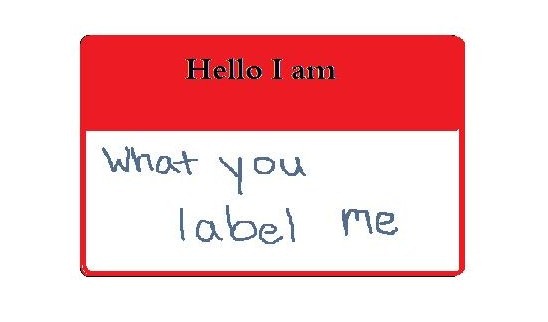
Life and business are far more complex than drawing a line and putting “Christian is good” on one side, and “Non-Christian is bad” on the other as one example.

label

The same applies to this ever growing propensity to demonise certain types of agricultural systems out of hand

The media is full of stories about the perils of conventional, large-scale agriculture, pointing to simpler ways of producing food that appear to be more in harmony with nature.

Large vs. small, family farms vs. corporate, organic vs. mainstream, free range vs. housed, grass fed vs. grain fed.The reality is it’s not the system it is how it is managed that really counts.
When it comes to the best approach to natural resource management and animal well-being we need to focus on measurable results that, in turn, will generate innovation and solutions to some of our most pressing problems on this planet. Not the least of which is to provide affordable, nutritious, ethically produced food that allows a reasonable return on investment for farmers that will allow them to feed a future 9 billion people and maintain life on Earth as we know it.

It is not just the community that is putting pressure on farmers. Some farm businesses and major retailers have taken to denigrating other farm management systems as a marketing tool to promote their own. The poultry industry is a classical example. How often do you see poultry advertised as “hormone free”.

Hormones0002

Not only is this is a nonsense as all plants and animals have natural hormones in them- think plant sterols in soy milk, but worse still it casts doubt into the mind of the consumer that all the other chicken on the market must actually have hormones added. Absolute myth. Hormones have not added been to any poultry feed in Australia for over 40 years! You can read all about the Australian poultry industry here

At Clover Hill Dairies we have been guilty of wearing the occasional badge of honour ourselves
Pesticide Free0001

Up until we took over Lemon Grove Research Farm we proudly stated on all our literature that we don’t use herbicides and pesticides.  When we took over Lemon Grove we suddenly found it was easy to say this because Clover Hill didn’t have plagues of army worms and red legged earth mite and nasty broadleaf weeds that grew like wildfire if let do so on the flood plain.

Lemon Grove 0003

Judicious use of scientifically validated technology is one of the great advantages developed food producing nations like Australia have over many other countries. We have rigid and well regulated systems and safety checks in place that make our food some of the safest in the world, irrespective of whether it has been derived by conventional or non-conventional methods. If we read the labels and play by the rules we can be confident that the technologies that we use on farm are safe and the food that we produce is superior and as safe as any in the world.

At Clover Hill and Lemon Grove we will always aim to produce the best quality and safest food that is grown with the best interest of the environment and animals that it comes from.

Badge with Photos  0001

However, our farming systems can not be locked into a religious type paradigm of what we think is best We must continue to adapt to our changing resource base, the seasons and climate, the economy and our markets. We also know that nature does not always get it right and some times we need to use technology to tip the balance back in favour of the farming system and the ever increasing people we need to feed.

7%0004

We must acknowledge this if we are going to keep feeding our world from an ever shrinking resource base with a market place that continually wants to pay less for food that costs more to produce. We must always use technology and innovation smartly and consider the collateral effects of its use ensuring that our management and farming practices are at best practice rather than just reaching for the key to the chemical shed or the drug cabinet.

Good article by the BBC’s Richard Black on this Farming Needs a “Climate Smart'” Revolution 

On a lighter side – Labels can mean many different things to different people

AmFsddOCIAEIgLX

and this one

Al5zX6gCQAAIGBB

Future farming: research puts grass out to pasture

Todays post comes via Kiama Independent story on our field day we are hosting in partnership with Southern rivers cma

DANIELLE CETINSKI

22 Feb, 2012 01:00 AM

A RESEARCHER could have the answer to the future of dairy farming and the solution was born in Kiama.

Research company SBScibus director Neil Moss, who lives in Kiama, has spent the past eight years developing a new kind of pasture using no grass at all.

“We wanted another way of doing things to fill gaps in the feed base,” he said.

Dairy

Dr Moss’ “salad bowl of ingredients” includes lucerne, chicory and plantain, which are all deep-rooted legumes and herbs – red clover is part of the mix because it grows quickly while the lucerne establishes itself, and the white clover fills in gaps in the pasture if other plants die out.

The trial pasture at Clover Hill Dairies’ research farm Lemon Grove at Jamberoo has already yielded some surprising results.

“We’ve found it generates 10 to 15 per cent more energy and the milk is 15 to 20 per cent higher in protein,” he said.

“We’re also getting between one-and-a-half and two litres more milk per cow per day spent on the pasture, which is a rise of five to 10 per cent.”

Dr Moss selected them from years of observations and fieldwork because they grow year-round, unlike the ryegrass and kikuyu commonly used on coastal dairy farms, which only grow in winter and spring and summer and autumn respectively.

They have deeper root systems than grass, meaning the pasture would be more resilient in times of drought.

They also rely less on nitrogen-based fertilisers, which are increasing in price, and respond to recycled effluent from the dairy.

Clover Hill Dairies owner Lynne Strong said she was excited about the research.

“It is widely recognised nine out of 10 farmers learn from other farmers and they want to see the research working in their own backyard,” she said.

The Southern Rivers Catchment Management Authority will run a field day at Clover Hill Dairies on March 26-27, allowing farmers to see the pasture firsthand.

“This field day will let regional farmers to see the results we are getting on our farm and allow them to determine if they think it will fit into their farming system,” Mrs Strong said.

It will include presentations on sustainable farming, soil health and the Australian Government’s Carbon Farming Initiative, including how to generate carbon credits.

Mrs Strong said the presenters were experts in their fields, including Dr Moss, Richard Eckard from the University of Melbourne, Mick Keogh from the Australian Farming Institute and Louisa Kiely from Carbon Farmers Australia.

Also speaking is Steve Wiedemann

Presentation topic:  Carbon and Nutrient Efficiency; Opportunities for dairyfarmers

Profitability and sustainability are front and centre issues for dairyfarmers.  One unlikely area where there may be opportunities to win on both fronts is from the manure pile.  Steve Wiedemann will speak about the carbon and nutrient opportunities that exist for dairyfarmers through improving effluent and manure management.  This will be a practical look at how to best utilise the resources that remain in waste streams at the dairy and in the paddock, and how to set a path to reducing some costly fertiliser inputs. Beyond the farm gate, we’ll also look at how dairy farmers might be able to participate in the carbon farming initiate by getting paid to reduce their emissions.

Technical summary:

  • Nutrient and carbon flows around the dairy farm – what they are and what they tell us
  • ‘Waste energy’ – how to capture this (Anaerobic digestion at the farm scale)
  • ‘Waste nutrients’ – where do under-utilised nutrients end up on a dairy farm and what can be done about it?
  • How increasing productivity can lower your carbon footprint
  • How emissions capture may lead to carbon credits

Bio:

Steve Wiedemann is a carbon and nutrient management specialist with FSA Consulting, based in Toowoomba Queensland.  Steve is currently running a number of national R&D projects looking at the carbon footprint of livestock enterprises, is a member of the livestock technical committee for developing Carbon Farming Initiative methodologies, and works regularly with a wide range of famers in the area of nutrient management.

If you would like to attend the field day, email peter.pigott@cma.nsw.gov.au or phone on 4429 4449.

Young people telling it like it is

I caught up with the dynamo Mike Stephens at the NFF Roundtable last Friday and introduced him to Stephanie Coombes. We were then lucky enough to catch up with Associate Professor Peter Sale from La Trobe University over dinner where the conversation centred on nurturing young people in agriculture and how we identify them, engage them and provide them with the skills sets to empower them to lead Australian agriculture into the future.

Mike sent me this quote this evening.  Don’t you just love it

I crave human beings who understand the world, who gain sustenance from such understanding, and who want–ardently, perennially–to alter it for the better. Such citizens can only come into existence if students learn to understand the world as it has been portrayed by those who have studied it most carefully and lived in it most thoughtfully; if they become familiar with the range–the summits, the valleys, the straight and meandering paths – of what other humans have achieved; and if they learn always to monitor their own lives in terms of human possibilities, including ones that have not been anticipated before. Source: Gardner, The Disciplined Mind – Penguin – pages 19/20

This week Art4Agriculture Young Farming Champion and Clover Hill Dairies team member Emma Visser is one of “ 36 young, thoughtful and opinionated Australians who will come together in Canberra today, February 5th to attend Heywire – a “Tell It Like It Is” Regional Youth Summit. The 2011 Heywire winners from across regional Australia will engage in a five days of discussion and project idea pitching. They will speak directly with government decision makers, Australian youth sector leaders and key ABC staff.”

Emma at Heywire

Emma and fellow Heywire winners tackling the Marshmallow Competition

Emma joins talented young people of the ilk of Melody Pedlar for this once in a lifetime opportunity.

The challenge for agriculture is how do we build on these opportunities our shining stars are being given.

Bindi Turner commented on my previous post “The world is run by those who show up” by saying “I struggle with a) the apathy when its an open invitation and b) who gets the tap on the shoulder when its not”

Bindi you have inspired me to put this forward.  I would like to suggest to all those people out there who get a tap on the shoulder – ask if you can bring a friend. Then identify an exciting inspiring YOUNG person in agriculture who deserves to be heard and take them – you have nothing to lose and agriculture has everything to gain.

The National Farmers Federation Blueprint is our chance to define the farming landscape. Lets make it a legacy we can all be proud of

Emma’s winning Heywire video can be watched here

The world is run by those who show up

Yesterday I participated in the National Farmers Federation roundtable to discuss Higher Education and Skills and Training in Agriculture as part of the Blueprint for Australian Agriculture.

There was a few farmers there, a number of representatives of peak industry bodies, a lot of bureaucrats,a lot of professors from agricultural universities, some thought leaders from industry service providers, a representative of the AWU and the RSPCA and some pollies.

Can you see the glaring big hole in the audience? Where were all the young people? All those exciting young people who have just been through, or are going through, or a hoping to go though “Higher Education and Skills and Training in Agriculture”

Yes we all sat around the room and listened and talked and second guessed their needs.

“The world is run by those who show up” Its time agriculture made sure the right people were given the opportunity to show up

Farmers call to arms

Each year the Readers Digest does a poll to determine Australia’s most trusted professions. Last year as you can see farmers came in at number 7.

Top ten most trusted professions in 2011

1. Paramedics

2. Firefighters

3. Pilots

4. Rescue volunteers

5. Nurses

6. Pharmacists

7. Farmers

8. Medical specialists

9. GPs

10. Veterinarians

Four years ago when farmers were at number 9 I showed the list to a group of farmers and posed the question “ why aren’t farmers at the top of the list”. The farmers around the table replied “ the majority of the professions in the top 10 save lives”. My reply was without farmers supplying people with food, their most basic of needs, there would be no life and we need to find away to remind people just how important farmers are.

At that time I received mostly blank looks to my suggestion from the farmers around the table. I thought this was very sad and recognised we also needed to find a way to make farmers realise just how important they are. After all if you don’t believe in yourself how can you expect anyone else too.

So I began a crusade to fix this lack of appreciation of farmer self worth and initiated the Art4Agriculture programs to provide opportunities for farmers to share their stories with the community and in turn get a greater understanding of the community’s expectations of the people who supply them with food and fibre. The aim was to create a two way appreciation between rural and urban communities and an understanding of how much we rely on each other.

This year is Australian Year of the Farmer. A once in a life time opportunity to remind people (farmers and the community alike) just how important our farmers are.

Australian Year of the Farmer is an opportunity for every primary industry, every rural community and every farmer to invite their urban cousins to join them in a 365 day celebration.

Beyond Art4agriculture’s activities I am having a dinner party once a month for my urban friends. They will receive a copy of an Australian rural showcase like Fiona Lake’s books which my first guests were lucky enough to get.
AYOF dinner

We will celebrate local produce, drink local wine and I will be encouraging them to wake up each morning and say “I thank a farmer today”

IMG_4111

There is no shortage of great food on the South Coast.  And just to prove it we recently won the 100 mile challenge

IMG_0331

What do you have planned?

Well known Australian author Fleur McDonald– the voice of outback has pledged to get hold of 52 Farmers and post a blog a week from a farmer. From every part of Agriculture; grain, stock, mixed, fishing, dairy, viticulture, communications and so on and so forth!

This week I am very honoured to say I am farmer no 4. You will find my blog on Fleur’s site as well as at the bottom of this post.

CALL TO ARMS

This is my challenge to Australian farmers. Farmers are currently number 7 on Australia’s most trusted professions list. How can we work together to make 2012 the year Australia votes to put their farmers at number 1?

I look forward to working with each and everyone of you to make this happen

Fleur McDonald – Australian Year of the Farmer – a farmers story No 4 by Lynne Strong Clover Hill Dairies

Firstly I would like thank Fleur McDonald for giving me this opportunity to share my story and congratulate her for taking the lead in Australian Year of the Farmer by sharing 52 farmers’ stories. For too long food has been about cooking and eating and recipes and restaurants with little attention paid to the origin of the key ingredients. It’s time for everyone in the food value chain to follow Fleur’s lead and put faces to the product and give our customers real farmers they can relate to

1. Summary of your family and farming enterprise

My name is Lynne Strong and I farm at Clover Hill Dairies in partnership with my husband Michael and son Nick in what I refer to as paradise – the beautiful Jamberoo valley on the South Coast of NSW.

Clover Hill Dairies

Jamberoo is the birth place of the Australian dairy industry and the cooperative movement and my family has been farming here for 180 years.

I am actively involved in the day to day running of our two dairy farms where we milk 500 cows that produce milk to supply over 50,000 Australians daily. Lynne and Michael Strong

The highlight of my farming journey to date has been winning the National Landcare Primary Producer Award. This award recognises farmers who have a holistic view of farming and are committed to achieving the delicate balance between sustainable and profitable food production, and the health and wellbeing of people, animals and the planet

Nick Strong

2. Why I farm

· I farm because the people I care about most in the world farm and they are in it for the long haul

· I farm because I believe feeding, clothing and housing the world is the noblest profession

· I farm because I like the mental intensity, the constant review process, the drive to get up each day and do it better. The fulfilling challenge of balancing productivity, people, animals and the planet

· I farm because inspirational people farm. Feeding, clothing and housing the world now and in the next 50 years is going to require an extraordinary effort. This means we need extraordinary people to take up the challenge. When I work with inspirational people, they light my fire, feed my soul and challenge me to continue to strive to make a unique contribution to agriculture and the community.

3. What do you foresee as the biggest short term and long term challenges in farming?

Sadly Australia is complacent about the challenges to food security. There is a lack of appreciation by society in general of the interdependence of environment, agriculture, food and health.

However if we are to progress and fuel the mushrooming food needs of the cities while meeting the community’s expectations for environmental sustainability and animal well-being, then both rural and urban communities must have greater mutual empathy and respect.

This I believe is the real challenge facing farmers in the immediate future -How do we fix it?

As I see it we can do one of two things. We (farmers) can sit back and lament that we are victims or we can actively acknowledge that farmers are business people selling a product and successful businesses recognise marketing is a strategic part of doing business.

Marketing doesn’t mean every farmer needs to have a logo, spend money on advertising, write a marketing plan, write a blog, join Twitter or Facebook – it simply means being customer focused. This means you have to understand your customer and their values and your business has to BE the image you want your customer to see.Then whenever you get a chance, put that image out there. It may be at the farmgate, at a local farmers market, a community meeting, a media interview or whenever you are in contact with consumers.

Every sector of the food system whether they be farmers, manufacturers, branded food companies, supermarkets or restaurants is under ever increasing pressure to demonstrate they are operating in a way that is consistent with stakeholder values and expectations. Farmers cannot expect to be exempted from this scrutiny just because we grow the food.

Businesses are built on relationships. This means we (farmers) have to get out there in our communities and start having two way conversations with our customers

Excitingly I know that once farmers embrace the concept they will discover like me that it can be very rewarding talking to your customers. They are interested and they do care.

There are so many ways farmers can share their stories. To help achieve this I initiated the innovative ‘Art4Agriculture’ programs which started with Picasso Cows and is now the Archibull Prize. The Archibull Prize uses art and multimedia to engage thousands of students in learning about the valuable role farmers play in Australia’s future.

With the Art4Agriculture team I am working on establishing an Australia wide network of ‘young agricultural champions’ who are trained to tell the great story of Australian agriculture to the next generation of consumers – students.

This program connects young people from different food and fibre industries. They get to see their similarities, they find common ground, they realise each has issues that are just as challenging, and they learn how they can help each other.

Art4Agriculture’s Young Farming Champions program for 2012 will train a team of 24 young farmers from regional Australia to actively engage with students in schools around Australia. The students will focus on a particular food or fibre industry, receive a unique insight from their Young Farming Champion and then enter their project work (their Archie) to vie for the ‘Archibull Prize’.

Our Young Farming Champions will also have the opportunity to participate in a comprehensive and diverse array of initiatives offered by our supporting partners. These events will provide a platform from which to develop, build and strengthen the capacity of the Young Farming Champions and allow primary industries to develop key farmer-to-stakeholder and farmer-to-consumer relationships.

Through their involvement in Art4Agriculture school programs our Young Farming Champions will be able to directly market their food or fibre industry and its diverse career pathways to a captive and relevant audience. The legacy of the Young Farming Champions program is to create an Australia wide network of enthusiastic young professionals and build their capacity to promote Australian agriculture as a dynamic, innovative, rewarding and vibrant industry.

We believe this program will not only help build the capability of young rural people to farm with resilience and confidence it will provide a great platform to spark the next generations’ interest in an agricultural career.

4. What is my vision for the future?

My vision for the future isn’t too difficult; it just requires a different way of thinking. I believe a profitable and sustainable healthy future for the farming sector is achievable – the health and welfare of all Australians and many people around the world depends on it.

To drive the process of change requires champions and leaders. But to change grass roots perceptions, we need grass roots action. Farmers care about the country, their livestock and the people they provide with food and fibre. Beyond best farming practices, farmers have to be out in communities, walking the talk – from paddock to plate, from cow to consumer – and building trust between rural and urban communities. I want farming men and women to go out and sell the message that feeding and clothing the world is an awesome responsibility and a noble profession, and that it offers great careers. Just imagine if we could achieve my vision of an Australia-wide network of trained, passionate farmers talking directly with the communities they supply!

5. What do you wish non-farmers / city people & the Australian Government understood about farming?

Australian farmers proudly feed and clothe 60 million people. If they were doctors or nurses or pharmacists or ambulance officers or firemen there would be a moment in most people’s lives when they would be reminded just how important those professions are.
But farmers, at less than 1 per cent of the Australian population, are almost invisible and with food in abundance in this country, there is little opportunity to remind Australians just how important our farmers are.
I am hoping Australian Year of the Farmer starts a very long conversation and a new appreciation for the land that produces our food and the hands that grow it

6. What would I like to see on a billboard?

Billboard – across Sydney Harbour Bridge

“If you want safe, affordable, nutritious food forever love the land that produces it and the hands that grow it.”

clip_image002

You can visit us at the following websites:

Clover Hill Dairies www.cloverhilldairies.com.au

Art4agriculture www.art4agriculture.com.au

Read our blogs at:

Clover Hill Dairies Diary http://cloverhilldiaries.com/

Art4agriculturechat http://art4agriculturechat.wordpress.com

Follow us on twitter:

@chdairies and @art4ag

Follow us on Facebook:

http://www.facebook.com/pages/Clover-Hill-Dairies/211850082224503

http://www.facebook.com/art4agriculture/

You can find links to our Flickr, Slideshare and YouTube accounts on our websites as well as my email address. Looking forward to hearing from you