One Saturday, two events, and the story of three orphans who built this district

Every object on this table holds a story. Yours do too, and most of those stories are one generation from being lost. Saturday 18 July, Kiama Library, the Royal Australian Historical Society is teaching us how to capture them before they go.

Three orphan girls built lives we still drive past every day

I write stories so the people we love are remembered. Memory has a shelf life of about two generations. Your grandchildren will know your name. Their children probably won’t, unless someone writes it down. Every family has people worth remembering, and most families never get around to it.

So when I heard what the Kiama Historical Society has organised for Saturday 18 July, I paid attention.

In 1821 three young sisters, Cecelia, Caroline and Catherine Rutter, were sent to the Female Orphan School at Parramatta. The Orphan School was where the colony put children it had no other place for. It was not a beginning anyone would choose.

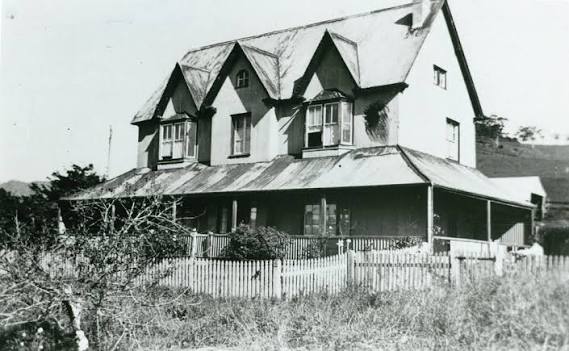
Fifty years on, their names were attached to some of the finest homes in this district. Cecelia married Michael Hindmarsh of Alnebank at Gerringong. Caroline married Thomas Surfleet Kendall of Barroul House. Catherine’s second marriage, to Thomas Chapman, made her home at Hartwell House.

For me, one of those names is personal. In 1880 my grandfather’s family, the Chitticks, arrived in Sydney aboard the Samuel Plimsoll, a wool clipper 74 days out of Plymouth. The shipping list records six brothers, aged 15 to 27, every one of them an agricultural labourer, with their mother and sisters listed as domestics. In time the Chitticks bought half of the Alnebank farm. The orphan girl’s ground became my family’s ground. My grandmother’s people had already been in this district since 1831, and my father’s side arrived in 1841. These stories don’t just overlap with ours. They share fences.

I know all of that because somebody kept the records, and somebody else taught me how to read them. A shipping list, a family tree in a booklet, dates and ages in a column. That’s how a name becomes a person whose story you can share.

Carol Liston, president of the Royal Australian Historical Society, tells the Rutter sisters’ story at Kiama Library Auditorium on Saturday 18 July at 1.45 pm. It costs $3 for Historical Society members, $5 for guests, afternoon tea included, and you can just turn up.

The morning session is the one I’d urge you to book

Before the talk, Carol and the Society’s senior vice president Christine Yeats are running a research workshop, 10 am to 1 pm at the same venue. This is a rare thing. The two most senior figures of the Royal Australian Historical Society, in Kiama, teaching the practical craft: how to search Trove so it gives you answers instead of noise, how to use the Historical Land Records Viewer to trace a property and the people who held it, how to read colonial records for the personal detail that turns a name into a person.

Almost every family around here has the shoebox. The photographs with no names on the back. The family tree that stops dead somewhere in the 1880s. The house with a name nobody can explain. This workshop is for that shoebox. BOOK YOUR SPACE HERE 

It’s $25 for historical society members, $30 for everyone else, and that includes morning tea, cakes and lunch. Bookings are essential, so don’t leave it until the week of.

I’ll be there with my own list of dead ends. Whether Trove can crack them is another question. That’s rather the point of going.

Two workshops in one week, and what they showed me about memory

Last week I went to two workshops.

On paper they had little in common. One was about making cabbage tree hats. The other was about recording oral history.

By the end of the week, I was thinking about both of them through the same lens. They were both about the past, and about what happens when people decide it still deserves a place in daily life.

The first was Sue Brian’s cabbage tree hat workshop at Jamberoo Youth Hall. I went to watch, not to make a hat, which was probably wise. The people at the tables were learning how to boil, shred and plait the palm fronds. I was listening for the story behind the craft.

There was a lot to hear.

In the mid nineteenth century, cabbage tree palms were cut in huge numbers. The trunks were used and the unopened leaf spears were taken for hat making. Sue and the people who still make the hats use the palm differently now. They take the unopened leaf from young palms in a way that allows the tree to keep growing.

The 19th century method took the palm out of the landscape. The current one leaves the tree standing.

The same palm that was once stripped from this landscape is now being planted back into it. Landcare Illawarra’s Future Proofing the Cabbage Tree Palm project is planting cabbage tree palms around Jamberoo, below Saddleback Mountain, where some of the last old palms still stand.

Cabbage tree hat making workshop proved to be very popular and the workshops will return in 2027. See bottom of blog post for contact details

The second workshop was at the Pilot’s Cottage in Kiama, run by Alison Wishart and hosted by the Kiama Historical Society.

Alison Wishart and attendees at Oral History workshop. The Historical Society always offer a superlative morning tea.

This was familiar ground. I have spent years helping people tell their life stories through written memories. Alison was talking about oral history, and the power of recording it.

As Alison reminded participants, the recording keeps the emotion for others to interpret. You hear the hesitation, the humour, the catch in the voice. On the page, I have to find another way to express it.

I keep noticing how much people here care about memory. Our local “remember when” Facebook pages come alive when someone posts an old photo. Within an hour, people are naming faces, houses, streets, teams and families. Someone always knows something. Someone else adds the bit they missed.

I understand that feeling more now than I did when I was young.

Earlier this year, when the council floated moving the Pilot’s Cottage Museum from Blowhole Point into a small space under the library, the reaction was immediate. Dr Tony Gilmour and the Kiama Historical Society volunteers led the campaign, and people who rarely write submissions wrote in. In five days, the idea was reversed.

Around the museum, they still joke that the council wanted to turn them into a KFC.

The museum is here to stay (but it is still looking forward to council giving it a 5 year lease – if only council worked as fast as our community)

I grew up in a family that took history seriously. Years were spent writing down who came to this country, where they settled, what the men did, how wonderful the wives and mothers were at raising children and keeping house. Which women never married because they stayed home to look after their parents or their ten plus siblings. Not an era I would have thrived in.

I always thought I should find it fascinating. I didn’t.

I did well in history at school, but I learned the dates to pass the exam.  I realise now I wanted to know what it felt like to be alive then.

I am grateful for the people I meet today who are prepared to share their story.

When I sit with someone to record their life, I am listening for what it was like to live through their sixty, seventy or eighty years. How much changed.  Who stood beside them. What they learned through grief, love, disappointment and endurance.

When I ask people what they would say to young people now, the answers are the same.

Find a way to live in peace.

Be kind.

At the oral history workshop, someone asked the obvious question. If you are recording one person’s memory, how do you know it is accurate?

It is a fair question.

Memory shifts. Families remember things differently. History is full of confident versions that do not line up. Put ten people at the same accident and the police will take ten different statements. Each person saw it from where they were standing.

So you listen for how that person remembers it. Their version may differ from someone else’s. It may differ from your own. But it is their story.

That does not mean anything goes. A life story is not a place to settle a score with family. The highs belong there, and so do the lows, but the purpose is to understand a life, not punish people from the page.

The other thing I came home thinking about is how different every person is to record.

Some people give you gold in the first ten minutes. Some hold their story so tightly you wonder why they agreed to begin. Some families want every sentence to serve a different purpose. Some people need audio. Some need a written story. Some need a patient interviewer who can sit with silence. Some need structure before they can begin.

There is no single right way.

The cabbage tree hat workshop showed me that a craft survives because people keep practising it, slowly and carefully, with their hands.

The oral history workshop showed me that a life story survives because someone listens, then chooses the way to record it that suits that person.

Anyone can keep the dates and the places.

I am focused on the voice behind them, and whether I can express enough of that voice on the page for the person and their loved ones to recognise them.

Three exciting things to share

  1. Dr Tony Gilmour the Vice President of the Kiama Historical Society told me the majority of the Oral History workshop participants would like to turn their workshop learnings into recording people’s lived experiences; Contact the society at E: kiamahistory@outlook.com  P: 02 4232 1001
  2. The Cabbage Tree Hat making workshops will return in 2027. Contact Kate Malfroy E: kate@lampshadeworkroom.com.au
  3. Landcare contact is Meredith Hall  E: coordinator@landcareillawarra.org.au
    M:  +61 (0) 499 027 770

Further reading:

Cabbage-tree hats through history 

Jamberoo welcomes the Future Proofing the Cabbage Tree Palm Project


The palm we cleared for a hat, and the people planting it back

I have spent the past 18 months buried in local history, much of it around the Jamberoo Dairy factory and the families who built our community.

The deeper I went, the more I learned to be careful with certainty. One story about the dairy industry can quickly split into three versions, each told by someone who is sure they have the right one. They cannot all be right.

So when Sue Brian told me her PhD was on cabbage tree hats, I had the predictable reaction.

Four or five years on hats?

Then she started talking.

I was sitting in the Jamberoo Youth Hall at a cabbage tree hat making workshop held over two days, three weeks apart on 6 and 27 June, so people had time to do the plaiting between sessions. Our village sits below Saddleback Mountain, where some of the last old palms still stand, and it is now where they are being planted back. The workshop promised a rare chance to learn from a master hat maker and leave with a finished piece of living Australian history. I left with something more useful than a hat. I left with a different understanding of the palm, the craft, and the people needed to bring it back into the landscape.

Sue has been making traditional plaited and sewn hats for years. She learned the craft on Norfolk Island and brought it home to the cabbage tree palm, the same palm that gave eastern Australia one of its most familiar nineteenth century hats.

The hats are slow to make. The unopened leaf spear is boiled, dried, dipped again to take out the crinkles, shredded to width with a tool a bit like a rasp, plaited into long sennit, then sewn with a running stitch.

Sue can plait a little over two metres an hour on a wide pattern. The sewing takes about as long again.

You can see why people did it at night by the fire. In Australia plaiting was first taught as a convict skill, something to keep men occupied after dark, and the craft was still being practised in some prisons into the 1930s.

Sue has also corrected parts of the story that have drifted over time. I had assumed the plaiting was a First Nations skill. I was wrong. It came here by sea. It is a simple four-strand plait found across the Pacific, in the English straw-hat trade, and in parts of the United States. Whalers carried it around the Pacific during the idle stretches between catches. It reached Norfolk Island through the Pitcairn Islanders.

It was also a man’s hat, despite what is often repeated. Ladies’ cabbage tree hats were first advertised in 1900. Before then, when women appear in the records wearing cabbage tree hats, Sue says they were usually wearing their husbands’ hats.

A quarter of a million palms, cut for the fashion

Behind every hatmaker is a husband happy to be the mannequin.

Then comes the part that turns a small craft story into something much larger.

Sue has gone through the shipping records out of the Illawarra. Between 1840 and 1870, she can document more than a quarter of a million cabbage tree palms cut for the trade. The leaf spears were shipped to Sydney and turned into hats.

By the 1840s, readers were already writing to newspapers complaining that the palms were becoming rare.

It is easy, from this distance, to blame the settlers. The truth is more uncomfortable and more useful.

Clearing was the law. A land grant required it. A felled palm also brought in cash, about ten shillings a hundred in 1850. Tell a settler to clear the land or lose the grant, then pay for the palm on the way out, and the palm comes down.

The farmers did what they were told, and they were paid for it.

In today’s version farmers are being invited to partner with Landcare to replant the palms.

Planting them back needs the farmers. Slowly the palms are now going back in.

Future Proofing the Cabbage Tree Palm Project comes to Jamberoo

Landcare Illawarra is working with local property owners in the Jamberoo area to preserve this unique species, replanting cabbage tree palms, with seedlings raised in a local nursery and planted in the riparian corners of private properties.

Planting is the easy day. The years after planting are the hard part.

Young palms need to be fenced from stock or they will be eaten. They also stay small for a long time before they become the tall, spiky trees people picture when they think of a cabbage tree palm.

On some properties there is an easier way. Where there are already fruiting palms, fencing them off from cattle can allow them to regenerate on their own within a few years.

The barriers will be familiar to anyone who has farmed this country. Kikuyu is an important summer feed for cattle, which is why farmers value it. It is also a headache for Landcare groups, because it can smother young native seedlings before they get going. Mature cabbage tree palms can stand above it. New ones need help.Deer are another growing problem.

Fence off an area, shade out the kikuyu with fast pioneers such as bleeding heart, keep the stock off, and the palms have a chance.

What the project needs now is farmers and a small section of their land.

There is a neat loop in all of this.

The same farms that cleared the palms under government order now hold the creek lines, gullies and corners where the palms can come back.

If the project reaches those farmers, the hat that helped strip the Illawarra of cabbage tree palms may become the reason a few hundred of them are planted again.

I began by thinking a PhD on cabbage tree hats was an odd way to spend four or five years.

Then I spent months inside the dairy industry’s history and watched one story fracture into a dozen confident, competing versions

This is where the value of PhD research can never be overestimated .

A topic can sound small until someone spends years following every thread. That is how old assumptions are tested. It is how family stories, local legends and confident retellings are put beside the records and asked to hold up.

The well researched version, the one with shipping records behind it, is usually the one that stands up.

Whether the palms get back into the landscape in time will depend on something much less academic.

It will depend on someone turning up at the gate to talk to farmers about cabbage tree planting  partnerships.

Further reading:

Cabbage-tree hats through history 

Jamberoo welcomes the Future Proofing the Cabbage Tree Palm Project


Sue Eggins receives the Kiama Electorate Woman of the Year award

There are awards that recognise a moment. Then there are awards that recognise a lifetime of turning up.

Sue Eggins has been named Kiama Electorate Woman of the Year for 2026, a well deserved recognition for someone whose dedicated persistence to heritage has shaped this community for decades.

Last weekend I had the pleasure of interviewing Sue for my Stories written so they can be found series, the project where I sit down with women across our district to record their life stories so they are not lost to time.

Sue’s story is highly entertaining.

It begins with insistence on hospital facility sterilisation standards in an ambulance heading toward Camperdown in 1948 when her mother refused a roadside delivery. It moves through science teaching, travelling the world in her twenties, a period Sue cheerfully describes as following a musician boyfriend around the country like “a brazen hussy”, and eventually lands in Kiama where her energy has been poured into protecting the history and heritage of this district.

Along the way she trained as a school counsellor, worked for decades supporting young people through some of the most complicated years of their lives, and became one of the driving forces behind the Kiama Historical Society.

Her younger years also included a stint at boarding school under a strict Catholic regime. Sundays involved Mass, Benediction, Rosary and several other services all in one day. Bread for school lunches arrived once a week and by Friday it was often mouldy. The nuns toasted fresh bread for themselves and tipped the leftovers into a bucket for the chooks, a bucket the permanently hungry girls often raided. Dormitories opened onto verandahs where winter wind snapped the canvas blinds and Sue remembers piling eleven army blankets onto her bed to keep warm.

Boarding school also came with a formidable rule book about modesty. Talcum powder was sprinkled across the bath water so the girls could not see their reflection while bathing. Even school dances were tightly managed. Boys were required to place a handkerchief between their hand and a girl’s back so skin never touched skin.  Sue remembers those years as very character forming. A decade travelling overseas and following a boyfriend and his band around the country looked positively wholesome by comparison.

If you have attended a heritage talk, heard the story of Orry-Kelly, visited the museum, or followed one of the long running campaigns to protect historic buildings such as Barroul House or the Pilot’s Cottage, chances are Sue has been somewhere either guiding a tour or behind the scenes reading the documents, asking the questions and turning up to the meetings.

And when Sue turns up, people listen.

They know she has done her homework. She understands the history, the planning rules, the legislation and the process. By the time she walks into a room she is ready to get the best outcomes for the cause.

Her approach to community life is simple. Know your subject. Make your case carefully. And never walk away simply because it looks too difficult.

Great leaders do their homework. They listen carefully. They build a case that stands up to scrutiny. They keep showing up, even when the process is slow or the outcome uncertain. Over time, people learn that when they speak, it is worth paying attention. Sue Eggins has practised that art for decades.

This award recognises exactly that kind of contribution.

And if you want to hear the full story, from ambulance drama to international travel to heritage picket lines, keep an eye out for the full Sue Eggins life story coming soon in the series.

Milk and men (no women) and the archive we inherit

I am writing the history of the Jamberoo dairy factory.

The minutes are thorough. Motions moved. Votes carried. Chairmen thanked. Directors named.

The record is male because in that era authority was male.

That is the structure the archive preserves.

From the 1940s through to the 1970s the dairy industry ran on family labour. Women rose for early milking. They fed calves. They sterilised equipment. They kept the production books and the household accounts. They stretched the milk cheque across machinery payments and grocery bills. They managed rationing in drought years. They hosted meetings. They sustained community networks. They carried the emotional load when prices dipped or disease struck.

None of of that appears in the official file.

Board minutes record motions. Newspapers quote chairmen. Legislation names directors. The kitchens and calf sheds rarely make print. Even our local retrospectives, rich in civic detail, move through institutions and office holders.  In the Kiama Independent Our History Supplement the pattern is consistent. Public life is recorded through public roles.

The tragedy sits elsewhere. The women who carried half the enterprise are now largely gone, and their voices were rarely recorded in their own words.

Oral history could have balanced the record. Time has narrowed that opportunity. It is archival reality.

When I read through factory reports and industry correspondence, I can trace leadership decisions with precision. I can follow drought policy, milk zones, compensation debates. I can name the men who chaired meetings and negotiated with ministers.

I cannot hear the conversation at the kitchen table when the milk price fell.
I cannot see the private calculations made after a vet bill arrived.
I cannot read the words of a woman who rose at 4 am and went to bed after the books were balanced.

Half the enterprise sits between the lines.

Wanting to change that makes sense. It shifts the lens forward rather than back. It asks who is documenting women’s lived experience now, while those voices are still present. It asks whose work is counted as leadership.

If we are serious about industry history, we record the boardroom and the calf shed. We record the motion and the margin. We record the lived experience

Interviews, recorded conversations, written reflections. These are not embellishments. They are structural repair.

An industry history written only through formal office leaves half the story implied.

I am writing “Milk and men (and no women.)”

The next chapter needs different sources. I hope those voices can be found

A night at the museum when the captain ran a tight ship


Dr Tony Gilmour ( Vice President) and Sue Eggins ( President) who led the conversation on the history of the Pilot’s Cottage which houses the Kiama’s Maritime Museum – Composite photo

If you are going to host a Night at the Museum, it helps when your historian arrives dressed to command the harbour.

Dr Tony Gilmour stepped forward in full captain’s cap, gold braid catching the light, shirt crisp, microphone steady in hand. He arrives on time, every time. History may roam across centuries. Tony keeps the schedule.

As Vice President of the Kiama and District Historical Society, he knows his brief. And he knows his audience.

We began outside at the Pilot’s Cottage. Basalt. Blue metal. The same stone that built fortunes and fuelled arguments. The same stone hauled down Terralong Street on a tramway that managed to become famous for all the wrong reasons.

Tony retold the story with relish.

During the 1880s Kiama Council built its own tramway to move blue metal from the quarries to the harbour. A bold civic enterprise. Public ownership. Local pride. A locomotive ordered from England. Vacuum brakes admired. Aldermen impressed.

There was one small problem.

The gauge.

The line proved too narrow for sensible interchange and too awkward for the engine that was meant to run on it. The blue metal still travelled. The logic did not. Within a few years, the rails came up and the engine found another home. It also sent the council into debt.

Ambition in iron and basalt. Standing beside the Pilot’s Cottage, Tony pointed out that this sturdy building rose from that same volcanic rock. Basalt blocks that once left Kiama by ship now hold firm against the sea air.

The local press, in its day, had strong opinions. The Kiama Independent described the cottage as “a building which has otherwise no architectural pretension,” condemning its exposed black rubble as “a flagrant violation of all the principles of good design.” Rendering would have made it respectable. Raw basalt did not meet the aesthetic brief of the 1880s.

Even architectural taste carries a timestamp.

Tony then turned our attention to the Robertson Basin.

Opened in 1876, the Basin changed everything. Before it, vessels moored to a heavy chain stretched across the harbour. After it, proper ships could berth, load blue metal efficiently, and leave with dignity intact. The harbour shifted from hopeful to operational.

From the verandah of the Pilot’s Cottage, the pilot managed that transformation. He recorded arrivals, issued weather reports, raised signals, coordinated rescues and kept order in a working port that was loud, dusty and lucrative. This small basalt building once oversaw a busy stretch of coastline and the industry that shaped Kiama’s identity. It was operational authority, grounded in experience.

The story stretches into living memory. The last pilot lived in the cottage until the early 1980s. This was a functioning government residence on Crown land. When the pilot and his family moved out, the future of the building entered a new chapter.

One proposal from the state government involved demolition, another converting the building into a fast food outlet. Harbour views. Prime land. Commercial logic.

The community formed a different view. Through careful advocacy, persistence and steady engagement with council and government, local voices made their case. The cottage became a museum rather than a takeaway counter.

That history remains important today. The Kiama Historical Society currently operates under a one-year licence. Council has offered no long-term guarantee that the cottage will remain a maritime museum. For a building of state and national significance, that uncertainty is of grave concern.

The Society understands long campaigns. It holds one of the largest membership of any historical society in New South Wales. It has defended heritage before. It knows how to assemble evidence, cultivate allies and return to the table until the outcome reflects community best interest.

Kiama Historical Society President Sue Eggins

From there, we moved inside where Sue Eggins, President of the Historical Society, kept the room thoroughly entertained. Sue draws out character and colour with ease. Where Tony charts the terrain, Sue brings the people into the room.

Between them, the evening flowed. We heard of councils arguing over sewerage with missionary zeal. Of hospital roofs surrendering to coastal storms. Of electricity arriving with ceremony and consequence. Of ratepayers scrutinising every loan and levy with familiar intensity.

And then there were the hosts. The Kiama Historical Society did itself proud. Wine flowed. Nibbles circulated with impressive efficiency. Conversation hummed. This is a society that preserves archives by day and knows how to throw a party by night.

By the end of the evening, the museum felt less like a building and more like a conversation across time.

History stood before us in a captain’s hat, precisely on schedule, anchored in basalt, overlooking the Robertson Basin, and entirely alive.

And inside, under Sue’s watchful guidance, it continued to sparkle.

Exciting News

Given the popularity of the sold-out ‘night at the museum’ last week the Kiama History Society is rolling it out again on 31 March 2026. This event will be open to everyone. Book your ticket here 


Jamberoo history humour and the joy of taking ourselves seriously

Jamberoo has a lot to be proud of and it certainly never lacked confidence.

According to the local correspondent for the Kiama Independent in the late 1800’s what it sometimes lacked was musical ability, favourable weather patterns, and a shared view on how to handle young men with too much energy and not enough supervision. The local newspaper shared his views with a straight face.

In 1887, the colony entertained the idea of calling itself “Australia”. Jamberoo mulled over the proposal and showed little enthusiasm.

The local correspondent described the idea as one of those foolish notions the colonial government picked up from time to time. The idea raised eyebrows, conversations carried on at the pub, in the butcher and baker’s shops, and through sewing groups, while the paper moved on. Readers kept pace or fell behind.

In 1890, Jamberoo floated the idea of forming a local band. The correspondent attended the meeting, listened carefully, then reached for the claws. He reported that a gathering of half a dozen Jamberoo cats produced sounds more pleasing than those scraped from the dead fellow creatures used to make catgut strings.

Visitors received a public service announcement. Arrive during band practice and you would understand immediately what the fuss involved. Action taken, reputation adjusted.

The same year delivered frogs. Not a few, not a rumour, but thousands. Captain Garde of the steamer Illawarra stood on deck at Shoalhaven Wharf when objects struck him like hailstones.

Daylight revealed frogs across deck, wharf and water. They fell for ten minutes, arrived in good health, then carried on hopping towards Wollongong as if aerial travel formed part of normal routine. The paper reported it as routine which made it funnier than any embellishment would have.

Then came the larrikins. Jamberoo sat inside a wider Kiama problem that escalated from nuisance to civic emergency. Bridges suffered damage. The town pump broke twice. Horses bolted after deliberate scares. Church windows shattered.

One New Year’s Eve saw 40 to 50 men and boys roaming, singing, hooting and pelting buildings. The court imposed the maximum fine. The community debated stronger measures and ordered a cat o’ nine tails by steamer. The cat arrived.

Threats followed. Actual flogging rarely did. The town demonstrated enthusiasm for symbolism and restraint in execution.

Ambition ran alongside all of this. Jamberoo carried pride in hills, cows and distance from coastal bustle. The paper described it as picturesque and impractical in the same breath. Big ideas surfaced anyway. The district dreamed, announced schemes with confidence, then watched resources thin out. Earnest campaigns appeared, gathered momentum, then quietly dissolved. The effect stayed visible. Later jokes carried extra weight because the groundwork was already in print.

When the nation’s capital was being decided, Jamberoo put itself forward as the Bush Capital. Supporters pointed to green hills, dairy country, space, calm, and distance from Sydney politics. The argument reflected how Jamberoo saw itself. Sydney politicians continued their search elsewhere. The paper recorded Jamberoo’s confidence and the broader response in close succession, then turned the page.

Smaller moments filled the margins. Visitors received warnings about local music. Outsiders earned suspicion, hospitality, then criticism in columns. Public enthusiasm surged, committees formed, and minutes followed. Jamberoo showed itself lively, observant, and fond of commentary on its own behaviour and not happy with Kiama Council governance.

Jamberoo took itself seriously. Very seriously. Reading the paper now, you’re reminded how fortunate it was that these debates stayed on the page and in the pub, rather than being amplified in real time. A band meeting, a capital bid, frogs from the sky, all of it received careful attention and confident opinion. Social media would have been carnage. Half the district would still be making its case.

BTW Did you know this? I didn’t.

Before Federation we were know as The Australian Colonies and legally and politically, it was six British colonies, not a country. On 1 January 1901, the colonies federated to form The Commonwealth of Australia

Who will be laughing at us in a hundred years

Old newspapers are a gift. They show us a community concentrating very hard on the business of being right about the small things.

In Jamberoo in the late 1800s, people worried about the name of the colony. Australia felt flimsy. Too casual. Too much like a place where people might relax. A proper society, it was argued, required a name with authority and a whiff of empire. Something that would sit comfortably on official letterhead.

The name survived. It now appears on passports, Olympic medals, and road signs without incident.

Beach behaviour also drew close attention. Men bathing in underwear sparked outrage. Editorials were written. Public standards were defended. The issue hinged on fabric, fit, and the preservation of decency. The town believed civilisation rested on correct swimwear.

Electricity prompted years of debate. Poles were discussed. Tariffs were dissected. Who should pay occupied many meetings. When power arrived, streets were lit and grievances brightened along with them.

Women voting caused genuine concern. Serious men warned it would alter women’s nature, upset social balance, and weaken chivalry. These arguments were delivered with confidence and a straight face.

Marriage advice was also a public service.

In 1886, the Kiama Independent offered bachelors a guide to finding a wife. It advised men to observe women closely in the morning. To check her hair. Her dress. Her energy levels. To assess whether she complained of cold, executed unreasonable projects, or wrote too many letters. A man was cautioned against leading a woman to the altar if she showed signs of extravagance or ambition. A good wife, readers were assured, would not be a boaster and a slattern. This bible of rules was apparently the gold standard.

This guidance was published earnestly. Presumably clipped. Possibly discussed over tea.

At the time, all of this mattered. These were serious conversations held by serious people trying to protect their world from decline, disorder, and women who might write letters.

Seen from here, the intensity is impressive.

Which brings us to the present.

We have our own certainties. Our own moral alarms. Our own debates conducted with absolute conviction. We argue about productivity, visibility, optimisation, self branding, and being constantly available. We hold strong views about how people should live, work, partner, parent, age, and perform success.

Future readers will find these pages too.

They will smile at the confidence. They will marvel at the energy. They will wonder how so much attention landed in such particular places.

History tends to be generous. It shows how people worked with the ideas they had.

The more useful question is which of today’s decisions will still make sense once everyone involved is dead and no one is defending them.

Those choices are rarely the ones anyone is busy congratulating themselves for.

They do not come with rules.

And they show zero interest in what a woman looks like before breakfast.


How a small town editor changed the landscape by channelling Hawke, Mandela and Attenborough

Wouldn’t life be easier if we knew when to calm the room like David Attenborough, when to hold the line like Nelson Mandela, and when to roll up our sleeves and push like Bob Hawke?

Joseph Weston understood timing.

He was the editor of the Kiama Independent in the late nineteenth century, a farmer in an earlier life, and a fierce advocate for systems that moved farmers from price takers to price makers.

He had range.
Emotional range.
Strategic range.
Editorial range.

I’ve spent a long time watching how change actually happens. It often slips in while everyone is busy arguing about something else. Weston seemed to understand that instinctively.

Start with women.

As editor of the Kiama Independent, Weston strategically expands who appears in the public record. Women begin to show up with careers. Paid work outside the home becomes part of everyday reporting. Secretaries. Clerical and office roles. Assistants in business and administration.

His commentary ensures these roles sit comfortably on the page.

Education is assumed. Literacy is assumed. Organisational skill comes with the territory. Women appear as capable participants in the life of the town.

Alongside this, the paper notes the first woman to graduate university with an Arts degree. She takes her place among the day’s business and the paper moves on. Education, work, and opportunity sit naturally within community life.

This is Weston in Attenborough mode.

He trusts readers to notice. He lets repetition do the work. Over time, expectations widen because what people see keeps widening.

Then he switches gear.

When the dairy industry is at stake, Weston becomes very Hawke. Energy up. Purpose clear.

He writes under the pseudonym The Dairyman. Farmers start asking each other who The Dairyman might be. They argue about the ideas and speculate about the author at the same time. The conversation spreads. Momentum gains traction.

Cooperative dairying becomes something people are talking about in sheds, kitchens, and at the factory gate.

This is Weston mobilising attention.

Running through both approaches is a third instinct, the Mandela one. A sense of timing. Knowing when to slow things down and when to apply pressure. Knowing that influence works differently depending on the moment.

With women’s roles, Weston widens the frame until it feels familiar.
With cooperative dairying, he sharpens the focus until it demands action.

Same person. Different tools. Wisdom we all can aspire too.

Joseph Weston understood how communities change. He worked with that reality. Low-key when low-key works. Direct when direction builds momentum.

For me

Joseph Weston is a role model who shows us how to rearrange the furniture, and when to do it.

FYI

Source 

Understanding heritage, development and relocation

We have  number of beautifully and faithfully restored homes in our region. Some of them like this one were restored by Jose De La Vega in the 80’s and nurtured by their owners since and they don’t need reminding of this hard truth 

“The public enjoys heritage, but the private owner carries the bill.”

This article sits alongside my recent piece on the former Kiama police residence. The issues surrounding a public heritage building on Crown land, subject to an Aboriginal land claim, are very different from the questions that arise when heritage applies to privately owned residential property.

To keep the discussion clear and useful for the community, these topics have been separated. This article looks at heritage from a developer’s perspective, drawing on planning requirements, the Kiama Development Control Plan (DCP) and common industry experience. These insights do not relate to the Police Residence site. They describe how heritage processes operate more broadly in NSW and why conflict often emerges when significance is identified too late.

Five things you need to know

  1. Heritage must be identified early.
    Once a property is bought with no listing in place, it becomes extremely difficult to stop demolition later.

  2. Heritage is more than a single building.
    Streetscapes, context and neighbourhood character often carry as much weight as the building fabric itself.

  3. Maintaining heritage is expensive.
    The community may love a building, but the owner carries the cost, the compliance burden and the responsibility.

  4. Relocation is possible, but rarely simple.
    Engineering, approvals, heritage reports and cost blowouts mean moving a building is often not viable.

  5. Clear communication prevents conflict.
    Uncertainty is what triggers community anxiety. Clear rules, early assessments and honest updates help everyone.

Why timing matters

Heritage significance must be identified before a site is purchased. Once land is bought with no heritage listing in place, and after due diligence and council checks have been completed, it becomes very difficult to later prevent demolition.

“If heritage isn’t protected before a site is purchased, the window has usually closed.”

This is echoed in the Kiama DCP, which requires applicants to understand the heritage character of a site and its surrounds, demonstrate how heritage values have informed their design, and engage specialists when needed. Early clarity benefits owners, developers and the community.

The importance of conservation areas

Heritage Conservation Areas carry weight because they assess not only the building, but the setting, streetscape, visual relationships and surrounding story. This aligns with the DCP’s emphasis on context, which sometimes matters as much as the building fabric itself.

“Heritage is more than a single building, it is the story held by the whole streetscape.”

When heritage character is defined early, conflict drops dramatically. When it isn’t, disagreement becomes almost inevitable.

Council’s role and why incentives matter

If the community wants to absolutely guarantee that a privately owned building survives, government purchase is usually the only certain option.

Short of that, councils can support better outcomes by making retention, adaptive reuse or relocation more feasible. Right now the regulatory pathway is often slow, expensive and unclear, which discourages owners from considering alternatives to demolition.

The DCP requires detailed documentation before relocation is even considered, including:

  • structural and engineering assessments

  • heritage impact statements

  • evidence that significance will survive the move

  • analysis of how the relocated building will sit in its new context

Relocation is possible, but rarely simple.

“Relocation sounds simple, but the approvals, cost and engineering make it anything but.”

Clearer incentives or streamlined processes would make a real difference.

The private burden of heritage

Heritage buildings are admired by many, but the financial burden falls on one: the owner.

“The public enjoys heritage, but the private owner carries the bill.”

Restoration requires specialised trades. Maintenance is ongoing. Grants are limited and rarely cover the true cost. The DCP places strong responsibility on owners to justify changes, maintain fabric and demonstrate that significance is respected.

“Two years ago I read that the NSW Government was going to spend $25 million demolishing the (Finger) wharf. They surely did not want to spend that money. What was needed was a formula to justify the investment.”

…. We won because we put in the time, did the homework and had the team. And we have been passionate about it.” Source 

This mismatch between community expectation and private obligation is one of the drivers of heritage conflict.

“Heritage has many fans, as long as someone else is paying for it.”

Understanding development risk

Development is complex. Even skilled developers carry significant risk, from contamination to infrastructure constraints to changing market conditions. A project that looks viable at purchase can become unworkable once detailed assessments begin.

“Most heritage crises begin as maintenance problems left too long.”

This context helps the community understand why late-stage heritage identification can destabilise a project and fuel community tension.

The role of communication

Clear communication lowers anxiety. Silence does the opposite.

“Silence from government is the fastest way to start a rumour.”

Developers who contributed insights to this article emphasised the importance of keeping dialogue constructive while statutory processes are underway to avoid misunderstandings.

The DCP supports this by requiring transparency, expert evidence and clear demonstration of how heritage considerations shape proposals.

“Clear rules calm communities. Uncertainty fuels conflict.”

Summary

Heritage and development are not adversaries. Both benefit from:

  • early identification of significance

  • clear, consistent planning rules

  • practical pathways for retention, adaptation or relocation

  • communication that builds understanding, not conflict

“Heritage survives when everyone knows their role, not when everyone waits for someone else.”

When the system works well, heritage is protected and development remains viable. When it doesn’t, communities, owners and councils all feel the strain.

Passion is important to de la Vega. “Can you feel the magic of it?” he asks pacing through the structure of the Finger Wharf. “It’s like restoring an old ship. You have to be passionate about it.”

Rider

This article is based on publicly available planning documents, including the Kiama Development Control Plan (DCP) 2020, and general insights shared by several experienced developers to help explain how heritage processes operate in NSW. These discussions were broad in nature and d0 not relate to the former Kiama police residence or any specific development site.

The purpose of this piece is to give the community a clearer understanding of how heritage is assessed, why timing matters, and why conflict often arises when significance is identified later in the planning cycle. All information has been consolidated and interpreted for clarity, with care taken to avoid speculation or commentary on any live development matters.

#KiamaHeritage #HeritageProtection #NSWPlanning #KiamaCouncil #HeritageConservation #DevelopmentAndHeritage #KiamaHistory #BuiltHeritage #CommunityInformation #HeritagePrecinct #UrbanPlanningNSW #HeritageListing #HeritageDebate #HeritageBuildings #KiamaCommunity #AboriginalLandRightsNSW #HeritageEducation #CivicPrecinctKiama #HistoricKiama #PlanningExplainer