When humans interfere with nature

As part of my Christmas at the Dairy post I mentioned we made the choice of interfering with nature by choosing to artificially hatch out a clutch of eggs two of our chooks decided they were no longer going to sit on after the first four chickens were born

IMG_3903

New life – Four healthy chickens and 17 eggs still to hatch out ( Hen on the left is a Peking and hen on the right is a Silky)

Broody chooks will not only sit on their own eggs but also tend to gather other chooks eggs over the next 21 days. So when the original clutch of eggs hatch the chooks have to make the decision to look after the live ones or continue to sit on the remaining eggs until they hatch and hope the live ones can look after themselves.

Not surprisingly they chose life over potential life – sounds pragmatic to me

However humans have the capacity to help them do both and being big softies Michael and I chose this option.

IMG_3915  

Chicken eggs in incubator 

Its pretty simple to do and very rewarding bringing new chickens into the world

IMG_3916

Once they hatch they stay 24 hours in the incubator and then we move them to their next home

IMG_6267

We use a plastic container like this and cover the bottom with pine shavings or in this case rice hulls

IMG_6274

We supply them with fresh water and chick starter

IMG_6276

and a light to keep them warm

Then we have to make the big decision as to when is the best time to give them back to their mums

IMG_6034

By this time you are getting pretty attached and you tend to keep putting it off and putting it off

So by now the 2nd batch ( they are still hatching) are almost two weeks old and it was now or never

So we decided to put the first 5 out on dusk just as mothers and the chickens they were looking after had gone to bed.

IMG_6312

We were very excited as you can see we managed to tuck “our” chickens under their mums with their brothers and sisters (B&S)

IMG_6158

But it was a different thing next morning. The mums and B&S went off and did their own thing and left “our” chickens to their own devices.

IMG_6369

But we are so proud of our offspring. They are resilient little champions. They have embraced the “chook palace” like they were born there.  

IMG_4860 

Our cows are just fascinated by chooks

IMG_6294

They have figured out how to get fed

IMG_6379

and watered

IMG_6218

They have gone on some big adventures

IMG_6242

Climbed a rock face

IMG_6238

In the meantime they are are not being completely ignored by their mothers and B&S who have walked by many times.

IMG_6296

and are now staying very close by

IMG_6289

With the silky chook keeping a very close eye on their activities. Tomorrow is another day and I wouldn’t be surprised if this silky chook has new family 


In the meantime another chicken has hatched in the incubator !!!!!!

The humans should get their act together and collect the eggs more regularly and  we wouldn’t need to play mums to other animal’s children would we??

Fascinating facts about cows

Now here is a quirky fact you may not know


Dairy cows ( Bos Taurus ) only sweat through their noses. 

As dairy cows perspire at only 10 per cent of the human rate we have to help them maintain a comfortable body temperature in the hotter summer months.

tonguing

Cattle dissipate heat primarily through breathing. That is why during the summer months cows’ tongues may be hanging out of their mouths. This is an attempt to increase the volume of air that passes through the airways, maximizing the exchange of heat with the environment.

IMG_5171

And they have this very quirky way of wiping the sweat off their noses

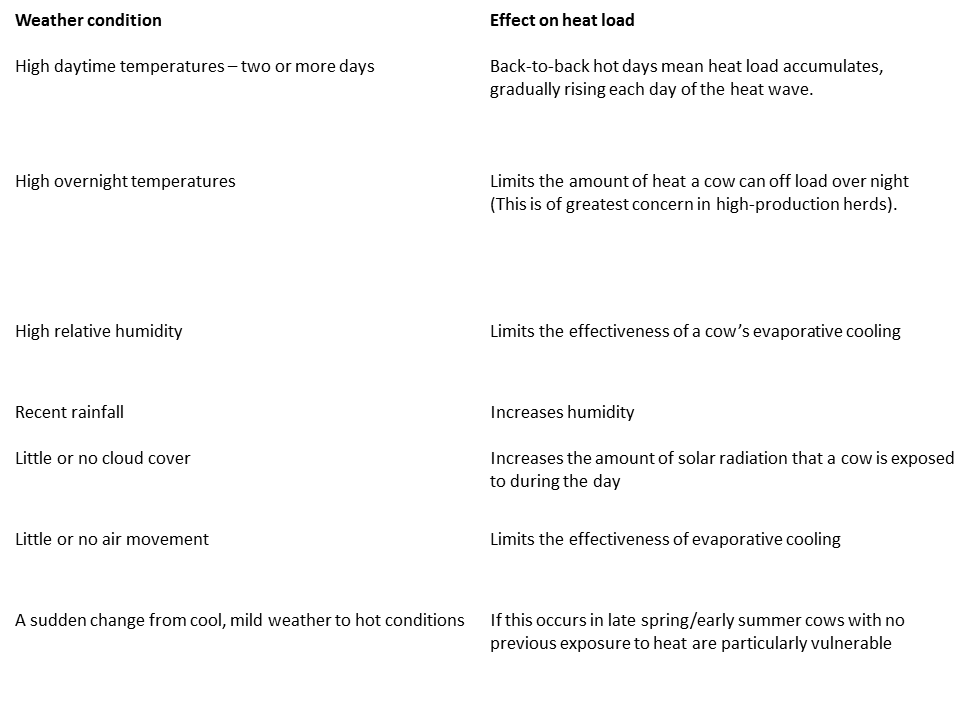
To reduce the levels of cow heat stress the trick is to be constantly aware of the  weather and what is likely to be coming.

For example a combination of the following can act as a warning

Slide1

http://www.coolcows.com.au/

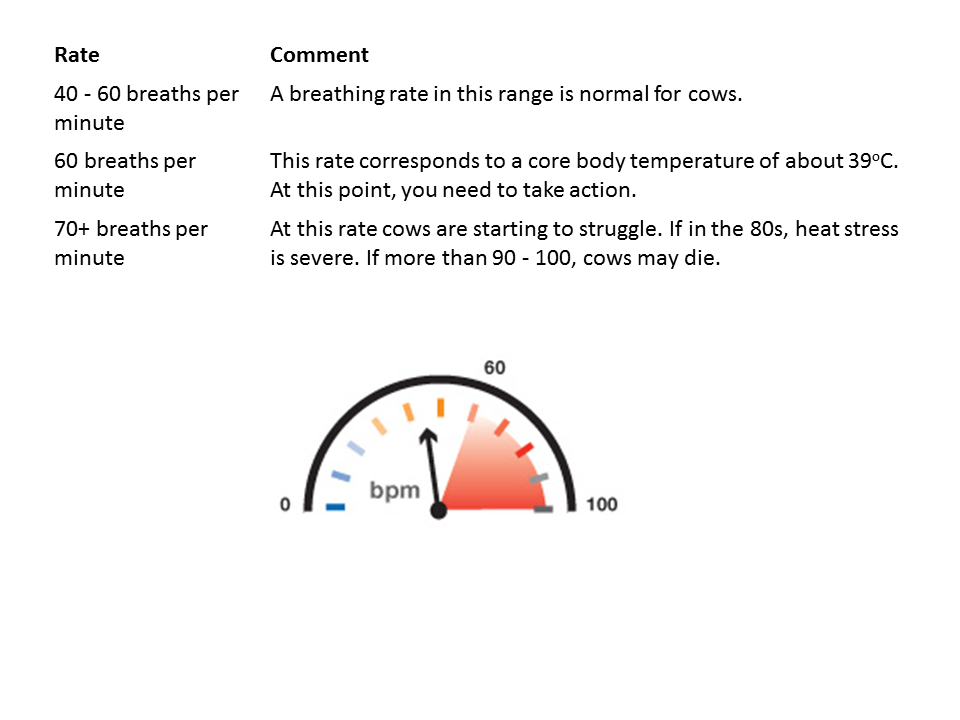
The most useful and practical way to determine how your cows are actually coping with the prevailing conditions and managing their heat load is to check their breathing rate.

Slide2

http://www.coolcows.com.au/

Holsteins being black and white have the added burden that black cows feel the heat more and seem to attract more flies that whiter cows. Whereas white cows will suffer sunburn.

IMG_4855

Flies seem to more prevalent on black cows

IMG_4779

Whilst this much whiter cow sitting next to her didn’t seem to be at all troubled by flies

We have the added complication of the home farm being very steep which means the   the cows require extra energy provided via a higher feed intake to walk up and down the hills. Metabolising this extra feed generates more heat aggravating any extra heat stress being incurred from the weather.

IMG_4524

The cows are in paddock 3 this week between the morning and the noon milking.

IMG_3119

Like this paddock it has a 5 to 6 gradient. That’s almost mountain goat terrain

IMG_4588

And they traverse the hills like mountain goats on the walk home 

IMG_4599

Udders full of milk prior to midday milking

On top of this our cows already have high feed intake because they produce a lot of milk so it goes with out saying higher milk production cows will begin experiencing heat stress before lower producing or dry cows (cows not lactating)

Okay so what do you do?

With wise advice from our nutritionist Dr Neil Moss we adjust the feed by packing the nutrients into smaller volumes of feed that we feed in the dairy.

IMG_4185

Our cows get fed a mixture of grains and vitamins and mineral supplements three times daily in the dairy. 

On hot days, we put the cows in paddocks where they have access to adequate amounts of shade.

IMG_4633

And you need to keep your eyes wide open for the ones in the bushes

High producing cows will often drink 50 per cent more water on a hot day so again it goes without saying they must have access to good quality, cool drinking water

IMG_4298

Big troughs and lots of them.

IMG_4341

Allowing the cows to take their time their time walking backwards and forwards from the dairy is always a high priority

IMG_4714

Cows don’t seem to like hot concrete and will avoid it if the can

Milking three times daily makes it tricky too and our cows are walking backwards and forwards to the dairy during the hottest part of the day. Whilst its hard to modify the times of milking we normally start early ( 4am) so that milking is completed early in the morning before it gets too hot. IMG_5334

Early starts mean the cows get to the paddock before it gets too hot

We keep the cows close to the dairy for the midday milking and the night time milking (8am) is in the cooler part of the evening. Research says during hot weather,cows prefer to eat at night so we pick the paddock with the highest quality feed for the night feed.

Then we get to the fun part. We have sprinklers set up in the milking yard to cool the cows while they wait to be milked and large fans in the milking shed which helps keep both the people and cows a lot cooler

IMG_3730

Cows love to stand under the sprinklers whilst they wait to get milked

IMG_5763

The dairy is also protected from the hot sun by two huge Morton Bay figs

Its a challenge but we get better at it every year

For those who like the science – courtesy of Dr Moss

PHYSIOLOGICAL RESPONSES TO HEAT STRESS
Heat stress induces a number of physiological responses by the cow in an attempt to keep body temperatures within normal limits. The following are some of the physiological changes occurring in the cow as heat stress conditions are incurred:

  1. Respiration rates increase and may reach the stage of panting. In this attempt to increase evaporative cooling, increased amounts of CO2 are exhaled resulting an a decrease in H2CO3 and an increase in blood pH. In response to the decrease in blood pH, the kidney increases resorption of H+ and more HCO3 and cations, primarily sodium, are excreted in the urine.
  2. Heat stressed cows lose two thirds of their evaporative water loss by sweating and one third by panting. The maximum sweat loss at 95° F is estimated to be 150g/m2 of body surface per hour. Cows lose potassium rather than sodium through sweating.
  3. Reticulo-rumen motility and overall rate of digesta passage is decreased during heat stress. There also is a change in rumen fermentation with less total volatile fatty acids produced and an increase in the molar percent of acetate.
  4. Blood flow to the digestive tract and other internal tissues is decreased and flow to the skin surface is increased
  5. Urine volume generally increases

Weddings in Paradise

Believe it or not this is a story about growing grass.

Rolling green hills, seascapes and briescapes ( not that I think either of our processors make soft cheeses out of our milk – what a shame).

Recognise the backdrop

jamberoo-kiama-the-pavillio_med-22

Four days earlier it looked like this

IMG_3414

This wedding was in November and the bride and groom and the photographer Peter Merison did a rekkie for wedding photos at Clover Hill in late September.

When Peter knocked on the door and asked if he could take wedding photos in the front paddock little did he know how much preparation would go into the timing of the cows eating the paddock off in order to have the grass at the perfect height (and manure free- well almost) to provide the best experience for all parties concerned including most importantly the cows .

The weather was perfect, the grass was perfect, the photos look superb and if the wedding blog is anything to go by the wedding was perfect.

Now back to the finely tuned art form of growing grass for best practice pasture based dairying.

Greener than Green

Looking back from the west to the dairy and the paddock in front of my house  – can you see it?

This picture was taken in the spring and the grass in the forefront of this paddock is almost perfect. A nice blend of oats and annual rye grass at just the right height, with  high energy (carbohydrate) levels and balanced protein content.

Good dairy farmers know their grass so well they can pretty accurately estimate the energy and protein levels of the grass just by looking at it at any given point of the year. Take my word for it this grass is short and sweet and the cows quicken their step when they saw it.

During spring our rotation (number of days its takes the cows to eat off every paddock on the farm) is approximately fourteen days and thanks to the temperate weather and high rainfall this year our current rotation is still 14 days as the ryegrass is still hanging in there. As ryegrass is a cooler climate grass normally at this time of the year it would be too hot and the ryegrass will have died out or gone to seed (grass loses 40% of its energy content when it goes to seed) and the kikuyu will have taken over.

Good dairy farmers are always casting their eyes over their paddocks on a day to day basis to pick the best grass for their cows. If one paddock has got away (the grass is past its peak ) and another paddock is at the perfect stage you go with the paddock that is perfect otherwise you spend your time chasing your tail. Our cows go into a different paddock after every milking. This allows us to pick a paddock with good shade for the hottest part of the day. This means we need to pick three ideal paddocks every day.

Cows on heat  

Yesterday when we bought the cows home from Jack’s paddock we had a number of options which is always a good thing unless more than one paddock is past its best by date. We chose this one known as the dam paddock (for obvious reasons) or paddock 27

IMG_4068 

Each paddock has a number but they also have another name that often has no relevance to the present. Jack’s paddock has an historical significance. Jack and Viv used to own the 100 acres next door and as we have fond memories of them  I imagine this paddock will be called Jack’s paddock for a long while yet.

Back to the wedding. How impressive does this look

jamberoo-kiama-the-pavillio_med-45

and my favourite photo from the blog

jamberoo-kiama-the-pavillio_med-42

Wedding photos in this blog have been used with permission

Christmas at the dairy

It always amuses me when people assume the cows get a day off for Christmas. Do breast feeding mothers get Xmas off? I don’t think so.

After all when you take on the responsibility of caring for other living things whether they be animals or children it is 365 and 24/7.

No-one is complaining at Clover Hill – though Michael is not quite sure how he scored the midday shift at the home farm but then that still leaves 21 hours to celebrate.

On our farm Louise coordinates the Xmas cheer.

Louise is just one of those people everybody loves having on their team. Louise brings the festive spirit to the dairy like no other

IMG_3803

For the babies she looks after

IMG_0389

and this one just 4 hours old

IMG_3780 C

for Sean

IMG_3806

for Martin

IMG_3845

There is also rumour Louise has pictures of Michael and Nick with antlers on. They are yet to surface but rest assured I am on working on it. WATCH THIS SPACE

The girls waiting to be milked think all of these hijinks are highly amusing.

IMG_3730

Though they are a bit jealous when they find out Louise has Antlers for Eileen but not for all of them!!

IMG_3790

But then Eileen’s face is adorable and lends itself to superb photo opps don’t you think?

Its not all play and no work. The babies still get fed and weighed to make sure we are taking just as good care of them as their mums do.

and back at the Chook pen new life has arrived for Christmas

IMG_3904

But the girls got off the eggs before they had all hatched. So the farmers took over from nature and bought a few more into world

IMG_3915IMG_3916

Which we will give back to their mums in a few days

Craig saved Christmas for our next neighbour by finding and fixing her broken water pipe

IMG_3825

Michael said thanks Craig with a few beers.

IMG_3828

The grain arrives and gets unloaded and Col is still trying to find out why all the parts haven’t arrived from NZ to install the new 30,000 milk vat. OMG Can you believe someone can put a vat this size on a ship and let it sail it across the ocean and left all the other bits that make it work sitting on the dock which now all have to be put on a plane and flown over. All that CO2

And what do you know?  Its dawn and its all happening again.

The girls say “Do we really have to go down that big hill this morning?

and Nick and Sean bring the springers (cows calving in the next 3 weeks) home

IMG_3874

And next thing you know the girls are back in the dairy waiting patiently to be milked.

IMG_3716

Sean’s on the job

Wouldn’t give it up for quits.

Walking when too much is not a good thing

At Clover Hill Dairies we milk 500 cows three times daily on two farms.

Milking three times a day is not the norm but we do it for a multitude of reasons which are good for people, cows and the planet.

Milking three times a day means lots and lots of health benefits for our cows but those health benefits rely on good time management.

Good time management is essential because cows need at least 12 hours a day to sleep. ( If you want to read the heavy science you can find it here.)

So as our cows walk backwards and forwards to the dairy three times daily we need to make sure they do that with as much cow comfort as we can provide so they can do it as quickly and efficiently as they can.

cows in line

Cows travel super highways at Clover Hill  (special thanks to Penny Scott who took this gorgeous photo)

To help them do this we have created a series of “supermoo highways” on our farms.

Lynne Strong images (2)

Like this and this –  Cars and people like them too. We get lots of the “keep fit” crowd walking up this road

IMG_1509

50% of our farm is rainforest and part of our role as land stewards is to make sure our farming practices do not impact on the native vegetation or the wildlife.

So we have supermoo highways through our rainforest as well .

Here is a great example of development of one through the rainforest

Cows Walking thru rainforest

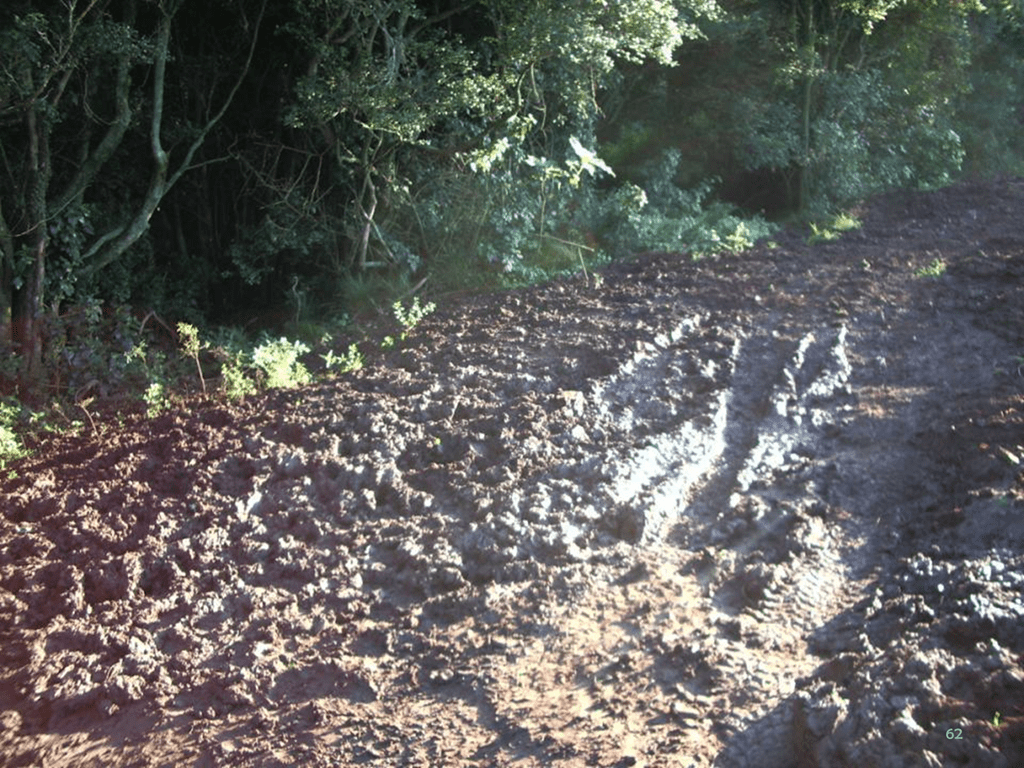
This one was fine like this when we milked twice daily but it looked like this when we got a lot of rain and the cows started using it three times daily

Mud0062

So what did we do. We got some advice from rainforest experts and some cow comfort experts and we did this

Cows on Picasso Laneway  0006

Picasso Corner

Firstly we separated the cows and the rainforest with a fence.

Cows on Picasso Laneway  0001

Then we poured concrete on the laneway.  We had happy cows and a happy farm team who found the cows liked the new comfortable road and were very keen to come back to the dairy for milking.

Then we needed to spend some time nurturing the rainforest. So we found some more experts to give us the right advice like Erin and the team at Landcare Illawarra

P1110010

Erin with Tony Hepworth and Mike Swanson from South East Landcare 

The troops came in and did their bush regeneration thing and achieved some great outcomes like this

10 July Picasso Corner  (12) 

Confidence to Grow Photos for Facebook   (13)

What about those cows getting their 40 winks!!!!!!!!!!

Yesterday I went for a walk and it gave me great pleasure when I came across the cows in the paddock at the end of the laneway we call Picasso Corner (another story) and saw this paddock full of very happy cows RESTING

Erin and Ann 0002

Great outcomes all round me thinks