Farmer Vicki Jones is living the dream

As promised in an earlier post I am now delighted to share Vicki Jones’ presentation from the Naturally Resourceful Conference in Mitchell this month.

I am confident Vicki’s story will move you just as much as it did me

IMG_7453

Hello my name is Vicki Jones……………………

Yes Jones one of the most common names in the phone book and I am married to a farmer, so I am Mrs Jones the farmer’s wife. I love what I do as a farmer’s wife and am very passionate about the land.

I suppose this came about at a very young age as I grew up on a cattle property on the western downs and even though I initially chose a different path, I have ended up just where I wanted to be. Lucky I guess or you could say well planned.

For the last couple of years as my involvement in the local land care group grew, I found myself volunteering to be the Chair of Mitchell & District Landcare. I did this because I believe in the foundations of land care and not only does it give us access to factors that affect our land scapes and environment it also allows us to be a part of a very important group of people who also have the same goals and love for their land.

For those of us who are fortunate to own a piece of this wonderful country, land care is a major part of our lives. Most of us get out of bed every morning with the intention to care for our land and to make it better for our future generation. We do this because we have too…. we are the ones with the money on the line, we can’t afford to get in wrong, we have to keep searching to make things better. It is easy for others who do not have any money on the line to have an opinion of what we as farmers need to do, or better still what not to do. However it is those of us that are the resourceful ones that are in the pilot seat of our future and chose this life because we can and it’s what we as people of this land do.


I will just give you a brief background. After leaving boarding school many years ago I went on to study dentistry and worked for Queensland Health on and off for 20 years having breaks for children and other pursuits. Dentistry is not all it’s cracked up to be as nobody likes you and it actually has the highest suicide rate of all professionals.

I did have a career, but as a wife and mother I always put my family first. For the first 10 years of our marriage we worked and lived on Bruce’s family dairy farm near Toowoomba and as seeming to be the theme of a couple of the speakers I heard yesterday, this was also not what it was cracked up to be.

Bruce had always wanted to have his own cattle property. It was his lifelong dream and as I had grown up on the land it soon became mine as well. After working on the family dairy farm for 15 years it became apparent that his dream was not going to happen unless he did it himself.

In one of a few heated discussions with Bruce’s parents, about our decision, we decided to walk away and make it on our own. Bruce’s dad told him that if he left the family farm to go west, that he would go broke.

So with these words from the man he admired most still ringing in his ears he packed up his young family and moved west. We bought all that we could afford, a small cattle property south west of Mitchell.

Just to give you an idea of the scale of how small. The surrounding properties and the regional average is about 20 – 60 thousand acres and we had purchased 2500 acres. So we don’t have a very big ship, but what we do have is our own boat and we can paddle it where ever we chose. And we chose to do the best with what we have. We could not buy this place and run it like both our fathers would have, because it was not big enough and it needed to pay for itself. If it was not profitable it just became and expensive place to live.

Oolandilla Park” was the beginning of our dream.  The only thing a bit tricky was that it only ran 80 head of cattle. The house had never been lived in, the fences / yards were all falling down and in terms of type of country, south of Mitchell was not a best street kind of suburb. As we found out from all of the comments from the locals. So we had some work to do. We were wondering what we can do to give us the biggest bang for our buck, as we realized that something had to change or our dream was not going to happen.

Slide1


With the help of MDLA, Queensland Murray Darling Catchment & farmbis my husband and I were fortunate enough to be involved in a pilot study  being participants in RCS’s Grazing For Profit School in early 2007. Sixteen local farming enterprises attended the course and up to 4 enterprises continued on the Graduate Link and Executive Link modules. We were privileged to have Terry McCosker as our facilitator. We took on this information with great enthusiasm and applied the grazing management principles immediately. This has since proven to not only change our business forever, but also our personal lives. It heightened our awareness of our environment and taught us to love our grasses just as much as our cows.

Slide3

When we started to measure our ground cover & grasses in March 2007 we found that we had 23% ground cover and 5% desirable grasses.

Slide4 

We immediately changed our grazing management to include rotational grazing of livestock, fenced off dams and boundary fenced for feral goats and kangaroos. Don’t get me wrong we still have some kangaroo’s, we just now have a sustainable level. Before they were in plague proportions and not very healthy. The rotational grazing has allowed us to rest each paddock for 12 months of the year every year.

Slide5

By changing our grazing management for only 2 years we had been able to increase our desired grasses by 1000% and the litter has improved by 350% giving us an overall ground cover now of 90%. While doing this we were also able to increase our livestock numbers by 325%.

Slide6

 After a while the wattle suckers and a few other species started to come up pretty thick and we became a bit concerned. We had neither the time nor the money to address them.

Slide7

We left them alone and concentrated on what we did want and not want we did not want and that was grass. As we were monitoring our grass we discovered that the suckers were changing. A scale/moth/grub or something was getting into them and they were slowly dying. Where the woody weeds had been the grass was higher and thicker.

We also noticed that due to the higher stock density that the cattle were now changing their diet to include some of the woody weeds. Things were happening that we know not much about, but however were changing for the good.

Slide8

During this time we have also been monitoring our microbial activity and water cycle.  The microbial activity and fungi within our soils are becoming more evident and the water cycle is increasing positively. This has allowed us to have an increase, in usable rainfall. Rather than having water running away, we now have moisture retention with less rainfall.

Slide10

Slide11

We are always on the lookout for worms and what’s happening in the soil and until this year we had not found any live worms, but when we did we celebrated. These things are the life blood to our soils and if we can have an increase in cattle numbers and have worms popping up in the paddock then we must be doing something right.
Map

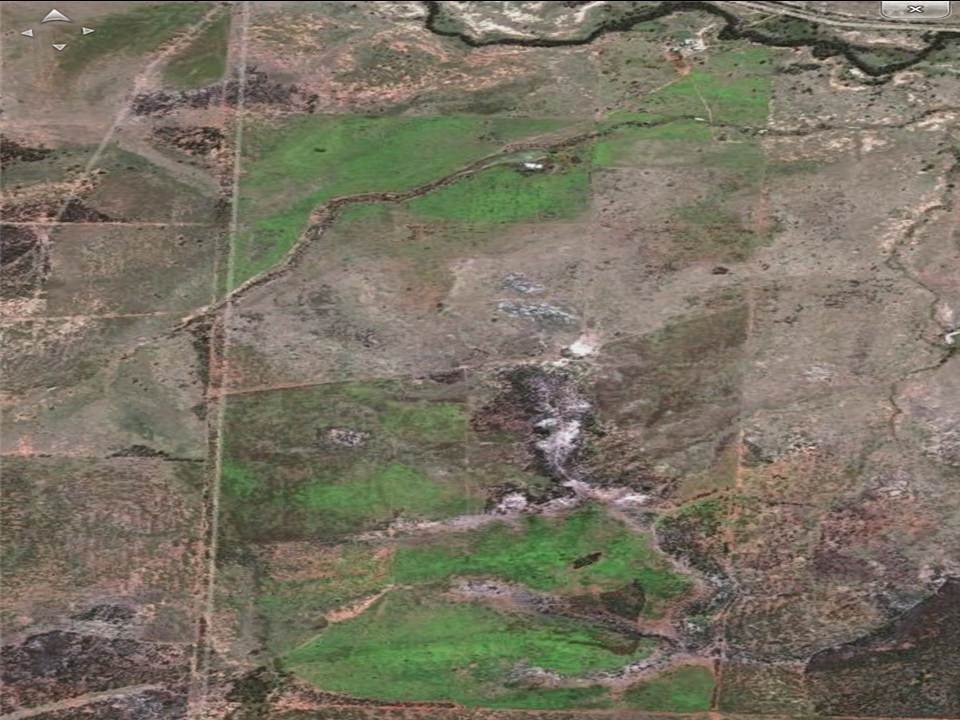
Until a few weeks ago we did not know that this map existed. Our eldest son was doing an assignment at school and he found the map. As you can see it clearly shows what’s happening with the ground cover and the moisture retention.

Other things that we have done to increase our profitability have been courses such as

  • KLR Marketing
  • Low Stress Stock Handling
  • Advanced Stock Movement and Dog School

One of the courses that we have been attending for the past 4 years is the Livestock Movement course which introduces the working dog into the enterprise. We have learnt so much form these courses and implementing the strategies, has made such a difference to our bottom line that we have fallen in love with the working dog an now have our own registered stud “Dunyellan Working dogs” and have been training and breeding kelpies and collies for sale as  a hobby. Like we needed something else to do.

Slide12

So, the big question is, are we there yet, have we achieved our dream? Well not quite, with everything that we have implemented we are not quite viable, but are pretty close. We do realise that we need to have a larger scale, however with what we know now, we definitely know it’s not about how much land you own but what you can do with it.

Slide13

Bruce and I have always built our lives on goals and trying to work out in what direction we need to go next, which is the most beneficial to our lives and our business. We know that it does not matter where you are today in this state of your lives or business because that is only a temporary indicator.

This conference is helping to provide the tools for you to take the clay of your life in your hands and mould it to your dreams. Just like moulding real clay, it’s not about the results but the process of the moulding that counts. Look and speak in the direction that you want to be and never look back.


Without these opportunities and courses we would not be where we are today. So, thank-you to MDLA and QMDC for allowing us to move our business forward.


Young Eco Champion Erin Lake reports from Bush Blitz Hiltaba

You will remember the gorgeous Eco Warrior Erin Lake was lured to Canberra earlier in the year to take up a graduate position with Department of Agriculture, Fisheries and Forestry

clip_image004

Back here on the farm we all thought she would be gobbled up and spat out by the bureaucracy and how wrong we were. Erin has had a wonderful time. In fact she has now got a permanent position in Canberra and she couldn’t be happier. 

Last week she was lucky enough to be a part of the 16th Bush Blitz expedition to the Gawler Ranges in South Australia, as part of the Graduate program with the Department of Sustainability and Environment (SEWPaC) and today in her guest blog she shares many of the highlights from her trip 

November 2012 ………

The Hiltaba and Gawler Ranges Bush Blitz is the second for the year, and is being run for two weeks in total. My role was to help organise the field logistics, participant contracts and payments, and to assist as a field officer during the expedition. After months of planning and organisation we finally hit the road, and headed 8 hours north-west of Adelaide to a remote former sheep station in the Gawler Ranges!

clip_image006

Hiltaba Station is a 77,000 hectare property in South Australia’s Arid Zone

The Bush Blitz crew arrived at the station last Sunday, and have been helping the team of scientists settle into the campsite for two whole weeks of intensive survey work.

clip_image008

Luxury accommodation…. The Bush Blitz camp and shearer’s quarters

While this property has only recently been converted from a sheep station to a conservation reserve, many of the scientists have commented on the exceptional diversity of unique species and habitats that this majestic property contains within. Peter Lang from the SA Herbarium says that the Bluebush plains here at Hiltaba are a real treasure because they are often converted into cropping or grazing land making it difficult to find large areas in such good condition.

clip_image010

Expansive Bluebush Plains- in good nick


Creatures Great and Small discovered on Bush Blitz Hiltaba

Hiltaba Station’s location adjacent to the Gawler Ranges National Park significantly adds to its ecological value, because it provides another jigsaw piece within the East Meets West NatureLinks wildlife corridor.

Greg Johnston, a leading ecologist with the Nature Foundation of South Australia, says that the Hiltaba Bush Blitz provides a unique opportunity to gain a specialised understanding of the species occurring on the property, which will significantly assist in the management of the unique biodiversity of the area.

Greg has been an amazing host, and has been working alongside the scientists daily to assist them in gathering information that can then be used to feed back into the ongoing management of the property in the future. Here he is with vertebrate expert Dave Stemmer from the SA Museum- looking at the three different species of bat which had been collected that morning.


clip_image012

Greg Johnston (left) from the Nature Foundation SA and Dave Stemmer (right) from the SA Museum are very happy to be back in the field

clip_image014

Going batty- Four individuals of three different species in one morning! Not a bad start and really highlights the amount of diversity which occurs in the area- no wonder Greg and Dave have such happy faces!

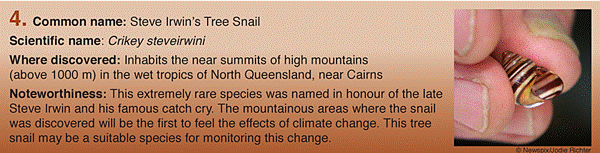
Mammals are only one part of the Bush Blitz experience however, and John Stanisic will tell you that it is always important to scratch the surface. John is one of Australia’s leading land snail experts and is known across the country as the Snail Whisperer. You may have heard of the Steve Irwin snail Crikey steveirwini ? Well it was John who named this snail after the late wildlife warrior, and he says that the story of the naming went around the world in 48 hours! That’s hot press for the slow moving sluggers!

clip_image016

According to John, Hiltaba station contains a very diverse range of snail species, supporting the full suite of species that occur in the region, and he has already found 10 different species.

While they are not usually recognised as particularly charismatic species, John explains that snails are crucial for local ecosystems and actually have quite interesting ecologies. They predominantly live in sheltered rock piles where there is a long-term stable moisture regime and have a number of strategies to improve their chance of survival. They are able to excrete what is called an ‘epiphragm’ which is a mucous shield, protecting them in times of drought. Snails are also important indicators of environmental health, and provide play a major role in breaking down organic material in the soil.

clip_image018

10 species of land snails have been found at Hiltaba- representing the full complement of the local fauna

John’s favourite snails are the large banded tree snails which are brilliantly coloured. There are around 30 different species and they live in the rainforest around Mackay and Proserpine.

Short range endemisim for snail species is very high as you can imagine, and some species are thought to only occur in ranges of around a couple of hectares, which means that whole species can be easily wiped out if proper precautionary measures aren’t taken to protect them. John’s findings at Hiltaba have added another 8 species to the current list of snails recorded for the Station.

Creepy crawlies are coaxed out of the woodwork at Hiltaba!

One of my less favourite things encountered on my Bush Blitz journey so far has been the spiders! The weather has been particularly good for spider hunting and luckily I had spider expert Barbara Baehr by my side to help me get around my arachnophobia while photographing them! Barbara is an absolute treasure to work with, and came all the way from Germany to study some of Australia’s most feared creatures.

clip_image020

Barbara is primarily interested in the Lycosidae family which are the wolf spiders, and Opopaea – the Goblin spiders. She has even named one after Sir David Attenborough and got to present a framed specimen to him earlier this year!

Barbara has spent many hours at Hiltaba sorting though the leaf litter looking for tiny spiders to observe under the microscope. She has also been probing sticks into giant holes in the ground and ‘tickling out’ enormous trap door spiders. She is able to catch them quite comfortably and refers to them as ‘darlings’- most certainly not the description I would give them…

clip_image022

Under the microscope- spiders are Barbara’s specialty

Who said that Fishing was bore-ing?

I was fortunate enough to go out for a day in the field collecting groundwater samples from a number of bores at Hiltaba Station, looking for tiny creatures which live in the groundwater. These ‘stygofauna’ could be tiny worms, molluscs or crustaceans and are usually blind. Stygofauna experts Remko Leijs and Rachel King showed us how to collect the samples and then we took them back to the lab to see if there were any stygofauna swimming around under the microscope. clip_image024

Fishing is not my strongpoint at the best of times- now i have been really put to the test- fishing for creatures that are millimetres in length!

The Hiltaba Bush Blitz has enabled the first stygofauna to be collected from the region, and so far Remko and Rachel have found worms and molluscs, meaning that the groundwater here is still in great condition.

Remko is also one of Australia’s top native bee experts, and was kind enough to show me some of the Hiltaba collections under the microscope.

So far, 26 species of native bees have been surveyed at Hiltaba from just one flowering Eucalypt, I had no idea that there were so many different species!

clip_image026

This native bee (I call him Lego man bee) has been mounted and will be taken back to the SA Museum

Remko explained that there is still not a great deal known about Australia’s native bees and there are not many people in Australia who are studying them. Bees are a difficult subject to study, as you can imagine it is very hard to count the populations. They are collected by sweeping a net over the flowering parts of trees and shrubs

clip_image028

It is tough being a bee sometimes…

There are 1500 species which have been described, however in the last 30 years there has been a lot of revisions and of the 500 that have been revised, around half have been found to be new species.

To revise a species, you need to first obtain the holotype- which is the specimen that was used to first describe a new species. Many of the holotypes are held by international museums such as the British Museum, so obtaining them adds a further level of complexity to an already complex process.

Remko’s favourite bee is the Blue Banded Bee as you can see it is very beautiful, and he has dedicated a lot of research into studying the populations. Remko is also looking into how Australia’s horticultural industry can utilise these native bees for pollination, rather than relying on importing foreign honey bees.

clip_image030

Bee-autiful, the Blue Banded Bee collected from Hiltaba Bush Blitz

A botanical paradise of flowers and fruits

I have been lucky enough to go out surveying with the Botanists from the South Australian Herbarium, doing a big loop around Hiltaba station’s north eastern corner. Peter Lang from the Herbarium is exceptionally knowledgeable about the local plants, having worked in the SA’s successful Biological Survey program -which set out to collect baseline data on the plant communities right across the state.

clip_image032

Peter Lang presses specimens for the Herbarium

Hugh Cross is a genetic biologist and is also a lichen and moss expert, and today we managed to collect a number of different species of lichen to be examined back in the lab. clip_image034

Hugh collecting lichen from this Western Myall (Acacia papyrocarpa) tree, which is probably around 200 years old

clip_image036

These colourful lichen specimens will go back to the lab for further analysis

Hugh and I also went looking for parasitic plant specimens such as Exocarpus and Santalum (Quandong). We collected a small sample from a number of individual trees in an area, and these samples will be taken back to the lab to test their DNA. Hugh and his associated back at the Herbarium are interested in finding out whether neighbouring parasitic trees are ‘clones’ and have the exact same DNA, or whether there is any genetic variation amongst the populations. Genetic analysis of plants and other tissues is certainly progressing full steam ahead. Hugh says that “Genetic analysis of the soil has allowed us to discover a wealth of hidden diversity beneath the ground”. It is a fascinating ecology that we usually just step over.

Juergen Kellermann also accompanied us on our botanical mission across Hiltaba. Originally from Germany, i was astounded by Juergen’s knowledge of Australian flora (not to mention his exceptional navigation skills!). He was very excited to find numerous populations of Stenanthemum arens, which is a member of the Rhamnaceae family of plants (the buckthorns).

The (Sten-an-them-um) is an endemic species and has only been found in areas around Hiltaba station. While it may not be much to look at, it is a very important indicator of the health of Hiltaba’s arid vegetation communities, showing us that they are able to provide refuge for a unique and diverse range of species.

clip_image038

Juergen gets a closer look at the Stenanthemum arens

clip_image040

One of my personal favourite botanical finds was this Ptilotus (tie- lotus) species, which is similar to the Foxtails that you would plant in your garden. Such beautiful colours and a very delicate flower.

Bush Blitz is a biodiversity discovery program between the Australian Government, BHP Billiton and Earthwatch Australia which aims to document the plants and animals across Australia’s National Reserve System.

clip_image002

Next Gen Eco Champions fostering life long partnerships with farmers

I have the pleasure of working with Art4Agriculture to help train a team of 5 young natural resource management professionals from Southern Rivers region of NSW. They will be trained alongside the Young Farming Champions to develop leadership and communication skills and become local faces of sustainable primary production and natural resource management.

They will also work with Young Farmer Champions to present Archibull Prize activities in 15 schools throughout the region and work with the students to explore the economic, environmental and social challenges of sustainable agriculture and biodiversity conservation activities through the ‘Archibull Prize‘ competition.

As part of the project the 5 Young Eco Champions are also paired with 5 farmers to plan and help undertake natural resource management activities on the farmers’ properties. The aim of this component of the project is to help them better understand the diversity of land managers and their priorities and to work side by side with land managers to deliver healthy ecosystem outcomes

Young Eco Champion Renae Riviere recently visited the property of the landholder she is working with.  Renae will be sharing her journey with the readers of my blog. I am confident you will enjoy seeing her progress and outcomes just as much as me  …

IMG_7614

Renae checking out some of the revegation work the farmer has undertaken along the river bank

Today I visited the property I will be working on as part of the Young Eco Champions program. The property is about 36ha and it situated in prime dairy country in Jamberoo, NSW. The property is owned by an absentee landholder who lived on the farm for some years, but for various reasons has since moved closer to her workplace.

However she is highly aware of the need for and value of having productive agricultural land in the region conjunction with having a sustainable natural ecosystem.

IMG_7640

The property has great views and backs on to a number of dairy farms in the region

The property has remnants of Dry Rainforest flanking the driveway up to the house, but the understorey is dominated by lantana and wild tobacco, which will need to be systematically removed and replaced with local native rainforest species.

IMG_7627

Lantana and Tobacco Bush hold up large areas of the hillside and careful planning will need to be undertaken to ensure their removal does not encourage erosion in major rainfall events

IMG_7631

The next door neighbour, another lifestyle farmers ( fenced area to the right) also has significant weeds of national significance along the boundary fence

The landholder is balancing the two by leasing the land to a neighbouring dairy farmer who uses it to graze their young stock  as well as undertaking a bush regeneration projects in the rainforest with the help of funding from Southern Rivers CMA and support from Landcare Illawarra.

P1020382

Dairy heifers enjoy the lush pasture growing on the property 

P1020383

The farmer has already fenced of the waterways and put in a series of water troughs

The project I am working on will be carried out by an experienced bush regenerator and teams of volunteers from Conservation Volunteers Australia who will assist at major planting events.

Map

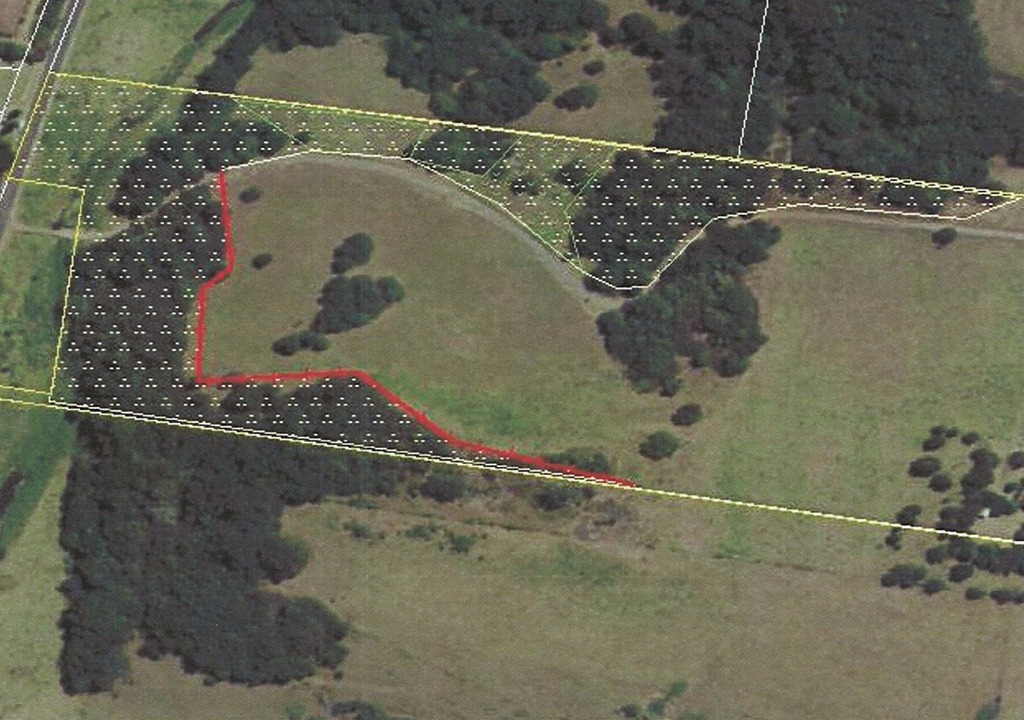
We have taken on a big pretty task as you can see from the map with the project area marked in yellow and the area we will be fencing in red

The project area fronts the road, so will be a great example to other landholders in the area of how an environmental rehabilitation project and a working dairy farm can exist side by side. As an added bonus every time the landholder drives up her driveway, she’ll be reminded of what a positive and lasting impact she has had on the biodiversity of her local environment.

This is a very exciting project and I can’t wait to sink my teeth into it! As well as coordinating the teams of volunteers, I will be writing pre and post project case studies, I’ll be making a video; interviewing the bush regenerator, the farmer who leases the property as well as the property owner. I’ll also be taking lots of photos along the way so that you can all see what great progress we make!

Recycle Reuse taken to a whole new level

The last two weeks have seen me traverse the continent. Firstly to WA where I attended my first Australian Landcare Council board meeting at Katanning. . Then back to QLD to speak at the Naturally Resourceful Conference in Mitchell. A special thankyou to the very dynamic Sue Middleton who also lined up a number of meetings with potential sponsors who can help Art4agriculture bring the Young Farming Champions and ArchIbull Prize to WA

What a blast Naturally Resourceful Conference in Mitchell was. I haven’t had so much fun in ages. The women of Mitchell are a shining example of when things have looked the bleakest, extraordinary people have seen a different way forward. Compelling visions of ‘better’ have inspired them to overcome massive odds before and they have done it again. It’s a remarkable and brave thing to do.

In fact “I have a dream today” was the foundation of both my presentation and Vicki Jones’ who preceded me. I have asked Vicki if I can share her story and I look forward to her saying yes.

Now whilst I like to think I was the highlight of the  day I was well and truly upstaged by the special entertainment provided by Marg Enkelmann who creates Farm Wearable Art: Using Recycled Materials Found on the Farm.

The pictures tell the story and I also took some very funny videos which I will load when I get home.

Now its hard to beleive but you are now looking at dresses made out of tractor tyres silage bags wool packs and everything else that was once part of the working farming landscape.

IMG_7482 

Marg Enkelmann

IMG_7528


IMG_7593

IMG_7571

IMG_7554

IMG_7587

IMG_7568e

Can you believe this

IMG_7591

Use by Date Campaign

Michael and I are in WA for my first Australian Landcare Council board meeting. This afternoon we were driving up the highway from Freemantle and we heard this clever add promoting WA yogurt and urging  all Sandgropers to buy local and support WA dairy farmers 


Here is a little bit of background from the website

Brownes are making a stand for WA dairy farmers and naming Saturday 3 November 2012 the official Use Buy Date for all yoghurts imported into WA. From that day on, we’re inviting all West Australians to buy locally made yoghurt instead.

On Sunday 4 November 2012 our Managing Director, Ben will be driving a truck from Perth, through the South West, across the Nullabor to the East Coast to give them back their empty imported yoghurt containers.

I will keep my fingers crossed Ben  doesn’t chose our place to unload his truck

There is also this great info graphic

You can read all about it on their  website here

Whilst it may not be Yeo Valley


I love the concept and the passion. Well done Brownes

What do you think?