I am always fascinated by politicians who have this innate ability to have a media opportunity waiting for them as they come out of church on a Sunday or people who feel it is imperative to state their political persuasion or their religious affiliations or what they eat or don’t eat as if the label alone confers them with character, integrity, ethics and values

I have great admiration for many people I have worked with who I don’t have any idea if they are Liberal or Labour or Green or Christian, or Agnostic, Jewish or Hindu or vegetarians or carnivores, heterosexual or homosexual or whatever. And I don’t really care. I know them by their actions not their words that they are men and women of integrity and character. This is the type of person who I want to surround myself with and can only be determined by watching their behaviour, their track record over time in responding to all sorts of situations.

What has this all to do with farming you ask. Quite a bit in fact
Life and business are far more complex than drawing a line and putting “Christian is good” on one side, and “Non-Christian is bad” on the other as one example.
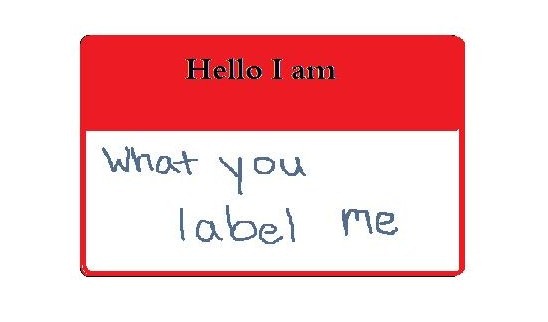
The same applies to this ever growing propensity to demonise certain types of agricultural systems out of hand
The media is full of stories about the perils of conventional, large-scale agriculture, pointing to simpler ways of producing food that appear to be more in harmony with nature.
Large vs. small, family farms vs. corporate, organic vs. mainstream, free range vs. housed, grass fed vs. grain fed.The reality is it’s not the system it is how it is managed that really counts.
When it comes to the best approach to natural resource management and animal well-being we need to focus on measurable results that, in turn, will generate innovation and solutions to some of our most pressing problems on this planet. Not the least of which is to provide affordable, nutritious, ethically produced food that allows a reasonable return on investment for farmers that will allow them to feed a future 9 billion people and maintain life on Earth as we know it.
It is not just the community that is putting pressure on farmers. Some farm businesses and major retailers have taken to denigrating other farm management systems as a marketing tool to promote their own. The poultry industry is a classical example. How often do you see poultry advertised as “hormone free”.

Not only is this is a nonsense as all plants and animals have natural hormones in them- think plant sterols in soy milk, but worse still it casts doubt into the mind of the consumer that all the other chicken on the market must actually have hormones added. Absolute myth. Hormones have not added been to any poultry feed in Australia for over 40 years! You can read all about the Australian poultry industry here
At Clover Hill Dairies we have been guilty of wearing the occasional badge of honour ourselves

Up until we took over Lemon Grove Research Farm we proudly stated on all our literature that we don’t use herbicides and pesticides. When we took over Lemon Grove we suddenly found it was easy to say this because Clover Hill didn’t have plagues of army worms and red legged earth mite and nasty broadleaf weeds that grew like wildfire if let do so on the flood plain.

Judicious use of scientifically validated technology is one of the great advantages developed food producing nations like Australia have over many other countries. We have rigid and well regulated systems and safety checks in place that make our food some of the safest in the world, irrespective of whether it has been derived by conventional or non-conventional methods. If we read the labels and play by the rules we can be confident that the technologies that we use on farm are safe and the food that we produce is superior and as safe as any in the world.
At Clover Hill and Lemon Grove we will always aim to produce the best quality and safest food that is grown with the best interest of the environment and animals that it comes from.

However, our farming systems can not be locked into a religious type paradigm of what we think is best We must continue to adapt to our changing resource base, the seasons and climate, the economy and our markets. We also know that nature does not always get it right and some times we need to use technology to tip the balance back in favour of the farming system and the ever increasing people we need to feed.

We must acknowledge this if we are going to keep feeding our world from an ever shrinking resource base with a market place that continually wants to pay less for food that costs more to produce. We must always use technology and innovation smartly and consider the collateral effects of its use ensuring that our management and farming practices are at best practice rather than just reaching for the key to the chemical shed or the drug cabinet.
Good article by the BBC’s Richard Black on this Farming Needs a “Climate Smart'” Revolution
On a lighter side – Labels can mean many different things to different people

and this one