When the fire is on your doorstep who do you call

Today I found myself within half a kilometre of an out of control bushfire and I was blown away by the team of people who work so hard to make sure my family, our cows and our worldly possessions are safe from harm.

water bombing


Jamberoo Fire 2


Firefighters

Photos by Dylan Robinson – Kiama Independent

They’ve been on the scene all day and are relying on water-bombing by helicopters to keep things in check.

The fire began as a hazard reduction burn in Budderoo National Park yesterday that jumped containment lines overnight.

Paul Best from RFS Illawarra says, they’ve contained all edges of the fire but the northern one, and will continue to monitor the situation tonight.

Makes you think about those talented people who fly those planes and stand at the coalface with just a hose so selflessly.

Jamberoo Fire 3

Then to find out that the pilot of the plane who crashed at Ulladulla is a resident of the  close knit community of Trangie who are participating in the 2013 Archibull Prize and known to a number of our Young Cotton Farming Champions. Even more poignant he is the second pilot from Trangie in five years to lose his life flying the same type of plane. 

Two young women left without husbands and fathers for their children. 

Life is so unfair sometimes.

There are many ways we can say thank you and support those people left behind. Just one example you may like to sign this petition like me.

Barry O’Farrell: set up a support fund for our fire-fighters who’ve gone without to fight the fires

And for those of you who suddenly find themselves faced with a bushfire here is some wise advice from the Rural Fire Service of NSW ( rfs.nsw.gov.au )

Prepare:

  • You must make important decisions before the fire season starts.
    • Your Bush Fire Survival Plan is one of the best ways to help improve the safety of you and your family before the impact of, or during a bush fire.
    • Preparation is not just about cleaning up around the house and having a plan. It is also about making sure you consider your physical, mental and emotional preparedness. Prepare yourself and your family for bush fires.
    • Regardless of your decision to Leave Early or Stay and Defend, you still need to prepare your property against the threat of a bush fire.

Act:

  • The higher the fire danger rating, the more dangerous the conditions. Keep informed and be ready to act.
    • Part of knowing what to do is knowing the Bush Fire Danger Ratings.
    • During periods of increased fire danger and when there is a bush fire in your area, it’s important that you stay up to date.

Survive:

  • Fires may threaten without warning so you need to know what you will do to survive.
  • Leaving Early
    • The safest option for you and your family during a bush fire is to leave early.
    • When you leave, you need to make sure you’re going somewhere that is safer.
    • Sometimes, things don’t go to plan. You should check if there is a Neighbourhood Safer Place near you and note it in your Bush Fire Survival Plan.
  • Stay and Defend
    • Before the fire impacts, you need to actively defend your property.
    • The heat from a bush fire can kill you. That’s why it’s important to wear clothing that will not only protect you from the heat but also from smoke and embers. Know what to wear during a fire to give you the best chance of survival.
    • When the fire arrives, go inside to protect you from the radiant heat. Remember – if your life is at risk, call Triple Zero (000) immediately.
    • Once the fire has passed, you may need to patrol your property for hours.

.

Schools deliver an auditory and visual blast

Yesterday afternoon I attended the most incredible event. The organisation, the style and the superb food  and innovative menu would have done Prince Harry proud

Barrack Heights Public School who are competing in the 2013 Archibull Prize held a launch party to celebrate the finishing of their artwork and the students and teachers involved

IMG_6641

The party was coordinated Julie Debnam supported by class teacher extraorinaire Natalie Harris (above) the room was decorated in everything black and white to celebrate  Australia’s most popular breed of the dairy cow – the Holstein

This slideshow requires JavaScript.

Now a COW on a surfboard is not something you see every day, but it’s part of the Barrack Heights Public School Archibull Club’s grand vision for their fibreglass cow, Brocco. I will let the art judge share with you after judging all the very clever elements of the Cow Art

IMG_6489

The 25 students taking part in the Archibull Prize competition this year, decorated their Archie with paint and recyclable materials to showcase their theme, “looking after waterways”.

Their Archie ‘Brocco’ is now covered in colours, a map of Australia’s rivers and indigenous artwork.

Yesterday was a celebration of all things dairy including the menu created by Azarak Experimental Kitchen owner and head chef Shane Debnam

IMG_6589

Those who have dined at Azarak  know we are always about surprises, and for the Archibull, we are surprises abound. We will be charging yoghurt with NO2, churning a milk sorbet with dry ice, smoking milk with hay, steeping milk in straw and souring it to make a soft curd, and wrapping beef in pastoral lucerne, and cooking it sous vide for six hours at 53’c. Like I said; Azarak is always about surprises. says Shane

Shane IMG_6601

Inspiration for the Archibull menu was drawn from the local urban and suburban environment. We will utilise localised foraging to enhance the menu items, paired with our unique brand of approaching ingredients in a scientific, and classical manner.

The best part about using dairy is the versatility of the core ingredient. Dairy encompasses milk, cheeses, yoghurts, sorbets, gelatos, and beef itself. We also want to showcase the local rural and urban environment, with sustainable foraging, pairing it with the best in handmade yoghurts, soft curd and sorbet.

Menu

Our five course degustation auditory and visual sensation

IMG_6587

IMG_6490

IMG_6560

IMG_6613

Cant wait to get permission to show the delight on the students faces to have the opportunity to participate in this experience that saw them create ice-cream through a haze of dry ice

IMG_6627

IMG_6632

Special thanks to Shane and Parmalat for providing the opportunity for all the students to have access to the perfect nutrient cocktail that is dairy

However I must admit the most rewarding part of the experience for me and the wonderful team behind Art4Agricuture was the feedback from the teachers, parents and students.

This is the best experience the school has ever participated in said headmistress Sarah Rudling

Ms Harris said it is great for the students to see a project come together over such a long period of time. “They really love the involvement and seeing it grow.”

Although the students have loved painting their cow, teacher Natalie Harris says they have been most excited when learning about their assigned industry, dairy.

“The kids love it because, one, they get to be involved in a huge art project with a lot of different aspects to it, but also because they’re involved in something they don’t know a lot about,” she says.

“Ninety per cent of it is working on the cow, but 10 per cent is looking at sustainable farming. I think in a way they’ve loved that part more.”

“Not a lot of our kids have been to farms, I think in the group there was about four that had been to a farm.

“For them to able to get some information about the farming industry . . . they have really enjoyed being able to find out where does milk come from, how they look after animals, what a farmer actually does.”

Ms Harris says many parents have told her that their kids have asked them to buy locally-produced milk rather than cartons from the major supermarket brands after their research into the Illawarra dairy industry.

The Archibull Club has also learnt about recycling and the impact rubbish can have on waterways, which Ms Harris says has led to students making a conscious effort to recycle and pick up rubbish at school.

This slideshow requires JavaScript.

They reminded us all the well being of our planet is the responsibility of everyone

THE CHALLENGE WHAT CAN YOU DO

The Challenge – WHAT CAN YOU DO?

Last words from Natalie Harris 

That was the most parents that have ever attended a school function.

Thanks again 🙂 I have just loved the whole project

Follow Barrack Heights Public School journey through their blog here

If you would like to check out Azarak Experimental Kitchen on Facebook, please follow the link here.   Don’t forget to like their page!

Farming is tough My thoughts on how to avoid the Valium

I have had a bit of Annus horribilis in 2013 and looking forward to my Annus mirabilis (Year of Wonder) in 2014.

Do You every feel like Bessie

Do you ever feel like Bessie ( thanks Brian)

I have survived my personal issues by throwing my energy into my professional life and in particular soaking up the bright minds I encounter beyond the farmgate in all of the diverse activities I now engage in. In particular I find the Young Farming Champions particularly invigorating

At home I find writing blogs posts very cathartic and it’s been a very tough week so you might have noticed a plethora of musings from my desk.

When suddenly I found I had no landline and no internet I thought I was going to have a serious meltdown. Mobile service is not great at times in paradise (fix my black spot Tony) and operating off my hotspot is always fraught with frustration

Instead of reaching for the Valium (just jesting) I have made a list of all of the things that are within my power to change that will help my wellbeing and begun ticking them off.

pizap.com13743392729321.jpg

This week I went to my doctor and started that list of tests I should have had 6 months ago (not smart when you have no phone and you are sweating on the results)

Whilst I was there I showed her my health and wellness bucket list and she is helping me work my way through it

Yesterday it was off to the dietician (they call themselves ‘Wellness Specialists” now)

So look out world it is the fit and ideal weight Lynne the world will be seeing sooner rather than later.

So what does that look like to me and this is all about me. I want to be proud of me; other people are irrelevant in this quest

Until I started winning a few awards I was always behind the camera so had to do a lot of searching for pix of me at my ideal weight and fitness. They were indeed hard to find and then I came across this one. clip_image002

OMG not only did I fit into size 11 jeans 10 years ago I had red hair. Yes to the size 11 jeans think I will leave the red hair off the list

I particularly like this photo because I have my arm around one of the most special people in my life Dr Neil Moss our farm consultant. Neil who has not only held our hand through the bleak years in the dairy industry, he supports all his clients at an unparalleled level through their darkest mental and physical challenges.

Read this great story on how Neil helped local dairy farmer Con Watts survive the devastation of the tier 2 milk pricing narrow minded strategy from Lion to combat the Down Down Down campaign by Coles here

My new ideal weight and health guru is Rebecca and of course she is tiny and super fit and wow is she interesting. I have a medical background which includes a fair amount of what I thought was good nutrition insights but I was quite amazed at the mindset change in this area since I left pharmacy

It’s all about portion size, high protein, low carbs and good fats. No counting every calories just healthy eating and quality not quantity exercise.

This means set the treadmill to incline and do the hard yards for half an hour rather than walking on the flat for an hour. So I can see why I looked like that ten years ago (before I broke my pelvis from a fall from the quad bike) and walked the hills of paradise.

What I find very interesting was the discussion we had on protein and how impressive eggs are.

clip_image004

My breakfast this morning.

Now thanks to Jamie Oliver – Woolworths have taken a very strong stance on caged eggs.

As farmer who has chooks as pets I know how hard it is to let them roam free range and not be wiped out by predators and I am very concerned about the viability of the egg industry and the affordability of this very important protein for Australians going forward.

So tomorrow I am go to share my thoughts ( internet allowing) on why I think this stance by Woolworths may be very naive

And of course milk was at the top of the list as the perfect healthy protein so tomorrow I will be whizzing up a breakfast smoothie

For lunch its the divine Dairy Farmers Thick and Creamy Yoghurt ( all good fat) and peaches,

Dairy Farmers Thick and Creamy

Which reminds me sadly no more Tamar Valley

Dont tell me the sky is the limit when there are footprints on the moon

Fear is at the root of so many barriers that women face. Fear of not being liked. Fear of making the wrong choice. Fear of drawing negative attention.  Fear of overreaching. Fear of being judged. Fear of failure. And the holy trinity of fear: the fear of being a bad mother/wife/daughter

Without fear, women can pursue professional success and personal fulfillment- and freely chose one, or other or both

What would you do if you weren’t afraid  – Sheryl Sandberg CFO Facebook

I am what is known as a big ideas person and sometimes I have a “big idea’ once a week and that’s a bit scary. Even I question my focus on a regular basis. Now it’s one thing to have a big idea it’s another thing entirely to bring it to fruition.

don't_tell_me_the-53100

Every now and then I have a big idea that my gut tells me is winner and some very smart people tells me it’s a winner – yet I continually question and get very frustrated by lack of belief in myself to take it beyond the big idea.

As it turns out it appears I stand beside far too many women who are doing the same

My good friend and mentor Victoria Taylor is currently reading Sheryl Sanberg’s book Lean In

Little bit of background See here

Thirty years after women became 50 percent of the college graduates in the United States, men still hold the vast majority of leadership positions in government and industry. This means that women’s voices are still not heard equally in the decisions that most affect our lives. In Lean In, Sheryl Sandberg examines why women’s progress in achieving leadership roles has stalled, explains the root causes, and offers compelling, common-sense solutions that can empower women to achieve their full potential.
Sandberg is the chief operating officer of Facebook and is ranked on Fortune’s list of the 50 Most Powerful Women in Business and as one of Time’s 100 Most Influential People in the World. In 2010, she gave an electrifying TEDTalk in which she described how women unintentionally hold themselves back in their careers. Her talk, which became a phenomenon and has been viewed more than two million times, encouraged women to “sit at the table,” seek challenges, take risks, and pursue their goals with gusto.
In Lean In, Sandberg digs deeper into these issues, combining personal anecdotes, hard data, and compelling research to cut through the layers of ambiguity and bias surrounding the lives and choices of working women. She recounts her own decisions, mistakes, and daily struggles to make the right choices for herself, her career, and her family. She provides practical advice on negotiation techniques, mentorship, and building a satisfying career, urging women to set boundaries and to abandon the myth of “having it all.”  She describes specific steps women can take to combine professional achievement with personal fulfilment and demonstrates how men can benefit by supporting women in the workplace and at home.
Written with both humour and wisdom, Sandberg’s book is an inspiring call to action and a blueprint for individual growth. Lean In is destined to change the conversation from what women can’t do to what they can.

That TedTalk

I just wonder how many women like me are afraid of success and just what will it take  to give us the courage to take that leap of faith and believe in ourselves.

Sheryl says it starts with 3 basic rules

  1. always take a seat at the table – no-one gets where they want to be by sitting on the sidelines
  2. Make your partner your partner – successful people have partners who share their vision or are divorced
  3. Don’t leave before you leave –  keep your foot on the gas pedal

So in my drive to achieve professional success and personal fulfilment I have made a start and downloaded Lean In on my iPad . Looking forward to Sheryl inspiring me to keep my foot on the gas pedal.

Don’t tell me the sky is the limit when there are footprints on the moon’  Paul Brandt

Successful Research Outcomes at Lemon Grove – Working with the best is good for people cows and the planet

For those of you interested in the lasted R&D&E happenings on NSW dairy farms I am highly confident you will enjoy this article

This video shares Dr Neil Moss’ full presentation on our pasture trials at the recent Sydney University Dairy Research Symposium. See full report (pages 21 to 39)  here 

Why we did the research at Lemon Grove

Surveys tell us 9 out of 10 farmers learn from other farmers and they want to see research that is relevant to them and their business i.e. they want to see the research working in their own backyard. They want to see research that we deliver a good return on investment in the shortest turnaround time

1st pix for Activity two

Lemon Grove Research Farm

Aim

To explore pastures that could potentially reduce Carbon footprint whilst improving productivity, profitability, and management (resilience)

Objective

To grow productive (quantity) and nutritious (quality) pasture that will be

  • Resilient through extremes of climate (floods and droughts)
  • Water and fertiliser efficient
  • Able to fill the feed gaps
  • Tolerant to captured dairy effluent irrigation

What we did

The trial was conducted at Lemon Grove Research Farm, located on the Minnamurra River floodplain just to the east of Jamberoo, NSW. Control and treatment paddocks were identified in December 2010 and soil tests were taken. One paddock was to be identified as the “trial/treatment” paddock and was to be prepared for the new pasture; the other “control” paddock was to be farmed as per the rest of the property, retaining its kikuyu base and being sown down to oats and Italian ryegrass in early autumn.

The trial paddock was sprayed with 6L/ha of Roundup Powermax (540 g/L glyphosate (present as the potassium salt)) on 17.2.2011. Pasture trash was mown and removed and the trial paddock sown down to 110kg/ha of Cooba oats on the 19.2.2011. A small area was topped up in early April following flooding in March. Grazing of the oats commenced shortly after and continued until the 5th of August when the paddock was sprayed again with 6L/ha of Roundup Powermax on 5.8.2011. The paddock was then direct drilled with a disc seed with the trial seed mix of:

  • 8.5kg/ha Stamina GT6 Lucerne
  • 4kg/ha Bulldog red clover
  • 1.5kg/ha Kopu II white clover
  • 1.5kg/ha Will ladino white clover
  • 2kg/ha Tonic Plantain
  • 2.5kg/ha Puna Chicory

The trial paddock was treated with 150ml/ha of Verdict (520g/L haloxyfop present as the haloxyfop-r-methyl ester) selective grass herbicide on the 20.2.2012 to control grass weeds. It was not over sown in the autumn of 2012.

c Treatment paddock of herbs and legumes (2)

Cows grazing the treatment paddock

The “control” paddock was sprayed with 200mls/ha of Roundup Power Max on the 1/3/2011 to suppress kikuyu growth and facilitate early planting of a mix of 35kg/ha of Feast II ryegrass and 60kg/ha of Cooba Oats. Grazing commenced 16th April 2011. It was resprayed with 225mls/ha of Roundup Powermax on the 16/42012 to suppress kikuyu prior to autumn planting with a similar mix

Neil Moss Ryegrass

Researcher Dr Neil Moss SBScibus in the control paddock of Ryegrass and Oats

Fertiliser was applied to both control and trial paddocks as deemed necessary by the farmer. This include urea, some mixed blended fertilisers and an application of liquid dairy effluent. Pastures were grazed only by the dairy herd and no fodder was conserved during the trial on the two plots. Pasture dry matter was estimated pre and post grazing using a C-Dax towable pasture metre and pasture yields determined. Yield data was validated using pasture cuts and estimation of dry matter during the trial. The nutritive value of the trial and control pastures were tested by NIR at Westons Laboratories, NSW.

Where we did it

clip_image002

Results

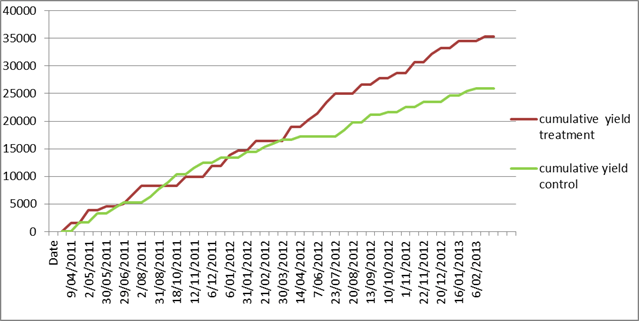
Total yield for the first 12 months of trial, including oats, and control pasture was 16413 and 15310 kgs of DM/ha respectively. Total yields in the six months following removal of the oats were 8134 and 6407 kgs DM/ha respectively. Total 2 year yields from trial and control paddocks was 35365 and 25989 kgs of DM/ha respectively. Cumulative yield data is presented in Graph 1.

Graph 1: Two year cumulative yield data: herbs and legumes (Treatment) v’s kikuyu and ryegrass (control)

clip_image004

The  results blew us away

Two-year nitrogen application rates were 289kgs of N for the trial paddock in total and 85kgs of N after the oats and 726kg of N in total and 476kg of N per hectare after the oats in the trail paddock were removed. In the second year of the study, only 30kg per hectare of N was applied to the herb and legume paddock compared to 188kg of N per hectare in the control.

Feed quality data from two samplings in November and February are presented in Table 1

Table 1 Comparative feed quality of herb and legume pasture (treatment) vs. spring ryegrass (control test 1) and kikuyu (control test 2)

Components: Treatment Test 1: Control Test 1: Treatment Test 2: Control Test 2:
% NDF 30.7 46.3 30.4 51.4
% Crude Protein 32 24.1 33.1 27.5
% Ash 13.33 11.34 11.35 10.41
Lignin % NDF 12.4 3.9 16.8 5.6
% Calcium 1.23 0.58 1.37 0.53
% Phosphorus 0.45 0.42 0.45 0.43
% Magnesium 0.36 0.3 0.36 0.26
% Potassium 3.28 3.13 3.18 3.16
% ADF 23.6 26.3 23.1 26.7
% Lignin 3.8 1.8 5.1 2.9
% NFC 25.2 18.6 27.6 14.4
Relative Feed Value 214 138 217 123
ME (MJ/kg) 11.63 10.8 11.76 10.97
ME CPM (MJ/kg DM) 10.16 8.58

Fertiliser Efficiency Outcomes where excellent

The trial paddock proved very nitrogen use efficient and responded well to effluent reuse from the dairy (2)

Pasture trial proves to be good news for people,cows and the planet

Challenges

  • Adverse climatic conditions with four major flood events and one very pronounced dry period during the trial certainly made for an interesting times and showed the trial pasture mix’s resilience to vagaries of the Australian  climate

Trial pastures were very resilient to adverse weather events events (2)

Trial pastures were very resilient to adverse weather events events (1)

Flood water pooled at the top end of the trial paddock however where the water was able to get away fairly quickly the pasture was very resilient to these extreme weather events

  • Accessing personnel in the region to do soil testing proved very difficult and we have been unable to have the final soil test undertaken at this point in time

Discussion

This farm based trial has provided useful evidence of the potential for alternative pasture systems based on legumes and herbs on coastal dairies in NSW. The trial pastures have provided at least as much dry matter in the first year as the conventional system with the yield data in year 2 being substantially higher in the trial paddock. The trial pasture appears to have performed very well in the autumn of its 2nd year and did not suffer a planting lag as per the conventional system. It also appeared to continue growing very well off a one off significant rain event in October 2012 during what was a very dry spring and summer in the region.

Nitrogen inputs were significantly reduced in the trial compared to the conventional plots with potential here to reduce fertiliser costs as well as nitrous oxide emissions and exposure to volatile nitrogen pricing. Full soil test data is not available at the time of writing.

Feed quality at all times on the trial was excellent with the farmers reporting anecdotal improvements in milk production when grazing trial pastures, particularly between November and March.

Weeds have been troublesome including both broadleaf and summer grass weed invasion in summer of 2012-2013.

These pastures have significant potential for NSW grazing based dairy systems. There has been considerable success with similar systems on the mid north coast and inland areas, however, problems with both stem root nematode and water-logging have been encountered on some properties. Soil characteristics, particularly, potential for poor drainage, underlying weed burdens and regional pasture pathogens need to carefully considered, when selecting alternative pasture systems as part of a pasture “portfolio”. However, there is considerable flexibility within both pasture species and cultivars in the group of pasture species under investigation to further explore these systems on a region by region basis. Farmers and scientific organisations can successfully partner to produce useful field based research.

What we learnt

  • The power of the two way conversations – farmers and natural resource management personnel working side by side to understand each other’s challenges and constraints
  • The value of cross community partnerships to improve NRM and sustainable farming outcomes and improve skills, knowledge, attitudes, and innovations,
  • That investment in people and on the ground activities that bring them together is critical for long term sustainability, fostering continuous improvement and creating opportunities to learn and grow together.
  • That communication is more than just sending information. It is a two-way process which creates demand for information delivery, is responsive to audience needs, and provides content in a way which is timely, relevant and understandable to target audiences.

Where to from here

Adoption of research, innovation and practices are critical to attaining long term goals

  • 9 out of 10 farmers learn directly from other farmers or through appropriate delivery of extension based on in field experience of other farmers in familiar and recognisable farming situations.
  • Farmers want to be able to ask questions in an non threating environment but need highly skilled facilitators who understand both the technical aspects of what they are presenting as well as the people they are working with
  • This project has produced extremely valuable and measurable results that have important and deliverable environmental and economic benefits for farmers. There is a need funding for extension projects that capture this research and other alternate forage system research. This could be delivered through regional farm discussion groups looking at  .

i) Triple/ double forages which increase yield per ha. See work on farms in the Hunter Valley here by Sydney University Future Dairy project

ii) Alternate strategies to annual and perennial pastures – showcasing the work at Lemon Grove Research Farm and farms in other regions doing similar trials.

iii) Developing fodder production portfolios to manage risk and season

This video is a 4 minute summary of the project

The project was supported by funding from the Australian Government’s Caring for our Country Initiative

caring for our country logo

This farmer says learning can fun

Almost 12 months into my Bob Hawke Award and the $50,000 prize money that comes with it I have been able to launch the Farming Ahead of the Curve initiative

Farming Ahead of the Curve aims to provide Australian farmers with the skills sets and knowledge required to create and generate greater value for the food and fibre they produce.  We will deliver programs to build Australian  farmers’ capacity to engage with all stakeholders along the supply chain to increase awareness, loyalty and pride and consumer preference for Australian produce par excellence.

Thanks also to some of my extra curricula activities and my role on the GPT Wollongong Food Reference Group I have met the food guru that is Rowena Cannane 

Food Marketing

Rowena is a food marketing consultant and runs a business called logically ‘Food Marketing’. See here

Food Marketing is an integrated marketing consultancy that specialises in the development and implementation of sales and marketing strategies for food related businesses. Led by Rowena Cannane, Food Marketing offers an extensive range of marketing services from short term project based solutions to the development and implementation of long term strategies.

To develop my supply chain skills and knowledge Rowena is taking me to visit retail food outlets par excellence.

Rowena Cannae IMG_4880 

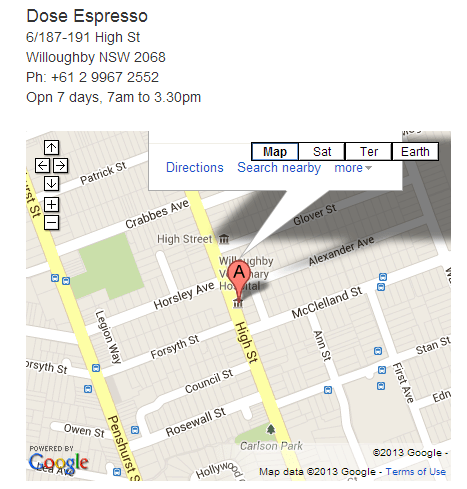
My food retail business mentor Rowena Cannane sharing with me why Dose Espresso at Willoughby ‘works’

What I have learnt in the first instance is retail food outlets have similar managerial and staff concerns as a lot of farm businesses.

Firstly

  • Employees in retail food business often don’t see it as a career of first choice
  • High staff turnover ( many farm businesses have staff turnover levels of more than 30% – scary) 

Secondly success relies on the following

  • Understanding GOOD employees are the life blood of your business
  • It is absolutely  imperative that you share your vision with your staff and they embrace it
  • You pour your energy into your talent – if an employee on a 3 month trial doesn’t live up to your expectations don’t waste your time up skilling them “shed them’
  • You give your employees ownership of joint outcomes and successes
  • Acknowledging success relies completely on having a systems approach. That is having a procedure for everything and everybody ( including management) and religiously following those procedures  

Last week’s learning curve for Lynne took us to the award winning Dose Espresso at Willoughby – one of Rowena’s favourite cafe experiences

  Dose 2 IMG_4885

The cafe is constantly full of streams of people getting takeaway or sitting down and enjoying a long brekkie or lunch.

Light fittings IMG_4877

The exposed brick, mismatched furniture and bare light bulbs give an industrial recycled trendy vibe to the cafe

There is a diverse mix of ‘clientele’ with most of the customers being families, groups of middle-aged friends and young and old couples.

IMG_4889

All the furniture is on castors which means it can all be wheeled inside the cafe in a few minutes at closing time 


IMG_4864 

The outdoor parking area adjacent to the cafe means parking is available during the week and they turn it into a playground on the weekend. How good is that?

The focus is on coffee (clearly evident in the name alone) and the café is owned and run by Sam Gabrielian who owns his own boutique roasting company ‘Caffe di Gabriel’. The café offers specialty beans of different varieties in addition to their in house coffee bean.

Coffee Grinder IMG_4878

They have an in-house coffee roasting machine, and you walk into the café and you can smell freshly roasted coffee in the atmosphere

I didn’t find the food as spectacular as the coffee perhaps that was because I had my eye . on the crushed avocado, haloumi, roasted tomato and pesto on sourdough but we arrived at 1.30 and its only available before 12.

I had this ‘Better than a Reuben!’  sandwich which comes with roast beef, sweet gherkin, Dijon mustard, onion jam and rocket on sourdough. It’s was a bit low on the roast beef department and had far too much onion jam ( and I love onion jam) for my liking. 

IMG_4867

Better than a Reuben!’ sandwich and divine milkshake ( even though they had run out of ice-cream)

This novel idea means ‘water is on tap’ with this self serve concept. Though I must admit I prefer my with ice and a serve of lemon 

Water Tap IMG_4869

I was a good girl and avoided the cakes

Cakes IMG_4876

Goodness gracious these days you would think everyone in Australia was allergic to gluten. With the price of corn per kg almost double that of wheat ( i.e. for our cows – not sure what the people grade sells at)  its surprising gluten free food isn’t out of the reach or most people’s pockets  

The staff were extremely friendly and management obviously follows the ethos of Maccas in that

If you have time to lean you have time to clean IMG_4883

‘If you have time to lean you have time to clean’

Winner of Multiple Awards 

This multiple award winning cafe is certainly a unique and delightful place for a leisurely brekkie of lunch


Dose Espresso Map

Thanks Rowena for another very insightful day out and special thanks to Steve and Ben at GPT for connecting us

IMG_4882

Cotton opens the champagne bottle

oysterschampdaysm

There is no denying that farming is tough and getting tougher and plenty of people in agriculture have sad authentic experiences and stories to tell that remind us of this.

The problem is too often they are the only stories we’ve been telling for decades. Nobody wants to discount those stories, but it is imperative we put some balance in the equation by sharing the good news too.

So when I got a call from a newspaper yesterday wanting comment on what agriculture would like the next government to deliver I asked them to ring back as I wanted to give my answer a lot of thought and I am still thinking – more about that later.

One thing that worries me greatly that definitely needs fixing is, I believe agriculture in the main has forgotten how to celebrate success and we now have a culture where we have  thousands of silent farmers, too frightened to put their heads above the trenches.

There is one industry I have been interacting with over the last three years who have certainly bucked the trend and wow do they know how to celebrate their industry and the people in it and that is the Australian Cotton Industry

I recently had the opportunity to present Art4Agriculture to Australia’s cotton farmers at the Cotton Collective event in Narrabri

For those of you who like me (until recently) know very little about the cotton industry in Australia, cotton is grown mostly in Queensland and NSW

Cotton Production in Australia

Whilst Cotton has had a bit of a bad rap over the years I have discovered a number of things that have certainly opened my eyes

Cotton farmers see Cotton as an opportunity crop. By that I mean they grow it when there is plenty of water and cotton prices are good. When the moons don’t align they grow something else. In reality Cotton uses about the same amount of water as other summer crops and on top of this it is pretty drought and heat tolerant.

Almost all the cotton grown in Australia is genetically modified. Biotechnology has allowed the cotton plant to turn on its natural insecticide which has meant the industry has been able to reduce its chemical usage by around 90%. Some cotton farmers also use this awesome thing called integrated pest management where beneficial insects fend off the insect pests and they don’t need to spray their crops for bugs at all.

The Cotton Collective was an opportunity for Australian cotton farmers to catch up with the latest advances in the world of biotechnology and I must admit I was blown away by their knowledge

Now I did a science degree and whilst I admit I was fascinated to learn how and why medicines work when I see the squiggly diagrams/graphs et al that show the minute details my eyes just glaze over and that was okay for me because my role was to explain the science in a way that the non-scientific world could understand.

Cotton farmers on the other hand live and breathe this stuff and the questions they asked the scientists clearly showed there was extreme rigor in the system at farmer level

The Cotton Collective was also the place to celebrate the industry’s best and brightest and their rising best and brightest

I would love to share these exciting stories with you so you can celebrate them too

Lets starts with their young people

Meet Sophie Gulliver. Wow does this girl know how to frock up for a big occasion. Divine dress and even more impressive wow can she deliver a speech. This is a young girl going places fast  

Sophie Gulliver accepting her award

Here is just some of Sophie’s story.

After graduating from a Bachelor of Science in Agriculture degree at Sydney University in 2009 with First Class Honours and the University Medal, Sophie headed to the Darling Downs in Queensland where she started her cotton and agricultural career.
Sophie joined AgBiTech in 2011 as its Technical Specialist. Her role involves providing technical, extension and sales support for the company’s product range, management of the research and development program for new and existing products and quality control oversight at AgBiTech’s production facilities.

Sophie Gulliver in laboratory

Sophie’s main area of interest is the biology, ecology and management of the Heliothis caterpillar, the cotton industry’s number one insect pest. Sophie is involved in projects investigating new ways to control Heliothis and other devastating caterpillar pests, to meet a growing community and global desire for fewer pesticides.

“Australia leads the way in sustainable agriculture and I want to to ensure that our cotton growers have access to an
increasing range of tools that allow them to continue to grow profitable cotton crops for as long as possible,” Sophie said.

Like her friend Young Farming Champion Liz Lobsey, Sophie is also working with kids in schools

As part of the Gateway Schools to Agribusiness program, Sophie has developed the “Caterpillar Classroom” initiative, which distributes Heliothis rearing kits and provides online technical support and a discussion forum for participating teachers and students. The kits will be used in primary and secondary schools as a practical way to understand and enjoy science. She is also working on a website project called “Primary Roots” to encourage young people from both rural and urban backgrounds to consider careers in agriculture. The website provides an audio-visual snapshot of the diversity of
careers available within agriculture and demonstrates what current agricultural employees do on a day to day basis in a range of workplace settings (e.g. the field, laboratory or office).

sophie-gulliver

Please take the time and read more of Sophie’s story here

But it doesn’t stop there when you meet Glenn Rogan you can see why the average age of cotton farmers is 39. This is one exciting industry.

Glenn Rogan with cotton bales  

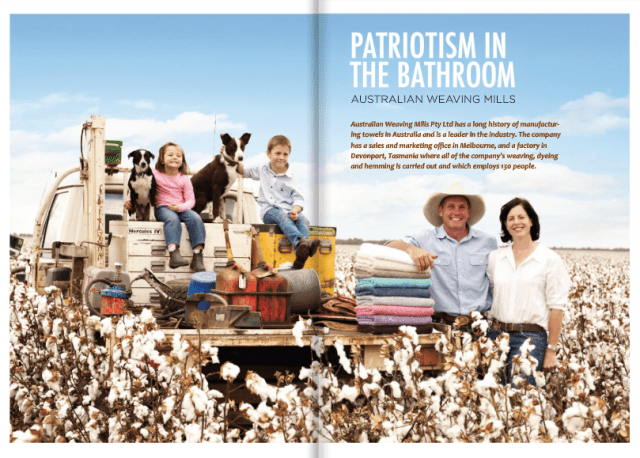
Glenn and Julianne Rogan and family won the 2013 Cotton Industry Awards for Innovative Grower of the Year! .

driglow-add

The Rogan family farms 2,760 hectares at “Benelong” St George, including 900 ha of irrigated cotton, gritting corn, sunflowers, wheat and mungbeans. The Rogans are great industry collaborators and innovators, growing long staple cottons for niche sustainability
markets.

Glenn is a visionary who saw an opportunity in linking his family’s story with the products that consumers purchase at retail
via “ingredient marketing”. Coupled with a point of difference, in growing a variety different to most growers, Glenn
partnered with Australian Weaving Mills (AWM) who produce a line of towels using 100% Glenn’s Australian Super Cotton.
AWM has attached Glenn’s story to its DriGlo towel range, with swing tags, magazine articles, a website and in-store
appearances all helping to build brand awareness.

. You can read all about Glenn and his family  here

Then there is the character that is John (Cowboy) Cameron of “Kintyre” Bongeen, QLD

John Cameron accepting his award 01

John and Ros Cameron won the Cotton Grower of the Year award. They are dryland cotton farmers and this means all their cotton is rain-fed.

They have a big focus on looking after their soils

“Our soils are the most important asset in our dryland system. We’ve got one metre below the soil to work with and we
need to know exactly what’s going on at any point in time. Everything above the soil goes out the gate,” John said.

John had what he calls a light bulb moment in the early 90s when he was running out of
cash after a few lean years. He decided to spend $150 on a soil test rather than $30,000 on fertilisers that he wasn’t sure the soils needed. What followed was five years of no fertiliser costs and a practice that has held, and been improved upon to this day. Soil tests are conducted at regular intervals across the farm, and nutrients added only when and if
they’re needed.

You can read John and Ros’ awards case study here 

These are all great stories worth telling and certainly worth celebrating and you can read all about the stars these people just pipped at the post here

Agriculture does have great stories to tell. What can the next government do to ensure they become the norm – its time for this little black duck to give this some more serious thought     

Getting back to you

There have been a few people who are surprised about my post on the Queensland Country Life’s video Get Back to Me. which has attracted almost 30,000 views in 4 days

There have been some strong comments supporting my view and some strong comments from people who don’t feel the same as me. See post here

There has also been a lot of emails and Twitter DM’s of support. Sadly those people have said they are not game to openly support me on twitter for fear of other farmer twitter backlash.

There was also this from Rural Leader Online

From Radio National with great feedback in this article from video creater Ashley Walmsley and farmer extraordinaire Georgie Somerset

The Art4Agriculture Young Farming Champions are also discussing the video on their internal Facebook page with the majority also strongly supportive of the video concept.

So I would like to take this opportunity to put my reasons into context.

Eight years ago I was lucky enough to meet a marketing guru who at the time was a consultant for Dairy Australia. Her name is Vicki Surwillo and we worked on a number of projects together including putting together a very extensive image library for Dairy Australia (who at the time had no images). See previous post here.

Vicki was an amazing mentor to me and taught me a great deal about marketing and image and the importance of being the image you want your customer to see.

That advice started me on the path that has seen Clover Hill Dairies get international recognition for the work we have done behind and beyond the farm-gate which has now also resulted in a number of major opportunity approaches to market the Clover Hill Dairies milk brand directly to the public.

Her advice also saw me connect with a lot of other people in the supply chain who could also mentor me

I am also very lucky to farm in a very peri-urban environment with the community scrutinising our farming practices every day.

Why is this lucky – well I get customer feedback every day, good and bad and that allows our business to understand community values and adapt our business to meet those expectations when we can

Art4Agriculture also offers me the opportunity to engage with the community on so many levels and again get that pivotal consumer feedback.

Today I had conversations with two people at MLA, some-one from the pork industry, Sophie Davidson and Angela Bradburn from Cotton Australia, 5 people from Dairy Australia, Milk Maid Marian, a fellow dairy farmer and boutique milk processer, a marketing consultant, Ask an Aussie Farmer’s Ann Britton, three young farming champions, two young Eco champions, my local council’s economic development officer, my lawyer, a journalist, three teachers involved in the Archibull Prize, Victoria Taylor ( Art4Agriculture comms manager) Kirsty Blades, Art4Agriculture’s Event Director, my graphic designer James,  a school teacher who wants to bring his students to the farm on a school excursion and answered 45 emails from people right across the supply chain.

Every single one of those people loves and appreciates Aussie Farmers. I know this because they tell me. Not everyone is as lucky as me and gets to have those conversations

So today I take my hat off to Queensland Country Life because ‘Get Back to Me’ has resonated with one hell of a lot of farmers who aren’t as lucky as me

Me I would rather watch this to be reminded how awesome our farmers are

or this

The best person to tell your story is you

In 2005 I had an idea that inspired Dairy Australia to create a series of images that inspired an exhibition called ‘Impressions of Dairy’

It began with my best friend’s daughter Jo taking a series of photos of her children on our farm.

This is Jo’s son Julian, who is now in high school   

affectionately_yours_b

a_day_out_b

What this exhibition taught me was the power of a great photographer and I am very lucky to have met many of those in my quest to tell the great stories of Australia agriculture and the farmers that underpin it  

It was recently brought home to me just how powerful my idea was when I saw a presentation 8 years later by Australian Dairy Farmer’s CEO Natalie Collard at recent event and my son appeared in her slide presentation with a much younger version of his dog “bear”

Nick & bear 1 B & W

As farmers we need to remember marketing gurus on $150K plus salaries aren’t the only people with good ideas

Stand tall, be proud farmers – the best person telling your story is YOU  

Taking the leap

It’s almost 10 years since I stood up and said I want to be part of the team that drives change for agriculture and I must admit I have been overwhelmed by the people who have nurtured and inspired me as part of my journey.

fishbowl (1)

It’s never too late to be who you could have been. – It’s a matter of switching gears, never looking back, and BECOMING the person today that you always knew you were capable of being. Entertain every thought, say every word, and make every decision from their point of view.

What’s even better is the people who were determined to drag me down form part of a small group who just don’t matter anymore.

Now it’s my chance to give back and support the next generation of people who want to engage as agents of change in their world and make a difference and it’s quite exciting the number of pathways and programs available in agriculture to help nurture them or provide a vehicle to give them the profile to attract and learn from likeminded spirits.

we each have the potentail to make a difference

Closing shortly are applications for the Australian Rural Leadership program and the NAB Agribusiness Rising Beef Champion Initiative

The Australian Rural Leadership program is a personal and professional growth training and development program of which part of the process is often called “transformative learning”, which is changing the way that you look at things, including yourself. It also has a reputation (and please correct me if I am wrong) of increasing the divorce rate as participants become aware that successful people have partners who either support them or share their vision or are divorced.

The program is viewed as the elite amongst rural leadership programs and many of the alumni are often almost evangelistic in encouraging others to join their journey.

For me the Kimberley experience and the trip to India are my excuse for not applying but I certainly admire and am extremely happy to support applications from young people that are gutsy enough to take them both on Leadership

The Rising Beef Champion Initiative commenced in 2010. The aim of the initiative is to inspire, empower and support young people, who are passionate about the Australian beef industry and to provide them with an opportunity to be directly involved. 2011 Young Farming Champion Alison McIntosh was the inaugural winner  

There is no doubt that if agriculture is going to attract forward and future thinking young people who have the potential to grasp the issues, complexities and range of perspectives across the supply chain as well as understand the importance of the big picture and its broader ramifications and implications we must identify those people, engage them, invest in and nurture them

Critically (and sadly where we too often fall down) is agriculture needs to be proactive in determining the pathways and support structures required to retain these young fabulous people

talent_retention