The past can teach us about the future, provided we remember to look.

I wonder how many opportunities we lose when we forget what previous generations achieved together.

Twelve months ago, I set out to write the history of the Jamberoo dairy factory. I imagined a modest booklet, perhaps 50 pages, celebrating the farmers who established the cooperative in 1887 and the people who kept it operating for the next century.

Well, that was optimistic.

The manuscript has grown to more than 200 pages of research, photographs, newspaper reports, interviews and discoveries. Along the way, I’ve learned an extraordinary amount about the people and industries that made this region what it is today. I’ve also discovered how much misinformation can find its way into local history.

Dates are repeated until they become accepted facts. Names change, events become muddled, and accounts written decades later sometimes contradict contemporary newspaper reports. Even respected historical publications contain mistakes. I’ve spent countless hours comparing sources, tracing original records and talking with people who actually worked in the factories.

And the more I discover, the more astonished I become by how little of this history we celebrate.

From Wollongong to Nowra, dairy farmers established cooperatives, pioneered manufacturing technologies, created the recipe for spreadable butter, developed the Illawarra dairy breed and built businesses that supplied products across Australia and overseas. Their influence reached into agriculture, science, transport, employment, education and community life.

Yet where can a visitor discover this remarkable history?

We have Daisy, our magnificent fibreglass cow in Kiama, standing proudly as a monument to the dairy industry. Beyond her, there is remarkably little across the region that tells the wider story.

MOOving Art: how Daisy the Cow inspired a national dairy art phenomenon

I suspect readers of this booklet will be flabbergasted by the scale of the industry’s achievements and equally surprised by how little public recognition remains.

And there is another story emerging from my research, one that has considerable relevance today.

My conversations with cousins Geoff Boxsell and Russell Fredericks revealed how dairy cooperatives developed community leaders. Both became factory managers and successful sporting leaders. Their workplaces encouraged people to learn every part of the operation, understand different responsibilities and work together to solve problems. These skills travelled into football clubs, community organisations and boardrooms.

When regional industries disappear, we lose far more than jobs and economic activity. We also lose places where young people learn from experienced colleagues, develop confidence, take responsibility and discover their capacity to lead.

Today, we often talk about organisations working in silos, with departments disconnected from one another. Those old cooperatives offer some interesting lessons about what happens when people understand the whole business and recognise that everybody’s contribution counts.

There is a great deal to learn from a generation that understood the power of working together.

It helps us understand the decisions that brought us here, recognise the people whose contributions have been overlooked and consider what we might learn from their experiences.

And occasionally, it reminds us that a fibreglass cow has been doing an extraordinary amount of heavy lifting for an entire region’s industrial heritage.

It’s time Daisy had some company.

History is full of people who could not spell their own names.

Christine Yeats Convenor of the Assessment Sub-Committee of the UNESCO Australian Memory of the World Committee.

A sold-out audience gathered at Kiama Library today to learn from two of Australia’s most experienced historical researchers.

Kiama Historical Society was honoured to welcome Carol Liston AO, President of the Royal Australian Historical Society, and Christine Yeats, its Senior Vice President.

Carol is an Adjunct Associate Professor at Western Sydney University. Her research focuses on early colonial New South Wales, particularly the development of the County of Cumberland and the lives of convict women transported from Britain.

Christine is an archivist and historical researcher who spent much of her career with State Records NSW, now part of Museums of History NSW. She is also Convenor of the Assessment Sub-Committee of the UNESCO Australian Memory of the World Committee.

Carol and Christine set up for their presentations with Vice President of the Kiama Historical Society Dr Tony Gilmour watching cleary please the AV is working 

For local historians, family researchers and writers across the Illawarra and Shoalhaven, having Carol and Christine visit Kiama and share knowledge gathered over a lifetime was a rare opportunity.

It soon became clear that historical research begins with persistence.

Our ancestors could not always spell their own names.

Neither, apparently, could the people recording them.

A surname might begin with Mc, Mac, M’ or a space. Trove may read it differently again. Christine’s advice was simple. Try every variation you can imagine, including a few you cannot imagine, and never assume something is absent because your first search failed.

She also demonstrated how to use quotation marks, AND, NOT and Trove’s persistent links, along with the importance of saving the newspaper title, date and page number. Search results can move as new material is added, meaning the article you found easily today may play hide-and-seek tomorrow.

Newspapers, Christine told us, are wonderful places to begin. They are not necessarily wonderful places to stop.

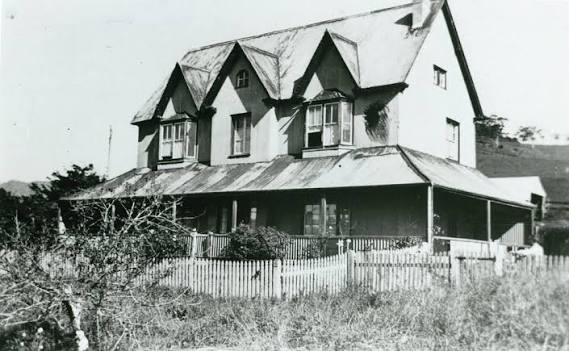
Historic Waughope House and the farm today is still and operating dairy farm

One article about Kiama’s Waugh family contained a letter and plenty of useful clues. It also elevated the wrong family member, incorrectly explained how Waughope got its name and confidently repeated details that did not survive contact with the original records.

Nobody had necessarily set out to mislead anyone. Someone filled a gap, another person repeated it, and eventually the story acquired the reassuring appearance of fact.

Carol took us further back, into colonial records created because Governor King wanted to prevent “fraud, confusion and perplexity”.

That may be the most honest description ever given to a government recordkeeping project.

The Old Register records what ordinary people were buying, selling, mortgaging, promising and fighting over from the earliest years of the colony. Carol showed us why one document is never enough. Every record reflects the knowledge, purpose and opinion of the person who created it. The researcher’s task is to compare it with maps, correspondence, newspapers, land records and other evidence.

Dr Tony Gimour Vice President Kiama Historical Society, Christine Yeats and Cameron McDonald Mayor and Patron

Then a Kiama silk mystery appeared.

Christine had been investigating Anne Waugh, who sent locally produced silk to the Paris Exhibition of 1855. That search led through parish maps, title records, primary applications and annotations left by long-dead clerks.

It also raised a new local question.

Are some of Kiama’s old mulberry trees survivors of its forgotten silk industry?

Kiama Historical Society has a well-earned reputation for bringing together outstanding speakers, fascinating local stories and food tables that deserve their own place in the archives. The magnificent lunch was prepared by the Children’s Medical Research team. 

Nobody walked out with a neat answer to every historical puzzle.

We left knowing where to look next, what to question and why the smallest handwritten number on the corner of a document may change an entire family story.

History, it turns out, is less about finding one perfect record and more about refusing to be defeated by a badly spelled surname, an intimidating website or a very convincing local legend.