History is full of people who could not spell their own names.

Christine Yeats Convenor of the Assessment Sub-Committee of the UNESCO Australian Memory of the World Committee.

A sold-out audience gathered at Kiama Library today to learn from two of Australia’s most experienced historical researchers.

Kiama Historical Society was honoured to welcome Carol Liston AO, President of the Royal Australian Historical Society, and Christine Yeats, its Senior Vice President.

Carol is an Adjunct Associate Professor at Western Sydney University. Her research focuses on early colonial New South Wales, particularly the development of the County of Cumberland and the lives of convict women transported from Britain.

Christine is an archivist and historical researcher who spent much of her career with State Records NSW, now part of Museums of History NSW. She is also Convenor of the Assessment Sub-Committee of the UNESCO Australian Memory of the World Committee.

Carol and Christine set up for their presentations with Vice President of the Kiama Historical Society Dr Tony Gilmour watching cleary please the AV is working 

For local historians, family researchers and writers across the Illawarra and Shoalhaven, having Carol and Christine visit Kiama and share knowledge gathered over a lifetime was a rare opportunity.

It soon became clear that historical research begins with persistence.

Our ancestors could not always spell their own names.

Neither, apparently, could the people recording them.

A surname might begin with Mc, Mac, M’ or a space. Trove may read it differently again. Christine’s advice was simple. Try every variation you can imagine, including a few you cannot imagine, and never assume something is absent because your first search failed.

She also demonstrated how to use quotation marks, AND, NOT and Trove’s persistent links, along with the importance of saving the newspaper title, date and page number. Search results can move as new material is added, meaning the article you found easily today may play hide-and-seek tomorrow.

Newspapers, Christine told us, are wonderful places to begin. They are not necessarily wonderful places to stop.
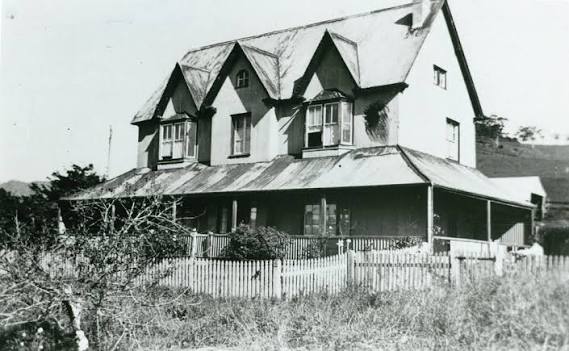
Historic Waughope House and the farm today is still and operating dairy farm

One article about Kiama’s Waugh family contained a letter and plenty of useful clues. It also elevated the wrong family member, incorrectly explained how Waughope got its name and confidently repeated details that did not survive contact with the original records.

Nobody had necessarily set out to mislead anyone. Someone filled a gap, another person repeated it, and eventually the story acquired the reassuring appearance of fact.

Carol took us further back, into colonial records created because Governor King wanted to prevent “fraud, confusion and perplexity”.

That may be the most honest description ever given to a government recordkeeping project.

The Old Register records what ordinary people were buying, selling, mortgaging, promising and fighting over from the earliest years of the colony. Carol showed us why one document is never enough. Every record reflects the knowledge, purpose and opinion of the person who created it. The researcher’s task is to compare it with maps, correspondence, newspapers, land records and other evidence.

Dr Tony Gimour Vice President Kiama Historical Society, Christine Yeats and Cameron McDonald Mayor and Patron

Then a Kiama silk mystery appeared.

Christine had been investigating Anne Waugh, who sent locally produced silk to the Paris Exhibition of 1855. That search led through parish maps, title records, primary applications and annotations left by long-dead clerks.

It also raised a new local question.

Are some of Kiama’s old mulberry trees survivors of its forgotten silk industry?

Kiama Historical Society has a well-earned reputation for bringing together outstanding speakers, fascinating local stories and food tables that deserve their own place in the archives. The magnificent lunch was prepared by the Children’s Medical Research team. 

Nobody walked out with a neat answer to every historical puzzle.

We left knowing where to look next, what to question and why the smallest handwritten number on the corner of a document may change an entire family story.

History, it turns out, is less about finding one perfect record and more about refusing to be defeated by a badly spelled surname, an intimidating website or a very convincing local legend.

One Saturday, two events, and the story of three orphans who built this district

Every object on this table holds a story. Yours do too, and most of those stories are one generation from being lost. Saturday 18 July, Kiama Library, the Royal Australian Historical Society is teaching us how to capture them before they go.

Three orphan girls built lives we still drive past every day

I write stories so the people we love are remembered. Memory has a shelf life of about two generations. Your grandchildren will know your name. Their children probably won’t, unless someone writes it down. Every family has people worth remembering, and most families never get around to it.

So when I heard what the Kiama Historical Society has organised for Saturday 18 July, I paid attention.

In 1821 three young sisters, Cecelia, Caroline and Catherine Rutter, were sent to the Female Orphan School at Parramatta. The Orphan School was where the colony put children it had no other place for. It was not a beginning anyone would choose.

Fifty years on, their names were attached to some of the finest homes in this district. Cecelia married Michael Hindmarsh of Alnebank at Gerringong. Caroline married Thomas Surfleet Kendall of Barroul House. Catherine’s second marriage, to Thomas Chapman, made her home at Hartwell House.

For me, one of those names is personal. In 1880 my grandfather’s family, the Chitticks, arrived in Sydney aboard the Samuel Plimsoll, a wool clipper 74 days out of Plymouth. The shipping list records six brothers, aged 15 to 27, every one of them an agricultural labourer, with their mother and sisters listed as domestics. In time the Chitticks bought half of the Alnebank farm. The orphan girl’s ground became my family’s ground. My grandmother’s people had already been in this district since 1831, and my father’s side arrived in 1841. These stories don’t just overlap with ours. They share fences.

I know all of that because somebody kept the records, and somebody else taught me how to read them. A shipping list, a family tree in a booklet, dates and ages in a column. That’s how a name becomes a person whose story you can share.

Carol Liston, president of the Royal Australian Historical Society, tells the Rutter sisters’ story at Kiama Library Auditorium on Saturday 18 July at 1.45 pm. It costs $3 for Historical Society members, $5 for guests, afternoon tea included, and you can just turn up.

The morning session is the one I’d urge you to book

Before the talk, Carol and the Society’s senior vice president Christine Yeats are running a research workshop, 10 am to 1 pm at the same venue. This is a rare thing. The two most senior figures of the Royal Australian Historical Society, in Kiama, teaching the practical craft: how to search Trove so it gives you answers instead of noise, how to use the Historical Land Records Viewer to trace a property and the people who held it, how to read colonial records for the personal detail that turns a name into a person.

Almost every family around here has the shoebox. The photographs with no names on the back. The family tree that stops dead somewhere in the 1880s. The house with a name nobody can explain. This workshop is for that shoebox. BOOK YOUR SPACE HERE 

It’s $25 for historical society members, $30 for everyone else, and that includes morning tea, cakes and lunch. Bookings are essential, so don’t leave it until the week of.

I’ll be there with my own list of dead ends. Whether Trove can crack them is another question. That’s rather the point of going.

Two workshops in one week, and what they showed me about memory

Last week I went to two workshops.

On paper they had little in common. One was about making cabbage tree hats. The other was about recording oral history.

By the end of the week, I was thinking about both of them through the same lens. They were both about the past, and about what happens when people decide it still deserves a place in daily life.

The first was Sue Brian’s cabbage tree hat workshop at Jamberoo Youth Hall. I went to watch, not to make a hat, which was probably wise. The people at the tables were learning how to boil, shred and plait the palm fronds. I was listening for the story behind the craft.

There was a lot to hear.

In the mid nineteenth century, cabbage tree palms were cut in huge numbers. The trunks were used and the unopened leaf spears were taken for hat making. Sue and the people who still make the hats use the palm differently now. They take the unopened leaf from young palms in a way that allows the tree to keep growing.

The 19th century method took the palm out of the landscape. The current one leaves the tree standing.

The same palm that was once stripped from this landscape is now being planted back into it. Landcare Illawarra’s Future Proofing the Cabbage Tree Palm project is planting cabbage tree palms around Jamberoo, below Saddleback Mountain, where some of the last old palms still stand.

Cabbage tree hat making workshop proved to be very popular and the workshops will return in 2027. See bottom of blog post for contact details

The second workshop was at the Pilot’s Cottage in Kiama, run by Alison Wishart and hosted by the Kiama Historical Society.

Alison Wishart and attendees at Oral History workshop. The Historical Society always offer a superlative morning tea.

This was familiar ground. I have spent years helping people tell their life stories through written memories. Alison was talking about oral history, and the power of recording it.

As Alison reminded participants, the recording keeps the emotion for others to interpret. You hear the hesitation, the humour, the catch in the voice. On the page, I have to find another way to express it.

I keep noticing how much people here care about memory. Our local “remember when” Facebook pages come alive when someone posts an old photo. Within an hour, people are naming faces, houses, streets, teams and families. Someone always knows something. Someone else adds the bit they missed.

I understand that feeling more now than I did when I was young.

Earlier this year, when the council floated moving the Pilot’s Cottage Museum from Blowhole Point into a small space under the library, the reaction was immediate. Dr Tony Gilmour and the Kiama Historical Society volunteers led the campaign, and people who rarely write submissions wrote in. In five days, the idea was reversed.

Around the museum, they still joke that the council wanted to turn them into a KFC.

The museum is here to stay (but it is still looking forward to council giving it a 5 year lease – if only council worked as fast as our community)

I grew up in a family that took history seriously. Years were spent writing down who came to this country, where they settled, what the men did, how wonderful the wives and mothers were at raising children and keeping house. Which women never married because they stayed home to look after their parents or their ten plus siblings. Not an era I would have thrived in.

I always thought I should find it fascinating. I didn’t.

I did well in history at school, but I learned the dates to pass the exam.  I realise now I wanted to know what it felt like to be alive then.

I am grateful for the people I meet today who are prepared to share their story.

When I sit with someone to record their life, I am listening for what it was like to live through their sixty, seventy or eighty years. How much changed.  Who stood beside them. What they learned through grief, love, disappointment and endurance.

When I ask people what they would say to young people now, the answers are the same.

Find a way to live in peace.

Be kind.

At the oral history workshop, someone asked the obvious question. If you are recording one person’s memory, how do you know it is accurate?

It is a fair question.

Memory shifts. Families remember things differently. History is full of confident versions that do not line up. Put ten people at the same accident and the police will take ten different statements. Each person saw it from where they were standing.

So you listen for how that person remembers it. Their version may differ from someone else’s. It may differ from your own. But it is their story.

That does not mean anything goes. A life story is not a place to settle a score with family. The highs belong there, and so do the lows, but the purpose is to understand a life, not punish people from the page.

The other thing I came home thinking about is how different every person is to record.

Some people give you gold in the first ten minutes. Some hold their story so tightly you wonder why they agreed to begin. Some families want every sentence to serve a different purpose. Some people need audio. Some need a written story. Some need a patient interviewer who can sit with silence. Some need structure before they can begin.

There is no single right way.

The cabbage tree hat workshop showed me that a craft survives because people keep practising it, slowly and carefully, with their hands.

The oral history workshop showed me that a life story survives because someone listens, then chooses the way to record it that suits that person.

Anyone can keep the dates and the places.

I am focused on the voice behind them, and whether I can express enough of that voice on the page for the person and their loved ones to recognise them.

Three exciting things to share

  1. Dr Tony Gilmour the Vice President of the Kiama Historical Society told me the majority of the Oral History workshop participants would like to turn their workshop learnings into recording people’s lived experiences; Contact the society at E: kiamahistory@outlook.com  P: 02 4232 1001
  2. The Cabbage Tree Hat making workshops will return in 2027. Contact Kate Malfroy E: kate@lampshadeworkroom.com.au
  3. Landcare contact is Meredith Hall  E: coordinator@landcareillawarra.org.au
    M:  +61 (0) 499 027 770

Further reading:

Cabbage-tree hats through history 

Jamberoo welcomes the Future Proofing the Cabbage Tree Palm Project


Sue Eggins receives the Kiama Electorate Woman of the Year award

There are awards that recognise a moment. Then there are awards that recognise a lifetime of turning up.

Sue Eggins has been named Kiama Electorate Woman of the Year for 2026, a well deserved recognition for someone whose dedicated persistence to heritage has shaped this community for decades.

Last weekend I had the pleasure of interviewing Sue for my Stories written so they can be found series, the project where I sit down with women across our district to record their life stories so they are not lost to time.

Sue’s story is highly entertaining.

It begins with insistence on hospital facility sterilisation standards in an ambulance heading toward Camperdown in 1948 when her mother refused a roadside delivery. It moves through science teaching, travelling the world in her twenties, a period Sue cheerfully describes as following a musician boyfriend around the country like “a brazen hussy”, and eventually lands in Kiama where her energy has been poured into protecting the history and heritage of this district.

Along the way she trained as a school counsellor, worked for decades supporting young people through some of the most complicated years of their lives, and became one of the driving forces behind the Kiama Historical Society.

Her younger years also included a stint at boarding school under a strict Catholic regime. Sundays involved Mass, Benediction, Rosary and several other services all in one day. Bread for school lunches arrived once a week and by Friday it was often mouldy. The nuns toasted fresh bread for themselves and tipped the leftovers into a bucket for the chooks, a bucket the permanently hungry girls often raided. Dormitories opened onto verandahs where winter wind snapped the canvas blinds and Sue remembers piling eleven army blankets onto her bed to keep warm.

Boarding school also came with a formidable rule book about modesty. Talcum powder was sprinkled across the bath water so the girls could not see their reflection while bathing. Even school dances were tightly managed. Boys were required to place a handkerchief between their hand and a girl’s back so skin never touched skin.  Sue remembers those years as very character forming. A decade travelling overseas and following a boyfriend and his band around the country looked positively wholesome by comparison.

If you have attended a heritage talk, heard the story of Orry-Kelly, visited the museum, or followed one of the long running campaigns to protect historic buildings such as Barroul House or the Pilot’s Cottage, chances are Sue has been somewhere either guiding a tour or behind the scenes reading the documents, asking the questions and turning up to the meetings.

And when Sue turns up, people listen.

They know she has done her homework. She understands the history, the planning rules, the legislation and the process. By the time she walks into a room she is ready to get the best outcomes for the cause.

Her approach to community life is simple. Know your subject. Make your case carefully. And never walk away simply because it looks too difficult.

Great leaders do their homework. They listen carefully. They build a case that stands up to scrutiny. They keep showing up, even when the process is slow or the outcome uncertain. Over time, people learn that when they speak, it is worth paying attention. Sue Eggins has practised that art for decades.

This award recognises exactly that kind of contribution.

And if you want to hear the full story, from ambulance drama to international travel to heritage picket lines, keep an eye out for the full Sue Eggins life story coming soon in the series.