#Strongwomen. "I write about the power of trying, because I want to be okay with failing. I write about generosity because I battle selfishness. I write about joy because I know sorrow. I write about faith because I almost lost mine, and I know what it is to be broken and in need of redemption. I write about gratitude because I am thankful – for all of it." Kristin Armstrong
Christine Yeats Convenor of the Assessment Sub-Committee of the UNESCO Australian Memory of the World Committee.
A sold-out audience gathered at Kiama Library today to learn from two of Australia’s most experienced historical researchers.
Kiama Historical Society was honoured to welcome Carol Liston AO, President of the Royal Australian Historical Society, and Christine Yeats, its Senior Vice President.
Carol is an Adjunct Associate Professor at Western Sydney University. Her research focuses on early colonial New South Wales, particularly the development of the County of Cumberland and the lives of convict women transported from Britain.
Christine is an archivist and historical researcher who spent much of her career with State Records NSW, now part of Museums of History NSW. She is also Convenor of the Assessment Sub-Committee of the UNESCO Australian Memory of the World Committee.
Carol and Christine set up for their presentations with Vice President of the Kiama Historical Society Dr Tony Gilmour watching cleary please the AV is working
For local historians, family researchers and writers across the Illawarra and Shoalhaven, having Carol and Christine visit Kiama and share knowledge gathered over a lifetime was a rare opportunity.
It soon became clear that historical research begins with persistence.
Our ancestors could not always spell their own names.
Neither, apparently, could the people recording them.
A surname might begin with Mc, Mac, M’ or a space. Trove may read it differently again. Christine’s advice was simple. Try every variation you can imagine, including a few you cannot imagine, and never assume something is absent because your first search failed.
She also demonstrated how to use quotation marks, AND, NOT and Trove’s persistent links, along with the importance of saving the newspaper title, date and page number. Search results can move as new material is added, meaning the article you found easily today may play hide-and-seek tomorrow.
Newspapers, Christine told us, are wonderful places to begin. They are not necessarily wonderful places to stop.
Historic Waughope House and the farm today is still and operating dairy farm
One article about Kiama’s Waugh family contained a letter and plenty of useful clues. It also elevated the wrong family member, incorrectly explained how Waughope got its name and confidently repeated details that did not survive contact with the original records.
Nobody had necessarily set out to mislead anyone. Someone filled a gap, another person repeated it, and eventually the story acquired the reassuring appearance of fact.
Carol took us further back, into colonial records created because Governor King wanted to prevent “fraud, confusion and perplexity”.
That may be the most honest description ever given to a government recordkeeping project.
The Old Register records what ordinary people were buying, selling, mortgaging, promising and fighting over from the earliest years of the colony. Carol showed us why one document is never enough. Every record reflects the knowledge, purpose and opinion of the person who created it. The researcher’s task is to compare it with maps, correspondence, newspapers, land records and other evidence.
Dr Tony Gimour Vice President Kiama Historical Society, Christine Yeats and Cameron McDonald Mayor and Patron
Then a Kiama silk mystery appeared.
Christine had been investigating Anne Waugh, who sent locally produced silk to the Paris Exhibition of 1855. That search led through parish maps, title records, primary applications and annotations left by long-dead clerks.
It also raised a new local question.
Are some of Kiama’s old mulberry trees survivors of its forgotten silk industry?
Kiama Historical Society has a well-earned reputation for bringing together outstanding speakers, fascinating local stories and food tables that deserve their own place in the archives. The magnificent lunch was prepared by the Children’s Medical Research team.
Nobody walked out with a neat answer to every historical puzzle.
We left knowing where to look next, what to question and why the smallest handwritten number on the corner of a document may change an entire family story.
History, it turns out, is less about finding one perfect record and more about refusing to be defeated by a badly spelled surname, an intimidating website or a very convincing local legend.
Every object on this table holds a story. Yours do too, and most of those stories are one generation from being lost. Saturday 18 July, Kiama Library, the Royal Australian Historical Society is teaching us how to capture them before they go.
Three orphan girls built lives we still drive past every day
I write stories so the people we love are remembered. Memory has a shelf life of about two generations. Your grandchildren will know your name. Their children probably won’t, unless someone writes it down. Every family has people worth remembering, and most families never get around to it.
In 1821 three young sisters, Cecelia, Caroline and Catherine Rutter, were sent to the Female Orphan School at Parramatta. The Orphan School was where the colony put children it had no other place for. It was not a beginning anyone would choose.
Fifty years on, their names were attached to some of the finest homes in this district. Cecelia married Michael Hindmarsh of Alnebank at Gerringong. Caroline married Thomas Surfleet Kendall of Barroul House. Catherine’s second marriage, to Thomas Chapman, made her home at Hartwell House.
For me, one of those names is personal. In 1880 my grandfather’s family, the Chitticks, arrived in Sydney aboard the Samuel Plimsoll, a wool clipper 74 days out of Plymouth. The shipping list records six brothers, aged 15 to 27, every one of them an agricultural labourer, with their mother and sisters listed as domestics. In time the Chitticks bought half of the Alnebank farm. The orphan girl’s ground became my family’s ground. My grandmother’s people had already been in this district since 1831, and my father’s side arrived in 1841. These stories don’t just overlap with ours. They share fences.
I know all of that because somebody kept the records, and somebody else taught me how to read them. A shipping list, a family tree in a booklet, dates and ages in a column. That’s how a name becomes a person whose story you can share.
Carol Liston, president of the Royal Australian Historical Society, tells the Rutter sisters’ story at Kiama Library Auditorium on Saturday 18 July at 1.45 pm. It costs $3 for Historical Society members, $5 for guests, afternoon tea included, and you can just turn up.
The morning session is the one I’d urge you to book
Before the talk, Carol and the Society’s senior vice president Christine Yeats are running a research workshop, 10 am to 1 pm at the same venue. This is a rare thing. The two most senior figures of the Royal Australian Historical Society, in Kiama, teaching the practical craft: how to search Trove so it gives you answers instead of noise, how to use the Historical Land Records Viewer to trace a property and the people who held it, how to read colonial records for the personal detail that turns a name into a person.
Almost every family around here has the shoebox. The photographs with no names on the back. The family tree that stops dead somewhere in the 1880s. The house with a name nobody can explain. This workshop is for that shoebox. BOOK YOUR SPACE HERE
It’s $25 for historical society members, $30 for everyone else, and that includes morning tea, cakes and lunch. Bookings are essential, so don’t leave it until the week of.
I’ll be there with my own list of dead ends. Whether Trove can crack them is another question. That’s rather the point of going.
Marketing guru Gaye Steel is a friend and mentor. In passing, she said something that made me smile and then made me act. If you are not on Google, you do not exist.
She was talking about what lasts.
A digital footprint carries a story beyond the last person who remembers it. Beyond the neighbour who knows. Beyond the family who tells it at the table.
Gaye is someone worth listening to because she has spent decades making big organisations move, not talking about it. She understands what cuts through because she has been responsible for ideas that had to work in the real world, at scale, with no room for excuses.
At McDonald’s, Gaye was at the centre of market defining innovation. She led the launch of products that reshaped the brand’s Australian offer, including Flake n Cone, McFlurry, McOz, and the first Family Meal Deal. These initiatives strengthened McDonald’s market leadership and showed her ability to translate consumer insight into large scale commercial success.
Gaye Steel taught me that good advice is meant to be used. So I used it, nudging a few Jamberoo legends onto the internet and leaving enough breadcrumbs that when someone types a name into a search bar, something comes back.
Think of it as historical housekeeping, with a keyboard. A way of making sure the people who shaped this place do not quietly slip out of view.
Geoff Boxsell and Kevin Richardson are a perfect example. Between them, they created the formula for spreadable butter, something that changed how Australians eat at breakfast. For years they were far too quiet about it. Hardly anyone in Jamberoo knew the full story.
Geoff Boxsell gets his first Instagram moment at 86 and somehow makes it look effortless. Read the story in Region Illawarra here
Now the world does.
There are Google pages. Radio interviews. TV interviews Podcast stories. A national audience hearing how two local blokes solved a practical problem and changed a national habit. The story has moved from sheds and factory floors into the places people actually look.
This work also connects back to why I started digging so deeply in the first place. When I spoke with Dr Tony Gilmour, who has been documenting local history for years, I told him I wanted to ground my book in what Jamberoo was like in the late 1800s and early 1900s. He warned me there was not a great deal of Jamberoo history written down.
If the record is thin, what we add now carries weight. Digital footprints are not about promotion. They are about continuity. They give future storytellers somewhere solid to start.
Jamberoo’s residents are proud of our village. Always have been. What has changed is that we are now firmly on the digital map as well. Our stories are there, searchable, linked, and ready to be found.
Did you know Allowrie St Jamberoo was once called George St
Once upon a time, Jamberoo was the centre of the universe on the New South Wales South Coast. People will tell you it was the largest town between Sydney and Melbourne. Drays rattled through, pubs bustled, and blacksmiths hammered away, all thanks to the fact that Jamberoo sat squarely on the main inland route south. Travellers from Sydney would pass through Albion Park, swing into the Jamberoo Valley, then take on the steep haul up Saddleback Mountain before descending into Kiama.
It was not an easy journey, but it kept Jamberoo humming. The town was a natural stop for food, drink, repairs, and gossip. Things got even better in the late 1800s when the Pike’s Cutting was cut, giving a shorter, less back-breaking link to Kiama.
Looking west through Pike’s Cutting towards the Jamberoo Rd
The real change came earlier than many think. Before the first bridge at Minnamurra opened in 1870, the coastal route had a built-in obstacle — the punt across the river. Travellers would roll up, sometimes in carts piled high with produce, only to find a queue of buggies, wagons, and the occasional impatient rider, all waiting their turn.
The ferryman set the pace, and he was not in a hurry. A good crossing depended on the tide, the weather, and how chatty he felt. A stiff breeze might mean you waited longer. A juicy bit of local gossip could mean you waited longest of all. Farmers swapped news, children fished off the bank, and the odd traveller calculated just how much quicker it would have been to go through Jamberoo after all.
When the first Minnamurra River bridge opened in 1870, and later the second in 1890, the days of punt queues were numbered. More and more traffic flowed along the coast instead of inland through Jamberoo. What was later named the Princes Highway in 1920, rebranded to curry favour with the visiting royals. The prince in question, who later became Edward VIII, very nearly brought down the monarchy.
Of course, Jamberoo had faced other supposed threats before, like the Russians. In September 1860, The Kiama Examiner reported on fears that Russia might invade Kiama. Their verdict on Jamberoo’s fate was unforgettable:
“Jamberoo will, of course, escape, as it will be impossible for any army to come up here from the impassable state of the roads. In some future generation their fossil remains would be found imbedded in a strata of yellow clay, which would be all that would be left to tell the tale that a great and mighty army had once invaded our shores.”
In other words, Jamberoo’s best defence in 1860 was potholes and mud.
While the roads were shifting, so was the way people and goods moved between Kiama and Sydney. For decades, ships carried passengers, butter, and blue metal from Kiama Harbour to the city. The arrival of the railway in 1887 changed everything. Fresh produce could reach Sydney markets the same day, and passengers could travel in comfort without braving the sea.
The first government proposal for the rail route actually had it running through Jamberoo rather than Shellharbour. Imagine if that plan had been adopted. Jamberoo would have been on the direct Sydney to Melbourne main line. Butter factories could have sent goods by train instead of cart, pubs would have bustled with passengers stepping off the platform, and the valley would have been plugged directly into the country’s busiest rail corridor.
In the early 20th century, there was even talk of a branch line to Jamberoo when it was thought coal might be found in the valley. Nothing came of it, and the railway stuck to the coast. Jamberoo remained an inland service town, its fortunes tied to dairy farming rather than the booming railway economy.
W.A. Bayley, writing in the 1960s and 70s, told this story with the precise detail of his era, recording dates, council minutes, and route maps in the serious style of mid-20th century history writing. Dr Tony Gilmour’s Rascals and Respectables covers the same territory but with more sparkle. In Gilmour’s version, the stubborn characters, bruised egos, and colourful asides make you wish you could eavesdrop in Jamberoo’s pubs the day the first bridge at Minnamurra opened, or the moment they learned the railway would not be coming through the valley.
Dr Tony Gilmour’s Rascals and Respectables does not just tell you the history of our local pubs, it pours you a pint of it, froth and all. From the days when Jamberoo ruled the coast to the high-stakes drama of the railway line that never came, Gilmour weaves the rise and fall of our watering holes into a tapestry of hysterical anecdotes, petty rivalries, and larger-than-life publicans who could pour a beer with one hand and stir up scandal with the other. It is history with a wink, where every closing time comes with a punchline. You can buy it here: https://www.trybooking.com/events/landing/1348394
Much gratitude to Dr Tony Gilmour and Sue Eggins from Kiama District Historical Society for their anecdotes and fact checking
Today’s post shares the life story of my grandfather Walter Dunster Lindsay (1893-1967) through the eyes of my aunt Ruth Rae (née Lindsay).
The third son and fourth child of Mary and John Lindsay, Walter was born into a dairy farming family well known in Dapto and throughout the Illawarra of that time.
He didn’t speak much of his family or his childhood though we were told he played a good game of tennis and of football in early youth until, at the age of 16, he contracted Rheumatic fever which ended such games for a long while. He told me once that while he was very ill it was his eldest sister, Muriel, who looked after him most, his mother being preoccupied with all the younger siblings.
Muriel Lindsay
It was during convalescence that his one tale was of the birdcage he built in the warmth of the big family kitchen. When it was finished to his liking he found it was too big to get out of the door. But we never heard what did happen to it.
He was a gentle man, slow to anger and rather shy. This shyness may well have been because he was born with a harelip and cleft palate, neither mended with today’s skills. He probably took more interest in his children than he showed but he seemed to have all the conservatism and indifference to his young family that he claimed his forebears displayed so abundantly. He left his wife, Ethel, to dispense both tenderness and discipline. Only once did he show anger and act upon it. That was when he was obliged to return to the dairy late one evening and did some damage to his shins when he tripped over his son John’s bike which had been carelessly left on the ground just outside the gate from the house. John, despite his protests, was the recipient of a sound hiding according to the traditions of justice of the day. It was only later that it became clear that it was a workman who had borrowed the bike, and not John, and had thrown it on the ground at the gate when he had finished with it. None of the children ever received any form of punishment from their father from that day on.
He did his work slowly, thoroughly and methodically, illustrated by his technique for washing up. He took responsibility for this within the dairy for half a century and, after retirement, continued it into the kitchen. First everything was rinsed, then washed immaculately, then rinsed again. It took all evening for he suspected that detergents had hidden implications for health. When he weeded a garden the result was just perfect and raked evenly to a fine tilth.
His conservatism extended to all things mechanical and, when a shortage of labour during the war forced Lindsay Bros to buy a milking machine, it was taken on with extreme suspicion and reluctance. For most of the war years the cows were milked by machine in the morning because it was the only way to get the job done and by hand in the afternoon when an extra person was available. Even with the machine his distrust was such that he always sat down and verified that the machine had done its work properly by doing a short finishing milking , or stripping as it was called. The cows gradually got used to this and saved up some of their milk for the hand milking so that some of them gave as much milk the second time around as they had initially given to the machine. Consequently milking 80 to 100 cows took and eternity and an inordinate amount of manpower- 6-7 hours a day plus another 2-3 hours for washing and cleaning the dairy equipment. There was not a lot of time for other farm work or recreation and he indulged in very little of either. This remained the case until the Karara herd was dispersed in 1958.
A treasure I inherited from my grandfather
It was many years before he could afford a car (Eric owned one and that was the family car) but he was very pleased with the one he bought and he drove it skilfully and well.
Eric Lindsay
He had a good relationship with Eric and they had nicknames for each other. Dad was ‘Andy’ when Gug was ‘Horace’ while, in other gender mood, Gug was ‘Katie’ and Dad ‘Lena’. I don’t know who thought up the names, but Doss and Estelle were referred to as ‘The Tabbies’ and Estelle was ‘Longo’. John was referred to as ‘The Boss”. Of them all Dad felt closest to Roy, who Mum always said should never have been a farmer. He had a lovely tenor voice, loved books and music. He planted a groves of trees on the farm and attempted innovations like breeding special types of poultry. The few times his name came up I noticed tears in Dad’s eyes. Roy died, aged 36 of a ruptured appendix. He apparently was in great pain on a Friday but refused to disturb the doctor’s weekend so waited till Monday morning when the condition was too advanced for treatment.
Walter and Eric began to value add ( to use a modern expression) to their dairy farming activity by becoming vendors of milk. Eric was the entrepreneur (to use another modern expression) and Walter the anchor man.
Bill Seath delivering milk for Lindsay Bros, Dapto in 1940.Photo supplied by Caine Seath from Dapto History in Photos
To upgrade the herd Eric went to New Zealand and bought a prize bull. It became an extremely successful business and WD &ES Lindsay, later to be called Lindsay Bros, was , at its height . retailing more milk in the Wollongong-Port Kembla district than any other firm including the Dairy Farmers Cooperative Milk Company. Some 8 or 9 farmers in the district sold their milk to the firm and this was cooled, stored and distributed through some 3 domestic milk runs and a wholesale network that included almost every milk bar and general store from Dapto in the south to Austinmer and Coaldale in the north. Eric would go to bed early and set off in the wee small hours with a laden truck to start the days distribution. Particularly in the hot months he would leave the milk in the cool room till the last possible time necessitating the early rising. After the war draconian and unfair government regulations were imposed that forced all other farmers to sell their milk only to a government agent which was the rival Dairy Farmers Milk Cooperative. With the loss of their major source of supply, Lindsay Bros were forced to sell their domestic business and retain only the wholesale business in the city of Wollongong itself. Their milk was subjected to regular and intrusive testing, while that of the rival company was not, but were always found to be well above the prescribed norms. Eric bought the farm, “Kembla Park” and a subsidiary dairy was set up to augment the supply of milk. Lindsay Bros also bought a small farm at Albion Park to run dry and young stock But the retail business was only a shadow of its former size. The company could not afford or warrant upgrading its machinery to enable processing and pasteurization which were beginning to be an important part of the industry and the business and herd were sold in 1958. The Dairy Farmers bought the plant which they scrapped to forestall potential competitors but the herd, which had become well known for its productivity in the State herd testing scheme, attracted excellent prices for the time. Walter was 65 at this time and Eric 64 so retirement was timely option.
Sale of Karara Herd John Lindsay
Sale of Karara Herd J
Sale of Karara Herd John Lindsay
The sale of the Karara herd attracted buyers from across Australia
Dad and Mum ( Ethel Lindsay nee Carr )fell in love 7 years before they were married, the first of his family to do so. They had to wait for several reasons: her responsibilities to her parents (her two sisters had moved away and were working) and the need to have a home when the farm was established.
Ethel and Walter Lindsay
Walter and Ethel Lindsay on their wedding day
Walter and Ethel on their wedding day – photo on the right
Karara only had on it a weatherboard old house with no facilities whatever and a cloying smell of dust and age. There was also the matter of religion – he, Protestant and she, Catholic. The exact details of the arrangement that allowed this to happen were never divulged but Mum was presumably excommunicated from the Catholic Church because she never attended mass again. They were married in St Phillips in Sydney and went home to a rented house called “Lakeview’ at Unanderra- a house with no electricity and home to a host of possums. Gug joined them and lived with them for the rest of their lives. Dad spoke of the Catholic Church only with bitterness but he always avoided mentioning the subject of their marriage.
Fortunately, the acrimony did not extend beyond the church and the Carr and Lindsay families had an extremely good relationship. For example , Gug and Auntie May were particularly fond of each other, platonically of course, and the Christmas table at Karara always had all available members of both families around it.
Ethel Lindsay with her sisters Mary and Alice Carr
After the business was sold the garden became a pleasant hobby.
This slideshow requires JavaScript.
He had always had a love of nature and knew all the birds around the farm. He watched them nesting and was so determined that they would not be disturbed that he told nobody about it. I often regret not having been allowed to share his knowledge. Mum would always consult him before hanging out the washing, and I can’t remember that his forecasts were ever wrong. I understand that he had only one year of secondary schooling, but he must have absorbed a tremendous amount of knowledge later as he read the Herald from cover to cover.
One very cold winter when Dad and Mum were house-sitting in Cowra for John and Robyn, I sent them an electric blanket. This was a sheer delight to him – there was only one control and he would set it to keep very warm, while Mum, who couldn’t spoil his enjoyment. slept with both feet outside the sheets. When small battery radios came in he considered it pure heaven to lie in a warm bed, head in the cool air, listening to news from far places. Then I would be called in to prepare a very large, cold milkshake which he drank with gusto before turning out the light.
He had been plagued for years with a so called ‘gastric ulcer’ and frequently complained of severe indigestion. In his late sixties this symptom was belatedly diagnosed as a severe hiatus hernia with oesophageal reflux. The strictures in his throat prevented him swallowing and he was admitted to hospital in Sydney for an operation. Five days post-operatively he was sent home, sitting up in an ambulance. He was a long time recovering. By this time his cardiac system was showing signs of damage and he died in Wollongong Hospital in April, 1967. Thus passed a good man who had never knowingly hurt a living thing. His last thought as he died was for Mum whom he adored and she was to live on for over twenty more years without him.
Phillip, Walter and Ethel Lindsay are buried at St Lukes Church Brownsville
Table – John Lindsay and Mary Dunster and children
Name
Born
Died
Status
John Lindsay
1857
1930
Married: Mary Dunster
Muriel
1887
1961
Unmarried
Charles
1888
1964
Married: Eileen McPhee
Joseph Roy
1890
1929
Unmarried
Walter Dunster
1893
1967
Married: Ethel Carr
Eric Stratford
1894
1970
Unmarried
Estelle
1897
1962
Unmarried
Harold Thornbury
1895
1959
Unmarried
Hilda
1900
1963
Unmarried
Doris
1899
1980
Unmarried
Hilton
1902
1964
Married: Edith Martin
OBITUARY. MR. JOHN LINDSAY.
Mr. John Lindsay, a member of one of the pioneer families of the Illawarra, died suddenly at his home, West Horsley, Dapto, on Sunday evening, aged 73 years. He had only returned home on Friday after a holiday trip in the Western districts, and appeared in the best of health. The late Mr. Lindsay was born near Unanderra, and was a son of the late Mr. John Lindsay, of Kembla Park, who was a noted breeder of Ayrshire cattle. The late Mr. Lindsay was also a noted cattle breeder, and met with many successes at agricultural exhibitions. For many years he was a member of the committee of the Dapto A. & H. Society, and at the time of his death was one of the trustees of the Society; he was also a Churchwarden of St. Luke’s Church of England, Brownsville. He was held in very high esteem in the district, being a man of very high principles, his word being his bond. The funeral on Tuesday was one of largest ever seen in the district. A short service was held in St. Luke’s Church of England, prior to the interment in the cemetery attached to the Church grounds. The Rev. O’Neil, an old friend of the family, and the Rev. Chapple were the officiating clergy. The late Mr. Lindsay was predeceased by his wife some four years ago, and he is survived by five sons, Messrs. Charles, Walter, Eric, Harold and Hilton, and four daughters, Misses Muriel, Estelle, Doris, and Hilda. One son, Roy, died some years ago. Messrs. George, Thomas, and Charles Lindsay are brothers, and Mrs. E. T. Evans, Dapto, and Miss Lindsay, Kembla Park, are sisters of the deceased. Mr. Charles and Miss Hilda Lindsay had just arrived in Tasmania on a holiday trip, when they received the news of their father’s death. They immediately crossed to Melbourne and arrived in Sydney on Wednesday by means of one of the aeroplanes of National Airways Ltd. We extend our sympathy to the bereaved family. Source
As I delve deeper into my family history, I’m struck by a recurring theme: the erasure of women’s identities. Reading the obituary of my great-grandmother in the Kiama Independent from June 10, 1925, it’s evident that women were often not given the dignity of being named in their own right. MRS. JOHN LINDSAY – not even her first name (Mary) is mentioned. Instead, she is an extension of her husband’s identity. This was a woman who lived a full life, moving from Tullimbar to Shellharbour, raising a family, and being an ‘ideal wife and mother’. Yet, her personal identity is overshadowed by her husband’s name.
Obituary – MRS. JOHN LINDSAY. Wednesday June 10 1925 Kiama Independent
The death took place at her residence “West Horsley,” Dapto, on Sunday night, of Mrs. John Lindsay. ‘The deceased lady had been in her usual health until Wednesday evening last when she was suddenly overcome by alarming symptoms of what appeared to be peritonitis. Dr. Kerr, of Wollongong was called in immediately and on consultation with his brother, decided to have the opinion of a specialist. Consequently Dr. Poats of Sydney arrived with a special nurse and an operation was performed, but although the operation was in itself successful, Mrs. Lindsay’s strength was not equal to the great shock incurred and she gradually sunk until death took place in the presence of her loved ones on Sunday night.
Mrs. Lindsay was born at Tullimbar and came to Shellharbour with her parents, the late Mr. and Mrs. Joseph Dunster, when quite a tiny child. She spent her girlhood at the old home at “The Hill” until her marriage with Mr. John Lindsay ,about 40 years ago, since then she has resided continuously at “West Horsley.” An ideal wife and mother she will be sadly missed by her loving husband and family of six sons and four daughters. Of Mrs. Lindsay’s brothers and sisters Mrs. J. E. Miller (Shellharbour), Mrs. Musgrave (Dunoon), Mr. Joseph Dunster (Billinudgel), and Mr. Walter Dunster (Dapto) still survive. One sister, the late Mrs. John James and two brothers the late W. C. Dunster and Robert Dunster, of Shellharbour, pre-deceased her. The funeral took place at Brownsville Church of England cemetery yesterday (Tuesday) afternoon.

 Christine Yeats Convenor of the Assessment Sub-Committee of the UNESCO Australian Memory of the World Committee.
  Carol and Christine set up for their presentations with Vice President of the Kiama Historical Society Dr Tony Gilmour watching cleary please the AV is working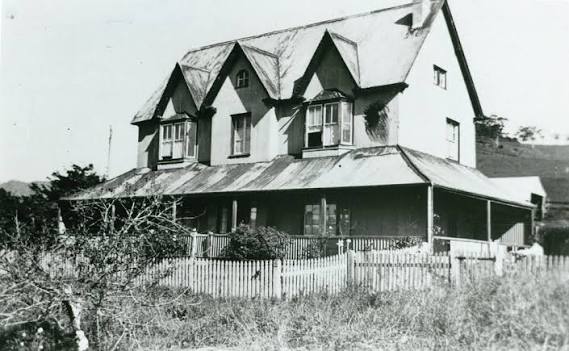


 A treasure I inherited from my grandfather


 Ethel Lindsay with her sisters Mary and Alice Carr