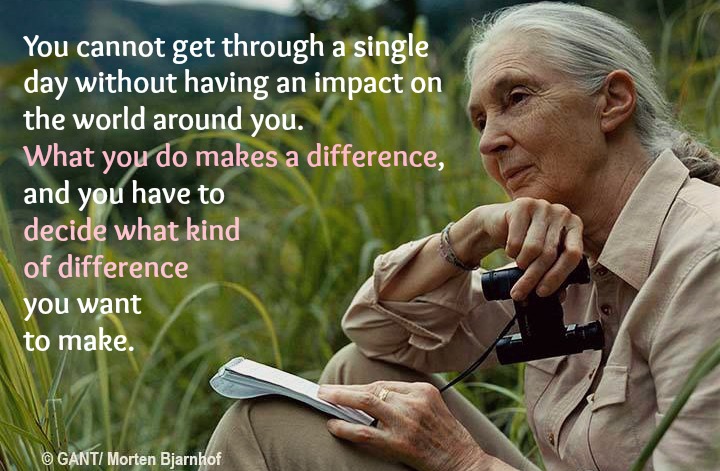
#Strongwomen. "I write about the power of trying, because I want to be okay with failing. I write about generosity because I battle selfishness. I write about joy because I know sorrow. I write about faith because I almost lost mine, and I know what it is to be broken and in need of redemption. I write about gratitude because I am thankful – for all of it." Kristin Armstrong
I am a very different person to the person I was when I began my mission ten years ago to have my fellow farmers proud and loud of what they do and the industries they produce food and food and fibre for
I credit that change in the way I think and act to the young people I have met on my journey
I sell hope, they sell hope, together we have started a movement to create a new era of communication and transparency from the agricultural sector between farmers and the community. This allows farmers to raise awareness of the challenges they face to provide Australian families with safe, affordable and healthy food now and in the future.
Our programs and activities open the door for the community to ask questions and receive answers to questions on stuff that matters to them.
We do this because deep down our farmers feel unloved loved and undervalued. Our programs and activities provide matchmaking opportunities – a dating service if you like for farmers to connect with, and partner with the people in the community who love and appreciate them and people in the community who will love and appreciate them when they meet them
We do this by
designing and delivering events and activities through partnerships between young people in the agriculture sector and young people in schools using art and technology and two way conversations.
building capacity and the confidence of young people in the agriculture sector to share their story and deploy them using innovative vehicles such as The Archibull Prize to deliver agriculture’s key messages in a way that resonates with the audiences they reach with the mantra “People don’t care what you know until they know you care”
Whilst I am very proud of this legacy, deep down its these young people that light my fire. On their journey they have developed the confidence and courage to share their story and lobby for action on stuff that matters to them
Let me introduce to Anika Molesworth and Kirsty McCormack – two young women in agriculture with a high profile in the media blazing a trail for us all
“Anyone sitting in Parliament saying they represent rural and regional Australia should be figuring out how the decisions they make today are going to determine whether our farms are profitable in the years to come.”
“If we want something done about this then we need to do more than whisper across the back fence. It’s time to start shouting, and if our politicians fail to listen and catch up with the times then they risk being left behind.” Anika Molesworth
“We’re a generation who don’t want to sit down and read facts and figures, we want to hear from individual people, and hear their stories,” Kirsty McCormack
The characteristic I most admire in people is courage.
Last week I attended the Australian Geographic Awards with Josh Gilbert’s family and partner. If ever there was an award’s event that celebrates courage, it’s the Australian Geographic Awards.
Yesterday I was reminded how lucky I am to be surrounded by so many courageous young people
Firstly there was this testimonial for Young Farming Champion Dee George. I know how much this will mean to Dee (you are a true champion Dee)
And there was this entry in The Archibull Prize based on the ethos of the Dr Suess book The Lorax. After 4 weeks on the road with the art judge videoing the students it had got to the stage where I was queen of the bloopers and struggling to turn the record button on and off at the right time.
What does all this have to do with Josh. Well Josh is like The Lorax
I love his sense of right and wrong.
I love that he recognizes the need to speak for those who have no voice.
I love that he sees the beauty of an unspoiled forest.
I love that he’s willing to stand up for what he believes in, even when it is the unpopular opinion.
But most of all, I love that he maintains a hope for the future, even when it seems so dismal.
And I love that he not only believes that one person can change the world, but like all the Young Farming Champions he puts his heart and soul into being part of a movement that empowers them to do so.
I videoed his presentation and his speech. It was a very courageous moment
A well known group of highly respected Australian farmers have put their hands up to debunk the myth that Australian farmers are climate change deniers
In a previous blog found here I shared the research that showed 2 to 4 times as many farmers identify as human induced climate change sceptics compared to the community in general. In contrast to this lack of alignment with 97% of scientists and the community, up to 90% of surveyed farmers acknowledged using climate change adaption and mitigation strategies.
Climate Change is now well and truly out of the closet for Australian farmers. Our farmers have a lot to be proud of whilst we are Australia’s fourth highest source of emissions (after electricity, stationary energy and transport) we are the only sector to have decreased emissions in recent years.Farmers have acknowledged they are part of the problem and they are very determined to be part of the solution.
At the moment, the electricity sector contributes around 34% of greenhouse gas emissions in Australia each year. This is more than double the emissions from agriculture. Unlike changing our personal and food waste habits, which will require a gradual cultural shift, changing our energy sources and reducing our energy consumption primarily requires political commitment.
We already have the technology and are seeing it adopted on a large scale around the world.Emissions reductions from the electricity sector could deliver the rapid and significant cuts that we need as soon as possible.
Excitingly our farmers are gaining public support and now actively lobbying our politicians to get on the clean energy train as this recent example shows
This article is a reprint from Australian Geographic by Gemma Hilton on Sept 27th 2016
IF THERE’S ANY group of Australians who are likely to see and fully appreciate the impacts of climate change first-hand, it’s our farmers, who rely on the patterns and moods of the weather to make a living.
Farmers like Peter Holding, who is a third-generation mixed-operation farmer (wheat, canola, wool and lamb) from southern NSW. Peter’s family has been farming their land on the south-west slopes of Harden since 1929. He says he first really started to be impacted by the changing climate with the big, late-season frost event of 1998, followed by the unprecedented drought period of the first decade of the 2000s.
Today, Peter is vocal about the need to do something about climate change. He is also a member of the newly formed Farmers For Climate Action, which is asking farmers around Australia to share their experiences of, and attitudes towards, climate change in a nation-wide survey. This is the first Australia-wide survey of its kind and was launched last week at a large, annual NSW agribusiness event called Henty Field Days.
Volunteers from Farmers for Climate Action prepare to survey farmers at Henty Field Days, NSW. (Source: Farmers for Climate Action)
Peter says farmers are at the “frontline” of climate change, and he thinks attitudes among farmers are changing – however the survey, which has already received hundreds of entries, will paint a clearer picture.
Cattle farmer and businesswoman Lucinda Corrigan, who has already completed the survey, is now encouraging other farmers to do the same.
“We already know agriculture is Australia’s most climate-exposed industry, but precise impacts vary between regions and sectors. For me, in southern NSW, we’re seeing increasing temperatures and our rainfall patterns significantly alter, and this makes short and long-term planning for our agribusiness more challenging,” she says.
“It’s critical that as many farmers as possible get involved in this conversation because the decisions made today and tomorrow will affect us long into the future. We want to make sure we can keep farming into not just the next season, but for generations to come.”
Farmers For Climate Action will use the survey results to inform their practices and areas of focus. Farmers who complete the five-minute survey will also go in the draw to win a solar system and battery storage worth $15,000.
The survey has already has 400 responses from farmers – help Farmers for Climate Action reach 1000 responses farmers can undertake the survey here.
Changemakers fascinate me. People who wake up everyday and want to change the world or at the very least their part of the world.
I am particularly fascinated by young changemakers or as they call themselves ‘disruptors’. Young people who are being a revolutionary – spotting something that needs to change and not being afraid to turn things upside down in order to achieve it.
Yesterday I got an opportunity to sit in on a roundtable in Canberra consisting of some of Australia’s most engaged young changemakers in the sustainability space.
The exercise that they did that blew my mind involved mapping their personal and professional development journey.
Identifying the moments in time.
The:
inspiration points
pivot points
Identifying the key people on the the journey.
The:
champions
mentors
critics/naysayers
connectors
These young people were all under 35. They all had a strong community spirit and involvement in community from a very young age. Many identified being inspired by a guest speaker at their school. They all viewed life as an opportunity to grab with both hands. And they had all changed the world. The world was a better place because they were in it
One thing that resonated with me was the impact of the political landscape on many of these young people. Young changemakers choosing career pathways based on who was leading our country at the time. Too often it was lack of inspiration from the top of the political tree being the pivot point in their journey.
Yesterday was definitely one of the highlights of my life – thank you #YoungAustralians committed to a #brighterfuture
I gave it a lot of thought but in the end I decided not to watch the 4 Corners Milked Dry program this week on the #DairyCrisis. I can feel all these people’s pain and I just didn’t want to see it.
Thanks Gill and Paul this one put a smile on my face
One thing the #DairyCrisis has highlighted to me is the pressing need to attract the best and the brightest to the Australian Agriculture sector – bright minds who can work with farmers to help our farmers get a fairer deal.
So instead of watching 4 Corners with the support of the Art4Agriculture team I put the finishing touches on our new competition for The Archibull Prize that aims to attract all those exciting people to our sector.
Despite farming being a verrrrrrry risky profession, it has plenty of highlights and in reality we don’t really need any more farmers we just need to look after the ones we have. Today less than 1% of the Australian population are farmers. Agriculture supports 1.6 million jobs and more than 80% of these jobs in the agriculture sector are off farm.
So this week we are celebrating the positives and inviting all the exciting,visionary and creative young people out there to identify your cutting edge career in the agriculture sector and join us in getting a fair deal for farmers and securing a bright future for everyone in this country.
Special shout out to Samuel at Glasshouse Christian College who provided some of the inspiration behind the design of this competition with his recent infographic
This is a long post that I have given a lot of thought. Anyone at all connected to the Australian dairy industry will know farmers have tough times ahead and they need all the support they can get
Upfront to me there seems to have been a lack of honesty and transparency from people the farmers ought to have been able to trust. The challenge now is how do we ensure that market opportunism doesn’t make a bad situation worse and the farmgate price decision makers realise now is not the time to feather their nest with bonuses and its time to look after the farmers who look after them.
Ht Rod Gribble
These days I sit on the sidelines and feel others pain. My contribution now lies solely beyond the farmgate and my reflections below are from the other side of the fence
To me PIEFA is an organisation that builds and nurtures relationships between agriculture, government, service providers, education experts teachers, students and industry
There were some phenomenal presentations from teachers, industry and education experts. See here
There were some great examples of success stories from both overseas and Australia.
US guest speaker Jay Jackman clearly defined the role of Ag-Educators (Teachers) and those whose role is Ag-Literacy (AGvocacy)
In the AGvocacy space the CEO of RIST Bill Hamill’s presentation tackled the elephant in the room “how do we balance the need to attract the best and the brightest to careers in agriculture with the realities of how financially and emotionally tough farming can be”.
The current crisis in the Australian dairy industry is a prime example and its heartening to see there are some people doing that very well
Before I share with you some of these lead by example media and initiatives I would like to share with you some of Bill’s findings that show review after review has identified poor image and perceptions of agriculture by young people as an impediment to the study of agricultural science and careers in farming.
Part of Bill’s PhD research aims to
‘To assist key stakeholders servicing the agribusiness sector to adapt the language they use to describe their industry and careers in order to positively engage with the Generation Z students and increase both the number of enrolments into agricultural science and the pursuit of careers in agriculture more generally’.
Below is some of Bill’s previous findings as well as some of his PhD preliminary findings
Gen Z
are worried about financial insecurity.
Are looking for positive and engaging careers.
‘work to live’
are more likely to pursue a career in agriculture if they were introduced to it at an early age with practical and positive hands on training.
Key influences
Parents have the strongest influence on young people’s career aspirations.
Employers have a strong influence on retention of young people in agricultural careers.
Language and images used by the industry have an important connection to attraction and retention.
Bill reviewed
Rural Newspapers – 150 front pages selected in years 2011 and 2012 (VIC, SA, NSW, WA)
20 submissions to Government Inquiries by farmers, industry spokespersons, government (2003, 2012 x3)
University web sites (provide degrees in Agricultural Science) x 2
His preliminary findings found that whilst only 18% of jobs are behind the farmgate the discourse of agriculture is focused about the farm and activities related to farming and there are four sub – discourses tied into this:
Negative discourse on farm income – 52%
Negative discourse on instability within the industry -39%
Negative discourse of the stereotype of who represents agriculture – male, old, poorly presented – 63%
Negative discourse of the work environment of agriculture – 30%
Bill used this quote from 2013 to make a point
‘With farmers across Australia struggling to maintain their financial stability in the face of continued dry weather conditions and other challenges, including fluctuating commodity prices and rising rural debt, the increase to the national minimum wage had the potential to create a further cost burden to the agriculture industry’. CEO National Farmers Federation
Post Bill’s presentation I had a conversation with a farmer I admire greatly who has spent a lot of time in the political lobby and AGvocacy space and she reflected by saying ‘our leaders use this type of language because they think this is what their farmers want them to say’
Bill summed up his presentation with
Ask not what ‘they’ can do to make agriculture more attractive for Gen Z, ask what you can do to promote agriculture as a positive and fulfilling career to the next generation.
At the moment that is a tough call in drought affected areas across Australia and in the Australian dairy industry.
Some questions we could ask ourselves are
Do we really want our industry leaders to share the doom and gloom stories?
Do we want sympathy or empathy?
Who do we want to hear from when times are tough
I think in the main farmers want to hear from trusted voices with skin in the game.
As always dairy farmer blogger Marian MacDonald is showing great leadership See here
Farmers want to hear from industry leaders who are doing more than talking
Loving this media example from David Basham SA Dairy Farmers Association President who is leaving no stone unturned.
We have already spoken to the SA Minister for Agriculture’s office to ensure the Minister has an understanding of the implications this situation may have on the dairy industry here in SA.
We have also spoken at length with the Federal Assistant Minister for Agriculture, SA Senator, Anne Ruston.
We are seeking indications from other major dairy processors operating in SA regarding the probability that they will re-evaluate their prices for the current year.
We are also seeking an indication from the companies on their ability to accept extra supply.
Our incoming CEO, Andrew Curtis has written by email to all affected members offering the support of SADA in the days and weeks ahead.
We are also speaking with financial institutions and others regarding the ramifications of this decision. We would be happy to discuss our findings with all members of SADA
We will continue to engage with Murray Goulburn staff and staff of other processors to encourage them to talk directly with their suppliers and discuss the current situation and how this will affect the suppliers going forward.
We have also spoken with Rural Business Support (formerly Rural Financial Counselling Service) to alert them to the situation and would encourage dairy farmers to make contact with them to help may have on their businesses.
“Our concern is the health and wellbeing of our farming families, and also the service sector that provides such valuable support to the dairy community.
As soon as we are confident we understand the long-term implications on farmers and the dairy communities we will be contact again with our member” David Basham
Farmers also want to know government and the community care.
Dairy farmers Diane Bowles and Catherine Jenkins have created a great iniitaitve that is allowing farmers to help support each other and also invite the community to “show some #dairylove” Story here and join the Facebook page here
Show some #dairylove is a group created to support our great Australian dairy farmers and to encourage everyone to buy more of the world class dairy products produced by caring farmers. Eat more dairy and show us your #dairylove!
And whilst dairy farmers have traditionally given the ‘suits’ a bit of a hard time they too have an important role to play and Dairy Australia has ramped up Tactics for Hard times
Blurb Dairy Australia will ramp-up the rollout and use of DairyBase to assist dairy farmers in revising their budgets for 2015/16 and developing budgets for 2016/17.
Dairy Australia is examining all of its support programs to see where it can adapt, adjust and respond with relevant advice, information and support. It will also support the efforts of milk processors and other dairy community service providers.
According to Alison Ledgerwood in this TEDxUCDavis Getting stuck in the negatives (and how to get unstuck) farmers are not alone and people in general have a fundamental tendency to tilt towards the negative. Her research has shown that it easy to move from a positive view of things to a negative view but far harder to shift from negative to positive.
Alison tells us
Literally this takes work. This takes effort. And you can practice it. According to Alison you can train your mind to do this better.
We can also rehearse good news and share it with others. We tend to think great that misery loves company that venting will help get rid of our negative emotions, that we will feel better if we just talk about how terrible our day was. And so we talk. And we talk. But we forget to talk about the good stuff.
And yet that’s exactly where our minds need the most practice. So my husband who has this disconcerting habit of listening to what I say other people should do and then pointing out that technically speaking I’m a person too has taken to listening to me for about two minutes on days when I come home all grumpy and complaining about everything. And he listens. And he says okay but what happened today that was good.
And so I tell him about the student who came up to me after class with this really interesting insightful question. And I tell him about the friend who emailed me out of the blue this morning just to say hello. And somewhere in the telling I start to smile. And I start to think that maybe my day was pretty decent after all.
I think we can also work in our communities to focus on the upside. We can be more aware that bad tends to stick. Our minds may be built to look for negative information and to hold onto it. But we can also retrain our minds if we put some effort into it and start to see that the glass may be a little fuller than we initially thought.
For all those dairy farmers desperately looking for the positive I have reprinted this glass half full review of the Murray Goulburn situation on LinkedIn by former CEO of Dairy Connect Mike Logan
Since leaving the dairy industry representative body Dairy Connect last month, Murray Goulburn has been in the news and I have been asked my view. While not having any skin in the game any more, I have been sufficiently involved in the dairy market to have considered it.
I can say this; Gary Helou and the MG Board have tried to do something different in an industry that desperately needs a fresh approach. That they have not yet succeeded is a pity, but it is time that is needed.
Time and financial markets are not friends.
Gary Helou came in and attempted to modernise a very old and conservative company. MG needed to approach the future with a new strategy because the world is changing rapidly and so should MG. Without doubt, Helou was brought in to do that. It was never going to be pretty, but it is still needed.
To achieve a new future, the MG Board decided they needed new markets and a new capital base. The old focus on commodity dairy products had led to low farmgate prices and no growth in their supply base. Their members were getting restless as the looked across the creek to the successful CuzzyBro’s at Fonterra.
Fonterra’s capital base and government underwriting had made them unassailable in the commodity market. MG had to do something different. MG envies Fonterra’s protective legislation but has to work within the rules of our post-deregulation, crazy-brave competition system.
Coles
MG got into bed with Coles. Every supplier knows that when you get into bed with Coles you should cinch up and prepare for a rough ride. MG won the Coles private label fresh milk contract in NSW and Victoria after a very competitive and value destroying bidding process. The Board decided to invest in two new factories to supply fresh milk into those markets.
We heard all the usual hyperbole of state of art/automated/world class/capacity for growth and so on. There is probably no margin in that contract even with the new factories.
They were investing in a market that was (and is) oversupplied in those regions. Neither NSW nor Victoria needed new fresh milk capacity. It was already well supplied with sufficient but antiquated capacity. Subsequently, the Sydney factory is remarkably underutilised.
Devondale Fresh Milk
They thought the way to create value from the deal with Coles was to develop their own branded, higher value fresh milk. The Devondale branded fresh milk has not been the success the Board would have reasonably hoped for. It has been discounted as low as 75c/litre so it has been worth less than the Coles homebrand product.
All of those that are expert in branding questioned the strategy. Simply, building a new brand that has no point of differentiation (unlike a2) is only a function of money. You have to buy the brand space. This may not work. Demonstrably, it didn’t.
In the middle of this, Warnambool Cheese & Butter came on the market. Humility was turned to hubris and the bidding was absolutely stupid. The wiley Barry Irvin came out of the bidding war with dignity intact. He made a quick $100million for Bega.
MG too made serious money on the ending of their shareholding in WCB. Dairy was gold and they had gold.
MG needed a new capital model and the time was ripe. They followed the old adage – when everyone is buying, you sell.
As a Co-operative in Australia their choices are limited. They came up with a creative solution where they raised a unit trust to support the Co-op’s balance sheet. Then they connected the dividends of the unit trust to the farmgate milk price. They are not a Co-op any more, and not a fully listed corporation. They are half pregnant. The current situation is undoubtedly awkward to manage.
All of the talk about $6/kg farmgate milk price held up the Unit Trust and made the farmers feel good about their new business partners. The MG Board and their CEO, Gary Helou fell for the old trap of over promising and under delivering.
Suddenly, they were not only a half pregnant Co-operative, but the investment market was soon going to find out that they needed a shotgun. The unconsummated pregnancy has not delivered sufficient satisfaction.
Infant Formula
Finally, here is where they went right. The board has agreed to a series of offshore partnerships to deliver infant formulaand other products to the new and emerging markets. These are yet to bear fruit. The global dairy market has tanked on the back of some unfortunate political circumstances in Russia and the Chinese who overbought Whole Milk Powder to a never-seen-before level of stocks to use. The WMP powder price literally burst like the bubble it was. These are political and market circumstances that the investment market should clearly understand. To add insult to injury, the little Aussie Battler went north to 76cents.
The demand fundamentals of the target export market are unchanged. The demand for manufactured and branded milk products from reliable safe suppliers is growing at a steady and remarkable rate.
Murray Goulburn’s strategy of developing supply capability in partnership with its customers to deliver high value, branded and packaged dairy products such as infant formula is well thought through. The NSW dairy industry suggested this to MG nearly four years ago and was laughed at but they have since seen the light very clearly.
That market is now recovering and the strategy should work.
It will work soon – but not soon enough for the impatient investment market who want results every quarter and damn the future.
Helou sent packing
The Board, probably at the behest of the investment markets, have taken out the shotgun and put Helou out of his misery. There is much dancing on Gary’s grave.
Helou should be recognised for trying to change things. He gave it a go and good on him. It is better to have tried and failed than never to have tried at all. He came from the outside of the industry so he was never going to be a favourite. However, everything he did was most probably with the approval of the MG board.
Where to from here?
There are three sides to the question, what should the investors do and what should the farmers do? But finally, what should the Board do?
Investors:
The investors came into the unit trust in full knowledge of the circumstances of the milk price and their dividends. They also knew that it is agriculture in a rapidly changing global market. At the moment, the situation looks grim, but the fundamentals are good. The investors will do what investors do, but they are only holders in a unit trust and they usually have the forsesight of a rear view mirror.
Farmers:
They farmers are the ones feeling the pain but they are the ones that should be the adults in this situation. They should stick with their co-operative and encourage the Board to deliver on the longer term strategy.
Board:
Directors should now brace themselves for a tough ride, but continue to assure the farmers – the suppliers to their business – that the strategy has had a few setbacks, but is still correct. They should tell the investors to look through the windscreen.
Now everyone is selling, should you buy?
Show some #dairylove because you might just be the light at the end of the tunnel for some-one else
I think we can all agree humans are flawed race. We are not all perfect and when it comes to bad behavior all industries and organisations do their very best in the recruitment process to weed out the bad apples.
When bad apples are discovered its how they are dealt with by the organisation/industry that show the world the mettle of the organisation/industry. A few bad apples are in the media at the moment and you all know who they are and we are all watching with interest how their industries/organisations handle in the first instance the fallout out. In the second instance the pivotal strategies to mitigate further outrage and weed out the bad apples in a way that ensures the bad apples do not view their industry/.organisation as one that has a culture of sweeping the bad apples under the carpet and hoping a miracle happens
Where agriculture seems to stand out is its seemingly bizarre desire to give oxygen to the bad news stories. This post is making me guilty of this and I acknowledge that.
But I am hoping it might help to generate a conversation to change the way we handle bad press.
PETA is currently doing what it does best and that is using shock jock tactics in its never ending campaign to bring down the wool industry
Our state farming organisations are doing what they usually do and that’s go into outrage mode which involves joining the feeding frenzy to spread PETA’s campaign.Which in this case is another video campaign that feature’s a model I have never heard of getting naked and being made up to looked battered and bruised and seemingly using this imagery to align shearers and farmers with domestic violence.
Now the majority of people look at PETA campaigns and just shake their heads and put PETA in the nutcase element
Agriculture on the other hand takes them very seriously and it begs many questions why and does us no favours
Like this – Who on earth thought it was a good idea to put this comment on Facebook under the PETA video
Especially in light of this very impressive ( for all the right reasons ) video currently getting a lot of traction on social media.
We all know farmers are just as outraged by the behaviour of the bad apples as the wider community. Agriculture has a lot to be proud of. We will continue to weed out the bad apples and continue our commitment to giving the animals in our care the best whole of life experience we can.
A couple of thoughts from me on PETA
PETA – using naked woman (and a few men) to make a point is an outrage in itself. I don’t know about you but to me that reduces their credibility rating to zero.
The above video too is calling out bad behaviour When we see this we dont think all boys are bad. Yet PETA is inferring that everyone in the Wool industry is cruel . Again their credibility is zero. The answer is not shutting down the wool industry. The answer is the same in both cases. Its getting the culture right and I can assure you the wool industry is very determined to do this.
and if your still think PETA has the moral high ground – this might make you rethink . According to this expose More than 93% of the animals in PETA’s care are killed each year. Get the full report here
“Marketing is an activity that has exited for over 150 years. Marketing activities commenced when farmers and tradespeople had a surplus of goods and decided to barter these goods in exchange for an item or service provided by some-one else.”
Whilst farmers were at the forefront of marketing 150 years ago, today Agriculture has very limited opportunity and dollars to ensure its voice is heard and its products promoted in a way that farmers are comfortable with. In fact a few years ago I attended an event where I learnt from one of the presenters that the marketing team at Meat and Livestock Australia had less than 7% of the budget of the marketing team at MacDonalds
Pretty confident Dairy Australia would have similar constraints. Hence the questions about accountability of dollar spend value in this post by Marian MacDonald about the recent TV advertising campaign featuring water slide tester Deb Poole are very relevant
According to the post Deb has a huge responsibility on her shoulders. Marian asked the marketing team at Dairy Australia this question. “ What are the objectives of the campaign and who is the target audience? and the answer was
The overall marketing objectives are to:
Improve perceptions of dairy products and the industry
Decrease the percent of women who agree “I’m concerned dairy foods will increase my weight”
Increase the percent of women who agree “dairy foods are essential for good health and wellbeing”
Increase the percent of women who agree “I trust the dairy industry”
Increase proportion of women who make an effort to consume enough dairy.
Wow Deb Poole is a wonder woman if she can change all these perceptions.
As Marian quite rightly said the big question to ask before the campaign was even conceived was ‘Is TV the best and most cost effective marketing and communications medium to achieve this?” The big question now is – “How do you effectively measure it ( and Deb) was?”
I did some large promotions with Dairy Farmers back when it was a farmer owned co-operative. Dairy Farmers employed consultant Ed Geldard to advise them on large community engagement projects and events. Ed certainly had lots of credibility in this space . Ed was the general manager of a sponsorship consultancy, the Sponsorship Unit, and helicopter company Aussie Copters. Ed consulted for a lot of big companies like Telstra and Channel 9 and even wrote books with his wife on the topic of how to get the best bang for your buck on advertising and sponsorship. I was a lucky girl I learnt a lot from Ed and I am even luckier still in that people have invested in programs I now help coordinate so our team can put into practice what I learnt.
One of the key things I learnt from Ed was the importance of measuring success. As I had skin the game (I was one of the 1000 plus dairy farmers who owned Dairy Farmers) knowing how to measure success was very very important to me.
If you read Ed’s book The Sponsorship Manual you will see there is a list of 14 reasons why businesses invest in the marketing and communications space with ‘changing attitudes and behaviours’ at the top.
So obviously the first thing you have to know is “what people’s attitudes and behaviours are” and Dairy Australia has obviously done that research and have been very concerned about what they have learnt about the images and perceptions towards milk and its consumption of their most important customer – women. You can see from the research results outlined in Marian’s post why the Australian dairy industry would be very keen to improve women’s images and perceptions of milk as a healthy product produced by people who care and can be trusted.
Evaluating success is also very expensive and if you want to do it well it can be 10% and upwards of your budget.
The Archibull Prize surveys the images and perceptions of many things about the industries that feed and clothe us.
Below is just a small survey example. As you can see like Dairy Australia we also learnt from our entry surveys there is a great deal of room for improvement. You can also see why we get very excited when we see the results of the program exit surveys.
Farmers were at the forefront of marketing 150 years ago. Being at the forefront of marketing today is just as important as it was 150 years.
Brands today are now creating value not just by the products or services they represent, but by the meanings they generate. People like to think that their purchases stand for something – consumers with a conscience are informed and discriminating and they will change their purchasing habits based on how they perceive the product.
As the marketing gurus keep reminding us image and perception do matter and that means marketing is a shared responsibility between everyone in the supply chain. How do we as farmers ensure we are doing everything we can to support the image and perception of Brand Agriculture?
How do we as farmers improve our image of being good environmental citizens? Reports like this show we are facing an uphill battle
I thought I would share leadership guru Zoe Routh’s newsletter with you today. As a person who does speak up but has often has found themselves at the ‘point of no return’ I do admire people who can both speak up and drive change without burning their bridges.
Looking forward to getting that balance myself but then again
Why Don’t We Speak Up?
“What do you think, Zoë?”
Holy crap. This was it. I had to say something.
My colleague had just thrown me a bone in a meeting. He knew I was peeved about the contract and was quietly stewing in frustration.
And not saying anything.
It was only when he set me up directly that I sat up, and spoke up.
It wasn’t easy. I got emotional. Apparently I cared more than I thought. And I felt better for it afterwards.
Speaking the truth always feels better. Eventually.
So why don’t we speak up? Why do we keep quiet when we’ve got something to say? An opinion to express, an idea to share, a criticism to make, a concern to raise?
Here are some reasons I’ve found in my own life, and work with my clients:
We don’t want to hurt people’s feelings.
We don’t want to rock the boat and risk our status in the group.
We’re afraid we’ll go past the point of no return and the unknown looms as a menacing void.
We’re afraid of the can of worms that might be unleashed, and we don’t like conflict.
We’re afraid we’ll be judged. Or rejected. Or hurt. Or dismissed.
In essence, we’re afraid of feeling bad.
So we shut down, shut up, and shrink.
And that’s the worst kind of feeling bad.
When we don’t speak our truth, our soul wilts a little, our heart grows a little more brittle, and the emotional pot goes on simmer.
Not speaking our truth is the worst kind of personal damage we can do to ourselves. It’s the deepest form of pain. So we numb it with alcohol, cigarettes, coffee, overwork, over exercise, food, or any other kind of distraction that keeps us from feeling into the depths of our inner world.
But when we do speak up, when we share what is going on in our heart, on the other side of the unknown mess that may ensue, we have a chance of a bigger horizon. We show ourselves and others that we matter, that we are worthy, that the stories we tell ourselves, even if they are wrong, matter. They matter because they help us connect better to ourselves and each other.
In Rising Strong, Brené Brown says, “I believe that vulnerability – the willingness to show up and be seen with no guarantee of outcome – is the only path to more love, belonging, and joy.”
The equation looks like this:
Truth – – – MESS – – – Feel better.
Speaking up is a leadership moment that matters. It can rattle cages, upset the apple cart, ruffle feathers, and every other metaphor for sh*tstorm, but speaking the truth is the song of the soul.
What helps is having a tether to our values and the willingness to walk in integrity. I have an intention that I want to model what I teach others, to embody what I know to be true, no matter how challenging.
So when my colleague looked to me and asked, “What do you think?” I took a deep breath, and spoke.
What calls you to speak the truth? What keeps you from speaking it? And what, if anything, will you change?
The Art4Agriculture team have created a complementary program model to The Archibull Prize that will allow us to roll the program out nationally. The students participating in the program will be investigating and reflecting on the theme
Feeding, Clothing and Powering a Hungry Nation is a shared responsibility
with the word ‘power’ referring to farmers potential to provide the community with renewable energy sources
So of course we needed a logo and I briefed the graphic designer who happens to be male and he comes back with
Okay so this was James stereotype of a farmer – love the bandy legs
Okay James farmers can be women too
So James sends me this
So girl farmers have bandy legs too !!!!!!
So then I said OK lets make it a partnership and James comes back with this
then we thought about it some more and we thought lets have the farmers on one side of the plug and people from the city on the other
So how should I brief James?
What does a stereotypical urbanite look like. Does he/she evoke images of super cool people with 9 to 5 corporate careers who surf after work and party on the weekends ??????
Update
The sage minds on twitter have delivered me a solution – farmer Gus Whyte has proposed a salute to the middle man. I will ask James to replace the farmers with a tradie wearing hi viz. But still have the problem of sex and ethnicity