Ausagventures Steph Coombes First Day at the Dairy

Our guest post today is from Stephanie Coombes who has come to the rescue in our hour of need. Refer previous post

Posted on June 19, 2012

Hello from Clover Hill Dairies!

Yes, i am in Jamberoo (NSW) working on a dairy farm! Does this girl ever sit still i hear you ask? Clearly not!

My friend and industry mentor Lynne Strong gave me a call last week and said they were a bit short staffed, as her son and daughter in law were on their honeymoon, and seeing as i was due to come to the farm for a workshop in a few weeks, how would i like to come early to work? Well that was that, i jumped on an aeroplane the next morning, and caught the train down to the south coast of NSW.

Paradise. Lynne always says that Mandelyn Holsteins (home of Clover Hill Dairies) is her little piece of paradise and she is not wrong. The farm is superb, lush green rolling hills. natural rainforest, and ocean views. Shame it’s a bit on the cool side (oh Bahrain and your hot weather how i miss you!).

IMG_2595

IMG_2569

So… my job at the dairy. Lucky girl i am, i get to look after the BABY COWS!1 Yes… BABY COWS! Oh gosh, haven’t i already posted enough videos and blogs about baby cows? Trick question, because the answer is no! You can never post enough about baby animals (I’m planning to go visit some lambs next).

Anyway, so at the farm the babies are looked after from a very young age. Between birth and moving to the grown up (teenagers) paddock, they go in 5 different areas around the farm, which have been designed to cater to their social, health and nutritional needs during the different stages of growth.

First up is the ‘colostrum’ shed, where the iddy biddy little babies go. They are all bottle fed cow milk, including fresh colostrum. Colostrum is the very first milk the cow produces after birth, and it is filled with all sorts of goodies, which give the babies immune system a kick start. It is essential that the babies have the colostrum, as it reduces their chances of getting sick.

P1050360

After a couple of days they go into the ‘duck’ shed (i have no idea why it is called that!). They have these adorable individual little stalls with heaps of wood shavings to make it all warm and comfortable. They also have see-through walls, so they can see their mates and talk to each other. It is here in the duck shed that the babies are gradually weaned off of cows milk and onto powdered milk. The process takes around 9 days, and is taken in small steps. This isn’t just to get the babies used to the taste of the powdered milk, but to allow the microorganisms in their stomach to adjust to the new formula.

After the duck shed they go into the ‘hay’ shed, where they are still fed powdered milk, but are also introduced to pellets and hay. There are a couple of pens in the hay shed, all in a row, so as they get older they move up the shed. Sort of like a primary school, you move from kindy to the junior block, to the middle block, and then to the senior block.

P1050416

Now i have to write about this awesome piece of technology that allows the dairy to raise these calves efficiently, without having to spend all day every day hand feeding. It’s an automatic milk feeder that works with the electronic tags in the calves ears. So every calf has a tag, and it is put into the software system. When the calf comes up to the feeder, the machine reads its tag, and knows how much it has had to drink that day, how many times it has come up looking for a feed, how much it drank yesterday, and how aggressive it was during feeding.

IMG_2674

Louise show me how to operate the computer and check the data

What is really cool though is that you can go through the computer and see how much every animal has had, so you can pick up if anything is starting to get sick, or needs more help learning how to use the machine etc., because you cant run 24 hour CCTV on the calves!

P1050434

Robotic Calf Feeder

After the hay shed, the “pre-teen” heifers go out into a grass paddock, where they are supplemented with hay and pellets. Then once they are big enough to have babies, they go out to another paddock to do that (gosh from the size of these babies, i think a human baby doesn’t look so bad now!).

IMG_3076

So my job is to feed all the babies each day and make sure they are comfortable and healthy. I love feeding the little little ones, as they can get quite curious and eager to play. They suck on anything and everything, so never wear half decent clothes around them! On my first afternoon i was having a lay down in the pen with them, and they were all crowding around me trying to figure out why i was laying on the floor. I thought it would be funny to let them chew my hair…. so i did. I mean, they were chewing all my clothes too, so what more was a pony tail?…. WRONG. That night as i washed my hair, a good chunk of it fell out in matts! Yuck! They actually chewed my hair off! Now I’m already down half a head of hair from the boat trip, so i couldn’t believe i was losing more!!

Playing with baby dairy calves

IMG_2687

IMG_2694

Stay tuned for more about life on a dairy farm!

Farmers Angels – The Alison Fairleigh story

During the last ten years I have met some very special people who I refer to as #angels.

They are knowledgeable, stimulating and inspiring people who have influenced me in a positive way. They have taught me that true leaders encourage and shape future leaders, not followers. They have helped foster the way I am in the present and what I will be in the future. They are people I can look to for advice in the ‘sticky’ times and the good times. They give me words of wisdom, a shoulder to cry on and a swift kick if I need it!

I have also had the pleasure of working with amazing,inspiring and selfless people who don’t farm and chose to spend their non working hours lobbying and supporting  and AGvocating on behalf of all Australian farmers.

I will be inviting a selection of these people who have crossed my path to write guest blogs to share their stories over the next 12 months.

Sadly I have found some farmers (too many) see themselves as victims and fail to acknowledge the wonderful networks of people who support them, appreciate them and fight for them every day.  

I am starting with the angel of all angels Alison Fairleigh  

Alison is founder of the “Farming is the New Black”  Facebook site

Some examples of Alison’s campaigns AGvocating for farmers  

The Great Cafe Challenge

More Questions than Answers

and one from the heart

What ANZAC day means to me

The Alison Fairleigh story………..

13 Feb 2012

I was born and bred on a farm in SE Queensland and into an entire extended family of farmers – from beef cattle production to dairying, poultry and cropping – but I wasn’t your typical farm girl. I did not relish growing up on a farm … in fact, I couldn’t wait to leave, which I did as soon as I was old enough: heading to uni and then, as a teacher, to discover the world.

Like the majority of Australians, I became very complacent about farming and agriculture as a whole, and my attitude didn’t begin to shift until a few years ago when I took up a position with the Australian Agricultural College and moved to north Queensland. While working for AACC I saw, learned and experienced things about our farming sector that caused me to become extremely concerned about Australia’s future food security. Things that the average Australian is completely oblivious too:

  • Once thriving agricultural colleges closing down due to lack of enrolments, lack of support from industry and government policy that just “doesn’t get it”.
  • Farmers encouraging their children to do anything BUT farming because they don’t see any future for them in the industry.
  • Male farmers and male farm workers having one of the highest rates of suicide in Australia.
  • Agricultural workers being drawn away from farming to the high wages available in the mining and construction sectors.
  • Urban-based young people who are eager to work in agriculture but who cannot find support from industry.
  • Governments, both state and federal, de-investing in agricultural research and selling off valuable research facilities and land.

What is the future of food production in Australia if we do not have family farmers growing it?

Do we want multi-national corporations and foreign governments to own and operate our agricultural lands and be responsible for our food production? Some see no problem in that. I on the other hand do. I want to see sustainable agriculture and I don’t trust multi-national corporations to do anything sustainably other than whatever it takes to make mega profits. At the end of the day, farming is a business but at least the majority of family owned farms throughout Australia operate ethically. I want to be able to buy food that I know is produced with the highest degree of environmental stewardship and animal welfare standards.

One of the things that frustrates me so much about campaigns against Australian farmers by certain animal welfare groups is that we can encourage and legislate for the ethical treatment of animals in Australia. If our farmers are forced to leave the industry and we do become a net importer of food, we have no control over how animals are treated in other countries. People are not going to stop eating meat or seafood. If they see it in the supermarket, whether it is Australian or otherwise, they will buy it. While restrictions have been placed on the live export of Australian animals to Indonesia, this does not improve the treatment of animals in Indonesia – in fact, as Indonesia seeks to go it alone, conditions may get far, far worse: Indonesia tests “breedlots” as self-sufficiency solution. That is not a win for animals.

I guess what I’m trying to say is that people who have little understanding of agriculture and farming systems, should be very careful about the long-term consequences of what they campaign for. If we don’t have farmers, we don’t have food; and unless people have had their heads in the sand the past year or so, Australian farmers are being expected to feed a large proportion of the world. What happens to farmers in Australia has global consequences. We need to take care of them and listen to them.

I would never have thought to become an ‘AGvocate’ except for social media. I have used it to speak about the things that concern me and to raise awareness for rural mental health. To my utter surprise, people have listened. If you were to meet me in person, you’d find a woman that country people call a ‘city-chick’ and a woman that city people call ‘country’. I have the best of both worlds and I feel comfortable in either setting which has given me the opportunity to be a ‘bridge’ between the two. It’s been frustrating at times because farmers are not the easiest people to advocate for: they are stubborn and self-sufficient, which is why they are so good at what they do. But I have a vision of an Australia that sees, loves and supports its rural communities as a valuable part of a whole. It’s not easy, but it’s absolutely, 100%, definitely worth it!

(Alison now works for the Mental Illness Fellowship of NQ as a Rural Development Officer. You can learn more about her advocacy by visiting her blog: ( www.talkingfairleigh.blogspot.com.au )

Alison tweets at @AlisonFairleigh

A chance to catch up with the special people in our lives

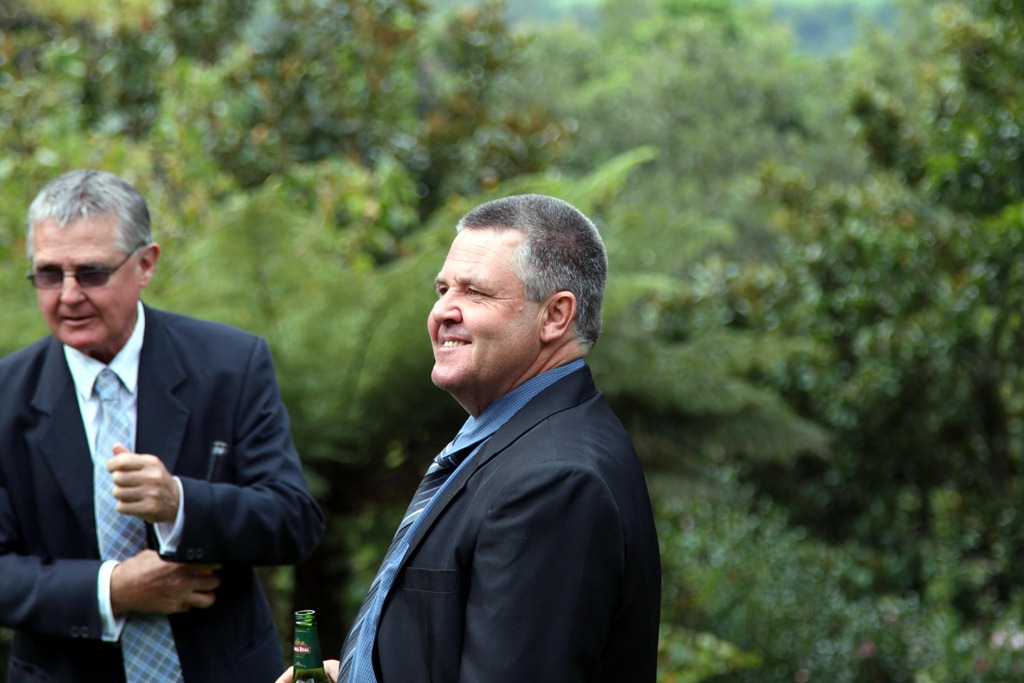
The recent wedding of Nick and Emma gave Michael and me the ideal opportunity to catch up with our special friends who have enriched our lives in so many different ways

The wedding was small, which meant careful consideration of who we could include on the guest list

Over the years Michael and I have gathered 4 different set of friends from different times in our lives who in most cases had never met

Friends who have been around forever, friends who we met through Nick growing up and his school activities, friends we have met through our farm related activities and friends who I have met through Art4agriculture

There was a significant gap between the wedding service and the reception for those special   lifetime memories of the special day to be recorded through the lens.

This opened up a unique opportunity for Michael and me to have a pre reception party for our friends and close relatives which opened the door for them all to meet 

And wow thanks to the generosity of the gorgeous Robin we had access to perfect venue to to do this and a great time was had by all

The gorgeous grounds

Magnificent spot for a party

Bev and Don and Branco and Rosy  

Friends since forever – Bev and Don and Rosy and Branco

Dave and Sandra

Lots of wonderful memories of great ski trips and great time with Dave and Sandra

Jenny John Neil Ros and VL

Toasting the past and the future with John and Jenny and Neil and Ros and Victoria

David 

Terry and David two of Michael’s brothers

Nathan and Ellie

Ellie ( best man’s fiancée) and Nathan ( Nicks cousin)

Neil and Annie and Ros

Neil and Annie and Ros

Nathan and Pop

Nathan with his grandfather Bruce

Sisters In Law

Mel and Cathy and Trish ( Michael’s sisters in law)

Wendy In the Shower

Wendy checks out the outdoor shower

John and Jenny

John and Jenny our gorgeous neighbours who scored some of the flowers and great Coolangatta wine to remember the event by

Emma and Flowers

Some of the amazing flowers from Wendy O’Malley of MossNest 

Kerrie HT and John

My sister Kerrie HT and my dad John

Taylors

Victoria with Craig and Wendy

Next stop reception

Next stop reception

IMG_2470

Kirsty was a late starter and joined us for the after party

Lynne & John

A blast from the past Me with my dad on my wedding day

Special thx to Robin ( venue) and Wendy O’Malley ( flowers)

Sudoku farming

Today I am delighted to share this guest post by Gus Whyte with you.

By way of background Angus and Kelly with 8 yr old son Mitchell Whyte run a grazing property that is 12,500ha on the Anabranch River at Wentworth in far western NSW.  They have been rotationally grazing to repair the landscape since 2001 and have seen significant changes in that time

Pic254

I first “met” Gus on Twitter and was delighted to see him profiled by Fleur McDonald as part of her 52 farmer stories to celebrate Australian Year of the Farmer.

I just loved this quote from Gus

 “Our attitude to farming is simply to work with nature rather than against, so we no longer have weeds, we have “plants with stories” that we can learn from and our aim is to make our business simple and our ecosystem extremely complex, the more complex the better.”

 and I have been following Gus and his ethos via twitter closely since

The more I talk to farmers across Australia the more I am feeling the social environment we farm in today is totally foreign to most farmers and many are feeling overwhelmed. Today’s food system offers a wide range of choices that allow consumers to purchase food that meets their needs and is consistent with their values

Consumers have traditionally trusted farmers because they believe farmers share their values but the problem is some consumers are beginning to question if today’s agriculture still qualifies as farming. We are seeing consumer alienation from agriculture and the food system expressed through concerns about nutrition, food safety, affordability, environmental sustainability and animal welfare – to name but a few

What the “concerned consumer” fails to recognise is many of our farmers are torn too. Gus and his family farm on 12,500 ha compared to our family farming on 120ha. On that 120 ha we produce milk that sustains 50,000 Australians everyday. We are proud of that but no matter where we farm, how much land we have to do it on or how much we produce our farmers can only give back what the market place is prepared to pay.

Before you judge your farmers Australia (and the world) please reflect on this. “Never before have so few people fed the world. Never before has food been cheaper in this country. Never before have so many people been able to afford to be so blissfully unaware of this”

When you read what Gus has to say can you doubt in any way that Australia has many great farmers who truly care and share your values ?……

The Gus Whyte ethos….

One of the things that I enjoy is to sit down on the weekend with a nice cup of coffee and complete a Sudoku or two. For those that haven’t played there are 9 rows and 9 columns and each row and column should contain the numbers 1-9. Also there are 9 sections that again should contain the numbers 1-9. I liken this to the environment where everything is interdependent and the change of one number has implications right through the whole puzzle/landscape. Of course there are many more than just nine possible numbers when dealing with an ever changing environment, the challenge is to always come up with the same outcome. Farming can not be done with set “systems” as these don’t always take into account the people, land, animals, the changing seasons and the climate etc, instead we need to focus on achieving the right outcomes using what tools/knowledge we have on hand. That is why in some instances organic accreditation may not actually produce the healthiest foods.

DSCN0124

Also like the environment when we focus on one area and do a really good job there, sometimes the other sections may be totally wrong and there is no chance of reaching the desired outcome. When we think of farming we may think of the vocation that aims to  produce the best crop or best wool/meat etc. Aside from farmers there are those that say we should be only eating a plant based diet to improve the welfare of animals, well again this only looks at a small section we need both plant and animals to farm together. One without the other is an incomplete system that will fail.

Few people view farming as the best way to produce healthy food in a healthy environment, while respecting the people and community around them. Maybe we should be seeing farmers as healthy food producers or as environmental regenerators or even nutrient nurturers. While we as the broader community compartmentalize farming we don’t put their real role into perspective so we don’t look to encourage those that fulfil some or all of these roles. As Wendell Berry points out in his book “The unsettling of America” Culture & Agriculture, either we are exploiters or nurturers, there is no in between.

The end goal is for people, animals and the environment to be improving in health rather than the direction they are currently going. The question is “how can we feed and clothe a growing society while looking after the health of us and the environment?” If you say “we are what we eat”, currently you are chemicals, GMO’s & Phosphate fertilizers etc. (yes these are both in the plants and animal products!), while others may be happy with this there are some that aren’t. So how do we change what we currently do to become nurturers and all (people, animals and environment) end up healthier? All of the top businesses/farmers look at the implications of what they do and don’t compartmentalize so let’s extend that a bit.

So let’s start by agreeing on what we see as healthy.; Healthy to me is food that is grown by harnessing Mother Nature to add all the vitamins and minerals required, without the use of any chemicals or fertilizers or by being processed in any way. I’m sure that most would agree that that is very healthy, however how are we going to grow enough to feed all the people?

To put together farming methods that will produce enough food while enhancing the land and retaining wild species will not be simple so will need lots of support from all of us if we would like to be healthier. We can produce more food/fibre than we currently do by harnessing Mother Nature rather than going into battle with chemicals and GMO’s, again that has been proven to be right, we may need to change the concept of farming though. What might drive a change? You ask. Well there is plenty of information around saying that the current food systems we have in place are causing major health problems with depression endemic as well as cancer and many other problems that put enormous drain on our health systems. With drugs only working on the symptoms, surely we need to look deeper at the root cause of these issues. Maybe we will be forced to find out the hard way if we keep doing what we are doing until we reach “peak Phosphorus” in about 2030.

So farmers can be seen as “just exploiters of the environment mining the nutrients & jeopardizing the welfare of animals” or they can be part of the Sudoku puzzle with everything in order, the choice is ours.

You will notice that I haven’t mentioned anything about money as yet, well you can’t put a value on your health or the health and well being of the animals and environment so why would I start. Currently our community puts the mighty dollar above all of the above, we can feed an ever growing world with very healthy food if we start putting some of these issues above money. We can choose to select food on the looks and the “value for money”, or we can start to demand food that is produced more naturally in harmony with Mother Nature, the choice is ours.

P1010012