People forgive but they rarely forget

Forgiveness.jpg

Forgiving someone is easy, but being able to trust them again is a totally different story

As Malcolm Turnbull prepares his apology to the survivors of Sexual Abuse   I had a stark reminder of how the pain never goes away

When the CSIRO removed this stunning time lapse video of a cotton boll opening from their website I loaded it on ours

Yesterday this comment appeared

Cotton Boll opening quote.jpg

I am confident you will agree forgiving and forgetting is great in theory, but in reality it’s difficult. Lets not beat ourselves up if we don’t achieve both.  Forgiving allows us to move on but we don’t forget either, so we can take the valuable life lessons with us.

Forgiveness 2.jpg

Turning the anti-bullying conversation around

bully-poster.jpg

You can find this poster here

When we use the word anti-bullying, we are articulating what we don’t want. So in this instance I ask the question … what do we want?

The counter position to bullying is lost in the current conversations, which is the opportunity to recognise preferred behaviour.

It’s easy to be against and say no .. more difficult to be for and say yes
May be it’s time we got clear and created a turnaround in the conversation?

This above quote is an extract of a comment from reader Andrew on my post Is the Mean Mob Mentality Out Of Control.  See footnote

I am confident we will all agree that Andrew makes a very valid point

When you Google ‘Modelling Anti-Bullying Behaviour’ Google Scholar offers a plethora of articles 

Social science research tells us if we craft the message that signals preferred behaviour we get preferred behaviour.

Using an example I saw at boys school I visited in 2016. The sign in the foyer said “65% of men and boys interviewed think domestic violence occurs”

The social scientists tell us this sign models negative behaviour. The ideal sign would say “100% of men think domestic violence is wrong.”

Clearly the image at the top of the post is a great example of modelling preferred behaviour. See article here

Love other readers thoughts on how we rise to challenge that Andrew has posed

Footnote

Andrew’s comment on the original blog

Where I’m coming from is contrarian to many, so please read to the end.
This is not a criticism of what’s happening in general or the posts and comments here.

In grappling with the issue we are faced with in relation to personal attacks in social and mainstream media we need to call out bullying for what it is, and those carrying out that behaviour need to be held to account.

At this time I’m reminded of Sister Teresa of Calcutta.
She was asked to attend an “anti-war” rally, where the proponents would have obviously used her presence to leverage the PR.
Sister Teresa’s response was if you can explain to me what you are for, I’ll consider it.

When we use the word anti-bullying, we are articulating what we don’t want. So in this instance I ask the question … what do we want?

Using Sister Teresa’s framework … if we are anti bullying, what are we for?

The counter position to bullying is lost in the current conversations, which is the opportunity to recognise preferred behaviour.

We know what we don’t want but, have difficulty articulating what we do want.
When training dogs, we reward positive behaviour for the obvious reason, with young children we do the same when it comes to behaviours. Or we should.

So what behaviour do we wish to recognise as it applies to social and mainstream media behaviour?
It’s easy to be against and say no .. more difficult to be for and say yes
May be it’s time we got clear and created a turnaround in the conversation?

Ripple.png

Walk a Mile in my Shoes – Farming and the Power of Authentic Stories

When I came back to the farm after a 25-year career as a community retail pharmacist I was invited by my local council to sit on their Economic Development Committee. I jumped at the chance to give agriculture an added voice in local government and to see how local government worked.

A bonus came when I found myself invited to government and community events where an agricultural perspective was valued

One of these events was a conference held by our five regional partner councils on Sustainable Food. The guest speaker on Sustainable Agriculture was Rosemary Stanton. I must admit I was flabbergasted. What does a TV “celebrity dietitian”  know about Sustainable Agriculture?

Well as it turned out Rosemary was very entertaining and had some very strong opinions. But had she walked a mile in my farming family’s shoes? Had she been at the coal face through the droughts and flooding rains? Did she feed, clothe and put a roof over her family’s heads from the returns of farming?  And of course, the answer to all of those questions was no.

This inspired me to start an organisation that would provide the agriculture sector with the skills, knowledge and networks to share authentic farming stories told by people at the coal face from the heart.

Today that organisation is called Picture You in Agriculture. With the support of our collaborating partners 80 young people (Young Farming Champions/YFC) in the agriculture sector from a diverse array of careers have attended intensive and extensive communication skills workshops over the last seven years. These young people are going into schools as part of The Archibull Prize

Our YFC know that 90 per cent of human behaviour and decision making is driven by our emotions. They go into schools not to educate but to share their stories, their memories, the triumphs and the challenges and the excitement they feel to have careers in agriculture

Are they kicking goals?

The graphs below show the percentage increase of teachers who STRONGLY AGREED with the question posed before and after participating in The Archibull Prize and a visit from a Young Farming Champion 

14319_Careers Graph 4

14319_Environment 2.jpg

Malabar Public School Teacher Louise Dique shares how Young Farming Champions can establish an easy rapport with students by bringing their stories and families into the school, to excite and motivate the students. 

Stories are about collaboration and connection. They transcend generations, they engage us through emotions, and they connect us to others. Through stories we share passions, sadness, hardships and joys. We share meaning and purpose. Stories are the common ground that allows people to communicate, overcoming our defenses and our differences. Stories allow us to understand ourselves better and to find our commonality with others.

The Young Farming Champions and The Archibull Prize are combining the ancient art of story telling with creative arts and multimedia to reconnect producers and consumers, farmers and communities in a way that frames the life-long perspective of the people they meet. I would say they are kicking goals to the moon and back. What do you think?

#archie10 #art4ag #YFC18 #farming #farmers #agriculture


Gender inequality and who inherits the family farm

Katherine Bain and Pluto.jpg

Katherine Bain – Her father says passion, not gender, will be the deciding factor in who takes over the running of the farm.

I have always being proud to say I stand up for what I believe in but when I was approached about this story No country for women: family farms are tough soil for daughters to grow as farmers I ran a hundred miles in the other direction

It was just too close to the bone – from as early as we can remember my sister and I were told my brother would inherit the family farm.

A – because he was male and B because the family surname was the legacy he furthered

In my case despite my brother being an extremely nice person, the fact that he thought he was “entitled” because of A and B effectively destroyed our adult relationship

Super kudos to The Age journalist Neelima Choahan for being dogged in her determination to tell this story 

Quoting from the story in The Age

According to University of South Australia’s Leonnie Blumson​, who is doing a PhD in gender inequality in farming family inheritance, there is a huge disparity in the way sons and daughters are treated.

She says in Australia it is estimated that just 10 per cent of farm successors are daughters.

“It makes the gender wage gap look pretty trivial in comparison,” Ms Blumson says.

“Essentially, sons get the farm, which can be worth millions of dollars, whereas girls tend to just get whatever assets are leftover when the parents die.”

Ms Blumson, who is herself from a farming family, says most farmers are likely to sell the farm if they have a daughter.

As part of her research, Ms Blumson conducted interviews and an anonymous online survey asking farmers’ daughters to talk about their family’s inheritance.

She says one of the hardest things was to get the women to participate. Similarly, few women were willing to speak to The Age about their experience. None would do it on the record.

Ms Blumson says family loyalty often stops women from talking about the gender imbalance.

“Women are conditioned to accept things the way they are and not to speak out,” she says.

“And also speaking out would require them to acknowledge that they have been treated unfairly.”

And mega kudos to the Bain family for being the face of this story – its changemakers like you that ensure my sister and I are an anomaly of the future

“I have grown up on the farm my whole life,” Ms Bain says.

“Helping out dad on the farm and just running around after him, being a shadow for the last 20 years.”

Her role grew from being the main gate opener for her father to helping him muster sheep and move them around.

Her father says passion, not gender, will be the deciding factor in who takes over the running of the farm.

“Katherine was always interested in being outdoors,” Mr Bain says.

“She always had a good eye for livestock, she could pick up a sick sheep in a mob.

“She has always been one-track minded. She wanted to do something in agriculture even when she was quite young. Which path she takes now is up to her.”

When Ms Bain finishes her Bachelor of Business in Agribusiness at the end of this year she will also have a grounding in finance and marketing.

“Every farm is a business,” she says.  “Learning … the ins and out of business, is vital to running a farm.”

Her younger brother, Alexander, 21, is studying architecture.

And though, there is no succession plan in place yet, Ms Bain says it has always been clear which one of the two siblings is more interested in farming.

“I was always the one really excited to go out and help dad from early on,” she says. “Never thought about being anywhere else.

“When you are growing up on the farm you are always outside helping out, you do get dirt in your blood and it does kind of stick with you and you really don’t think about anything else you could do.”

ur generation is better placed to achieve gender equality than any other in the history of humanity. This is our opportunity to grasp, our campaign to join and it is our fight t

You can read more about Katherine here 

More on succession planning

Succession planning – the good the bad and the ugly 

Third Grade Hamstring tear – 12 months down the track

Roald Dahl Quote.jpg


This post delivers the third installment in my earlier promise to share my hamstring avulsion ( third grade hamstring tear) conservative treatment recovery journey.

See previous posts here

My third grade hamstring injury – a right pain in the butt 

My third grade hamstring tear – ham off the bone update

Third grade hamstring tears are classified as both ‘rare and serious’. Dr Google was an invaluable source of information and advice  when I found myself both  ‘rare and serious’ and potentially looking at a very nasty operation. It gives me great pleasure to bring you up to date at the almost 12 months post injury date

In my case conservative treatment appears to be a resounding success. I put this down to getting the best medical advice and rehabilitation specialists and being bloody determined

Bloody determined currently involves

  1. Four hours walking per week
  2. Six to eight hours of fully supervised Gym classes per week which include
    1. Weights
    2. Functional training
    3. Fitball with weights
    4. Balance classes
    5. Pilates stretch
    6. Pilates – my goodness you can even do Pilates with weights
  3. Regular Dr visits
  4. Power of Positive Thinking
  5. Rest and Relaxation

I have gone from being unfit to overexercising without advice ( leading to hamstring avulsion) to being fit and able to do almost anything (if I master the technique and that is one of the reasons you need supervision). Balance remains my one sticking point –  Its about one leg learning to trust the other can hold me up – its a mental thing I am working on

Mental as well as physical health also plays a big part in your ability to stay resilient.

I found the whole experience pretty unnerving from living in a house unsuitable for people with partial disabilities, the severe restriction on activities you can undertake and the isolation of living in the country.

I have renovated my house, grown my network of genuine friends and found other ways to do the things I love. For example I have a beautiful garden but was restricted with what I can actually achieve in it since I had a quad bike accident in 2008.

When I decided to renovate my house to accommodate a short term disabled person I also revisited how I could garden with a dodgy back.

When my original fern house was blown over in a storm the opportunity to build ‘The Orchid Palace’ was born. Its amazing what you can do with re-purposed doors and windows

orchid palace  (3).JPG

   My orchids are flourishing in their new home and they are giving me great joy 

Orchid Palace (2)

The Orchid Palace upgrade also allowed me to remodel the Poultry Palace

These little cuties know how to make me smile 

I have learnt the hard way like physical fitness, mental toughness is the result of a long-term conditioning programme – you can never be too prepared.

Quotefancy-149307-3840x2160.jpg


Is Farmers for Climate Action the new leadership model for Agriculture?

As a founding member and ambassador for Farmers for Climate Action I find the  movement and its farmers awe-inspiring for so many reasons and ask is it the new model for leadership in agriculture?

It is a movement set up by farmers for farmers and its kicking goal after goal showing that Australian Farmers

  • Are taking climate action
  • Can work effectively with diverse groups including groups farmers traditionally felt were antagonists
  • Can effectively form a powerful lobby movement
  • Have powerful philanthropic support
  • Have community support
  • Can attract outside industry support funding partners
  • Can effectively develop and deliver NGO campaigns in a style like Getup
  • Can effectively crowdfund for projects that match their values
  • Can get the politicians to sit up and listen and converse and act
  • can work collaboratively and collectively together

_2017 Landcare Conference Lynne Strong 16_9 _Page_01


Farmers for Climate Action – The Why

WHAT DO WE STAND FOR

 Farmers for Climate Action is an inclusive movement driven by farmers, for farmers calling for immediate action on climate change and supporting on-farm adaptation and mitigation to ensure a positive future for generations of Australian farmers.

We are committed to working with farmers from all across Australia to communicate issues relating to climate change.

We are supporting farmers to be part of the solution to climate change through climate-smart farming practices. We recognize that many farmers are already leading the way.

We are actively advocating for more targeted research, development, extension and adoption to support farmers in successfully adapting to changing climatic conditions.

We are strongly advocating for immediate action on climate change at local, state and federal levels and working with our communities to ensure farmers have a strong voice on climate change.

We are calling on a rapid transformation of Australia’s energy system away from fossil fuels and towards renewable energy in a way that maximizes benefits to farmers and regional communities.

We recognise that climate solutions can provide huge benefits for regional Australia, helping revitalise our communities.


Go Together.png

Yes indeed the forward thinking “we are all in this together” model for a bright and flourish agriculture sector in Australia


Agriculture moving to an new era of celebration not commiseration

ff0d7f6e0e7aa4ae44938e36523dc3ce--positive-motivational-quotes-true-words

The last five years have been the most difficult and the best times on my life’s journey

What people see on the outside is very different to the inner me and this can be exhausting. It has affected my health and I seem to bounce from one health issue to another.

Thanks to the people I have surrounded myself with, I know celebrating both the successes and the tough times make us into the person we were meant to be.

I often get asked in interviews what success looks like to me.

Two things recently stood out for me

The first came from travelling around with The Archibull Prize artwork judge and seeing the magnificent Archies the students had created, how much they had learnt about the world of agriculture and the appreciation they had gained of our farmers. It was so empowering to witness the success of a program that has gone from strength to strength

What seemed like a straightforward concept at the outset has become a trigger for so much growth and contribution

It lights the fire, then those participants, once sparked, seem to carry their own torch. The Young Farming Champions are all shining examples of this

The second came from two conversations I had in the last week. The first person had been part of a round table conversation with many indigenous Australians. She came away feeling so down, listening to so many stories of bitterness and pain

The second person had recently been to a rural women’s gathering where the take home message for her was “people in the cities have no idea how tough we have it in the bush” She said surely, they know there are many people in cities who are doing it just as tough. She too felt so disempowered. She emailed me to thank me for the opportunity to work with our programs and be in a positive bubble. She finished her email with “Let’s celebrate not commiserate”

When I first started my advocacy journey I too shared tales of gloom and doom. I found it repelled people rather than mobilised their support.

You are a product of the people you surround yourself with. I feel so blessed that in the last five years so many wonderful people have supported me to understand and embrace the power of positivity.

As Anthony Robbins wisely said, “the past does not equal the future” Success lies in loving yourself first. Only in this way can you help empower others to do the same and be part of a movement driving the change you want to see for your tribe.

With a slight tweak to a poem by Dale Wimbrow 1895-1954

The Girl in the Glass

When you get what you want in your struggle for self

And the world makes you Queen for a day,

Then go to the mirror and look at yourself,

And see what that girl has to say.

For it isn’t your Father, or Mother, or partner

Who judgement upon you must pass.

The girl whose verdict counts most in your life

Is the girl staring back from the glass?

She is person to please, never mind all the rest,

For she’s with you clear up to the end,

And you’ve passed your most dangerous, difficult test

If the girl in the glass is your friend.

You may be like Jack Horner and “chisel” a plum,

And think you’re a wonderful girl.,

But the women in the glass says you’re only a bum

If you can’t look her straight in the eye.

You can fool the whole world down the pathway of years,

And get pats on the back as you pass,

But your final reward will be heartaches and tears

If you’ve cheated the girl in the glass.

Success for any cohort of people trying to drive change for their mob lies in empowering others to support you.

For agriculture and indigenous people, it will take courage. It means taking risks.

It means putting aside differences and finding commonalities.

I have found young people do this naturally: they seek connection not division.

While we teach and encourage we can also learn.

Next time you are faced with a complex challenge, don’t go it alone. Reach out and seek a collaborative, collective solution.

Next time you feel concerned about the future of your tribe, think – how can I support young people to lead the way?

Encourage them to tell their stories, to step up and do a leadership program, to become the voice for the future of the sector

Because they do make a difference.

Imagine if we pooled ideas, resources, and skills across our tribes and communities?

It is an absolute bonanza of opportunity.

Similiar Love Power Of Positivity Quotes Keywords regarding Power Of Positivity Quotes


Mental health – making hope the cornerstone of life

I live in a very beautiful part of the world on a farm on the side of a mountain with rich volcanic soil and an average rainfall of 2000 mm.  Yes that’s almost 80 inches of rain per year. With Australia experiencing the driest and warmest winter in 15 years we haven’t had “real’ rain here for months. We are in the midst of a green drought as the highly moisture stressed ryegrass does its best to hang on and provide the cows with the  rich energy source that sustains them and the milk they produce.

AYOF  (4).jpg

My little piece of paradise hasn’t looked like this for quite a while 

Rural Australian life is very rewarding in many ways, however, farming has many challenges including the long term impacts of climate change and extreme weather events and can be a stressful occupation.

Mental health and maintaining optimism in the face of adversity is very close to my heart

Optimism is the faith that leads to achievement. Nothing can be done without hope and confidence.” Helen Keller

I believe through  The Archibull Prize we are selling hope to young people. Putting them at the centre of the learning experience . Using farmers as examples of dealing with the daily challenges of providing quality food and fibre and Young Farming Champions  as leaders in creating the change we want to see.

Helping young people make ‘hope’ a cornerstone in their lives is the driving force behind The Cottage Mental Health program 

Archie at the Cottage

The Cottage helps about  forty, 12 to 18-year-olds experiencing a mental health condition every year. Days are split between schooling and therapy, with counselling,  rehabilitation, creative arts sessions, education and individual clinical management on offer to help students achieve their recovery goals. Source 

 Well done to all the business who have come together to make The Cottage a true story
of hope
“Let your hopes, not your hurts, shape your future.” Robert Schuller

If you know some-one who is struggling with stress an excellent resource can be found here


My third grade hamstring tear – ham off the bone update

KIama Harbour .jpg

Kiama Harbour #lovewhereIive – the perfect place to inspire rehabilitation 

In my Third Grade Hamstring Tear Blog Part One found here I promised to blog the progress of my conservative treatment post the divorce of my right leg hamstrings and the bone (ischial tuberosity) they are attached to. As the literature shows there is little documented about conservative treatment for third grade hamstrings tears with most authors preferring and recommending operative treatment in both acute and chronic cases so I am doing my best to help rectify this.

There is almost no evidence in the literature about non-operative treatment of complete proximal hamstring ruptures in elderly patients. Source 

Bit of background

The hamstring group comprises three muscles – biceps femoris, semi-tendonosus and semimembranosus. The muscles function as movers and stabilizers of the hip and knee The action of these muscles is to bend the knee and extend the hip, especially on faster running.  They also  help to get from a crouched position to an erect position. This refers to movements like getting up from a chair or in sprinting, where the front leg in starting position has to bear the effect or the start. This makes the hamstrings extremely important muscles if it comes to walking and running.

Hamstring tears are divided into the following categories

  • First degree strain is damage to a few muscle fibres
  • Second degree strain is damage to a more extensive number of muscle fibres
  • Third degree strain is a complete rupture of the muscle itself

A Grade 3  is deemed to be rare and serious and ranges from more than half of the fibres ruptured to complete rupture of the muscle.  It causes massive swelling and pain. The function of the hamstring muscle can’t be performed anymore and the muscle shows great weakness. 

OK so mine is a complete rupture embarrassingly caused by falling over in Pitt St in Sydney.

Pitt St


The scene of “ham off the bone” event 

I have a very high pain threshold and I think what happened next was I went into shock. I just sort of lay there. I was in gym gear ( I was going for a run but hadn’t started ) Onlookers assumed I was dehydrated and everyone was running around trying find water. This nice man asked me if I would like a hand to get up and I said Yes Please in this tiny little voice.  It wasn’t that painful I just felt weird so I decided I would continue. I walked a block and realised I was living in fantasy world to think I was going to start jogging. It was a bit painful behind the knee, so I iced there which was a waste of time as the injury was under my buttock. I went to an all day workshop the next day which required going up and down steps for meals.  I can assure you I was taking baby steps. The next day I had a heap of things to do in Sydney and baby stepped my way through and then drove two hours home.

It wasn’t getting any better and I decided to consult Dr Google. Even though I wasn’t in a lot of pain and there was no bruising my self diagnosis was either a second or third grade hamstring tear.The doctor agreed and when the radiographer rushed out and got the radiologist to come in and look at what was on her screen I knew it was serious.

Lynne Strong Hamstring MRI

This is a snapshot from my MRI – all that white stuff is not good

Hamstring repair

Surgery repair is usually very successful for athletes but conservative treatment is preferable  for those of us who fall into the “aged” category  

Conservative treatment means I will always have a third grade hamstring tear. So if conservative treatment was the healing of choice I said enough is enough I am going to this properly. It had been one thing after another with my health in the previous six months. First there was the ocular ulcer ( now that’s painful)  and cellulitis in my leg. I wont bore you with the rest. One thing about third grade hamstring tears their rarity excites specialists. Despite having a distal retraction of more than 2 cm ( how far the hamstring had moved from the bone) it was decided for people my “age” conservative treatment was the first choice of action.

What have I done and how am I tracking 

I have done all the right things and I am star patient ( even if I do say so myself).

First I consulted a sport physician and orthopaedic specialist whose area of expertise include hamstrings. I have seen an osteopath and a podiatrist to check my gait. I am   currently seeing a physiotherapist one day a week who is doing dry needling  which I can assure you doesn’t hurt but when a nerve accidentally comes in the equation wow is that a funny feeling. I visit a gym and see a rehabilitation specialist personal trainer. I have been doing this four times a week for four months. My routine includes weights, recumbent bike, functional trainer, fit ball exercises, balance exercises, planks and bridges (specialist loves these). I now have my own program under supervision.

Today I walked ( baby steps, no steep hills and no pathways or roads with a cambre)  for an hour, did weight training and balance exercises for one hour and a one hour Chillax* class.

My biggest setback has been the onset of neurpoathic pain. It was really nasty for a while. The pain was bad enough without the ants walking all over you sensation. The specialist prescribed Lyrica. It aint side-effect free but it appears to be helping so I am putting up with the side-effects. I still have trouble sitting for extended periods of time and the dry needling seems to be helping with that. If I hit a roadblock the next step will be Platelet-Rich Plasma (PRP) treatment

Diet

Diet has played an important role in my recovery. I have an ‘all or nothing’ attitude to supplying my body with the nutrients needed to maintain optimal health and recover from my injury. I am eating a high protein diet to ensure my body gets the essential amino acids to help my satellite cells and new muscle fibers create the protein needed for repair and rebuilding. The experts say the best sources of protein are meat (beef, lamb, fish, chicken et al), dairy products and eggs; second to those are legumes, nuts and high protein vegetables like peas, broccoli and spinach. On a regime like mine it is hard to get all the protein I need from whole foods so I have added whey protein powder to my diet

whey Powder.jpg  Adding whey protein powder to my diet ensures my body gets the essential amino acids to help my satellite cells and new muscle fibers create the protein needed for repair and rebuilding 

Taking in sufficient dietary amino acids, including essential amino acids, ensures your satellite cells and new muscle fibers can create the protein needed for repair and rebuilding. In addition, the branched-chain amino acids – isoleucine, leucine and valine – found in milk products can play a role in making the process more efficient. These amino acids can enhance protein synthesis within your muscles, particularly when you consume them with a carbohydrate.    

A typical breakfast pre-exercise would be cottage cheese and fruit and 20 grams of protein powder dissolved in a glass of water, another 20 grams of protein powder drink post the gym and just before I go to bed. I love cottage cheese which features heavily in my diet as do vegetables, eggs, other dairy products and salmon  .

Often after my walk I will drop into the Hungry Monkey

Hungry Monkey (9) Adore the Veggie Juice

Hungry Monkey (1)

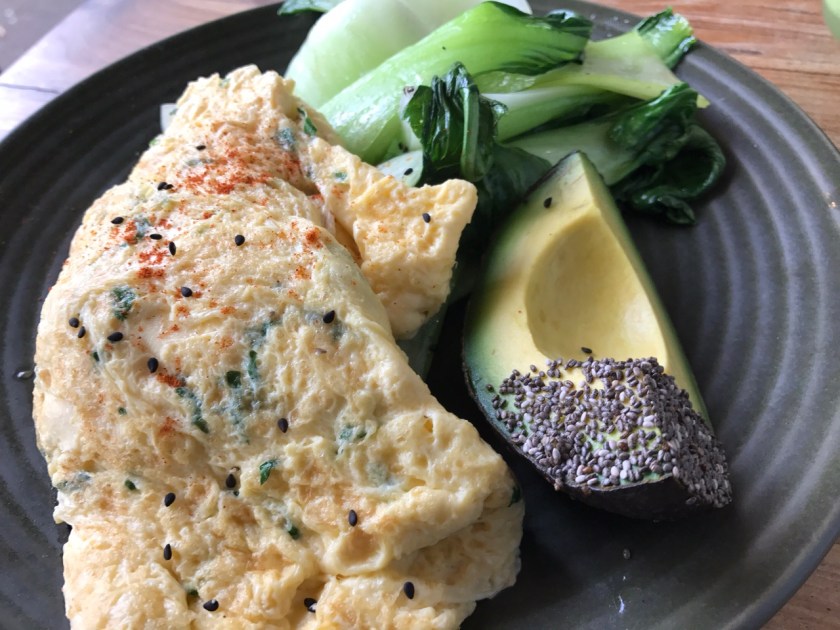
Scrambled Eggs and Avocado and Haloumi – wonder woman food 

Blueberry Muffins .jpg

Once in a while I treat myself to the Blueberry Pancakes  

As mentioned above without surgery I will always have a third grade hamstring tear but if my rehabilitation continues at this level I should be able to walk and hike without hamstring pain.  Whether the neuropathic pain  continues is anyone’s guess at this stage

Lynne Strong Gym  (1).JPG

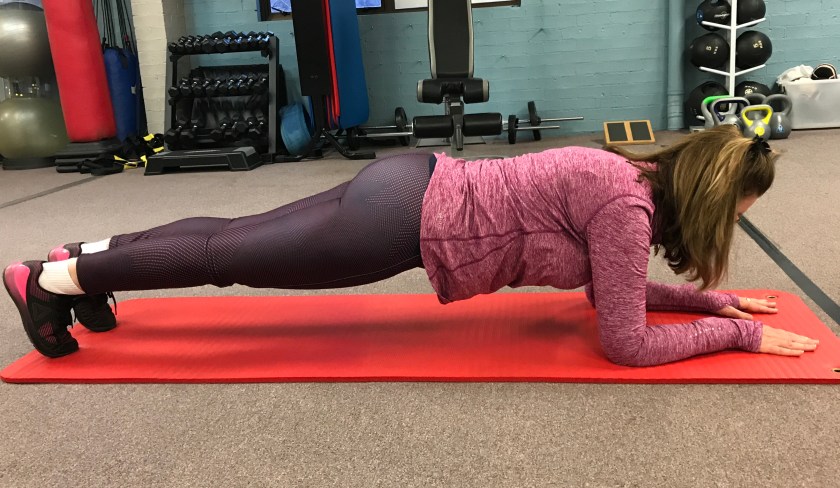
The road to recovery is one plank at a time 

Footnote*

A Chillax class is designed to help you chill out and relax using stretch, relaxation and breathing techniques.  It is designed to de-stress and unwind


My third grade hamstring injury – a right pain in the butt

Its now four months since my right leg hamstrings and the bone they were attached to decided they would like to divorce and get some distance between each other. Now in a way I don’t blame the hamstrings, fancy been attached to something called a ischial tuberosity.

Third grade hamstring tear

Third grade hamstring tears are classified as both ‘rare and serious’. Dr Google was an invaluable source of information and advice  when I found myself both  ‘rare and serious’

Grade 3 Hamstring Tear

A grade 3 hamstring tear is a severe injury involving a tear to half or all of the hamstring muscle. You may need crutches to walk and will feel severe pain and weakness in the muscle. Swelling will be noticeable immediately and bruising will usually appear within 24 hours.

Diagnostic MRI may also be used to specifically identify the grade of hamstring tear and its exact location. Source 

You can imagine I wasn’t too thrilled when Dr Google kept assuring me major surgery was on the horizon. This type of injury normally happens to people who enjoy extreme sports like Mick Fanning or Alberto Tomba  or Alisa Camplin and these people do need surgery if they have any hope of getting back to the sport they love.


proximal-hamstring-tear

Hamstring happily married to Ischial Tuberosity  

Hamstring tear

Hamstring and Ischial Tuberosity Divorced aka Ham off the Bone aka Proximal Hamstring Avulsion 

Having a proximal hamstring avulsion with more that 2 mm of displacement the literature wasn’t very positive for me

If a proximal hamstring avulsion has more than 2 mm of displacement, a surgical consultation for reattachment is recommended. Early surgical repair can yield superior results over both conservative treatment and delayed surgical repair of proximal hamstring avulsions.

The recovery process following surgical repair can take from 6 to 12 months or longer, depending on the severity of the initial injury and required surgical intervention.

As I said it’s a rare injury and not too many orthopaedic surgeons touch it. So I was very grateful to the bloggers who directed me to OrthoSport Victoria where I saw the adorable Brian Devitt and very lucky to have sports physician Dr Paul Bloomfield (who works with David Wood) visiting a town near me fairly regularly.

Because of my “age” (I so hate it when I get classified as elderly. Don’t they know 60 is the new 40) both the surgeon and the physician recommended conservative treatment (that’s the medical term for wait and see)

The reason being

‘The surgery involves an incision that is either vertical or horizontal under the gluteal fold.  After identification and neurolysis of the sciatic nerve, transosseous tendon reinsertion to the pelvis is performed with three or four metal or resorbable suture anchors.’

All this means they cut you open under your bum cheek and apparently healing is dodgy in this area for “elderly” people and they are not crazy about surgery so close to the sciatic nerve Hamstring surgey.jpg.

However there is almost no information available for people like me on what the road to recovery looks like with conservative treatment and as its rare not too many medical professionals have been involved in the rehab process. I have been very lucky to have have wonderful medical support and conservative treatment may just work for me.

So this is Part One of my story to share my road to recovery journey with other “elderly” people and the not so elderly who choose the road less travelled.

and the road to recovery is one plank at a time

Plank.jpg