Hello Coles its tough being the villain in the story

Every great story has a hero and a villain

This story is all about the hero

Meet Cassandra MacDonald. A young lady who loves everything about the Australian dairy industry

Cassandra McDonald

A young lady who is determined to achieve her dream of being a large animal vet no matter how long it takes

A young lady with considerable artistic talent that she is using for the greater good

A young lady who took on one of the most powerful forces in the Australian supermarket sector and won

Today we salute Cassandra MacDonald

A young lady who stood up to Coles and won

Cassie said

I wanted to show people everyone can make a difference by sharing their story

I wanted the message to reach as many people as it can.

I wanted to show that if you have an important story to tell people will listen

I hope consumers will stop and think about what exactly is happening.

I hope they think about the choices they make

Today the ACCC said via this story from Milk Wars; Coles admits to errors in Campaign

 That Coles spruiked a rosy picture of the dairy industry at the height of the $1 milk wars last year using data it could not substantiate

The supermarket giant has conceded it relied on figures that could not be proven when it claimed that shaving the price of a two-litre milk container from $2.41 to $2 early last year would increase farm-gate prices for producers and lift national dairy production.

Coles has agreed to correct the claims, admitting to the Australian Competition and Consumer Commission that its social media advertising blitz “would be likely to have” breached consumer law that prohibits misleading and deceptive conduct.

Here is Coles mea culpa response

Corrective Notice on our Milk Story  – Coles 

This story is about people standing up and being counted about what’s important to them and using the skills sets and the knowledge they have to get the best outcomes for everyone.

We should all salute those people who put the greater good first because sometimes “fair is equaland today the ACCC proved like Cassie we can all stand up and be counted and make a difference.

Its an absolute honour to know you Cassie and on behalf of farmers everywhere I salute you


The art of story telling agriculture must get it right and the time is now

As per my previous post What is Fair Food? the Australian Food Sovereignty Alliance has launched its new initiative to create a strong and independent voice for Australian farmers. Fair Food Farmers United will be a platform to connect, support and provide a united voice for farmers feeding Australia fairly.

According to their press release their aims are too

  • provide a balanced voice to represent farmers who are at the sharp end of the impacts of free trade,
  • raise awareness about the impacts of cheap imports on farmers
  • advocate for fair pricing for farmers selling to the domestic markets
  • connect Australian farmers for farmer-to-farmer knowledge sharing
  • be a voice for farmer-friendly regulations and standards.

Read more on the AFSA website

The majority of people attracted to this initiative in the first instance are farmers who are cutting out the middle man and dealing directly with the public. This gives them a unique insight into consumer images and expectations of farmers and how important it is to meet or exceed those consumer expectations if you want to sell your product at a premium and get a FAIR return for your efforts. As I mentioned in my previous post FAIR means different things to different people. Now is the right time to get into the  FAIR FOOD space. As a segment on the Checkout ( See Value for Money – Tuna) last night showed there is a clear rise in the number of people choosing ethics over value and voting with their wallets at the supermarket checkout and farmers markets and the like.

Fair Food Farmer United know that if they want to get real traction now and achieve their aims they must get into the hearts and minds and wallets of consumers aka voters.

I have been a long term advocate of farmers having direct connection with consumers with a strong focus on finding ways to innovatively do this in a way farmers are comfortable with. One of the most successful initiatives is the highly innovative Art4Agriculture programs which include the Archibull Prize and the Young Farming Champions program

I will be the first to admit its pretty scary and a huge responsibility to advocate on behalf of industry and I was reminded the other day that even after 10 years of doing it I am still uncomfortable in this space.

I had a message on my phone from Radio National indicating Bush Telegraph wanted to do a story. So I rang back with butterflies in my stomach as per usual wondering what it was and how long it would take me to prepare to ensure I got the key messages spot on

I was overwhelmed with relief when they didn’t want me. Excitingly in the first instance the ABC reads the Art4AgricultureChat blog and secondly wanted to interview one of our young team of farming champions Danila Marini about her research.

clip_image001

Sheep are smart and so is Danila

Thirdly I was absolutely thrilled how excited she was and didn’t hesitate to say yes. This is a great example of engaging and nurturing the young to build their capacity to sell agriculture’s story with confidence and most importantly build their capacity to do it with charisma and resonate with our key audience.

There is no denying its a given a key issue for agriculture is the continual need to strive for sustainability – but what is sustainable? Having farm systems that ensure the environment and productive capacities can co-exist in the long-term is the standard take on the definition. Like it or not sustainable agriculture is also about creating value for our products in our consumer base, that ensures consistent and long-term demand.

Consumer choice is as big a threat to our industry as climate change/variability, international competitiveness or government policy.

We need to create partnerships right along our supply chain to develop relationships that enable farmers and consumers to make informed decisions about the trade-offs inherent in their choices and our production systems. Consumers have accepted $1 milk and cheap/imported food more generally, so it is up to agriculture to articulate and share why we don’t believe that is a choice that will deliver a sustainable future.

If consumers do not value farm output, then no amount of innovation, productivity gain or government support is going to deliver a sustainable industry into the future.

We need to reconnect with our consumers. Modern supply chains mean farmers have never been so isolated from their end-consumer.

Therefore we need to develop the capacity of our people, so they are knowledgeable and are comfortable in addressing all issues and stakeholders along the entire supply/value chain in order to re-build these relationships.

This will mean farmers and others working in agriculture taking a higher profile role in the lives of our consumers, current and future.

This will mean farmers proactively engaging with processors and supermarkets to develop mutually beneficial relationships ensuring value is delivered at all points along the supply/value chain – including farmers, processors, retailers and consumers.

The last thing we need is another advocacy group cluttering an already overcrowded space but I believe if Fair Food Farmers United get it right they are off to a great start with the key audience then they may just build the partnerships necessary to deliver an advocacy success story for agriculture

Women doing it backwards and in high heels

John Woden

Today is International Women’s Day. It is a day that holds quite a bit of significance for me. 10 years ago I was selected my local MP as the regional Woman of the Year which saw me then inducted into the NSW state Government Honour Role for my contribution to agriculture and rural and regional communities.

clip_image002

I remember at the time being totally flabbergasted that I had been nominated let alone selected

Being upfront as I tend to be I asked my MP why he chose me. He said he had chosen me not so much for what I had achieved at that point in time but what he believed I could do with this level of recognition.

How right he was. Up until this time no matter who I approached for funding, for support for agriculture, for policy changes etc. etc. I spent the first half of my meetings and funding proposals explaining who I was and convincing people I had the capacity to achieve what I wanted to achieve.

Before I won this award the key questions I was asked who I was and who was supporting my proposal? So I spent hours and hours requesting letters of support and building partnerships. All time well spent for future endeavours but it was very draining at the time and I kept questioning myself and why I was doing it. I got a lots of no’s and very few yes’ and more doors where shut than were opened.

So part of the last ten years with this very wise advice from my MP and my support networks has been spent building a CV that lets people know what you have done and opens the door and allows you to focus on core business and your compelling value proposition.

There will always be detractors who don’t see the big picture and declare this as self-promotion. This used to worry me, not anymore. I know longer spend hours beating myself up over what the minority think and say because I have witnessed personally how far young people in agriculture can go and what they can achieve for the greater good when they are recognised and celebrated for their efforts 

Equally when I see women in Australian agriculture nominated and celebrated (including seven Art4Agriculture Young Farming Champions) via the Emerald Grains Women in Australian Agribusiness list, I am very proud all these exciting and dynamic women understand the importance of and relish the opportunity to inspire others to join them in their quest to see Australian agriculture admired and valued right across the globe

Today I salute all women across the world that will be recognised and celebrated for ‘their achievements, regardless of divisions, whether national, ethnic, linguistic, cultural, economic or political’.

“Success comes from knowing that you did your best to become the best that you are capable of becoming.”

“Success is never final; failure is never fatal. It’s courage that counts.” John Woden

If you are looking for a fun read try Recline. Don’t Lean in Why

What is Fair Food and how do you put a price on it ?

I start this post by declaring I truly hope I have an open mind and wake up everyday ready to have my opinions challenged and a will to move where my values take me  

This week saw the launch of “Fair Food Farmers United” a platform to connect, support and provide a united voice for farmers feeding Australia fairly. Read the press release here

This of course opens the door for many conversations about what is ‘fair’.

I for one am very happy to have that conversation.

What is fair?

Many define it as treating everyone the same, but everyone including farmers are not the same. They have different motivations for their choices, different needs, different causes for their behaviours and different goals.

According to UK Prime Minister David Cameron ‘fairness’ is about  

“giving people what they deserve – and what people deserve depends on how they behave”.

For me ‘Fair’ is about ethics and values and ‘Equal’ is a term you can put numbers against  

Last weekend I attended the Northside Forum to hear Young Farming Champion Jasmine Nixon speak as part of a panel that also included Philip Wright from the St James Ethics Centre.

The panel mix was superb and each panellist resonated with the audience in their own unique way and I was heartened by the way audience listened and absorbed and celebrated all the speakers.   

We had a speaker who spoke with considerable expertise on the science of Genetic Modification, a 6th generation 25 year old beef farmer and a speaker who reminded us all that ethics is hard

Slide2 

In the end ultimately it was how each panellist answered the audience’s questions that determined the take home messages and each speaker gave their answers according to their values not the science ( though it always never hurts to be able to back up your values with some solid science)

For me ‘Fair’ for farmers means everyone in the value chain gets a fair return on investment.

So it all comes back to the individual and what each and everyone of us has invested to bring ethically produced, high quality affordable food and fibre from the farm to you

Ethics is hard and like it or not it is about accepting the cost 

Slide9

Does Agriculture have enough cheerleaders in its ranks

When I was looking for the image I used in yesterday’s blog about Talking Leadership  I came across this post Whose Voice is in Your Leadership Circle by Amber Teamann on a blog called Connected Principals and I enjoyed reading it and would like to share it with you


When making decisions, having discussions, or troubleshooting topics on your campus, how many people are involved? How many voices have input? I think it’s important to have several…in fact, I can give you some perspective on 4 voices that I think NEED to be involved in practically all of your campus decisions. A quadrant of leadership, if you will.

First voice, the Boss. The head honcho. The one who knows district policy, inside and out. The one who sets the vision, inspires the direction of the campus, and helps empower every body on the campus to be the best they can be, from students to staff. The Boss is the instructional leader who recognizes their own limitations and chooses to surround themselves with a team that balances strengths and weaknesses.

Next, the Sunshine. The Sunshine is the calm, positive, supportive voice who adds different perspectives in every situation. Think of the sunshine as the devils advocate in reverse. They truly see situations without ulterior motives and is always looking at the whole “person”. The Sunshine never has a bad thing to say about anyone, and is so genuinely good, it’s impossible for situations to get volatile or hateful in their presence. Every team needs a lil’Sunshine.

The Bitty Bird. The Bitty Bird is the voice of all the babies on your campus who need an advocate for their rights. They look at the LAWS and the STATUTES in place within the system (district, state, national policy) and ensure that they are followed. Without a Bitty Bird, you can walk too close to the line of whats “right” for kids, but isn’t done the right way. Legal polices are black and white, and Bitty Birds keep you out of the grey.

Lastly, you need a Cheerleader. The Cheerleader cheers for what you do…they recognize that everyone needs to be encouraged. Days are long and days are draining. The Cheerleader is there to pep you up and remind you WHY you’re in this business in the first place! They’re always up for something new, to change something up…you can’t do the same cheer over & over!  From a thank you to an “I noticed” statement, the Cheerleader is there for YOU.

Whilst agriculture does have a lot of people sitting in the stands talking about the team do we have enough people cheering them on? My experience tells me no

How do we change the culture?

Talking leadership

Tomorrow I am going to the doctor. What’s so unusual about that is that I am actually going

I am extremely disappointed (devastated might be a better word) that I am not free to attend the Australian Farm Institute’s launch of their research report tomorrow in Canberra

Opportunities to improve the effectiveness of Australian farmers advocacy groups – a comparative approach’

Are advocacy groups necessary? (the rationale for collective advocacy); Getting inspired: International and national case studies of advocacy groups; What do Australian farmers really think of agricultural advocacy groups?;

Workshop: Developing a preferred model for agricultural advocacy in Australia

So what’s all this got to do with going to the doctor? A lot actually

There has been a lot of talk about leadership (or lack of) in agriculture for as long as I can remember.

Whether leaders are born or made?

Is the advocacy model flawed?

The Smartest person in the room

Lots and lots of talk and I haven’t seen much change over the last 20 years. So when I was asked last year to be on the NSW Farmers Dairy Committee I was very reticent. I was reticent because I don’t necessarily believe leaders are born and I didn’t feel I had the required skills sets

I was eventually convinced that it wouldn’t involve any more time and that it might help fast track some of the initiatives that I was trying to achieve.

I also felt a bit guilty and that I had a responsibility to give it a go and maybe, just maybe with the right team around me (all those people who had the skill sets I didn’t) I could really help make a difference.

More time. You are joking. 24/7 just took on a whole new meaning.

Face to face meetings are twice a year. The first meeting is taken up with identifying the priorities of your industry, your committee members’ area of expertise and where each person can be most effective and then developing the action plan.

Then putting it all into action seriously becomes 365 days plus

This is because you find most of the priority issues have been around for a long time and if your committee is going to be the one to get action you have to do a lot of backgrounding to understand the politics, the barriers, the personalities (and trust me its normally the personalities) as to why your committee may just have what it takes to surmount what all the committees before you couldn’t

State level representation often means federal representation and that means you are dealing with people all over the country and Australia is a big place. So that of course means teleconferences. Endless teleconferences. Urgent teleconferences. Workshops, summits, industry briefings, industry breakfasts, briefing notes and yes cancelled doctor’s appointments.

So I have found in the majority of cases there are lot of well-meaning people who put their hands up to take on these roles who just like me are floundering around in the dark, frustrated they are putting in all this time getting no-where and putting the rest of their life on hold

Leaders may be born, so might doctors but they don’t give you a license to operate until you have knowledge and the skill sets and the mentors and the support networks in place so you can be the very best doctor you can be physically and emotionally

The world is complex, agriculture is complex and leadership requires many things and we have to do a lot more than talk about it

As always no matter how good the concept it’s the people who make it work

Lets not forget the world is run by those who turn up. How do we make sure the right people are in the room. The people with all the skills sets required to make an effective team

For me we don’t have near enough people talking about how we can best help and support our people who put their hands up.

I look forward to reading the Australian Farm Institute’s report. I look forward to talking to some of the people I know who are going

Mick Keogh and his team are definitely world class leaders in their space. Let’s hope we take on board the learnings and the insights and so we can get on with the doing

Meet Danila Marini a city kid who loves sheep and is doing some amazing research to enhance their welfare

I am a big fan of Meat and Livestock Australia’s Target 100 program concept.
 
Target 100 initiative demonstrates the long term commitment of Australia’s cattle and sheep farmers to advance sustainable practices – from an environmental, animal welfare, social and economic perspective – and ensure a sustainable food supply for generations to come. Target 100 outlines 100 research, development and extension activities covering soil, water, energy, pests and weeds, biodiversity, emissions and animal welfare.
 
 
In fact I am a big fan of any industry initiative that allows farmers to play an active role, communicate with each other, share stories, collaborate and feel proud of themselves, their fellow farmers and their industry.


This initiative also has some great sustainability study guide resources for schools and I was fascinated by an animal welfare Target 100 research initiative for sheep that I came a cross reading Food for the Future which has just been released

This  particular project looks at the role of technology in improving animal welfare
and in this case the opportunity to make pharmaceutical and drug delivery systems, including needle-less injectors a more feasible proposition for farmers

You can imagine my excitement when I discovered that Young Farming Champion Jo Newton actually knew one of the researchers involved in this project  

Meet Danila Marini

clip_image002

Originally I’m a city kid; I hadn’t gone near anything remotely like a farm until I was 9 when my Dad bought a small property and started a little hobby farm. I had always loved animals but being on this little farm increased my love for livestock animals and sparked my interest in agriculture.

Me getting my sheep ready for measurements for the first experiment of my PhD

I decided working in agriculture was my calling, so I applied for Urrbrae Agricultural High school, even if it meant travelling 2 + hours a day just to study. I made use of the school’s farm and applied to study in as many agricultural subjects as I could and as a result I received the Urrbrae Agricultural high school “Majorie Bowes Prize”, which is awarded to the highest achieving female in agriculture, as well receiving the Animal Science certificate for participating in animal related subjects. Throughout the years I had a million ideas of what I could be when I finished high school, a livestock veterinarian, a jillaroo, a stud breeder, a farmer, the list was endless, everything sounded exciting.

clip_image004

My year 12 Ag class that attended the South East Tour, where we learnt about different agricultural practices in the South East of South Australia

In year ten I went on an excursion to Adelaide University’s Agricultural campus, Roseworthy and to CSIROs Waite campus. I saw some amazing projects on animal nutrition, animal/plant production and animal/plant health. I was completely fascinated and from that point I decided I could do some interesting work in the agricultural field if I became a scientist. It was a hard choice between animal and agricultural science but in the end animals won and I went on to do a Bachelor of Animal Science at Adelaide University.

clip_image006

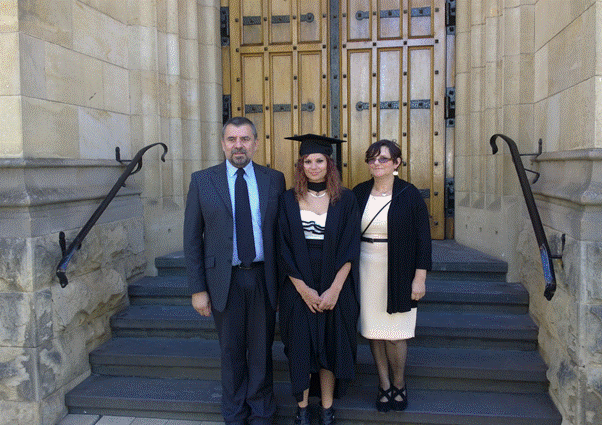
My Dad, my Mum and me at my graduation day in 2012 for my first degree a Bachelor of Science (Animal Science)

Like most undergrads I still had no definite idea what I wanted to do when I finished my degree. When it was time to graduate, I thought “why not give research a go?” I mean research was one of the main reasons I decided to go to uni. So with that I went and did honours, for which I was awarded first class. During my honours year I learnt a lot about research, I had a lot of fun and I grew to love sheep.

clip_image008clip_image010

How can you not love those faces!

As the year began to wrap up I knew I wanted to work in animal welfare and if it involved sheep even better! I thought that one of the best ways I could help improve animal welfare was through research so I went looking for PhD projects that had an animal welfare focus. Luckily enough I found a project with CSIRO and the University of New England on self-medication in sheep, which was a double whammy for me! There was a catch though, I had to move from little ol’ Adelaide to an even littler Armidale.

clip_image012

Research sometimes means early starts, late finishes and very long days but I’m not complaining!

The aim of my PhD project is to incorporate pain relief in food, so that sheep and cattle that undergo painful husbandry procedures, such as castration and tail-docking, can eat this food and be relieved of pain. I will also try to train sheep to self-administer the drugs (non-addictive of course) in order to provide pain-relief, this will give us some interesting insight into pain states in animals. I think it will be the most interesting part of my research! In my first year I identified a non-steroidal anti-inflammatory drug (this is what our panadol is) that works at relieving pain in sheep.

clip_image014

clip_image016

My sheepie minions! Together we shall take over the world with great animal welfare practices!

I have just started my second year and I am really enjoying my work, I currently have some interesting experiments planned for this year. They include adding the drugs to food and seeing if it helps to relieve pain in lambs that have been castrated and tail-docked and training sheep to self-medicate.

As you can imagine I’m getting pretty excited about my work. Many think I’m mad having gone on to do a PhD, some days I think I am too but thanks to the support from family, friends and my supervisors at CSIRO and UNE, I am so glad I have started this journey. So here’s to a future of research, helping the agricultural sector and helping animals!

Australian farmers advocacy groups have to change or die

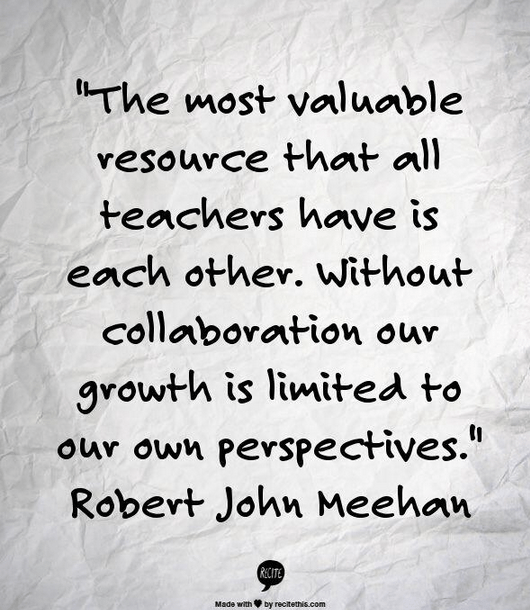
The most valuable resource farmers have is each other. Without collaboration our growth is limited to our own perspectives – appropriated from wise words from Robert John Meehan

Last Monday I attended a meeting in Sydney that brought around the table a group of people all determined to create a prosperous NSW dairy industry that had the capacity to grow and support that growth

I learnt things that scared me. Things like there are 20 plus organisations in NSW all trying to meet the needs of NSW dairy farmers

20 plus organisations that if we were all honest have very little idea what each other’s roles are and what each other does

Hopefully we haven’t got 20 plus organisations and individuals all vying for meetings with politicians and policy makers. But we wouldn’t know because in the main we don’t talk to each other.

I am confident the dairy industry isn’t alone

In fact the Australian Farm Institute is about to release its research into the efficacy of our state and national farming advocacy groups that decrees ‘Australian farmers’ advocacy groups have to change, or die’

This is a complex problem that trusts me get more complex when you put your hand up to take an active role in these state and national bodies.

I have spent a lot of time thinking about why they don’t work. Why I couldn’t be more effective. What I could do to be more effective.

But instead of beating myself up I am focusing on looking for models that work and I trying to work out why they work

The key thing that frustrated me as a farmer representative was how little I knew of what was happening in the background

For example the dairy industry has research, development and extension programs that focus on

1. Animals, Feed and the Environment see here

2. People and Business see here

In fact the dairy industry is renowned for the quality of its R&D but often struggles to get uptake of extension.

Now I found even at representative level there was no opportunity for me to get exposure to any of this R&D unless I asked for and had a meeting with a head of department at Dairy Australia, spent a lot of time on their website or stumbled across it because of my involvement elsewhere.

Because of my involvement on an NFF Blueprint Committee this document the Australian Dairy Industry Sustainability Framework came into my Inbox When I saw it I went WOW. Does a document get any more impressive than this? I doubt it

Now to me this Sustainability Framework is the dairy industry’s answer to Meat and Livestock Australia’s Target 100 initiative

What is bizarre is this. I am a dairy farmer who knew nothing about the Australian Dairy Industry Sustainability Framework yet I know a considerable amount about Target 100.

I think these two examples exemplify the problem on many levels and maybe the solution.

MLA has given their farmers ownership of Target 100. There are now over two hundred farmer stories

Two hundred plus farmer stories sharing the same key messages

Stories about farmers from right across Australia including young farmers like Jasmine Nixon , Tim Eyes , Hannah Barber, Josh Gilbert and Geoff Birchnell and Danille Fox

There are a number of other clever key marketing nuances that set the two programs apart.

Ultimately the answers to agriculture’s woes are sitting right in front of our noses.

The 21st century gives us the perfect communication tools.

All we have to do now is get on with it

Self-Promotion is not a dirty word.

Let’s celebrate success and share our stories and start talking to each other

CollaborationLike teachers none of us can afford to be an island 

The how and why of Agriculture consumer education

There is no denying that Australian agriculture today recognises two very important things

1. Without customers we would not exist

2. We need to move heaven and earth to reengage with our customers. 

Currently all agricultural industries are TALKING about re-engaging with their customers and some are actively DOING it.

Agriculture doesn’t have a lot of dollars to do this so we need to get very smart about how we do it and focus on why we are doing it to get the best return on investment in the shortest turn-around time we possibly can

Building relationships with the next generation of customers through schools is obviously one of those smart choices. But unless you have been in that space it’s unlikely you will know how fraught this opportunity is with challenges.

Teachers are under a huge amount of pressure to deliver top down government outcomes On top of this anyone who has visited a classroom knows working with children is often not all it’s cracked up to be. So I for one salute the teachers who take on extra curricula programs and do it well.

Agriculture also tends to get a bit bogged down with ‘educating the public about the paddock to plate’ processes – the HOW we do it rather than the WHY we do it

Telling the WHY we do it is what drives the Art4Agriculture in school programs

Four years ago when the Art4Agriculture team first started delivering the Archibull Prize into schools the aim was (AND STILL IS) to build partnerships between farmers and their customers to take on the challenge together of feeding, clothing and housing the world with less land, less water and growing levels of waste we had to write the whole program content ourselves because there was nothing out there that did this

The last four years have been such a rewarding experience particularly for me with the way the industries we work with have fine-tuned their education resources to meet this need and deliver world class outcomes.

Let me show you what I mean

The MLA Target 100 Sustainability Guides found here

The Cotton Australia’s e-education kit found here

The Australian Wool Innovation Learn about Wool School Resource kit looks like this

clip_image002

The resource kit bag even fits a laptop and contains this adorable 4GB flash drive that is chock a block full of more ‘Learn about Wool’ resources

clip_image004

This week I also received the entry/exit students and teacher survey results from the Archibull Prize.

We ask the students many things in the survey including . “Did you learn anything new and if so what was it?”

What we have discovered this year is the better the industry resource kits are at sharing the WHY story the higher level world view responses we get from the students

For example from students studying wool, beef and cotton

  • I learned how important agriculture is to Australia and how reliant our modern farmers are on advancing technology.
  • Farming is something that is important to every single Australian every day of their lives and Australian farmers are important to every single person in the world.
  • I learnt livestock export is a complex issue. People in under developed countries need the protein our animals provide them with but getting the best outcomes for people and animals is often not easy. It is important for Australia to continue to work with other countries for this to happen
  • I learnt about how important managing natural resources and looking after the land is and our farmers’ role in this and what my role should be.
  • I learnt about genetic modification, and all of the reasons behind doing it – it changed my mind about whether we should keep exploring the opportunities the technology offers.
  • I learnt how little land Australian farmers have to produce food on and how challenging the weather conditions and price variations they get paid make it

Whereas we got answers like this about the dairy industry which is still focussed on telling the HOW story

I learnt

  • Different methods of milking
  • Breeds of dairy cows
  • Facts about cows and how they produce milk
  • Different breeds of dairy cows.
  • How dairy cows are milked by robotic dairies.
  • About the progression of the milking process, especially about using technology and machines for milking

I was also amused that this response kept coming up

I learnt we should not buy milk from Coles

I want to strongly reinforce we do NOT teach this as part of the program and this response appears to be driven by what the students and teachers see and hear in the media.

Customers I am confident are something Coles is firmly focussed on ( it looks to me like they could do with a lot more advocates)

As the experts remind us

Customer satisfaction is at the heart of the selling process. One estimate is that it costs five times as much to attract new customers as it does to keep an existing one. The relationship between the customer and the organisation is, therefore, an important one.
Building customer relationships can be seen as moving up a ladder. At the top rung of the ladder are your loyal customers (advocates).
The ladder consists of four main rungs (with 4 being the highest):

4 – Advocates

3 – Regular customers

2 – Occasional users

1 – One-off purchasers

The extent to which customers move up the ladder depends on how well they are treated by the organisation. Well focused sales methods and attention to individual detail is likely to encourage customers to move up the ladder.

At Art4Agriculuture we aim for the top rung of the ladder with the next generation of customers graduating school as advocates for agriculture  

Telling the HOW story is important but it is telling the WHY story and sharing our values with our customers that will ensure agriculture retains its customers, attracts new and emerging ones and farmers in this country are paid a fair return on investment.

We must get this right

Congratulate your industry when they get right and if your industry needs to raise the bar put some pressure on

Its there anything worse than feeling helpless

helpless

When I saw this post from Milk Maid Marian this morning I was very sad. I admire Marian very much and seek her wise counsel often and I know how much it pained her to write to this post.

Our co-op, MG, is rushing onwards with a “capital raising project” that would forever change it from being 100% farmer-owned to “farmer-controlled”. It’s one of the biggest changes in the co-op’s history

It might well be wonderful but what’s certain is that the ramifications are complex. It’ll take time for us to:

  • understand why we really need to raise half a billion dollars of external capital
  • understand the proposal
  • tease out the pros and cons
  • consider the alternatives and
  • debate it.

Our Kiwi counterparts took five years to make such an important decision about their co-op. We seem hell-bent on doing it in weeks. Why?

I know she has spent weeks in the background politely but firmly trying to get Murray Goulburn management to see the errors of their ways.

And as you can see its not so much Marian’s concerns over the concept but how MG have communicated (or in this case poorly communicated) what they are trying to achieve for their farmer stakeholders/owners.

Sadly this bureaucratic attitude is endemic in the Australian dairy industry and it frustrates the hell out of me and I am often not as polite as Marian about it and then I get cranky at myself.  Vicious circle but I am working on it – even going so far as to get a business coach.  

Marian and I are certainly not alone sharing this frustration and there are currently some very wise minds in the NSW dairy industry doing smart things to help address this These people are very focused on the win:win and I admire them immensely for that

Personally I see in the main the problem lies with a patronising culture at the top that views clear and transparent knowledge sharing unnecessary and farmers are on a need to know basis and apparently they need to know as little as possible.

I readily acknowledge that communication is a two way street and farmers need to play an active role but this mindset must start at the top with great leadership and a genuine desire to acknowledge if there is ongoing dissent then model is broken

To me there is no excuse. Bureaucrats today are lucky enough to all have the opportunity to build their capacity to succeed via extensive personal and professional development in their careers and all successful bureaucrats are taught and know and act on the number one rule for success. 

Be a good communicator –

Share information and resources with your team. Remember, you’re all there for one purpose – and by keeping everyone informed, you contribute to that goal.

On Monday I have seat at one table of people trying to create a new model and change the culture. I certainly hope the wise minds who have worked so hard to bring everyone who has influence (or could have influence if they chose to use it) together do get a win:win for farmers in NSW  and Australia as a whole.

There is so much potential for the Australian dairy industry to grow and prosper but  growth remains stagnate despite strong price and market signals.

I look forward to a culture of cohesion and collaboration but most of all I look forward to a culture that sees Australian dairy farmers feel empowered and confident.

To end with something a little light hearted I am with Elizabeth Taylor on feeling helpless

Elizabeth

and I also I love this quote.  

A girl is only helpless when her nail poish is drying

So for a while to control my feelings of helplessness I stopped wearing nail polish and then I discovered Shellac. Such technology gains. Wow nail polish that dries instantly. Can it get any better. My goodness I now even have nail polish on my toes. That makes me feel like a film star. And it gets better if you have it done in a salon you sit in these amazing chairs that massage your back. 

and the final word from Marian

Part of cherishing the co-op is questioning it