My first Sydney Royal

I posted below on Art4agricultureChat this morning and thought the readers of Clover Hill Dairies diary might enjoy it too.

I remember my first Sydney Royal Easter Show ( bet you do too Dad and Kerrie and Aunty Bet) All of 8 years old and two horses and a second prize first class in the ring. How proud was I in my first grand parade. You had better find those photos Dad I am feeling nostalgic.

Camden Haven High School first Sydney Royal

Hi my name is Paige and I attend Camden Haven High School. I love my school and I want to tell you what makes it special. Agriculture that’s what!!!!.

wingham show 006

Agriculture is compulsory for years seven and eight. I think this is a great idea as it gives students who do not live rurally or who do not have the opportunity to live with animals and have agricultural knowledge the chance to experience and enjoy what agriculture has to offer young people of today.

wingham show 040

Our agricultural department focuses on a ‘paddock to plate’ experience giving the students in years nine and ten the option of electing two courses unique to Camden Haven High School; Vet studies and Agrifoods. From year nine to twelve, agriculture is also available for students to elect for study . In  years eleven and twelve we have the opportunity to do both primary industries and senior agriculture, along with a new horticulture course.

wingham show 009

The agricultural department not only has strong links with local farmers but also supports local businesses by buying their produce. The Camden Haven High School Agricultural Department has also formed a sub branch of the Camden Haven Show Society and we are are actively involved in preparing, organising, giving ideas and helping out with local events.

Agriculture has become so popular at our school the number of students who attend the agricultural plot before school, at recess and at lunch times has tripled in as many years. We have a very diverse range of animals that we care for including chickens, sheep, ducks, rabbits, turkeys, budgies, guinea-fowl, pigs, donkeys, cattle (including three breeding heifers), a water buffalo, guinea-pigs and two national park certified brumbies.

peter and friend

What is particularly special about the ‘ag plot’ is it is also a safe place for students who do not fit in with the rest of the school or are having a rough time or just enjoy the peace and quiet as there is always a great student/teacher support network to found in the agriculture department

wingham show 013

I am personally involved with the school cattle team. Being the leader/captain has helped with my personal development and taught me many life and team work skills.

It has improved my ability to speak publicly, organisational skills, give directions confidently and have learned that it is important to make the wisest decisions even if they are not the most popular.

Currently there are forty students actively involved in preparing and showing the school cattle for the Sydney Royal Easter Show. I must admit directing such a large team gives me a positive sense of satisfaction and confidence.

The animals we are showing come from our agricultural teacher Mr Hickson, he grows Limousin and Limousin cross steers and heifers. They are also donated to our school by our long-time supporter Robert Rule.

wingham show 024

We selected these animals as they both have the muscle development and fat coverage for their weight classes; they are also wide through the top line from the shoulders through to the rump. They are the pick of the animals from this year’s show team as they display the best attributes.

Students in the Sydney Show team this year are mainly year 10 students who have been constantly involved in showing cattle from year 7 onwards and they make up the bulk of the senior students in the team and basically run it.

wingham show 027

We have been preparing our animals since October 2011, when they were first brought in to be broken in. This involves daily walking, brushing, leading and feeding our animals.

They are also tied up daily to get used to long periods of being in one place; we also wash and blow-dry our animals to prepare them for cleaning at the show.

This is our first royal and it will be a new experience and all the students are so excited and highly appreciative of having this great opportunity.

wingham show 012

and to top it all off one of their students is a finalist in Cream of the Crop Competition with the winners presented with their prizes on April 14th at the Show in the RM Williams Stables

How timely these photos came through late last night of Olympic Park preparations for the Royal Easter Show from an excited George Davey  General Manager, Agriculture at Sydney Royal

SRES Cattle Hocker

The Beef Cattle Ring Hocker

Beef Cattle Sheds

The Beef Cattle Sheds

Will there be more money in non-farming than farming

There was lively debate on the panel session of dinner event component at our Field Day. It is well known that Mick Keogh from Australian Farm Institute has a fairly conservative view about the benefits for farmers from the Carbon Farming Initiative. Keen to put forward a balanced  perspective we invited Stephen Wiedemann from FSA who says he sits in the middle and already has some projects for the pig industry in the pipeline that may deliver for farmers. And at the other end of the spectrum to Mick was Louisa Kiely the glass half full girl on the panel and co-founder of Carbon Farmers of Australia who have developed a trading model for soil carbon which gives farmers access to markets before the formal Emissions Trading Scheme begins.

Panel Session

Dr Richard Eckard Mick Keogh Dr Neil Moss Stephen Wiedemann and Louisa Kiely provided a lively debate

I was MC for the event and currently waiting on the photographers in the room to send me pictures so I can share some of the insights from the podium and the floor with you. Not forgetting Department Agriculture Fisheries and Forestry taped the entire event ( not sure how long that will take to be a wrap).

Dinner at Jamberoo School of Arts

Lots of questions from a diverse audience

So I thought in the meantime I would share some of Mick’s humour  on the CFI with you.

This excerpt comes from  If I get paid for not having cows, can I get paid a lot more for not having a lot more cows?

There has been a steady stream of publicity about farmers starting to make money out of carbon farming, but it seems the only way to actually generate real money will be by destocking cattle. This begs the question – if I plan to have a lot of cattle then agree not to, can I get paid more than if I just planned to have a few cattle then decide not to?!!

A rough estimate is that each adult cow generates approximately 2 tonnes CO2-e per annum, so each cow not run on a property presumably could generate $46 in offset credits in the official carbon market from July 2012 – presuming that by then a Methodology involving destocking cattle has been recognised under the Carbon Farming Initiative legislation.

ets-cows

Whether or not such a methodology will be accepted is an interesting question! Destocking cattle on one property will reduce national beef production, resulting in higher prices (all else being equal) which will encourage either Australian or overseas cattle producers to increase their cattle numbers, with the result being no net change in cattle emissions in the atmosphere (a phenomena known as ‘leakage’).

If a destocking methodology is recognised under the Carbon Farming Initiative, it raises some interesting questions for livestock producers. For example, if destocking credits are calculated based on a reduction from current cattle or sheep numbers, the best thing to do would be to absolutely stack on stock fence-to-fence, at very high stocking rates, then undertake to get rid of them all! This would generate a lot more credits in perpetuity than would be available for someone with low stock numbers.

In fact, there would be many opportunities generated by such a development. A business opportunity could quickly emerge for properties where stock from farms involved in generating destocking credits could be sent for ‘holidays’ in case the auditor was due to check that stock numbers had been reduced. Conversely, a good market could develop for rental stock – stock that could be ‘borrowed’ for a short while to prove high stock numbers prior to destocking!

Australian farmers have long been envious of their European friends, who for many years have been able to generate money by not farming. Finally it seems the Australian Government has taken up the idea!!

Turning heads

This is Desert Pea our new bovine masterpiece at the entrance to Clover Hill

IMG_0022


and this is internationally renowned Australian artist Peter Griffen

PeterGye

and this is Peter painting “Desert Pea” at the Sydney Royal Easter Show in 2008 as part of the Art4agriculture  “Picowsso Art in the Park Exhibition”

aaaP1050421

and this is Desert Pea four years later gazing over the rolling green hills and the “sea for miles view” at her new eco gallery home. 

IMG_9299 

As you can imagine she is turning a few heads.

On behalf of the Clover Hill Dairies team I would like to say a big thank you to Peter Griffen and his gorgeous wife, the equally talented Denise Lithgow who I had the pleasure of spending five days with a the show whilst Peter with Denise on hand lovingly created Desert Pea. BTW There is a great story behind the name see Peter on Landline here http://www.abc.net.au/landline/content/2008/s2670983.htm

aP1050290

Peter Griffen and Denise Lithgow ham it up at the Sydney Royal Easter Show – two wonderful Australians doing wonderful things in the community. We salute you both

I never thought of it like that

Today’s post has been written by the amazing Stephanie Coombes creator of the Careers in Australian Agriculture website who also blogs at the laugh a minute  Steph’s Agventures

Steph was born and raised in the suburbs of Perth, Western Australia. She has just graduated with a degree in Ag Science with First Class honours and is passionate about the beef cattle industry and ultimately wants to work in the live export industry, in animal welfare, training, education and supply chain management. She is now honing her skills as a jillaroo just about to start work for Annabelle Coppin on the huge Yarrie station at Marble Bar in WA

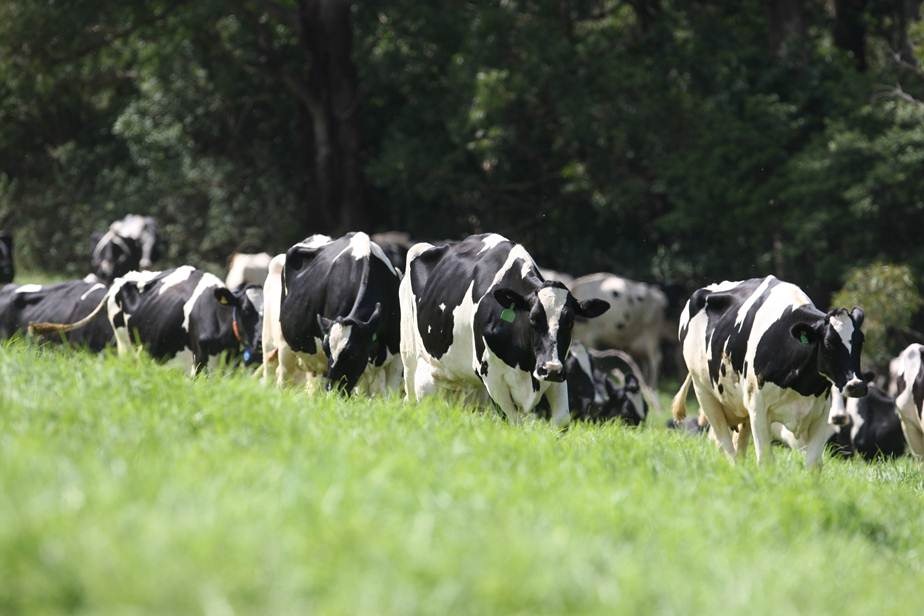
Steph first told me this story on the couch at the National Press Club in Canberra and I was fascinated. I have watched the cows going to the paddocks backwards from the dairy for years and must admit they way they do it intrigued me but never understand the “science” behind it

IMG_4149

Here is the “science” told like I will guarantee you have never heard it told before ………  


There are countless times I have said “I never thought of it like that”, and it always makes me think that well… I don’t think enough. How could I not pick up on something so fundamental? The skill of observation often sets people apart in this industry, if you have it, you’re one up, if you don’t, well… awkward! However, sometimes I tend to focus on particular things, and stop observing the bigger picture.

One example of when I have said “I never thought of it like that” was when the intricacies of cattle pads (tracks) were explained to me.

Question time! Cow pads… are they straight… or meandering?

IMG_8599

If you answered meandering, two points to you! Next question… why do they meander?

IMG_8601 

Are the cows drunk? Are pastoralists all over Australia spiking the lick for a laugh? Are cattle just not blessed with the gift of balance like the Australian gymnastics team? Nope. Is my imagination in overdrive? Yes…

The answer is to do with livestock senses. In the short time I have been working with beef cattle, I have had two main teachers who have bestowed a lot of knowledge upon me. Well I don’t know if I have said that quite right, because it is not as if they dropped a bomb of knowledge on me. I suppose it was more not just what they taught me, but also how they taught me. It wasn’t just facts and figures from a book, it was about using my skill of observation, and asking myself questions about what I was seeing and why I was seeing it.

It should come to you as no surprise that both of these people are well respected in the beef industry, and very good at what they do. They are Doug “Dougie” Jenkins, and Boyd Holden.

There is a whole spiel on livestock senses I could go into, but I’ll cut to the chase about meandering cattle pads.

IMG_8709

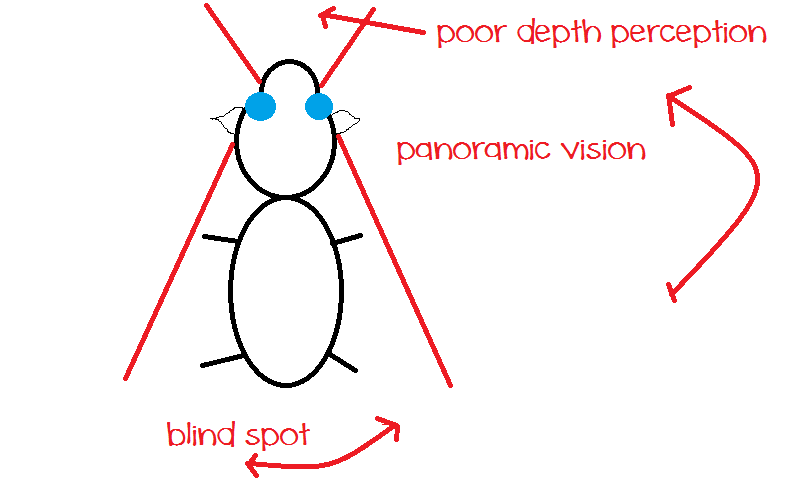
Cattle have peripheral vision. That means they have a wide angle vision, like a panoramic camera shot. They also have poor depth perception directly in front of them. Humans, on the other hand, have binocular vision, so we can see directly in front of us, but not so much to the side, and certainly not behind us!

One theory entertains the idea that our vision is dictated by our predator- prey status throughout evolution. Cattle are herbivores, they are the prey. Furthermore, they are grazing animals. Like that game we played in primary school “heads down, thumbs up”, drive past a paddock of cattle, and you will see them playing “heads down, bums up”.

Now, if the cattle are busy playing “heads down, bums up”, who is on the lookout for predators sneaking up in the grass?

If cattle had binocular vision, it would serve zero purpose to them as they had their head in the grass, munching away. They’d just be looking at grass. However, with their panoramic vision, they have poor vision directly in front of them (the grass) but good vision side to side.

cow

Now first things first- that is an awful picture, yes I am aware! It looks more like a pig than a cow.

Now back to business. So can you see in this picture, with the panoramic vision, the cattle can be scanning for predators while they are grazing? Why it is more useful for them to be able to see around them, than directly in front of them?

Next, take note of the blind spot. Even with their panoramic vision, cattle, like us, are not blessed with being able to see directly behind them, which means they are also susceptible to people running up behind them yelling things like “boo” or “RAHHH”, things other people think are funny, but as the person with no eyes in the back of our heads, things we do not think are funny…

IMG_4093

So imagine you are a cow walking around. You have poor depth perception directly in front of you, (I’m not sure if that is near or far sightedness?), good vision side to side, but then you have this annoying blind spot. That one spot which leaves you open to a dog or another predator, sneaking up behind you. Of course, being in the “prey club” as opposed to being a predator, I would be a bit paranoid on top of that if I was a cow.

So, you need to check behind you, to make sure nothing is eying you off as dinner (unless you are in a hoof and hook class and then you should be eying off that human on the other end of your lead rope!).

IMG_4095

Now, we all have that annoying friend who bumps into us when we’re out shopping, they keep looking at window displays, cute boys walking past etc… Fact is, when you turn your head, you often wander off your pathway. That’s why we have mirrors on our cars, especially those add ons which show you your blind spot! Wandering out of your lane is far worse than bumping into your friends!

That is why cattle pads meander. Cattle need to check their blind spot as they go on their way. They have fairly short, inflexible necks, so when they bend them to play peek-a-boo, it affects their whole body, sending them off course ever so slightly.

image014

Horses on the other hand, have longer, more flexible necks, are able to look behind them without such an obvious effect on their balance and as a result, their tracks aren’t as meandering.

I love learning bits of information like this. It is such an important concept to me, to be able to understand livestock senses, and why they do what they do, to be able to work with them effectively. Sometimes we are so focused on awesome research and discovering new things, we don’t discover what already is.

…. and a great night was had by all on the couch at the National Press Club as you can imagine with story tellers like this for entertainment. Thanks Steph I must admit my life is re-energised since I met you   

BTW Some more interesting stuff here via Emma http://www.slideshare.net/LandLearnNSW/cattle-whispering-emma-kay

IMG_4111

The wounds are still raw

It is now 7 days since the double whammy of one farm being covered in flood water and the other the scene of a spine chilling tractor accident. Read the original post here

Today is the day that the tractor recovery session begins

We got off to an early start with the sun shining, the birds singing and some very VERY fit people braving the Clover Hill mountain on their bikes.

IMG_9228

I was exhausted just watching them

IMG_9240

By 7 o’clock the team of experts were in place.

IMG_9243

By 7.30 everyone was starting to get very nervous with the recovery truck now bogged and a second tractor called in to pull out the truck failing to do so.  

IMG_9244

That then required more machinery to un-bog the truck

Nick was starting to think we should call the whole thing off and Michael and I were quick to agree. A quick call to our insurance broker and he was on the scene. After a long conversation with the recovery team we were assured this was a piece of cake compared to the places these experts often find themselves in such as recovering semi trailers that had gone over cliffs. So we reluctantly agreed to let the process continue and we all busied ourselves doing whatever it took to keep our minds off the task at hand and let the experts handle it.

IMG_9248

We were all very relieved to see 4 hours later not only had the tractor returned to the top of the hill so had the gator which had been bogged at the bottom of the hill with the tractor for 7 days.

So the next trick was driving a tractor with one operational tyre onto the tow truck.

IMG_9253

Its soon became obvious backwards wasn’t going to work

IMG_9260

Finally the tractor is loaded

IMG_9271

As you can imagine a lot of people will be very pleased when that tractor incident is just a faded memory

Little Miracles

Last month I wrote a post titled “ A Friend in Need” about a badly hurt baby wombat Michael found on the side of the road and bought home

Wires informed us Dunlop (named Dunlop by Tweep @beeso) was very seriously hurt and they didn’t expect her to survive. Dunlop is roughly 12 months old and weighs just 6kg. On top of this it is believed she had originally being attacked by foxes. The legacy of this was numerous wounds including a very deep maggot filled injury to head, severe injuries to her feet, a large area of her back stripped of flesh and now she had been clipped by a car.

We left Dunlop in the care of WIRES angels Lorraine and Kay and kept our fingers crossed.

Last week I had a call from Lorraine and Kay inviting Michael and me to visit “Amazing Grace” 

Bandage Bear IMG_9051

Bandage Bear

Lorraine and Kay said they had said so often this wombat has the most amazing will to survive they thought it fitting to call her Grace.

How much is Grace loved.  Let me show you. Firstly Grace lives with Kay and this is where Kay lives

2 IMG_9078 

This is the view from Kay’s front verandah. We thought we lived in paradise

7 IMG_9055  

Everyday Kay and Lorraine lovingly dress Grace’s wounds and feed her milk bottles

Bottle Feeding Grace

Grace has to be held like this for her bottle otherwise she chews the teat to bits ( they discovered this hold after Grace had bitten through 12 teats)


3 IMG_9036

Grace’s back has fresh new skin

4 IMG_9040

The nasty wound on her head is healing nicely thanks to “Solugel” applied with love

6 IMG_9044

Her feet need a lot of attention

5 IMG_9041

With staples assisting the torn soles to heal

1 IMG_9074

and lots and lots of cuddles

What next for Grace. Well we will keep you informed but things are looking very promising. Little Miracles do happen 

Seeding season begins with a bang and a whimper

Growing pasture is an art form and dairy farmers are pasture specialists because our cows demand (and so they should) the best quality pasture our soils can grow.

We have a highly intensive dairy farm system with the home farm having an effective milking area of only 50ha (actual land available to graze cows). Our key management strategy is to grow as much pasture as we can and this allows us to have a high stocking rate. We currently run 5 to 6 cows/ hectare. ( FYI this is 2.5 x the industry average)

IMG_3119

The home farm has a pasture base of kikuyu – a South African grass that thrives (sometimes too well ) in our climate. Well managed “Kik” can be a very effective summer feed for our cows but it becomes almost dormant in the colder months. To ensure the cows have plenty of energy dense highly quality autumn/winter pasture we sow oats and annual ryegrass at Clover Hill. See footnote

Seeding season begins on 1st March every year and lasts for eight weeks and tends to be a very stressful period with two tractors operating around the clock.

P1060721

One with a direct drill (above) on the flatter landscapes and one with a super spreader (below pix) broadcasting seed on the steep slopes.

Fertiliser Spreader

These days we start with a light “knockdown spray” which stuns the kikuyu and allows the ryegrass and oats to establish well

IMG_8786

We then broadcast the seed and let the dry (cows not milking) cows in to walk it in.

IMG_9010

It doesn’t take long and the ryegrass and oats is just starting to poke through.

IMG_0468

Its going to be a challenge in the next couple of weeks The farm is waterlogged and after the accident yesterday we are now short one tractor, so we are well and truly under the pump to deliver the best quality pasture on time for our girls.

439703-Royalty-Free-RF-Clip-Art-Illustration-Of-A-Cartoon-Woman-Walking-On-Eggshells

“Walking on eggshells”

You can find out more information here

Footnote: When we have reviewed all of the perennial pasture trial results from Lemon Grove we hope to be able to translate that research into on farm action at Clover Hill

The Good the Bad and the Ugly

The Good

Take it from me farming has many great positives. For me its the mental intensity, the constant review process, the drive to get up each day and do it better  For our team its about the cows and growing the best quality pasture we can to feed them.

Louise and Calf

For Louise its taking care of next gen

The Bad

But lets be honest there can be some serious negatives. It is well known farming is one of the most dangerous occupations in Australia. Only one in 10 workplaces are farms, yet they account for one quarter of all work-related deaths. Children under 15 years and adults over 65 years are more likely than others to be injured or killed on farms. Males are more likely to be injured than females via http://www.betterhealth.vic.gov.au/bhcv2/bhcarticles.nsf/pages/Farm_safety_risks_and_hazards?open

Yesterday’s post  The big wet has left us a little worse for wear in more ways than one was a timely reminder to stay safe on farm

The Ugly

Farming is also very physical and pretty hard on the body

These are farmers knees – not a pretty site. Plenty of bone on bone here and shortly Michael is having a double knee replacement and they tell us that’s not much fun. Michael has a condition called traumatic arthritis which is a legacy of altercation 15 years ago with a bull  who ploughed him into a concrete trough

Farmers knees

Michael isn’t having much luck lately as he was the person somersaulting down the hill in the tractor yesterday

Russell has now come and inspected the damage after the tractor lost traction on the water logged slope and slid down the hill at a rapidly increasing rate of knots and hit a tree amongst a few other things with the “old boss” on board

IMG_0469

Russell has declared this the worst bent roll frame he has ever seen yet the drivetrain and all the castings are intact as is the driver.


IMG_0476

No oil leaks and even the front axle is still intact

IMG_0482

And it looks like the GPS is still functional and the radio works

Yes we are taking the good with the bad and the ugly and early next week we will be having a team meeting and reviewing our Farm Safe procedures.

Stay safe Michael

Don’t tell the cows but yoghurt grows on trees

This story by Saffron Howden  “Cultural cringe: schoolchildren can’t see the yoghurt for the trees”made the front page of the Sydney Morning Herald and not only that it was the most read article nationally. I am not sure I should tell you this but the whole world is talking about it. If you Google “yoghurt grows on trees”  you get almost 1.7 Million hits on the web on this story line

At the farm we have decided that we wont tell the cows that 27% of children surveyed think yoghurt comes from trees. It will break their hearts.

GRT_9470

It was bad enough to learn that most people didn’t know cows had four teats let alone this latest travesty.

But seriously what is it we want people to know about agriculture. I am sixth generation farmer. I grew up on a beef and sheep farm not returning to the dairy industry until I was 22. I will readily admit I had no idea how many teats a sheep had until I looked it up the other day. They have two by the way

Students in Dairy 0005

Sydney School students visit Clover Hill Dairies

Today farming is diverse, its complex, underpinned by the latest science and research and is highly technical. Its also dynamic, innovative and can be a very rewarding career pathway.

One of my next door neighbours is an engineer and for quite sometime taught advanced engineering at Sydney Uni. He loves living on the farm and being part of a working dairy landscape. We have had many many discussion about educating people about agriculture. He tells me its not so much about educating but building an appreciation. He uses the mobile phone as an example. He tells me the mobile phone is the most technically complex device on planet but it is not necessary for people to understand how it works they just appreciate it works and he believes this is where agriculture should focus.

For agriculture I like use the Sydney Harbour Bridge as an analogy. We value it as an Australian icon. We appreciate its a complex structure, but we don’t need to understand the intricacies of how it is put together. When we cross from one side to the other with our most precious cargo, our families, on board  we just need to have confidence in the people who designed it and trust who the people who built it .

My neighbour is right. The key is for farmers to actively engage and have two way conversations with urban Australia to build trust and appreciation of Australian agriculture so the community will value the hands that grow it and the land that produces it.

Sydney Harbour Bridge

There are many ways to do this and Art4agriculture was conceived for agriculture to have these conversations as early as we could.

On the farm we have taken every opportunity to share the Clover Hill Dairies story and its definitely a highly rewarding experience having two ways conversations with the people who not only love yoghurt but also know it is made from milk from happy healthy cows

Yogurt is made from milk from happy healthy cows0064

ICE-CREAM DELIGHTS

I was like an excited little kid waiting for Christmas Day and arrived early for day 3 of the Sydney Royal Cheese and Dairy Show judging. It is widely recognised the Sydney Royal Wine, Dairy and Fine Food Shows set the standard in Australian wine and food judging and offer producers a platform to benchmark their products within the Australian market. Only the most exceptional quality is recognised with gold and silver medals providing a perfect platform for marketing exposure.

Lynne Strong

All dressed up and ready to work

Today I was to have the ultimate sensory ice-cream experience stewarding the ice-cream judging at the Sydney Royal Cheese and Dairy Produce Show. I don’t know anyone who doesn’t like ice-cream and there I was eyeing off the best the country has to offer.

The Sydney Royal does everything with style and the day started with a yummy breakfast for judges and stewards.

IMG_8441

I had a birds-eye view of the massive upgrade being undertaken on the arena

IMG_8444

I had the pleasure of meeting international legend that is Herve Mons

IMG_8447

Herve Mons discusses the day’s duties with Chairman of the Royal Dairy Produce Show Gerry Andersen

My mentor for the day was RAS Councillor and former chairman of the Sydney Turf Club Bill Picken. Bill is all personality and with lots of wise advice I soon got into the swing of things.

Bill Picken

Racing Identity Bill Picken

Mark Craig and Susan

Ice-cream judges Susan Burns, Craig Davis and Mark Livermore.

The steward’s role is to ensure the judging process runs smooth and effectively. This includes ensuring each entry is presented to the judges at the correct temperature.

A scoop of each ice-cream is placed on a separate plate behind the entry so the judges can view its melting profile. The judges then take numerous samples for tasting.

Ice-cream is judged on Flavour, Texture, Appearance and Melting.

IMG_8518

Susan closes her eyes and mind to the world about her and holds each sample approximately the same length of time in her mouth,

IMG_8519

As the ice cream melts on your tongue there should be a pure taste

To evaluate the flavour a small amount of the frozen ice cream is placed directly into the mouth and quickly manipulated between the tongue and palate and the taste and odour sensations are noted. By pressing a small portion of the frozen ice cream against the roof of the mouth the smoothness, the coarseness, the sandiness, and the relative size of the ice crystals can be determined

IMG_8463

Mark clearly enjoys the task

The experts can get a fairly accurate impression of the ice-cream’s body and texture characteristics by dipping the ice cream. The judges notice the way it cuts and the feel of the dipper or spoon as its cutting edge passes through the ice cream.

You may have heard that the overall quality of an ice-cream line can be judged by tasting its vanilla. True. Simple and pure, a scoop of vanilla should have a distinctive but delicate flavour that lets you experience the texture of the ice cream without masking other quality indicators.

IMG_8492

There was no shortage of flavours on offer

Appearance/Presentation –  Ice cream should look freshly made. Icy crystals on the surface or around the edges of the tub indicate either that the ice cream has been melted and refrozen or that it’s old.

IMG_8485

There was even a Banana and Vegemite Flavour

Texture –There has to be some “air” in ice cream or else it would be hard as ice. But you also don’t want it to be all fluffy. The surface of the ice cream should be smooth. There should be some heft to a cup of ice cream, and when you dig in your spoon, you should feel a little resistance.

IMG_8450

A team of 5 RAS staff ensures everything runs smoothly and double and triple check every score card

Once the individual classes are judged and the gold medal winners decided the top four gold medal winners are bought out in each section to determine the champions in their respective categories

IMG_8514

The judges from all the sections come together to decide the champions. One of the finalists was a Lamington flavoured ice-cream. Not surprisingly this was a flavour our French judge was not familiar with

Lamington Icecream

Fellow judge Rob Elliott describing the Ozzie icon the “lamington” to Herve Mons

AND THE WINNER IS

Champion Ice-cream

Champion Icecream
Entry 413 Class 49 Premium Ice Cream or Gelato, any flavour, minimum 12% fat content. GUNDOWRING FINEST ICE CREAM GINGER

Don’t quote me but I got the impression that our Aussie Gelatos and ice-creams could compete with the best of the best world wide

IMG_8546

And a great day was had by all including me. I look forward to doing it all again next year

See here for a full list of the Gold Medal Winners

Great follow up from ABC

http://www.abc.net.au/rural/content/2012/s3435882.htm#.T0Q-_9OKIDc.twitter