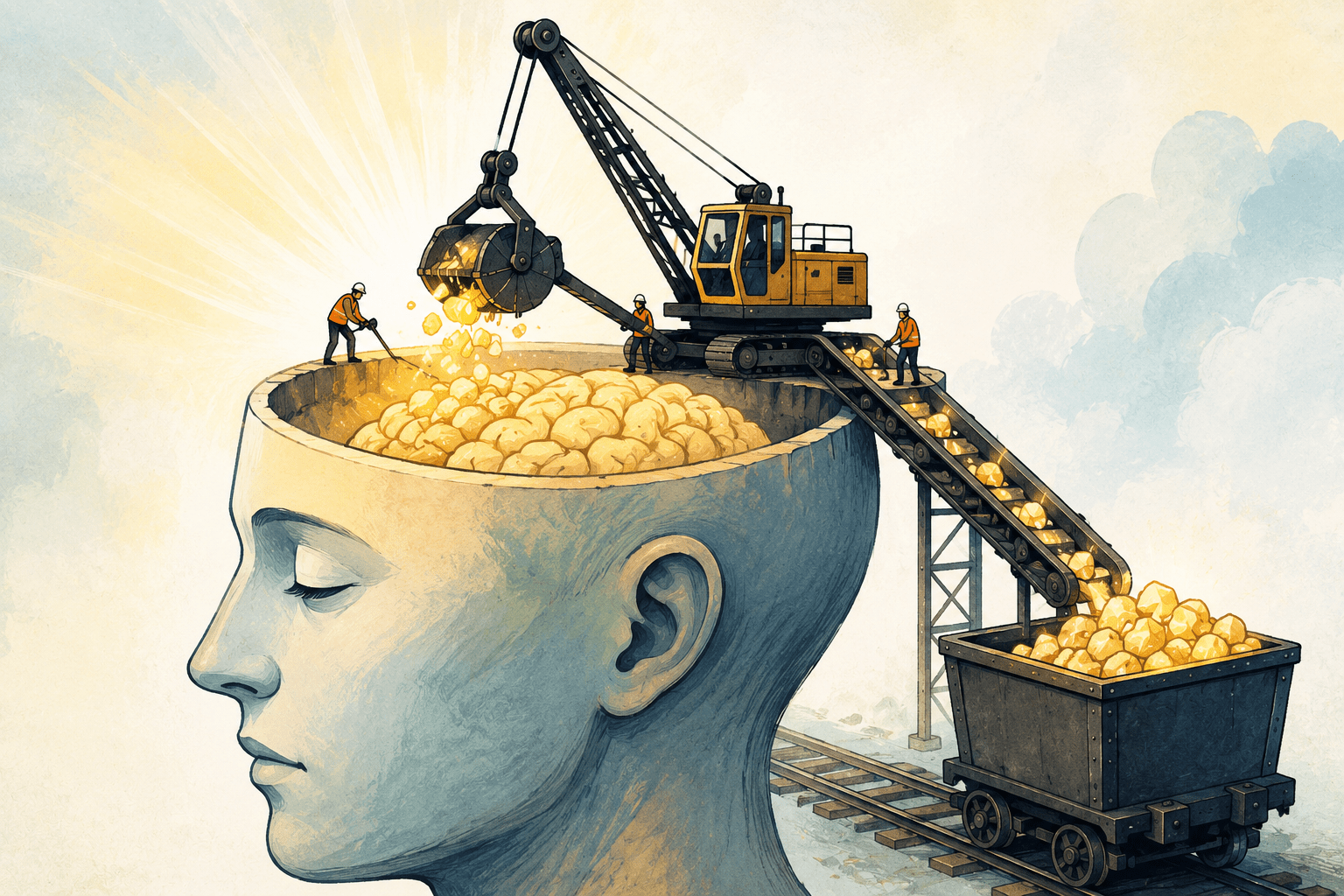
The leaders we choose decide more than our own future

Back home after three weeks in Sri Lanka. I saw what fuel shortages look like without passport privilege.

The petrol stations aren’t empty. There is fuel.
It goes first to tourism, because tourism brings money into the country.

Families miss out. No transport. No income. No school. No healthcare.

Teachers can’t reach their classrooms.
Parents who sacrifice everything for their children’s education watch that chance slip because a bus can’t run.

Nurses can’t get to clinics. Medicines don’t arrive.

Drivers, farmers, shopkeepers are left waiting while the system they serve no longer functions.

And still, people stretch every rupee. They put their children first.

Then you come home to abundance.

Where one person throws away food, another is searching for it.
Where one person chases wealth, another is trying to stay healthy.

And above all of it, the imbalance is obvious.

Countries with everything still want more.
More influence. More control.

Those who already hold power set the rules.
Those without it are told to accept them.

And we’re part of this.
The way we vote carries.
If we vote for me, me, me, we get leaders who think the same.
Power first. People after.
And people far from us live with the consequences.

After seeing what happens when something as basic as fuel is taken away, you understand how quickly everything can fall apart, and how much dignity depends on the basics.

Drop the good guys and bad guys for a second.
You know who decides who gets in the club and who doesn’t.

The countries with nuclear weapons set the rules.
They still have theirs.
Others are told they can’t have them.

If your country was being told no, would that seem fair to you?

Sri Lanka through the people who make the journey possible

Ash our tour guide, Dino our bus driver and Lucky our driver’s assistant, spotter, and passenger support.

Sri Lanka is my fifth group tour overseas tourism experience. We all know the feeling at the beginning. A group of strangers, a guide you have yet to meet, fifteen days ahead. Each of us arrives keen to meet each other. The group, and the guide, will shape the trip as much as the country itself.

Our tour guide Ash (Niruth Ashendra) meets us at the hotel the night before. We stand around in a loose circle, share a short backstory and why we have come to Sri Lanka. The first challenge of meeting new people begins. There are no name tags. The test starts immediately. Some people write names down. I start linking names to faces and their stories, hoping it sticks. It rarely does. Then Ann and Adam introduce themselves. A and A.  “A” breakthrough.

 The conversation carries into dinner. By the time we arrive at breakfast the group has started to connect.

We walk out to the bus to the bus. You step on and see the seats, the windows, the air conditioning, check for charging points and if the seats recline. Then you see the team.

Lucky (Mohottige Shalitha Lakshan), stands at the door with a tray of flowers. He hands one to each of us as we step onto the bus. People smile, cameras come out, conversations begin. It happens again the next day, and the day after that. It becomes part of the trip.

Dino (Rajapakshe Pathiranage Dinushan Isurinda), is in the driver’s seat. Lucky moves between the door and the aisle, handing out refillable water bottles.

Ash, walks down the aisle, doing a head count, all warmth and welcome, something we discover is typical of Sri Lankan people

After my first two blogs (see here and here), I had feedback from two Australian readers who work in the social and environmental justice sector. Bill worked in international development and understands how aid is designed, funded and delivered across countries like Sri Lanka. He reminded me that what I was seeing from the bus sat alongside years of programs, partnerships and investment that a visitor rarely sees. He encouraged me to have conversations with people on the ground, to move beyond what I could see from the bus. It became clear very quickly that the only people I had real access to were Ash, Lucky and Dino. Neil remined me about passport privilege, the ease of arriving, observing, and leaving.

A view from the bus shows moments. A conversation shows a life.

I had already spent time with Ash hearing his story (see my blogs on our conversations  here, here  and here.) I had now spent 12 days watching how well the three of them  worked together

Today I sat down with them in the hotel foyer. Ash translated for Dino and Lucky, and you could see how much their ability to understand and speak English will shape what opportunities open up for them next.

Ash works as a freelancer, often with Butterflies, the local partner to Bunnik Tours. He can choose when he works and who he works with. Dino and Lucky are employed by the bus company, which is contracted into the tour.

Dino is 29. He has been driving for ten years, across cars, vans and heavy vehicles. He went to Japan to earn money and send it back home. Getting there meant paying an agent a large fee and taking on loans. He worked long factory shifts until his back gave out and he came home.

He is married. He lives with his parents and is building a house on family land for his wife and himself. Each trip pays for more walls.

Lucky is 22. He worked in a hotel before this job. He notices when someone hesitates on the steps or when a bag needs lifting. He moves before you ask

He came into the job through Dino. They grew up in the same village. They trust each other and it shows.

Lucky is working toward a heavy vehicle licence when he turns 24. Ash encourages him to build his English and move into guiding, work that brings more income and more options.

Their choices keep pointing in one direction. Work, income, a house, and family stability.

On the road, Dino watches the traffic carefully and moves skillfully with it. Motorbikes pass close to the bus. Tuk tuks move into narrow spaces. Dogs cross. Cows stand in the road. When he overtakes, he uses the horn and the other drivers respond. It works as a signal. Everyone understands it and uses it.

Lucky watches everything else, the passengers, the luggage. In tight spaces he works like a spotter, out of the bus, guiding Dino through and directing traffic.

When we step off the bus to visit temples or markets, Dino and Lucky stay and wait for us to return.

As we talked, the conversation moved to what comes next.

Dino wants to keep driving and finish his house.

Lucky spoke about getting his heavy vehicle licence. He has to wait until he is 24. For now, he works alongside Dino and learns the job from the ground up. Ash encourages him. Better English opens the next step. Guiding, more responsibility, better pay, more opportunity.

I asked them what it was like working with travellers from countries like Australia, seeing how we travel and where we stay. Opportunities they can only hope for.

Lucky said he enjoys meeting people, hearing their stories, seeing how they live.

Dino nodded. “It’s good,” he said. “You see different things.”

We step off the bus and walk into hotels, temples, restaurants. They stay with the bus or head to driver accommodation nearby. Basic rooms, shared spaces, simple meals. The same trip, two different versions of it running side by side.

The conversation shifted again, this time to life outside the tour.

Do they have access to clean water. Yes, both their families are connected to the town water supply. I asked about the diseases I was vaccinated for before I left. Ash tells me typhoid is rare in today’s Sri Lanka. So is catching rabies, malaria or Japanese Encephalitis.

Whilst healthcare is free, they spoke about long waiting lists. If something needs to happen quickly, you find the money. Sometimes there is no money.

Dental care was another thing. If it costs too much to fix, you take the tooth out.

We spoke about growing up here. The civil war. The tsunami.

 Their memories are fragments. Ash remembers it well. He spoke about it as something that sat in the background of his childhood. On the bus he shared with us about his family’s frightening experience with the tsunami. He laughed when he told us his father who is Anglican was praying to Jesus, his mother who is a Buddhist prayed to Buddha to keep them safe.

Then the conversation moved to now.

Sri Lanka has changed, people talk more openly about politics. Ash described Sri Lankans as politically savvy. They follow what is happening. They talk about decisions and how those decisions land in their own lives.

There was a time when speaking out carried risk.

Women show up in public spaces here. Ash spoke about protests led by women, especially families still asking what happened to those who “disappeared” during the war. Mothers and wives stand together, holding photos, returning again and again, asking the same questions.

There is also a long history of women in political leadership. Sirimavo Bandaranaike became the world’s first female Prime Minister in 1960. Her daughter, Chandrika Kumaratunga, later served as President.

 Women have seen leadership at the highest level.

At the same time, what you see on the ground is mixed. Women ride motorbikes, work in hotels, and move into management roles in places like Jetwing Kandy Gallery. The General Manager spoke about mentoring and creating pathways for young women to step into leadership.

They also showed me their TikTok accounts ( Dino and Lucky). Short clips from the road, moments from the trip, small snapshots of Sri Lanka through their eyes.  This is their country, their work, their way of sharing it. In those videos they are  at the centre of the experience, showing places, telling stories, and building something of their own.

For Dino and Lucky. The here and now is the focus.

Dino is building his house. Lucky sees new opportunities for him in tourism.

Tourism brings income. It also brings a window into other lives, every day, right in front of them.

I have been working in the environmental and social justice sector for twenty years. Most people I know want to support others. The harder question is how to do that in a way that helps people build the lives they want, rather than the lives we imagine for them.

The answer starts with conversation.

For Australians, support can be practical. Travel with companies that use local partners and treat local staff well. Tip directly. Share the work of people like Dino and Lucky, including their TikTok videos ( here and here), because visibility can become opportunity. Support programs that build skills, vocational training, women’s leadership, clean water, health access and safe futures for children. Support what is built with people, not for them.

Passengers sit on the bus and look out the windows, taking in the country they have come to see, immersing themselves in it as much as someone passing through can.

Ash, Dino and Lucky give us lifelong memories. We leave with their stories, their plans, and a clearer sense of how global support can strengthen the lives they are building.

Kamani survived the tsunami and asked the question no one wants to answer

The ocean came once. What happens after that point is not nature, it is policy, priorities, and whose lives are treated as expendable.

You walk in expecting a collection of photographs and meet a voice that speaks from every wall.

“Why are we creating disaster when nature gives us so many.”
— Kamani

It frames the room.

This is the Tsunami Photo Museum on the south coast of Sri Lanka, near Telwatta between Hikkaduwa and Ambalangoda. Kamani De Silva, a local woman who survived the 2004 tsunami, started it after losing family, home and history in a single morning. She gathered photographs, stories and fragments of what remained, many returned by aid workers, to rebuild a record of what happened and to place it in front of anyone willing to look.

She gathered these stories to keep the faces in view, to show what happens when protection fails, and to ask why we keep adding to what nature has already done, through conflict, through power, through choices that turn risk into catastrophe.

The stories sit on timber and tin. Handwritten, uneven, sometimes misspelt, direct, unfiltered, raw and immediate.

“12500 children were left orphaned.”
“We are so helpless.”
“We do not know where our parents are.”
“Please bring us back to them.”

Faces of children. Faces of mothers. Faces caught in the moment where everything has already gone. The facts sit there in full view. Death, 40,000. Missing, 5,650. Injured, 15,200. Displaced families, 84,031. A single event, one morning, one coastline.

Survival comes into view through early warning towers, instructions, what to do when the sea comes again, a community building its own system after the fact. The gap between what existed and what followed sits in full view. Preparation arrives after loss.

Then the argument widens.

“Million of people suffering in the world with the war.”
“We are so small, we are innocent, why you destroying our world of children?”
“Please do not do that.”

Images of war sit beside images of the tsunami. Children crying, displaced, holding onto each other. The cause shifts. The outcome remains.

“Our children are innocent. Don’t destroy their world for your unlimited power and greed.”

This is where it becomes personal. The sea takes, then human choices decide who carries the burden, where people live, what protection exists, who rebuilds, who waits.

Earth is calling. Are you listening.
When you destroy nature, you destroy yourself.
If you protect nature, nature protects you.

This slideshow requires JavaScript.

Animals move before danger comes. They feel it, they leave, they survive.

“As the human we should follow them.”

This is her plea, act early, move before the damage lands. What sits around it tells a different story, warnings delayed, systems built late, decisions shaped by cost and distance from consequence. The pattern holds, people left exposed, then left to rebuild.

“Why? It is our karma? Why? It is true we have to pay for our sins?”

People look to fate for answers. The causes sit in human decisions made long before the wave arrives.

“Slow down and be patient with your life in this world.”

If you are looking for wealth, somebody else is looking for health.
When you smile, a tear appears in another place.
Each time you throw food into the dustbin, someone is looking for it.

Everything in the room holds the same thread, disaster, inequality, waste, conflict, each one shaped by decisions that fall on the same people again and again.

“PLEASE WE NEED PEACE”

The words sit in red at the bottom of the wall. They read as a demand.

The ocean came once. The difference between survival and devastation sits in what is built, what is funded, and who is forgotten.

Why does Australia pay to lock people up rather than fix the reasons they leave?

Australia spends huge sums punishing desperate people at the border instead of spending earlier on the health, sanitation and opportunity that might help people build a life at home.

Sri Lanka has forced me to see something I have managed to avoid for years. I have travelled in first world countries, stayed in clean places, come home with photos and impressions, and rarely had to think about the public health conditions that shape daily life for millions of people. This trip changed that within hours. The vaccines alone told part of the story. The streets, the water and the smell told the rest.

Before I left Australia, I went to my chemist to check what I needed. COVID, flu, diphtheria, tetanus. Then typhoid. A check on hepatitis A. A conversation about Japanese encephalitis. Malaria risk. It felt like a long list for a short trip.

Then I arrived and understood exactly why the list exists.

You step outside and you see how easily disease can move. Waste sits in the open. Water carries what it should not. Heat amplifies all of it. This is daily life for people who do not have the infrastructure many Australians take for granted.

I am drinking a cocktail standing in water that you wouldn’t dream of drinking 

And then, in the middle of this, 0ur guide pointed out bus shelters funded by Australia.  He asked if we knew why they were there. We did not. He told us they carried warnings about people smugglers. Sri Lankans, he said, look to Australia and want the life they believe exists there.

Of course they do.

You can see the reasons from here. Reliable health care. Clean water. Education that leads somewhere. Jobs that pay. A future that feels secure. Add to this a strong Sri Lankan community already in place, people who help new arrivals find work, housing, a foothold.

So people make a calculation. They sell what they have. They take risks. They hand money to operators who promise a way out.

And this is where we shake our heads.

Australia spends huge sums punishing desperate people at the border instead of spending earlier on the health, sanitation and opportunity that might help people build a life at home.

We will pay a fortune to lock people up after they leave, still we drag our feet on helping create the conditions that might let them stay.

Standing here, that choice looks harder and harder and harder to defend.

We already spend money in places like this. Those bus shelters prove it. We fund messages telling people not to leave. We fund systems at the other end designed to stop them arriving. The spending is real. The intent is clear.

Still the gap sits in front of you.

What would change if a share of that money went into the basics people talk about here every day. Clean water systems. Waste management. Local health services. Vaccination programs delivered as standard care, not as travel protection for visitors. The kind of infrastructure that reduces disease, improves daily life and gives people a reason to stay.

The aim does not change. Fewer dangerous journeys. Fewer families risking everything. Less money flowing to people smugglers.

The starting point shifts.

Travel can be many things. This trip has stripped something back for me. Vaccines protect people like me when I arrive. Investment in public health and basic infrastructure could do far more for the people who live here.

Here is the question again for all of us.

Why are we willing to pay a fortune to lock people up after they leave, still so reluctant to help create the conditions that might let them stay?

Review: The Narrow Road to the Deep North


At this stage of my life, The Narrow Road to the Deep North reads as a study in justification.

Richard Flanagan moves through every camp, every mind, every moral universe. Prisoners. Surgeons. Lovers. Japanese officers bound to the Emperor. Each inhabits a logic that makes sense from the inside. Honour. Duty. Survival. Desire.

History turns on those private narratives. People act. Then they explain. The explanation hardens into belief. The belief becomes identity.

Flanagan’s range unsettles because it removes the comfort of certainty. He shows how lived experience shapes language, posture, allegiance. A man formed by hunger speaks differently from a man formed by command. A nation formed by defeat remembers differently from one formed by empire.

The novel widens the frame. It reveals how easily righteousness takes root. It shows how repetition grows from persuasion rather than ignorance.

The horror sits in the background. The real force lies in the anatomy of self-justification.

I read “The Narrow Road to the Deep North” in the way I now read many war novels, I moved past much of the graphic brutality. I understand what the railway was. I did not need every blow described. I was fascinated by Flanagan’s willingness to enter the minds of the Japanese officers and show how honour, obedience and Emperor worship formed a moral world in which cruelty could be framed as as duty, even virtue, and suffering recast as proof of loyalty.

This mythic language, set inside an operating theatre, shifts the scale. A surgeon who once carried himself with absolute command feels the weight of his own humanity. The hand that once cut clean now trembles.  The body remembers. The past intrudes.

“He had stolen light from the sun and fallen to earth. For a moment he had to turn away from the table and compose himself, so that the rest of the team would not see his scalpel shaking.”

The horror in the book becomes more unbearable because the prose is so luminous. Beauty heightens contrast. When a writer can render tenderness, love, memory, even desire with such precision, the brutality feels sharper.

You do not need to read every detail of suffering to recognise that power. The architecture of the book carries it. The moral weight is present in the pauses, in the fractured relationships, in the way time folds back on itself.

Flanagan writes extremity, yet he also writes longing. He writes shame. He writes the ache of love that never resolves. That is what makes the novel extraordinary.

The railway is the crucible, yet the book is about what remains afterwards.

I responded to the beauty of the sentences as much as the history.

For me that is enough.

Ashleigh McGuire – From Imagination to Innovation

At the Ignite event on 5 September at the Berry School of Arts, every speaker gave us something to think about. Over the next few weeks, I will be sharing highlights from each presentation. You can find the presentations as they are published here.

Ashleigh McGuire’s story was one that moved the room. She spoke with honesty about growing up with dyslexia and sensory issues, struggling to make sense of a world that felt too bright, too loud, and not built for her. Later, as a teenage mother navigating trauma and the aftermath of domestic violence, life felt like a series of battles stacked against her.

“Innovation comes from lived experience, from people who have been told no their entire lives.”

But where others saw limitation, Ashleigh found imagination. She described how, in quiet moments holding her children, she began to picture a different life, one where they had security, independence, and a future they could be proud of.

Imagination was not escapism. For her, it was resilience. It was the spark that helped her reimagine her story and chart a way forward.

“Your imagination is the most powerful asset you have. It is the compass that will guide you and the forge where your innovation will be born.”

From that spark came innovation. Ashleigh built a social enterprise that connects Aboriginal culture and skills with business markets, proving that heritage and creativity can be powerful economic engines. She taught herself the language of business, from grant writing to tender applications, and when the obstacles piled up, she returned to imagination to find a way through.

Her message was clear and deeply inspiring: innovation does not only come from labs, boardrooms, or textbooks. It often comes from lived experience, from those who have been told “no” their whole lives, and from mothers who refuse to give up.

“Imagination was not a distraction. It was my deepest form of resilience.”

Ashleigh’s journey from imagination to innovation is more than a business success. It is a reminder that the future can be reshaped when we dare to see it differently. And it is proof that the stories we write for ourselves can be stronger than the ones the world tries to write for us.

“I refused to read their script. I imagined a different one.”

📸 Images used in this post are for commentary and community storytelling. Credits belong to the original photographers and sources. Please contact me if you would like an image credited differently or removed.

#IgniteBerry #AshleighMcGuire #FromImaginationToInnovation #Resilience #SocialEnterprise #AboriginalCulture #LivedExperience