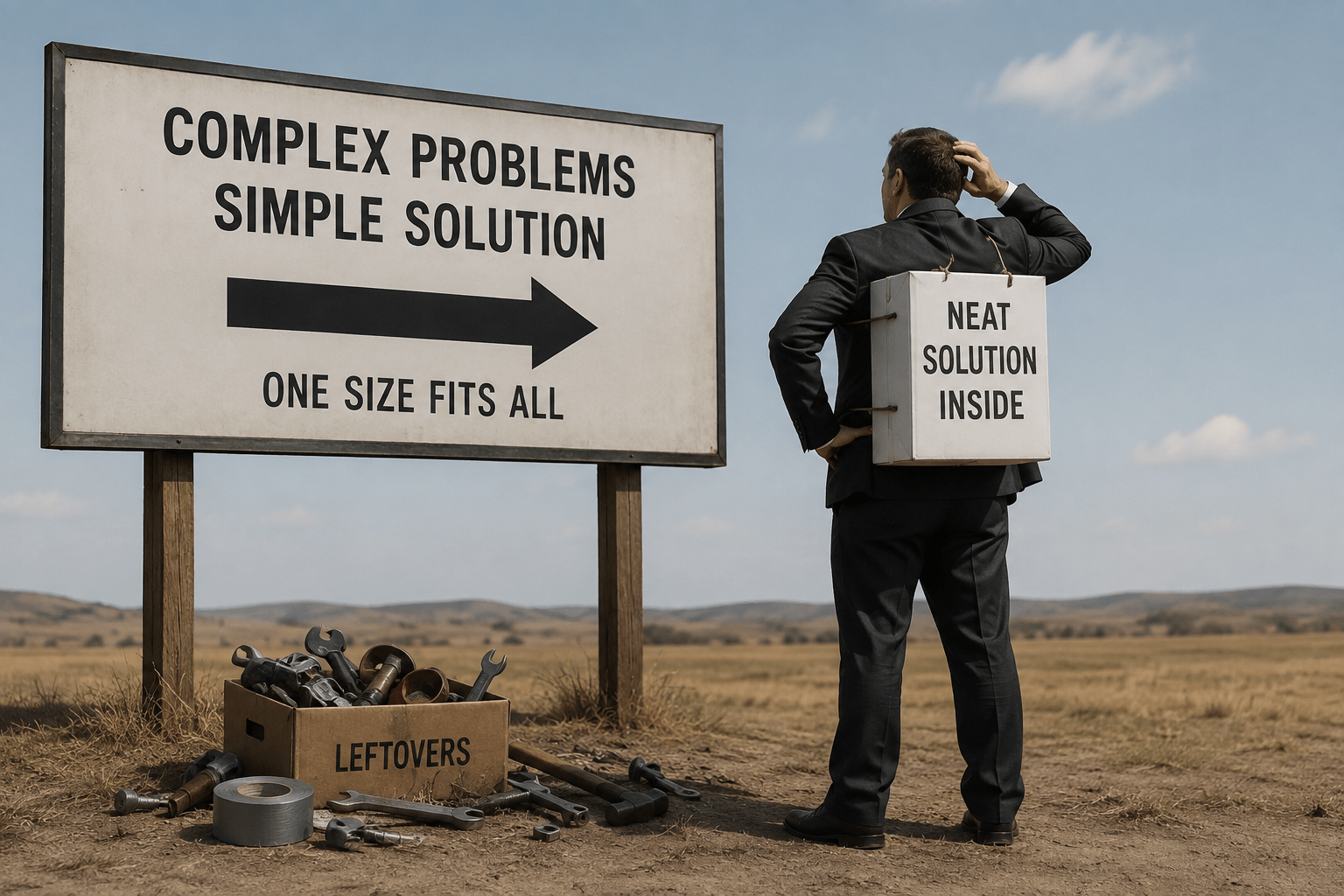
She told me there was a meeting about collaboration. Looks like everyone else missed the memo
How many times have we read an article like this? Agriculture needs to break down silos, work with other industries, listen to different perspectives and collaborate to solve problems. I’ve been hearing it for decades.
I have enormous respect for the person behind this work, and I hope their research helps bring about meaningful change. Systems thinking has been around for close to a century, and we have learnt a great deal about the value of collaboration. The challenge is putting that knowledge into practice.
Agriculture has plenty of company. Governments, universities, businesses, charities and community organisations have been having the same conversations for years. We hold conferences, commission research and develop strategies. Then everybody goes home to their own organisation, their own budget and their own priorities.
What is it about human beings that makes us so good at identifying what needs to change and so reluctant to change how we behave?
We have built systems that reward individual and organisational success. We encourage people to become experts, compete for funding, protect their intellectual property and demonstrate why their organisation deserves support. Then we ask them to share knowledge, resources and decision-making with the very people they have been competing against.
After years of working with farming organisations, attending meetings, participating in workshops and watching the same conversations go round and round, I decided to put my energy into working with young people. I wanted to give them the skills, confidence and opportunities to be the change they wanted to see in the world.
I’ve watched students surprise themselves with what they can achieve when they have a problem worth solving, the freedom to ask questions and the opportunity to work with people who see things differently.
Change starts in our schools, where young people learn to listen, question, collaborate and solve problems together, before they inherit the habits that make change so difficult for the rest of us.
Much of our education system still revolves around individual achievement, subject boundaries and getting the right answer. We send those young people into workplaces where their success increasingly depends on their ability to work with people from different backgrounds, disciplines and organisations.
The Australian Farm Institute and AgriFutures are investing in systems thinking. The real test will come after the research is published and the workshops are finished. Who changes the way they work? Who shares a budget? Who invites somebody with a completely different perspective to help define the problem? Who is prepared to hand over responsibility when somebody else has a better idea?
What would happen if funding bodies measured collaboration by what organisations actually achieved together, rather than how many partnerships they listed in their applications?
And what would change if curiosity, communication and collaboration were given the same attention in schools as academic achievement?
I’ve learnt a great deal about changing my own behaviour over the years, including how I communicate and how much explanation people need. Old habits are remarkably persistent.
I hope this research gives people the confidence and encouragement to start doing some of these things differently.
I’ve found one. In Cowra, a neighbourhood centre that started in 1984 with $500 and volunteers in a church rectory now turns over around $5 million a year. Family support, youth work, disability programs, home maintenance, food relief and a volunteer group making burial clothing for stillborn babies all share one roof, one set of accounts and one leadership team. Council donates back the rent. Supermarkets donate food every day. Every program spends more of its money on people. I’ve written it up as a case study here.
I’m now working with a small group of people to see whether we can do the same in Kiama. We have a long way to go. Cowra shows us where to start.
If you’ve got a success story, I’d love to hear it.
If you’ve got a success story, I’d love to hear it.