Show me the love

Did you know that one teaspoon of healthy carbon-rich soil can contain almost as many organisms as there are people on the planet, that is, close to 7 billion living things – and a greater diversity of life than the Amazonian rainforest.

At Clover Hill Dairies our soil organic carbon varies from 5.5% to 12%. Now for anyone not au fait with soil organic carbon stats I can assure you that’s damned impressive and I am very proud to share this with you. I am even more proud to tell you that extensive soil carbon tests on many dairy farms in our region show similar results. That’s a lot of living organisms our regional dairy farm soils are proudly feeding and supporting.

Why am I telling you this?

Because Coles uses it marketing power and financial might to run loss leader marketing strategies with our Aussie farmer’s produce – like milk.  Marketing campaigns that give Australians the impression they are the reason for cheap groceries in this country when its our farmers who should be getting the credit for this

This behaviour is crippling NSW dairy farmers. The destructive pricing policies just have to stop because it doesn’t stop with our dairy farmers – it is undermining the financial viability of our great Aussie farmers.

I don’t have millions of dollars to spend in TV advertising campaigns to right this wrong. In fact my business like all Dairy Farmers Milk Supply Coop and Lion suppliers will take a heavy battering this year from the fallout from these Coles destructive pricing policies

But I do have voice and I have taken a pledge to get out there and tell every single Australian the real story behind food at rock bottom prices in this country and why they should be proud and loud of our Aussie farmers

This week I am speaking at ABARES in Bega. Since I first put forward the title of my presentation a lot has changed in the NSW dairy industry and the new title “Show me the Love” more reflects the need for everyone to think differently about the way farmers are embraced in this country

By the end of my talk I want nothing less than a pledge from every single person in the room to use their  LOVE to wake up Australia and get them behind our farmers!!!!

What do you reckon? Can I pull it off?

Show me the Love

 She certainly hopes I can because her future depends on it. 

A Sucker for Good News Stories

Must admit I was feeling a bit overwhelmed today for a number of reasons which I wont bore you with.

I know we all have those days when we just want to scream, when you seem surrounded by self interested, non productive green house gas emitters, who you wish would just get off the planet

Well I was having one of those days and then this arrived in my inbox and I smiled and all was once right again with the world.  

Bobby 

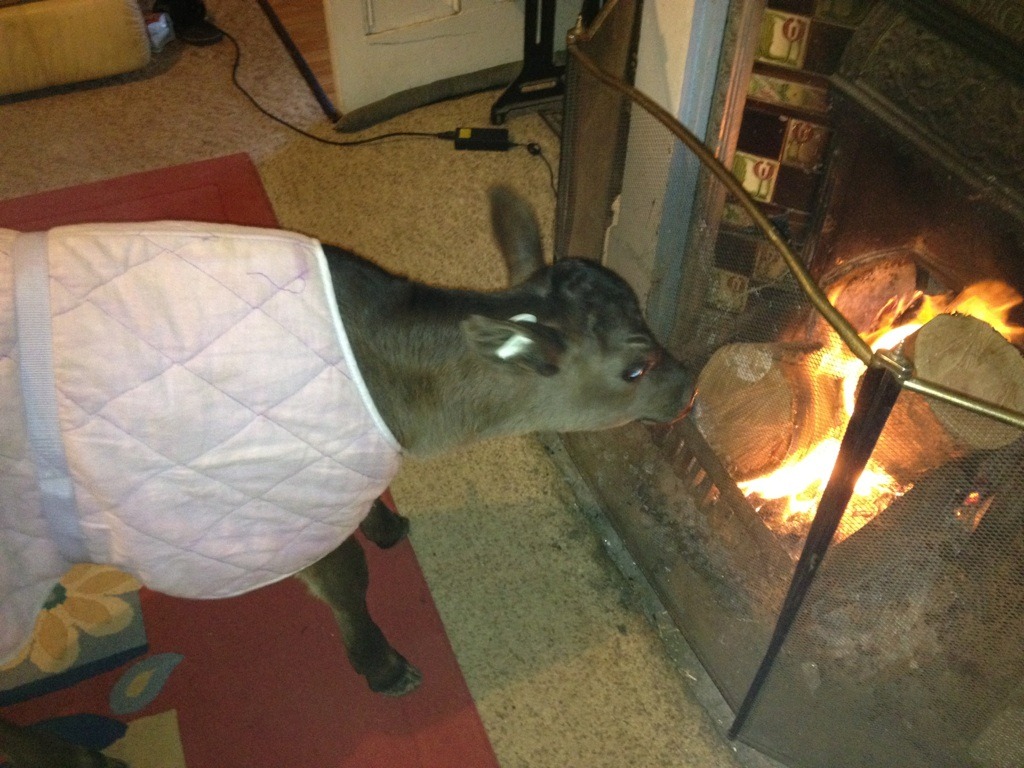
This is Bobbi and she is a Jersey Holstein cross 3 weeks old little heifer we gave away yesterday to some wonderful people who as you can see are giving her a life of luxury.

Bobbi has a new mum. Just to add to the liquorice allsorts mix her new mum is a Brown Swiss. 

I had call yesterday from Bobbi’s new owner who was distressed about Bobbi’s new mum

Apparently her next door neighbour’s Angus bull had jumped the fence, impregnated her Brown Swiss cow who is a companion for her horse and sadly the resulting offspring did not survive

At Clover Hill the team is thrilled Bobbi is now surround by all this love, cuddly blankets and fireside moments.

What do you reckon. I think marshmallows and hot chocolate might be on the agenda later tonite for Bobbi         

Why Coles should stop the Milk Price Wars

Today Young Farming Champion Jess Monteith and I went to visit her friends Tim and Natalie Cochrane. You can read an earlier post about  Jess here

Jess wasn’t born on a farm but after meeting people like Nat and Tim who own a dairy farm at Terara just north of Nowra and helping them show cattle she fell in love with all things dairy . Jess’ little herd of registered Holstein and Illawarra cows now live at Tim and Natalie’s property with each new drop of calves helping set up a future for Jess to start providing milk for lots of Australian families just like her friends.

The visit today was to get some more photos for Jess’ Archibull Prize in school presentation. Jess is being sponsored by Paul’s Milk and will visit Caroline Chisholm College at Glenmore Park in her role as a Young Farming Champion.

IMG_4800

Jess and her favourite cow Eve

I was struck today by all these young people full of hope for a bright future in the dairy industry not just Jess but Tim and Nat who have two small children

IMG_4728

Tim and Nat milk four hundred cows. Generations of farming families and cow families make them and their cows the team they are today

IMG_4711 

The next generation wait their turn to join the herd

IMG_4751

Everybody waiting and wondering if there will even be any dairy cows let alone farming families on the flats at Terara if the crippling milk price wars don’t stop soon.

AJK Eve First calf 

Jess’ favourite cow Eve on the day she was born

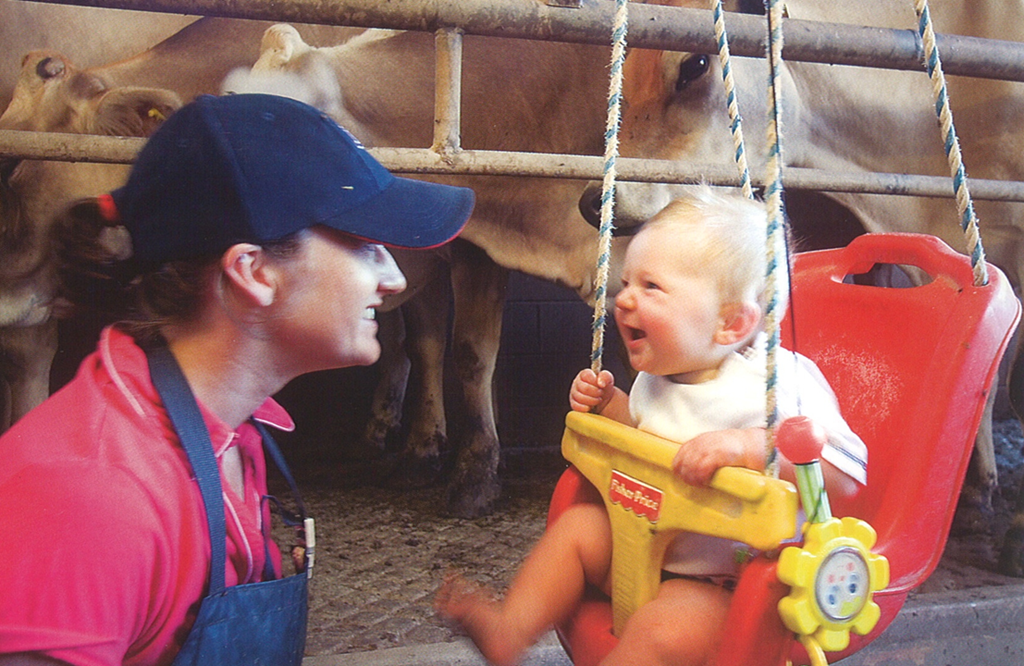
People in the dairy industry have a very close relationship with their cows. The nature of the industry means husbands and wives work side by side and often their children join them in the dairy.

image  

This photo says it all

IMG_4871

Dairy farming today is technology rich and phenomenal efficiency gains mean we can produce 60% more milk from 50% less cows than we did 50 years. They tells us if we do x,y, and z we can achieve further efficiency gains and maybe even survive this senseless round of milk price discounting being conducted by Coles.

But we can only work so many hours a week, what we need is smart young people like Jess working in agriculture and we need a milk supply chain culture that values people       

The dairy industry needs to be able to invest in our young people and nurture them. Tell me Coles how we do that on milk that is being valued at 15c/litre.

Help the dairy industry invest in Jess’ future Coles. You can do this. Its easy

STOP USING MILK AS A LOSS LEADER

This is the real story Coles

One thing that really saddens me about the current dire state Australian dairy farming families are finding themselves in, is their inability to tell the real story

With 2011-12 pre-tax earnings to $1.356 billion Coles can afford multi million dollar campaigns that spruik they are ones delivering cheap groceries to Australian families.

That is absolute rubbish. Its Australian farmers who are producing high quality, nutritious food for Australian families at the lowest prices as a percentage of income never before seen in this country.

Yes again the statistics tell the real story.   Food is less 10% of income in this country.   That is 80% lower than it was in the 1900’s.

Its a beautiful thing really that farmers get up every day to do this. They don’t demand  $15 million dollar salaries like Ian McLeod the CEO of Coles.

Our farmers look after over 60% of Australia’s land and yet only 6% of that land is arable and only half again is suitable for growing crops.

Not much is it. We have such a big country and a 5.7% arable land. That’s almost half the world average.  We have so much to lose if we starve our dairy farmers and sadly Coles that is effectively what you are doing

That’s a whopping 54% of the land they just look after so the rest of us can have the clean water and those amazing landscapes we too often take for granted.

AYOF  (6)

Even more amazing Australian farmers on average feed 600 people that’s 580 more people each than our farmers did in 1950.

I can guarantee this, because I know, because I am Australian farmer too, that if I can convince Coles to stop using milk as a loss leader and my processor can make enough money so it can flow down the supply chain to my family farm,  my family will be spending any excess dollars in our pockets on our cows and those beautiful landscapes that we so proudly look after. Maybe Coles there might even be a little bit left over for a bonus for our dedicated staff

IMG_3780 C

This is what is threatened Coles –  jobs of wonderful Australians like Louise

What I can assure you is we wont be spending it on huge self serving advertising campaigns and destructive pricing policies that walk over Australian farming families to put mega profits in the till and pay huge huge salaries to CEO’s

IMG_4269

This is what’s is threatened Coles – the cows and Australia’s beautiful landscapes

This comment from Ian Verrender in Business Today SMH August 30th 2012

Crying over Spilt Milk

Who really benefits from the milk prices wars

I think the statistics tell the real story

Coles tell us its “Down Down Down campaign” saves its shoppers $450 per year.

Coles on the other hand recorded a 16.3 per cent increase in 2011-12 pre-tax earnings to $1.356 billion.

Coles CEO Ian McLeod earns $15.63 million in salary alone. Cant even imagine what his bonuses are 

McLeod’s spectacular earnings are more than double that of his boss, Wesfarmers CEO Richard Goyder, who made $6.9 million last year.  

Coles home label brands now account for around 51% of Coles milk volumes, up from around 25% in 1999/2000.  This result has been rapidly assisted by the current $1/litre milk discounting marketing strategy

I don’t know whether to laugh or cry when they spruik the milk price wars are solely to help Australian families.

We dont think its funny Coles

Coles and Woolies take pot shots at each other but its their customers and farmers who are being critically wounded


The words “loss leader” sends shivers up my spin. Why? Because Coles is using milk as a loss leader. This marketing strategy is lining their pockets with gold and it is crippling Australian dairy faming families See previous post “ Wake up Coles please don’t put your profits before Australian farming families”

So what is a “loss leader”. Our friend DR Google and Wiki (1) do a nice job of explaining it  

A loss leader, is a product sold at a low price, at or below its market cost[ to stimulate other sales of more profitable goods or services.

The Strategy

One use of a loss leader is to draw customers into a store where they are likely to buy other goods. The vendor expects that the typical customer will purchase other items at the same time as the loss leader and that the profit made on these items will be such that an overall profit is generated for the supermarket .

“Loss leading” describes the concept that an item is offered for sale at a reduced price and is intended to “lead” to the subsequent sale of other items, the sales of which will be made in greater numbers, or greater profits, or both.

Now the concern for supermarkets using this strategy is deep price promotions may cause people to bulk-buy (stockpile), which they obviously don’t want .

Characteristics of loss leaders

  1. A loss leader may be placed in an inconvenient part of the store, so that purchasers must walk past other goods which have higher profit margins.
  2. A loss leader is usually a product that customers purchase frequently—thus they are aware that its unusually low price is a bargain.
  3. Inexpensive products like milk, eggs, bread and other low cost items that supermarkets would not want to sell without other purchases.
  4. Some loss leader items are perishable and cannot be stockpiled.(1)

So as you can see milk is the perfect loss leader, kept at the very back of the store, purchased everyday and its perishable ( no stockpiling milk)

Don’t be fooled Coles customers Coles are not doing you an favours by selling you milk at a $1/litre. The billion dollar profits tell the real story  

supermarket_cartoon

Thank you to this great article from Punch for the inspiration for my heading   

Australian dairy farming families are in Crisis

I don’t know about you but to me no-one tells a story from the heart more powerfully than Marian MacDonald. See  Sad Discovery that is Good for My Green Farm Girl

My story today comes from my heart to yours.  The Australian dairy industry in crisis. It is not just the domestic milk supplying states of QLD, NSW and SA that are affected.  The milk processing company Lion will endeavour to offload the 15c/litre* (see footnote) T2 milk it is paying its farmers into milk processing plants in Victoria and this will put severe downward pressure on farm gate milk prices in this state as well.

Victoria is known as the dairy state and currently 70% of milk production comes from south of the border. The current farm gate milk price in Victoria is already impacting on farm and this  new pricing structure for Lion suppliers I can assure you will have serious ramifications right across Australia.  

How did we get in this sorry mess you ask? Let me share what Dairy Australia has said in its In Focus publication.

“The two issues putting downward pressure on prices at present are – oversupply of milk in the Eastern states and the supermarket discounting of milk“ 

Now it should be as clear as the nose on your face that a milk processor like Lion could get smart and correct the oversupply issue by investing in a dryer for skim milk powder production for example which would allow it to take up the excess milk for export purposes. 

On the other hand we could have another ten year drought. Don’t think anyone will be suggesting the latter option.

Just so you understand why we have an oversupply of milk in NSW, SA and QLD. Dairy farmers were given clear market signals through large incentives paid by Lion to grow their milk supply businesses. Sadly Lion’s milk sales business did not have the same growth spurt

Now to the supermarket price wars. The supermarket discounting will end when they have achieved their objective of growing the home brand share of the milk market to their targets and ultimately the target is to have only home brand milk on the shelf and the strategy is working.

Supermarket’s share of Australian drinking milk sales is now around 53% and growing.  Home label brands now account for around 51% of total supermarket milk volumes, up from around 25% in 1999/2000.  This result has been rapidly assisted by the current $1/litre milk discounting marketing strategy

And as you can clearly see using milk as a loss leader is making them buckets of money. See “Another strong earning performance from Coles supermarket division “ 

How can you help?

To assist dairy farmers you can choose to purchase branded milk products not house brands. It doesn’t matter what brand as long as it is not Woolworths label or Coles label. This will support the margins of the processors and this offers the best opportunity for farmer margins.

You can also choose to purchase milk from venues other than Coles and Woolworths.

What can Coles Do?

It is absolutely critical that they stop using milk as a loss leader

So what solution will we chose?

What are we going to do Australia? Do we change our buying habits or do we lobby Coles?

I say let’s go both barrels. Love to hear what you think

AYOF  (7)

Look at these beautiful creatures Surely their milk is worth more than 16c/litre

Footnote I am yet to find a farmer who has received the mooted 15c/litre most people are getting between 11 and 13c/litre. The variation is caused by the different milk fat and protein percentages on farms 

Wake up Coles please dont put your profits before Australian farming families

Coles profits are riding on the back of their Down Down Down campaign. As reported in the  Sydney Morning Herald today “Wesfarmers said full-year net profit rose 11 per cent to $2.126 billion. Its Coles unit capped a third year of market-beating performances as it stepped up its price war with bigger rival Woolworths.” But this comes at a cost, a huge cost and there is no denying dairy farmers are the current collateral damage in this drive for billion dollar profits”

My blog post yesterday Coles is Making my Blood Boil saw an outpouring of united support for dairy farmers from both the community and our fellow farmers.

Now that the community is aware that Coles is suggesting their customers support their Down Down Campaign that is having such a devastating effect on Australian dairy farmers to put an extra $1.23 per day in their pockets they are mortified. Appalled that Coles is effectively asking them to be complicit in the downfall of Australian farming families.

How do we right this terrible wrong. People Power that’s how. No matter how much the government would like to help their hands are tied. However every single Australian can stand up and have a voice and say Coles we wont support you if it means Australian farming families and the jobs they support in the broader community are threatened

What can you do”. You can vote with your wallet and/or your feet Australian families.

You can do this in two ways

Option 1. Is to buy branded milk rather than supermarket equivalents. This would support the margins of the milk processors and the real opportunity for this to flow back to farmers.

Option 2  You can seek out your independent Australian owned supermarkets and grocers  and support them instead of Coles.

The government needs your help too. Their National Food Plan aims to provide all Australians with affordable, nutritious LOCALLY produced food that is good for people, animals and the planet. Lets help them do it. Support Aussie Farmers and say no to Coles Down Down Down campaign and the massive profits it is putting in their pockets

Emma and calves  

Our future is in your hands Australia. We can win this one together  

Tree Huggers Unite

Our guest blogger today is the gorgeous Megan Rowlatt who is a finalist in the National Young Landcare Leader Award and a Young Eco Champion and part of the Clover Hill Dairies eco team .  

Hi my name is Megan Rowlatt, and I hug trees

Profile Pic eroo

Jamberoo Tree Hug


No really. I do. All the time. See…

RNP tree hug

Royal National Park Tree Hug

Positano italy tree hug

  Positano Italy Tree Hug

Grand Canyon tree hug

Grand Canyon USA Tree Hug

Growing up in the NSW coastal town of Corrimal with my mum, dad and younger brother, I had a wholesome childhood. Playing with other kids in our street until the street lights came on, climbing trees, playing in the bush along the foothills of the Illawarra escarpment after school, visiting local swimming holes in the national park, and with regular camping trips and family holidays to a range of destinations, this set the foundations for a keen sense of adventure, a desire to travel the world, and a love of our natural environment.

.Nan and pop from my dad’s side resided in a beautiful little country town called Crabbes Creek on the north coast of NSW. I spent many of my first years in the crystal clear creeks with my dad and our family dog and over the years developed an emotional connection to the landscape, particularly rainforests and fresh water bodies. I’m a sucker for a rope swing and a swimming hole.

Megan and Dad

1 year old me and my dad in Crabbes Creek, NSW.

Growing up I was a keen bushwalker and still am. I love climbing things, especially mountains (even though I am secretly a little bit scared of heights. But don’t tell anyone. I like to look tough).

Path of the Gods, Amalfi Coast – Italy Austrian Alps Royal National Park


Kosciusko National Park NSW (me and my bro), Whistler Mountain Canada, Füssen – Germany

I’ve travelled the world (but not nearly enough of it) and love learning about other cultures, exploring new environments and letting my mind flow over the possibilities of where life will take me next. I love laughing, and I mean laughing hard, and I always surround myself with people who make me smile. But I always come home. There really is no place like home and travelling abroad and living away for a period of time helped to develop a deep appreciation of just how amazing our country is. Sometimes I am so awe-struck by the beauty of our landscape it gives me goose bumps. And when you love something so much and want to make sure it’s there for future generations to enjoy, you get involved.

My home…

My favourite swimming hole, Royal National Park

Megan (4)Megan (6)


Megan (1)

Exploring the creek line, Royal National Park

My home (7)Lagoon


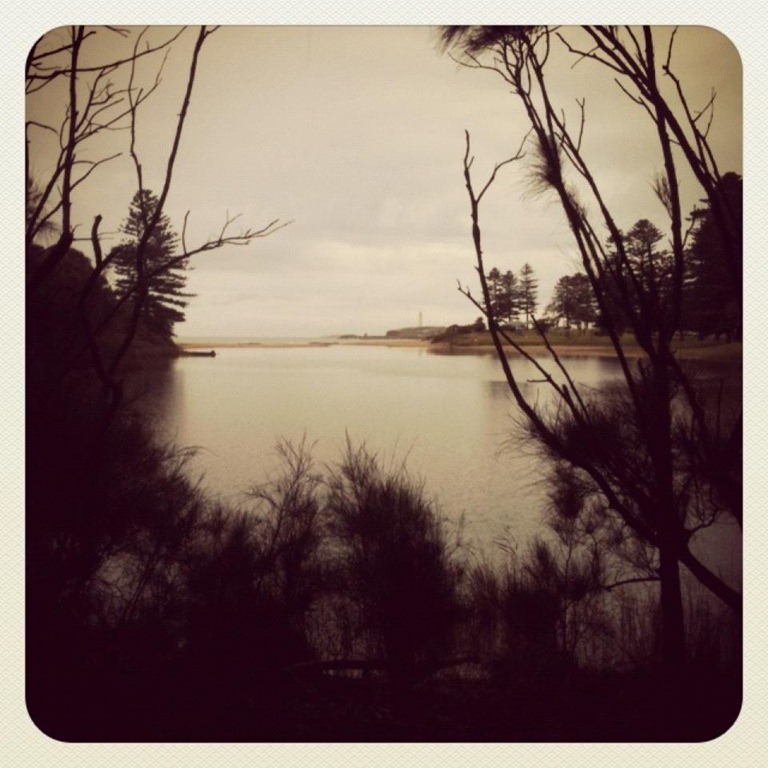
My local beach at sunset, and local lagoon North Wollongong, NSW


My home (4)

My bike 


My home (8)

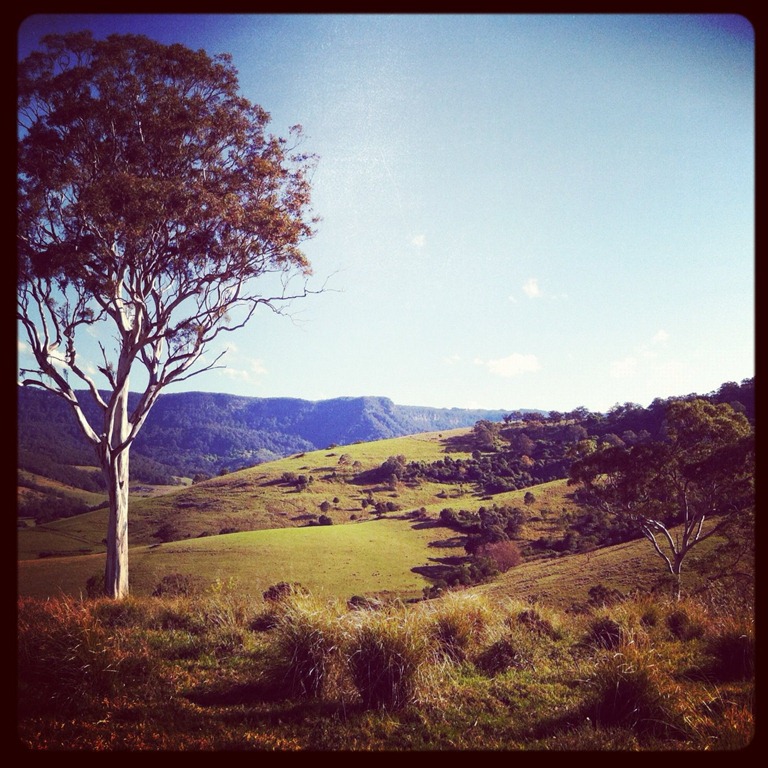
And this is the view I am greeted with every time I come home from traveling.

After finishing high school I decided that I wanted to complete a degree in primary teaching figuring the lengthy school holidays would satisfy my desire to travel and allow more flexibility in the amount of time I could take off, but soon after commencing a Bachelor of Education degree I developed a love affair with my science electives. Through my first year of study I was so torn, I was spending more time with my two environmental science electives than my education subjects and things were getting out of control. After breaking down in tears to my dad one night crying “I don’t want to be a primary teacher anymore I want to be an environmental scientist (insert sooky stressed face)” he looked at me and plainly said “why are you crying you weirdo? If that’s what will make you happy, do it” and so I did, and immediately made the leap into Bachelor of Environmental Science degree’s arms at the University of Wollongong. (See ya education, you just weren’t the right one for me).

Having spent all of my life growing up in the Illawarra I began to get itchy feet and was craving a change of scenery so I moved to the Gold Coast in 2003 and transferred to a Bachelor of Science in Ecotourism. Working with people has always been in my nature, I spent many years working in bars and hospitality. Interacting and meeting new people was the biggest attraction for me in this industry so it was only natural that I would enjoy studying a degree which offered opportunities for me to explore the tourism industry as well as develop skills and knowledge in environmental science.

After spending four years away from home and taking advantage of the beautiful warm weather QLD has to offer, I began to miss our coast line (seriously, we really do have the best coastline in the world).

My home (3)

See. It’s pretty amazing. (Me and my best friend)

I returned to Wollongong and was immediately employed as a casual Visitor Services Officer with NPWS working at Royal National Park. Being casual, I had some spare time and I wanted to continue to develop my knowledge around natural resource management (NRM), so I began to volunteer with Conservation Volunteers Australia (CVA) where I started to really become aware of regional environmental issues. A position as Landcare Community Support Officer came up during my time as a volunteer with CVA. Looking at the selection criteria I didn’t think I had a chance but I applied anyway. The next day I had an interview and the day after that I was employed! Almost five years on, I am still loving the role.

Funded by Southern Rivers Catchment Management Authority and hosted by Conservation Volunteers Australia, as the Landcare Community Support Officer for the Illawarra region, my role is to assist Landcare volunteers, private landholders and farmers, as well as the wider community to develop skills and knowledge around natural resource management. This includes delivering training to build capacity of volunteers and individuals working in natural areas to carry out quality on-ground activities, engaging new volunteers into Landcare, managing and distributing online resources through newsletters, social media and a range of websites, and applying for a variety of grants to carry out environmental projects in the Illawarra region.

This job couldn’t be more perfect for me. I get to travel around the region and meet and work with loads of wonderful people. I love my volunteers and the groups I get to work with, they are just beautiful. I also am fortunate enough to be able to travel around the state for meetings and forums where I have an opportunity to share my experiences and be inspired by other NRM professionals and volunteers. I find managing online resources and developing resources such as newsletters satisfying as I am able to apply my own creative flair to these products.

Some of the places I get to see for work…

Bermagui River

Bermagui River at sunset NSW

Little Blowhole

Little Blowhole, Kiama NSW

Dapto

Albion Park NSW

But after attending my very first state Landcare forum in Queanbeyan I was surprised to learn that there was a real lack of young people in the Landcare movement. Many existing groups were of retirement age and no significant new recruitment was occurring. So I started to question why this was the case and why I had been attracted to volunteering and what was lacking that was deterring younger people from joining.


In 2009 I set up Illawarra Youth Landcare and run the group in my own time. Illawarra Youth Landcare is a Landcare group exclusive for young people aged between late teens to early thirties. We travel around once a month and visit an existing Landcare or Bushcare group in the Illawarra and assist them with their on-ground work. This gives the host group an opportunity to share their knowledge and skills with a younger generation and volunteers are able to explore the region and develop awareness about the environmental management issues we are facing. In addition to local projects I also organise overnight expeditions to other parts of the state. We partner up with other organisations and look at what other environmental issues persist beyond the Illawarra. These trips allow for volunteers to bond and develop friendships while giving something back to the environment.

To date we have a membership of over 70 people and over 120 followers on Facebook. Volunteers come from all sorts of backgrounds and are motivated for all different reasons to volunteer with the group. The key is flexibility, variety and opportunity for a fun social experience. It’s all about having a good time because at the end of the day, if it’s not enjoyable people are not going to become involved. I wouldn’t. Landcare is just as much about the people as it is the environment, and gen Y are generally time-poor and prioritise study, career and social commitments. So it’s difficult to gain any long term commitment from volunteers of this demographic. So I simply try to cater to this.

Over the last few years we’ve been involved in some amazing projects, a highlight for me was the Hawkesbury Source to Sea paddle we did with Willow Warriors in 2010. On this extremely hot (43 degrees in fact) weekend, we paddled along the Colo River working with a range of different Landcare and Bushcare groups. The weekend was jam packed full of swimming, kayaking, more swimming, rope swings, BBQs and a few beers (which I also love), fishing and oh yeah, some bush regeneration and a whole lot of laughing!

Here’s a short video of our adventures so far…


In 2011 I was awarded the Be Natural Young Landcare Leader award for NSW and am now a finalist in the National Landcare Awards as the NSW representative under this category. This is a huge achievement and being nominated means a lot. But living in a country as beautiful and diverse as ours, I could never stand back and not be involved in making it a better place for future generations to enjoy the way I did.

You can check out more about Illawarra Youth Landcare at www.illawarrayouthlandcare.com.au

Farmers Knees

The first thing you cant help but notice when you meet this farmer is the big smile (and yes he is pretty good on the eye as well I must admit)

MERCURY.WEEKENDER. Pic taken at Clover Hill Dairies Jamberoo for Two page feature and history and future of Clover Hill Dairies ..pic of Michael Strong round up cows.pic by sylvia liber. 6 September 2006. job number 00065069 SPECIALX 00065069

Michael Strong  – photo taken by Sylvia Liber September 2006

This farmer has been finding it harder and harder to smile every year since 1998 when he had a rather nasty run in with a 900kg plus bull. The bull decided the quickest way to separate Michael from his cows was to slam him in to the closest concrete trough. Well this worked for the bull but Michael is confident a polite word in his ear would have achieved the same thing without leaving him with a lot of broken bones and ultimately a rather nasty condition called Traumatic Arthritis. Traumatic Arthritis is pretty much the same as Osteoarthritis with the added complication of intermittent excruciating pain caused by bleeding in the joints and in Michael’s case his knee joints.

Farmers knees

10 years ago they said he was too young and his job too physical to have knee replacement surgery. Five years ago they said the same thing but when the pain got so bad he could no longer sleep they decided it was time. Double knee replacement here we come. That sounds like fun doesn’t it? For some reason Michael wasn’t looking forward to it  

The big day was to be in April but firstly an altercation between his legs and some lantana bushes and then a wedding to attend ( lots of smiles that day) meant it was delayed until last Friday.

Church

Nick and Emma

Wedding Speech

Now I have always been big on insurance and work on the principle if you cant afford to insure it you cant afford to buy it. Whether that be a car, a tractor or the farm, income protection, life insurance or in this case private health insurance. Michael is in the Mater in North Sydney. Wow never seen anything like it. The quality of care is just unbelievable. Michael has his very own personal nurse and to top it all off the food is good.  Yes believe it or not the food is great

The operation didn’t go quite to plan and they were only able to do one knee – they found far too many bizarre things that needed fixing with one knee let alone two at once.  

Machines

Very pleased to say after 48 hours of fentanyl/morphine cocktails the pain seems to be easing and the smile is back on the face. Full steam ahead I say to a full recovery. Then there is that little hiccup of the other knee. Less said about that one at the moment the better I think

Knee Draining

Next stop Michael – say Whitsundays where you can see knees like these

Knees onthebeach

Some great info on knee replacement surgery can be found here for all of my readers with Farmers Knees